Excellent Repairability: Steam Machine Tear-Down and Accessing RAM & SSD
Gamers Nexus
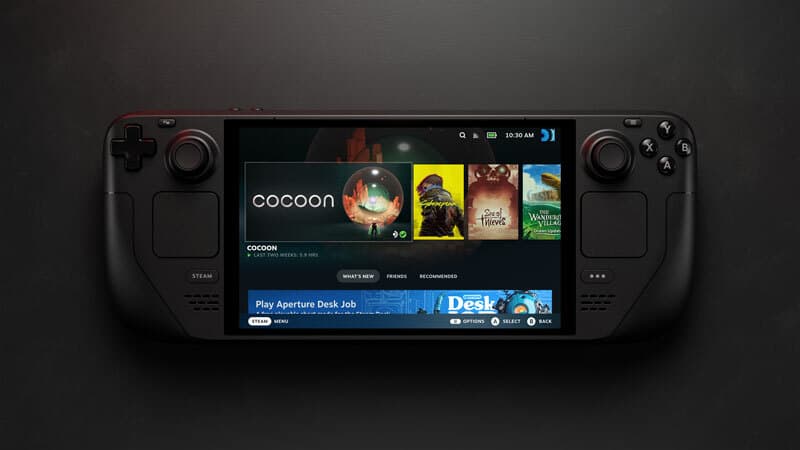
The original LCD Steam Deck, which Valve discontinued new in late 2025; now sold refurbished and used only.
Gavler Meta-Score
“The budget entry, now refurbished-only. New LCD stock is gone, but a refurbished Deck still delivers the essential Steam Deck experience for well under the OLED's price.”
The Gavler Verdict
Steam Deck (LCD) Review: Discontinued New, Still Worth Buying Used
The Steam Deck (LCD) ranks number 6 on Gavler's Best Gaming Handhelds list with an 8.8 — a genuinely high score for hardware Valve no longer sells new. The company discontinued the LCD model in December 2025, leaving the OLED as its sole current entry-level device, but the original Deck hasn't gone anywhere as a product: it lives on through Valve's own refurbished program and a healthy used market, and the core experience that made it a phenomenon is fully intact. Tom's Hardware's original take still applies in full: it's "a powerful, flexible gaming handheld that feels great and lets you take your games on the go." Buy a refurbished unit if you want the cheapest legitimate way into SteamOS handheld gaming. Skip it if you specifically want the newer OLED screen and longer battery life that the current-generation model offers — new stock of this exact configuration simply doesn't exist anymore.
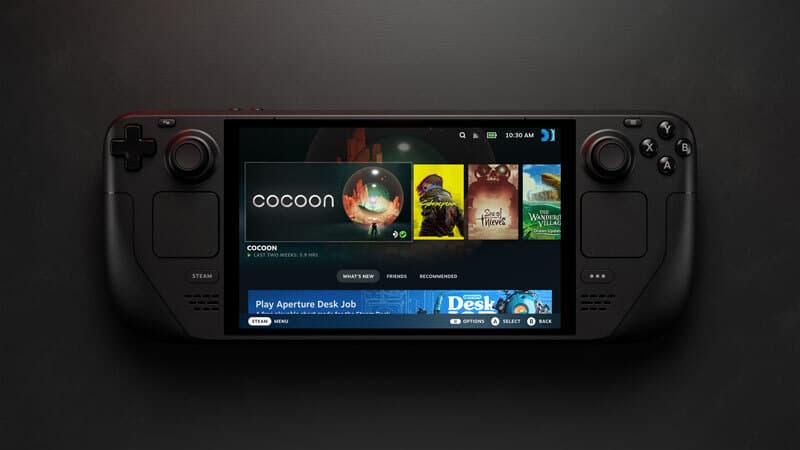
The original Steam Deck pairs a custom AMD Zen 2 and RDNA 2 APU with 16GB of LPDDR5 memory and up to 512GB of storage across its tiers, driving a 7-inch 1280x800 LCD touchscreen at 60Hz. It runs SteamOS, Valve's Linux-based, controller-first operating system that boots directly into your Steam library rather than a general-purpose desktop — the single biggest reason the Deck earned its reputation as the handheld to beat in the category's early years. Physical controls include dual thumbsticks, a D-pad, full ABXY buttons, four rear grip buttons, and two trackpads, giving it both traditional gamepad input and mouse-style precision for games that need it.
Since Valve discontinued new sales in December 2025, the only ways to buy one are Valve's own certified-refurbished storefront or the secondhand market — new-in-box units of this specific model are no longer being manufactured or sold through official retail channels.
What made the Deck matter in the first place wasn't raw power — it's a modest APU by current standards — but the software wrapped around it. The Verge's review put it succinctly: "The Steam Deck wasn't born ready, but it's ready now," a verdict that captured how much early software polish Valve delivered through updates after a rough initial software experience. That software-first advantage is exactly what still separates SteamOS from Windows-based rivals years later: booting straight into your library, navigating menus with a controller that actually feels designed for it, and having Proton compatibility handle the vast majority of the Windows-native Steam catalog without extra setup.
Tom's Hardware's broader assessment praised the same fundamental strength: a device that "feels great and lets you take your games on the go" — comfortable in the hand, intuitive to navigate, and genuinely portable in a way that early handheld PCs from other manufacturers weren't. That comfort and software polish are exactly why the LCD Deck still holds an 8.8 on Gavler's list even after being discontinued new — the hardware underneath a great software experience doesn't stop being good just because a newer screen technology exists in a pricier sibling.
The honest limitation, and the reason Valve moved on to the OLED as its flagship, is the screen itself: a 60Hz LCD panel that looks noticeably flatter and dimmer next to the OLED model's 90Hz HDR display, and battery life that trails the newer hardware's efficiency gains. None of that makes the LCD Deck a bad handheld in 2026 — it makes it a clearly positioned budget option now that a superior sibling exists at a higher price.
Higher up the same list, the Steam Deck OLED is the direct successor and Valve's current entry point — the same SteamOS experience with a substantially better 90Hz HDR screen and longer battery life, for a real price premium after Valve's own 2026 cost increase. It's the device to buy if you want current Valve hardware rather than a discontinued model; the LCD Deck is the device to buy if minimizing cost matters more than the screen upgrade.
One rank above, the Asus ROG Ally X represents the Windows alternative — stronger raw performance and full PC software compatibility, for real money more, with the Windows-desktop friction that SteamOS was built specifically to avoid.
An 8.8 that reflects genuinely durable hardware, not sentimental scoring. The original Steam Deck's discontinuation doesn't erase what made it good — The Verge's and Tom's Hardware's original verdicts about comfort, portability, and software polish remain accurate today, and the SteamOS experience underneath is identical to what ships on the pricier OLED model. If you want the cheapest legitimate way into serious handheld PC gaming and don't mind buying refurbished or used, this remains one of the smartest picks in the category — you're just buying it through a different channel than you would have a year ago.
Yes, on the refurbished or used market — it's no longer sold new. It ranks number 6 on Gavler's Best Gaming Handhelds list with an 8.8, and The Verge's assessment still applies: 'The Steam Deck wasn't born ready, but it's ready now.' At well under the OLED model's price, it remains the most affordable legitimate entry into SteamOS handheld gaming.
Valve stopped selling the LCD model new in December 2025, positioning the Steam Deck OLED as its sole current entry-level device. The LCD lives on only through Valve's own refurbished program and the broader used market.
The OLED model adds a brighter, more vivid 7.4-inch HDR OLED screen at 90Hz versus the LCD's 60Hz 1280x800 panel, plus a lighter chassis and longer battery life. The core hardware architecture and SteamOS experience are otherwise the same — you're paying the OLED premium specifically for the screen and battery upgrades.
Valve sells certified refurbished units directly through its own store with the same warranty terms as new hardware, which is the safest route if buying used. Third-party used units carry more risk around stick drift, screen condition, and battery health, so buying from Valve directly or a reputable retailer is the safer path.
Prices checked regularly
90-day price history
Steady at $399 for the entire 90-day tracking window — no increases, no discounts, across 91 tracked days.
Tracked daily across retailers. Vote Want itabove and we’ll alert you the moment the price drops.
Some links are affiliate links — Gavler may earn a commission. This never affects rankings or scores. Learn more.
The 7-inch LCD touchscreen has a 1280x800 resolution and a 60Hz refresh rate for handheld play.
Dual thumbsticks, a D-pad, ABXY buttons, four rear grips, and two trackpads provide complete gamepad and mouse-style input.
A custom AMD Zen 2 and RDNA 2 APU pairs with 16GB of LPDDR5 memory across three storage tiers up to 512GB.
A long-standing value champion, now discontinued new (the OLED is Valve's current entry model); still a strong buy on the refurbished and used market.
Do you think Steam Deck (LCD) deserves the #6 spot in Best Gaming Handhelds?
“Valve's Steam Deck is a powerful, flexible gaming handheld that feels great and lets you take your games on the go.”
“The Steam Deck wasn't born ready, but it's ready now.”
Watch
Hand-picked from creators we trust — playable inline.
Excellent Repairability: Steam Machine Tear-Down and Accessing RAM & SSD
See how other top picks compare in this category.
A teraflop hangtag is the wrong first question. SteamOS, Windows Game Pass, or Nintendo first-party is the library. Then shop Gavler's live community ranking.
A 2TB Legion Go 2 now runs $2,849. The AI memory shortage wrecked handheld pricing — here's how to buy a great one in 2026 without overpaying.
Steam Deck OLED, ROG Xbox Ally X, Switch 2, Legion Go 2. Gavler ranks the best gaming handhelds of 2026 — and a May price hike just reshuffled the value math.