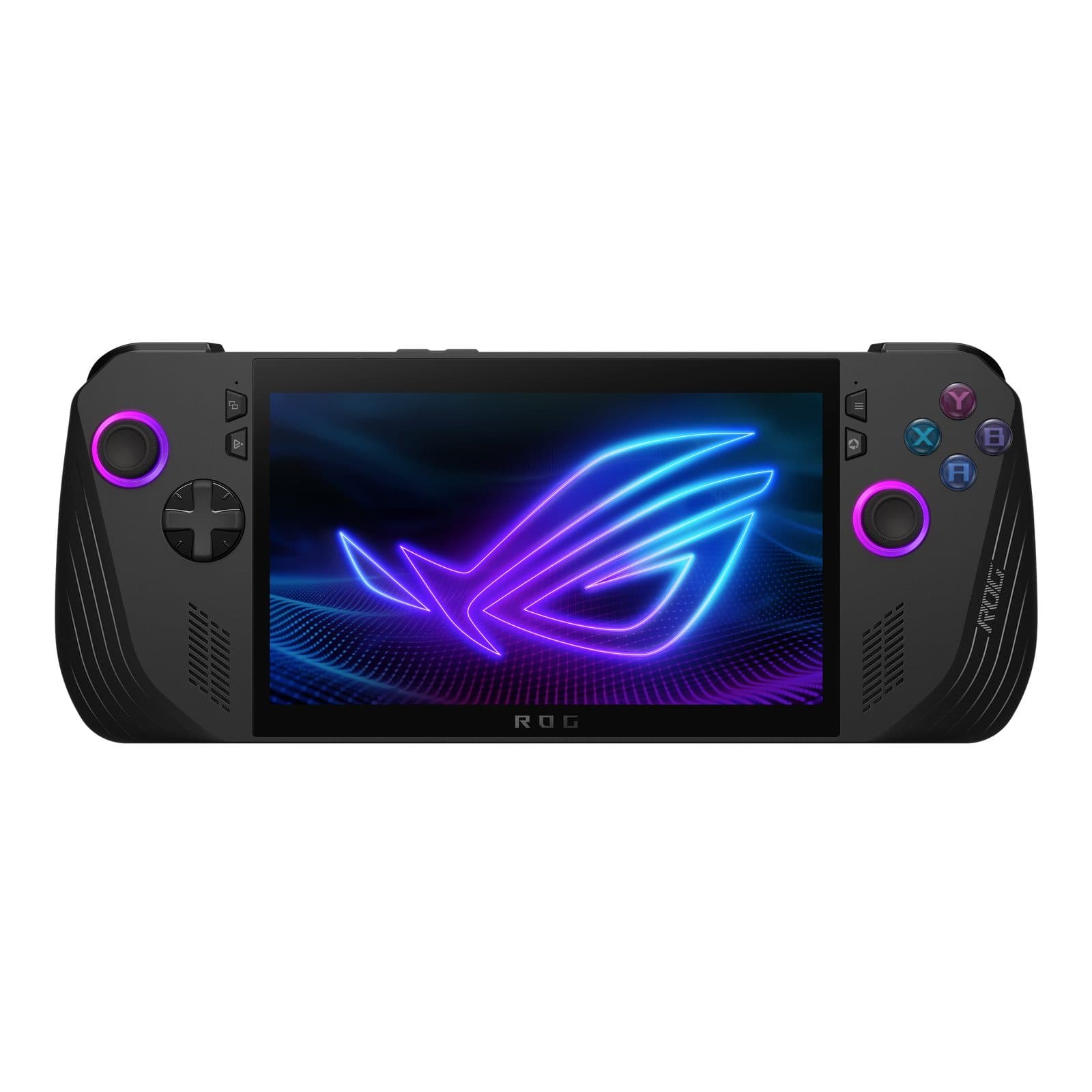
Asus ROG Ally X.
An upgraded ROG Ally with an 80Wh battery, 24GB RAM, and the Z1 Extreme chip.
The Verdict.
Gavler Meta-Score
“Still an excellent Windows handheld, and a smart buy now that it's no longer the newest. Great battery and performance for the money.”
The Gavler Verdict
The Gavler Review.
Asus ROG Ally X Review: Still the Windows Handheld to Beat at a Better Price
The Asus ROG Ally X ranks number 5 on Gavler's Best Gaming Handhelds list with an 8.7 — a strong score for a device that's no longer the newest thing in its own product line. It's for buyers who want a genuinely capable Windows gaming handheld without paying the premium the latest flagships now command. The Verge called it "the best Windows gaming handheld by a mile" when it launched in 2024, and two years on, that verdict still holds up better than most hardware reviews age. The trade-off is straightforward: this is now Asus's second-tier Windows handheld, sitting below the newer, pricier ROG Xbox Ally X, and it still runs the plain Windows 11 desktop rather than the console-style interface Asus and Microsoft built for that successor.
What it is
The ROG Ally X is Asus's revised take on its original ROG Ally, addressing the two biggest complaints about that first handheld: battery life and comfort. The fix was blunt and effective — Asus doubled the battery to 80Wh, nearly filling out the chassis around it, and reshaped the grips for longer sessions. Under the hood sits the AMD Ryzen Z1 Extreme APU, paired with 24GB of LPDDR5X-7500 memory and a 1TB M.2 2280 SSD, driving a 7-inch 1080p IPS touchscreen at 120Hz with AMD FreeSync Premium and a 500-nit peak brightness. It runs Windows 11 out of the box, which means it plays anything you'd run on a gaming PC — Steam, the Epic Games Store, Xbox Game Pass, Battle.net, emulators — without the compatibility gatekeeping that a closed console ecosystem imposes.
That openness has always been the case for and against Windows handhelds. You get the entire PC library and every storefront; you also get Windows itself, an operating system designed around a mouse and keyboard that Asus and its rivals have spent years trying to skin into something controller-friendly, with mixed results.
In use
The single biggest change from the original Ally is one you feel rather than see: the Ally X simply lasts. Where the first Ally could struggle to clear ninety minutes in demanding titles, the 80Wh cell here stretches sessions meaningfully longer, and it does so without making the device unwieldy — Asus managed the battery increase while also improving the grip ergonomics, a genuine engineering win rather than a brute-force fix. The 24GB of fast memory gives the Z1 Extreme's integrated graphics more headroom than the 16GB configuration common on cheaper handhelds, which matters more than raw clock speed in games that lean on shared system memory for textures and frame buffering.
Performance-wise, the Z1 Extreme was a genuine flagship chip at launch and remains a solid mid-to-upper-tier performer now. It comfortably handles most of the current Steam and Game Pass catalog at 1080p with dropped settings, and its FreeSync-capable 120Hz panel makes lighter, faster games feel notably smoother than the 60Hz screens still common on budget handhelds. Where it shows its age is against the newest silicon: the Ryzen Z2 Extreme chips now powering devices like the ROG Xbox Ally X and Lenovo Legion Go 2 post meaningfully higher frame rates in the most demanding AAA titles, and if you're chasing native 1080p performance in the newest releases, the gap is real.
The software experience is the other constant with any Windows handheld: it's still Windows. Asus's Armoury Crate overlay does a reasonable job of surfacing performance profiles and quick settings with the controller, but navigating out to the actual desktop — installing a launcher, changing a driver setting, dealing with a Windows update mid-session — remains the same friction every Windows handheld shares. If you've used a ROG Ally, a Legion Go, or an MSI Claw before, you know exactly what to expect here; nothing about that experience has fundamentally changed on this specific model since launch.
Strengths
- 80Wh battery. Double the original Ally's capacity, and the single upgrade that turned this device from a promising idea into something you can actually take on a flight or a long commute.
- 24GB of fast LPDDR5X-7500 memory. More headroom than the 16GB configurations common at this price, which helps texture-heavy games run more consistently.
- A 120Hz, 500-nit FreeSync display. Smooth and bright enough for indoor and most outdoor use, a genuine step up from the 60Hz panels still found on cheaper rivals.
- "The best Windows gaming handheld by a mile," per The Verge. A launch verdict that's aged well — this remains a genuinely well-regarded device, not a relic.
- A real price advantage now. At $799, it undercuts the newest Ryzen Z2 Extreme flagships by hundreds of dollars while still delivering strong day-to-day performance.
The trade-offs — who should skip it
- It's Windows, not SteamOS. The desktop-to-controller friction that's dogged every Windows handheld since the category began is still present here; if a boot-straight-to-your-library experience matters more to you than raw compatibility, a SteamOS device will feel smoother out of the box.
- The Z1 Extreme is no longer Asus's fastest chip. Newer Ryzen Z2 Extreme handhelds — including Asus's own ROG Xbox Ally X — post better frame rates in the most demanding current-generation games.
- No console-style interface. Unlike the newer Xbox-branded Ally, this model doesn't include a full-screen, controller-first UI layer over Windows — you're navigating the standard desktop when you step outside a game.
How it compares
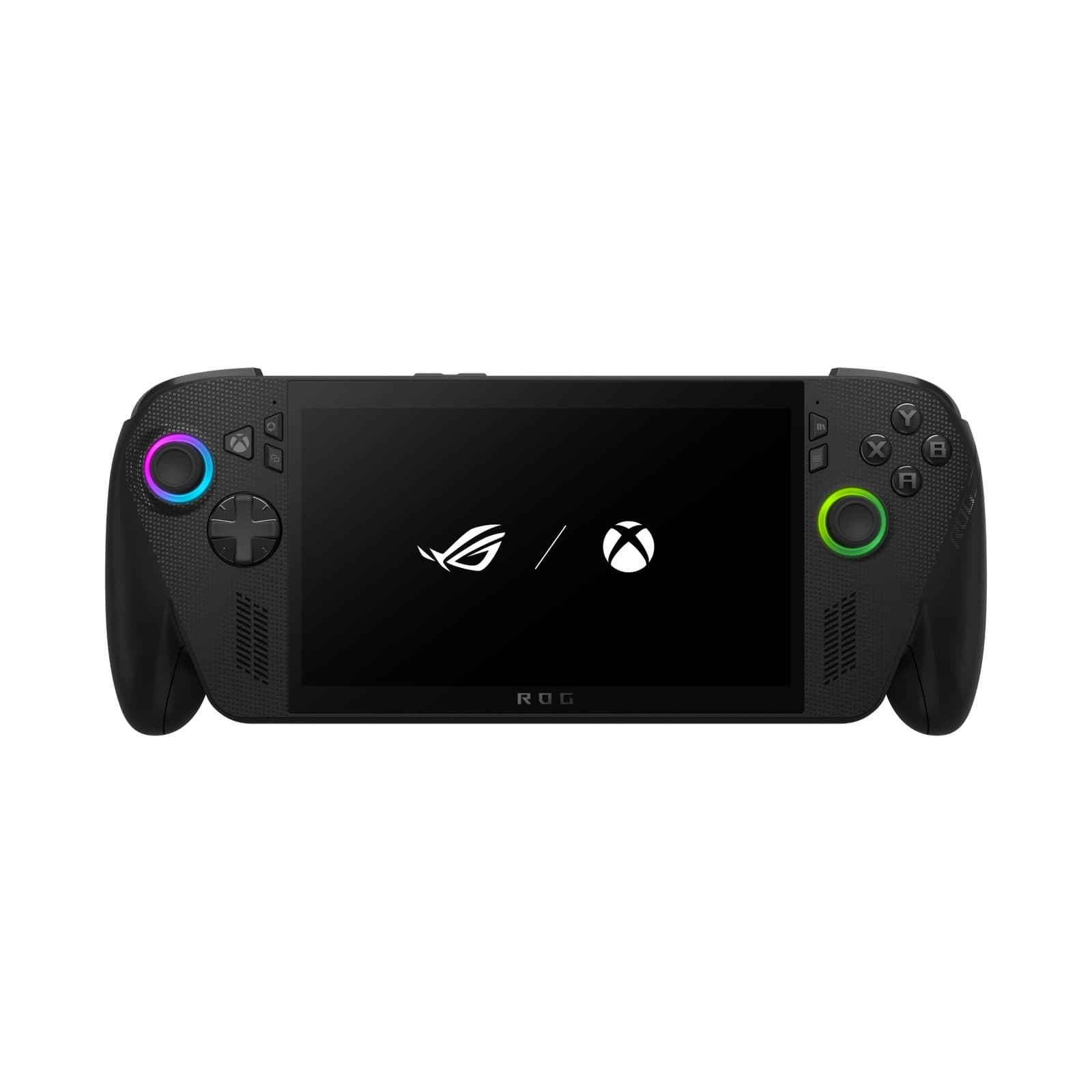
The ROG Xbox Ally X sits at rank 1 on the same list and represents where Asus's line has gone since: a newer Ryzen AI Z2 Extreme chip, a full-screen Xbox interface built to hide the Windows desktop, and native Game Pass integration, all for $999. It's the better buy if raw performance and a console-like feel are worth the premium; the original Ally X is the better buy if $200 in savings matters more than the newest silicon.
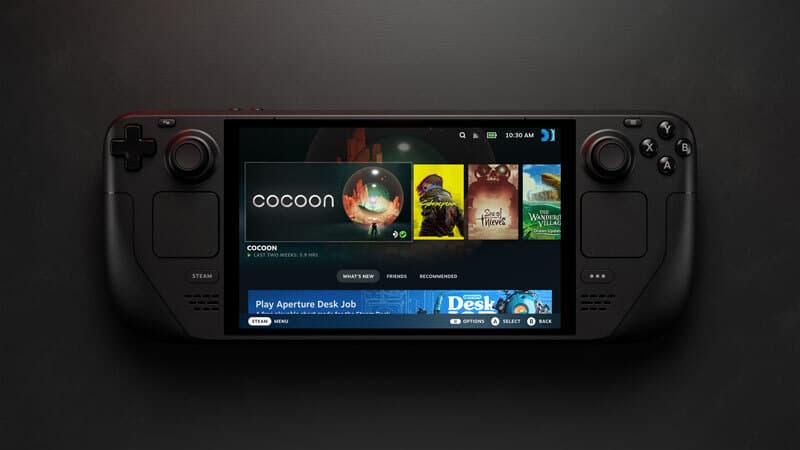
At the budget end of the same list, the Steam Deck (LCD) — now sold refurbished only after Valve discontinued new units — undercuts the Ally X by $400 and trades some raw horsepower and screen quality for SteamOS's tighter, more controller-native software experience. It's worth cross-shopping if your priority is spending less rather than getting the most power for the money.
The Gavler verdict
An 8.7 for a handheld that's quietly become one of the smarter buys in its own product line rather than the flashiest. The ROG Ally X was praised at launch specifically for fixing the original Ally's battery and comfort problems, and neither of those fixes has stopped mattering just because newer, pricier hardware has since arrived. If you want strong Windows-handheld performance and don't need the very latest chip or a console-style shell over the desktop, the Ally X remains an easy recommendation — and at its current price, arguably a better value proposition than it was the day it launched.
Common Questions
Yes, for most buyers who want a Windows handheld without paying flagship prices. It ranks number 5 on Gavler's Best Gaming Handhelds list with an 8.7, and The Verge called it 'the best Windows gaming handheld by a mile' at launch. It's no longer the newest option, but the 80Wh battery and Z1 Extreme performance still hold up well.
The ROG Xbox Ally X, ranked number 1 on the same list, adds a full-screen Xbox interface that replaces the Windows desktop for controller navigation, a newer Ryzen AI Z2 Extreme chip, and a higher $999 price. The original Ally X still runs the standard Windows 11 desktop and costs $799 — a real discount for buyers who don't need the newest silicon or the Xbox UI layer.
Choose the Ally X if you want stronger raw performance, a higher native resolution, and access to the full Windows software library, including launchers SteamOS doesn't officially support. Choose a Steam Deck if you prioritize a more controller-friendly, boot-to-library operating system and don't mind trading some horsepower for that polish.
Where to Buy.
Prices checked regularly
90-day price history
Price History
Steady at $799 for the entire 90-day tracking window — no increases, no discounts, across 91 tracked days.
Tracked daily across retailers. Vote Want itabove and we’ll alert you the moment the price drops.
Some links are affiliate links — Gavler may earn a commission. This never affects rankings or scores. Learn more.
Precision Engineering
7-Inch FHD 120Hz
The 7-inch 1080p IPS touchscreen runs at a 120Hz refresh rate with AMD FreeSync Premium and reaches 500 nits brightness.
80Wh Battery
An 80Wh battery, double the capacity of the original ROG Ally, extends play sessions away from a wall outlet.
Z1 Extreme, 24GB
The AMD Ryzen Z1 Extreme APU pairs with 24GB of LPDDR5X-7500 memory and a 1TB M.2 2280 SSD for storage.
Technical Specifications
The Scoreboard
Lauded at launch for fixing the original Ally's battery and ergonomics; strong value in 2026.
Cast Your Vote
Do you think Asus ROG Ally X deserves the #5 spot in Best Gaming Handhelds?
Global Critique
“Asus ROG Ally X review: the best Windows gaming handheld by a mile.”
More from Best Gaming Handhelds.
See how other top picks compare in this category.
SteamOS, Windows, or a Nintendo Hybrid?
A teraflop hangtag is the wrong first question. SteamOS, Windows Game Pass, or Nintendo first-party is the library. Then shop Gavler's live community ranking.
The Memory Shortage Broke Handheld Pricing — Here's How to Buy One Anyway
A 2TB Legion Go 2 now runs $2,849. The AI memory shortage wrecked handheld pricing — here's how to buy a great one in 2026 without overpaying.
The Best Gaming Handhelds in 2026: A Price Hike Just Reshuffled the Whole Field
Steam Deck OLED, ROG Xbox Ally X, Switch 2, Legion Go 2. Gavler ranks the best gaming handhelds of 2026 — and a May price hike just reshuffled the value math.