Smith Level MIPS.
The Level delivers Smith's Koroyd impact technology and MIPS rotational layer at $100 less than the Vantage 2 MIPS, trading the full-Koroyd wrap and AirEvac 2 venting for a simpler in-mold shell and fewer vents. The resort-skier value-flagship.
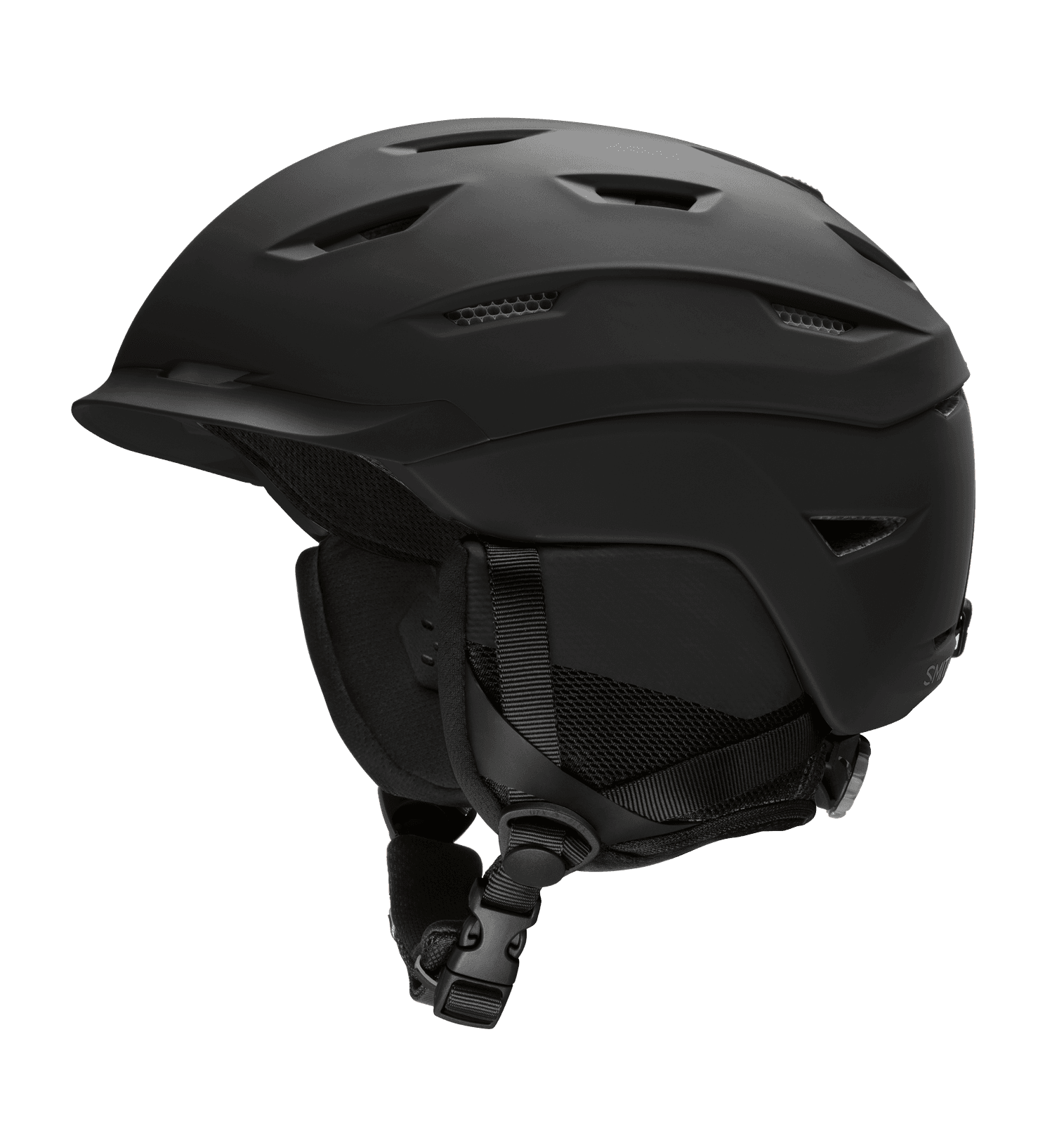
The Verdict.
Gavler Meta-Score
“Buy this if you ski mostly resort lifts on cold powder days and want Smith's Koroyd platform at a sub-$220 price. The Level gives you 85 percent of the Vantage 2 protection rating for 70 percent of the spend, and the May-to-July closeout window regularly drops it to $180. Pass on it if you ski spring corn or warm-weather days — the non-adjustable venting will run warm and the Vantage 2's AirEvac 2 system is worth the upcharge for those use cases.”
The Gavler Verdict
The Gavler Review.
Smith Level MIPS Review: The Vantage 2's Protection at $100 Less
The Smith Level MIPS ranks number 6 on Gavler's Best Ski Helmets list with an 8.9, and it exists to answer a specific question: how much of Smith's flagship protection platform can you get without paying flagship price? Switchback Travel's answer is enthusiastic — it's "a favorite resort-oriented model on the market due to its unparalleled comfort paired with the double-team defense of MIPS and Koroyd." Gavler's own verdict quantifies the trade directly: "The Level gives you 85 percent of the Vantage 2 protection rating for 70 percent of the spend." Buy it if you ski mostly resort lifts in cold conditions. Skip it if you ski warm-weather days or spring corn regularly, in which case the Smith Vantage 2 MIPS at rank 1 is worth the extra spend.
What it is
The Level is Smith's resort-skier value-flagship — built to carry the same core technology as the brand's $320 Vantage 2 MIPS at a genuinely lower $220 price point, without pretending the two helmets are identical. The construction trade is real but narrower than the price gap suggests: where the Vantage 2 wraps Koroyd — Smith's honeycomb-tube impact-attenuation material — around the entire shell and adds a 40-vent adjustable AirEvac 2 system, the Level uses Koroyd inside its side vents only, paired with a simpler in-mold polycarbonate shell and roughly 14 fixed vents.
Critically, the MIPS rotational-protection layer is the same system found in the Vantage 2 — the part of the helmet responsible for redirecting oblique-impact forces in angled falls, which is the dominant injury mechanism in ski crashes, isn't downgraded for the cheaper model. What you're actually paying less for is shell coverage and venting adjustability, not the core rotational-safety technology. At roughly 17 oz in a size medium, it's also close to the Vantage 2's weight class despite the simpler construction.
In use
The independent read on the Level is consistently framed around one central trade-off: comfort and value against venting flexibility. Switchback Travel's fuller assessment lays it out directly — "The $45-cheaper Smith Level MIPS is cushier, warmer, and just as well-built compared to more expensive alternatives." That "warmer" is doing double duty in that sentence: it's a comfort compliment for cold-weather skiing and, implicitly, the honest description of what happens on a warm day when the vents can't be opened further.
Better Trail's review reinforces the same picture from a slightly different angle: "The Level is warm, nicely cushioned and extremely comfortable, protective thanks to safety features like Koroyd and MIPS along with great coverage, and constructed from durable materials." That's a genuinely strong endorsement of the core experience — protection, comfort, and coverage all rated positively — with "warm" appearing again as the recurring, honest descriptor rather than a euphemism reviewers are dancing around.
The seasonal pricing detail is worth knowing before you shop: per Gavler's own product data, the Level regularly drops to about $180 during the May-to-July end-of-season closeout window, which meaningfully changes the value calculation for anyone willing to buy off-season for the following winter.
Strengths
- Koroyd impact-attenuation technology in the vent zones, the same honeycomb-tube energy-absorption material used across Smith's flagship line, at a meaningfully lower price.
- The same MIPS rotational-protection system as the $320 Vantage 2 — the core safety technology isn't downgraded to hit this price point.
- Consistently praised comfort and cushioning across multiple independent reviewers, not just a single source.
- A simpler in-mold polycarbonate shell keeps weight competitive with pricier hybrid-shell helmets.
- Reliable seasonal discounting to around $180 in the late-spring closeout window for buyers who can plan ahead.
The trade-offs — who should skip it
- You ski warm-weather days or spring corn regularly. The roughly 14 fixed vents can't be adjusted, and multiple reviewers independently describe the helmet as running warm — a real limitation outside cold-climate resort skiing.
- You want the most refined venting system available. The Smith Vantage 2 MIPS at rank 1 offers 40 adjustable vents through its AirEvac 2 system, a genuine step up in temperature control for buyers who ski varied conditions.
- You want the full-Koroyd shell coverage. The Level's Koroyd is limited to the vent zones rather than wrapping the entire shell — a real, if narrower-than-the-price-gap-suggests, protection difference from the flagship.
How it compares
Ranked five spots below its own flagship sibling, the Smith Vantage 2 MIPS, the Level is best understood as that helmet's value-tier little brother rather than as a fully separate product. The two share the MIPS system and the Koroyd technology story; they diverge on shell coverage, venting adjustability, and $100 of price. Against the Salomon MTN Lab at rank 9, the comparison is really about use case rather than value — the MTN Lab is a dedicated backcountry-touring helmet at 14.1 oz with no MIPS at all, built around always-open vents for uphill heat dump, while the Level is a resort helmet built around cold-day insulation and MIPS rotational protection. A tourer and a resort skier are shopping different problems even when their helmets sit on the same list.
The Gavler verdict
An 8.9, with a 90 expert consensus and an 87 community rating that reflect strong, specific loyalty from cold-weather resort skiers. The scoreNote is candid about the split: strong cold-weather-skier loyalty, with Switchback Travel rating it the top resort-oriented value, offset by warmer-climate reviewers flagging the non-adjustable venting. That's the honest way to shop this helmet. If your skiing is mostly cold-day resort laps — the Rockies, the Sierras, the Northeast — the Level delivers Smith's real protection technology at a genuine discount, and the May-to-July closeout window makes that discount even better. If your season includes a lot of warm or spring days, the venting limitation is worth paying up for the Vantage 2 to avoid.
Common Questions
Yes, for cold-weather resort skiers who want Smith's Koroyd impact platform without paying flagship prices. It ranks sixth on Gavler's Best Ski Helmets list with an 8.9. Switchback Travel called it 'a favorite resort-oriented model on the market due to its unparalleled comfort paired with the double-team defense of MIPS and Koroyd.'
Buy the Level at $220 if you ski mostly resort lifts on cold days and want Smith's protection platform at a lower price. Buy the Vantage 2 at $320 if you need adjustable venting for warm-weather or spring skiing — the Level's roughly 14 vents are fixed and non-adjustable, while the Vantage 2's AirEvac 2 system has 40 adjustable vents.
Yes. Per Gavler's own product data, it regularly drops to around $180 during the May-to-July end-of-season closeout window, which makes timing the purchase worthwhile if you don't need the helmet immediately.
It can, by design. The venting is fixed rather than adjustable, which is the right trade for cold-climate skiers in the Rockies, Sierras, or Northeast, but the wrong one for warm-day or spring-corn skiing, where the adjustable-vent Vantage 2 performs better.
Where to Buy.
Prices checked regularly
90-day price history
Price History
Steady at $220 for the entire 90-day tracking window — no increases, no discounts, across 91 tracked days.
Tracked daily across retailers. Vote Want itabove and we’ll alert you the moment the price drops.
Some links are affiliate links — Gavler may earn a commission. This never affects rankings or scores. Learn more.
Precision Engineering
Koroyd Vent-Zone Impact Material
Honeycomb-tube impact-attenuation material lines the side vents, crumpling on impact to absorb energy while maintaining airflow through the straw-like openings.
MIPS Rotational Liner
Same MIPS system found in the Smith Vantage 2 MIPS — redirects rotational impact forces in oblique falls, the dominant injury vector in ski crashes.
In-Mold Polycarbonate Shell
Single-piece molded shell construction keeps weight competitive and durability high at a price tier well below the hybrid-shell Vantage 2.
Technical Specifications
The Scoreboard
8.9 reflects strong cold-weather-skier loyalty (Switchback Travel rates it the top resort-oriented value) offset by warmer-climate reviewers flagging the non-adjustable venting.
Cast Your Vote
Do you think Smith Level MIPS deserves the #6 spot in Best Ski Helmets?
Global Critique
“A favorite resort-oriented model on the market due to its unparalleled comfort paired with the double-team defense of MIPS and Koroyd.”
“The Level is warm, nicely cushioned and extremely comfortable, protective thanks to safety features like Koroyd and MIPS along with great coverage, and constructed from durable materials.”
“The $45-cheaper Smith Level MIPS is cushier, warmer, and just as well-built compared to more expensive alternatives.”
More from Best Ski Helmets.
See how other top picks compare in this category.
Resort Koroyd, Touring Grams, or a Race Shell?
Vent hangtags are the wrong first question. All-mountain Koroyd, touring grams, or a FIS race shell is the lid. Then shop Gavler's live community ranking.
The Best Ski Helmets in 2026, Ranked by the Riders Buying Them Off-Season
Smith, Giro, POC, Sweet Protection. Gavler's community ranks the helmets worth buying — from full-Koroyd flagships to the 14-ounce touring outliers.