Salomon Genesis.
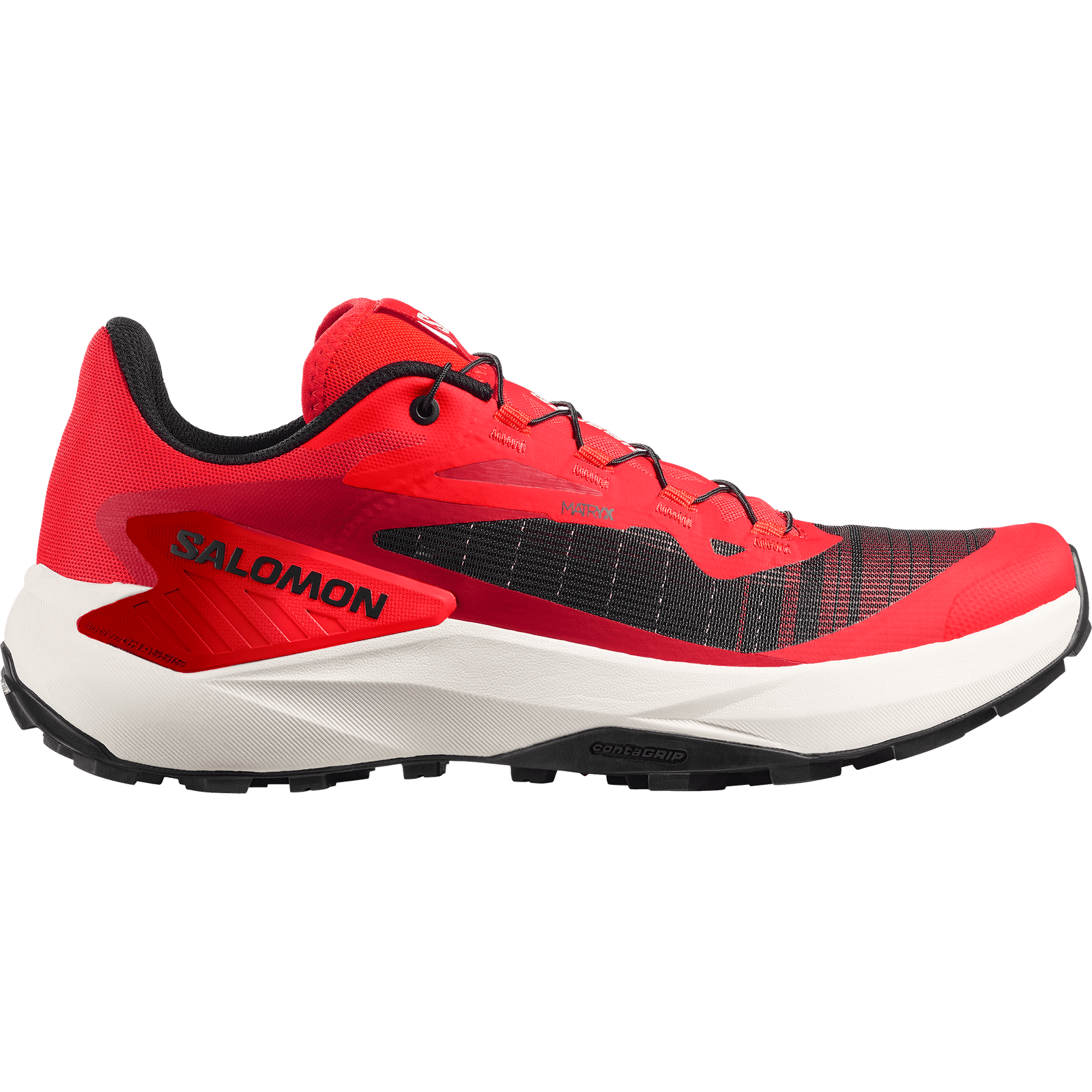
Matryx upper with Contagrip traction and an Active Chassis midsole — Salomon's value play without the cheap-shoe compromises.
The Verdict.
Gavler Meta-Score
“The Genesis isn't the most comfortable trail shoe, the grippiest, or the lightest. But at $150 with premium rubber and a nearly indestructible upper, it's the most rational daily trail shoe in the Salomon lineup. Buy it if you want one shoe that works everywhere and lasts. Skip it if you run ultras on smooth terrain — the firm midsole will punish you past 30 miles.”
The Gavler Verdict
The Gavler Review.
Salomon Genesis Review: The $150 Shoe Courtney Dauwalter Wore to Win UTMB
The Salomon Genesis ranks fourth on Gavler's Best Trail Running Shoes list with an 8.9, and it earns that spot by doing something increasingly rare in trail running: delivering genuine versatility without a premium price tag. At $150, it's built for runners who want one shoe that handles daily training, mixed terrain, and long efforts without specializing narrowly in any of them. RunRepeat's independent lab testing scored it 92 out of 100 — "Superb" — and summed it up this way: "The Salomon Genesis truly stands out as a versatile trail workhorse in our lab, effortlessly managing everything from easy runs to ultra marathons." The trade-off is real, though — the outsole wears faster than the category average, and the shoe lacks the plush cushioning that ultra-distance specialists want for the back half of a 100-miler.
What it is
The Genesis is Salomon's value play, built around the same structural DNA as its higher-tier Sense Ride line minus the premium foam. The Matryx Jacquard upper — a woven high-tenacity synthetic that blends Kevlar-grade fibers into an engineered mesh — is the standout feature. RunRepeat's microscope and smoke tests confirmed what Salomon claims: the upper is genuinely breathable (a 4 out of 5 ventilation score, "surpassing most trail shoes") while remaining tough enough that the reinforced toecap barely showed wear after an abrasion test. Underfoot, the Contagrip MA outsole with 4.5mm chevron-shaped lugs is tuned for versatility rather than any single terrain type, and the Active Chassis midsole — two external TPU stabilizing panels — adds lateral support without stiffening the ride into something maximalist shoes deliver.
At 9.7 ounces (brand-claimed) to 9.9 ounces (RunRepeat's scale weight), the Genesis sits right at the category average, and the 8mm to 9mm drop puts it on the higher end for trail shoes — a deliberate choice that helps runners prone to Achilles or calf strain but won't suit everyone.
In use
The Genesis reads as controlled and stable rather than cushioned or propulsive, and that's consistent across every source we checked. Salomon's Energy Foam — a blend of EVA and Olefin Block Co-Polymers — outperforms plain EVA but falls well short of premium compounds like ZoomX or Lightstrike Pro. RunRepeat's lab measured just 55.6% energy return, slightly below the 56.5% trail-shoe average, and shock absorption at 111 SA against a 124 SA category average — numbers that translate to a firmer, more ground-connected ride than most competitors at this price. That firmness is a feature for technical terrain, where a mushy midsole makes footing less predictable, and a limitation for runners chasing a bouncy, energy-returning stride on smooth fire roads.
Stability is where the Genesis actually over-delivers. The Active Chassis panels and a notably stiff heel counter (4 out of 5 in RunRepeat's testing, versus a 3 average) combine with a wide heel platform to make this a confidence-inspiring shoe for heel strikers navigating off-camber trail. RunRepeat's "who should buy" section is specific about this: "trail runners who heel strike and need a reliable, do-it-all shoe for diverse terrains" and "ultra-distance runners who value a more forgiving ride over the stiffness of carbon-plated options." That second point matters — the Genesis has genuine ultra-distance credibility. RunRepeat's review notes it's the shoe Courtney Dauwalter wore to her UTMB victory, which is a meaningful data point for a $150 shoe going up against $200-plus competitors.
Strengths
The Matryx upper's durability is the headline strength, and it held up in destructive testing. RunRepeat's Dremel abrasion test scored both the toebox and heel padding 4 out of 5 — well above the roughly 3-out-of-5 category average — and the brand's own reviews back this up, with buyers reporting 500-plus miles before the upper shows real wear. Combined with the quick-pull Quicklace system and a fully gusseted tongue that keeps debris out, this is a shoe built to survive brush, rock scrapes, and repeated trail abuse without the upper failing first — a common failure point on cheaper trail shoes. Cold-weather performance is another underrated strength: the midsole only stiffened 13.9% in RunRepeat's cold test, well below the 24% category average, meaning the ride stays consistent in shoulder-season conditions.
The trade-offs — who should skip it
The clearest weakness is outsole durability, and it's a real one, not a nitpick. RunRepeat's standardized abrasion test measured a 1.2mm dent on the outsole rubber, worse than the 0.9mm category average, which tracks with the "outsole wears quickly" complaint that shows up as an explicit con in their review. There's no rock plate either, so the 2.0mm outsole thickness is the only thing standing between your forefoot and sharp rock on technical terrain.
The bigger dealbreaker for some runners is cushioning philosophy. RunRepeat is direct about who should look elsewhere: "The Salomon Genesis doesn't quite meet the mark for heavier forefoot strikers or those who prefer the plush feel of maximalist trail shoes," recommending the ASICS Trabuco Max 3 or Hoka Mafate Speed 4 instead. Runners chasing a propulsive, energy-returning ride should also look elsewhere — RunRepeat points toward carbon-plated options like the Nike Ultrafly or Hoka Tecton X 2 for that feel, which the EVA-based Genesis simply isn't built to deliver. One more genuine miss: no reflective elements anywhere on the shoe, a real gap for a design associated with UTMB's evening starts and nighttime racing segments.
How it compares
On its own list, the Brooks Cascadia 19 at rank five is the closest philosophical match — another do-everything trail shoe built for beginners through 50Ks rather than technical specialists — but it leans softer and roomier where the Genesis leans firm and locked-down, and it costs more. For runners willing to spend up for outright performance, the Hoka Speedgoat 7 at rank one delivers more cushioning and a plusher ride across both short technical runs and long ultras, at $15 more and with less of the Genesis's ground-feel stability. The honest framing: if your budget caps at $150 and you want one shoe for mixed terrain and long miles, the Genesis is hard to beat on value. If you can spend more and want a softer, more forgiving ride, the Cascadia or Speedgoat are the upgrades.
The Gavler verdict
The Genesis isn't the most cushioned, grippiest, or most propulsive trail shoe on the market, and it doesn't try to be. What it delivers instead is a genuinely durable upper, a stable, controlled ride for heel strikers, and ultra-distance credibility at a price that undercuts nearly everything comparable by $50 or more. The outsole wear and thin protection are legitimate compromises for anyone running consistently technical, rocky terrain — but for the versatile do-it-all trail shoe that most runners actually need, this is the smart buy on Gavler's list.
Common Questions
Yes, for the right runner. It ranks fourth on Gavler's Best Trail Running Shoes list with an 8.9, and independent lab testing from RunRepeat scored it 92 out of 100 — 'Superb' — praising the MATRYX upper and stable ride while noting the outsole wears faster than average. At $150, it undercuts most premium trail shoes by $50 to $70 while covering the same range of terrain.
It's built for it — this is the shoe Courtney Dauwalter wore to win UTMB, according to RunRepeat's testing writeup. The firm, balanced midsole and secure heel hold suit long days on mixed terrain well. The trade-off is comfort past about 30 miles, where the firmer ride and below-average energy return (55.6% in RunRepeat's lab testing, versus a 56.5% category average) become more noticeable than in softer, more cushioned shoes.
Yes — RunRepeat's owner survey and lab measurements both point to true-to-size fit, with a medium-width toebox in line with the category average. One fit note worth flagging: RunRepeat measured the toebox height at just 23.1mm, below the 26.9mm average, which can matter for runners prone to black toenails on long descents.
Where to Buy.
Prices checked regularly
90-day price history
Price History
Steady at $150 for the entire 90-day tracking window — no increases, no discounts, across 91 tracked days.
Tracked daily across retailers. Vote Want itabove and we’ll alert you the moment the price drops.
Some links are affiliate links — Gavler may earn a commission. This never affects rankings or scores. Learn more.
Precision Engineering
Matryx Jacquard Upper
Woven high-tenacity yarn resists abrasion from brush and rock that would blow out a lighter mesh in weeks — typical upper lifespan is 500+ miles.
Contagrip MA Outsole, 4.5mm Lugs
Salomon's all-terrain rubber compound. Grips wet clay, dry rock, and loose gravel with equal confidence. Not as sticky on wet rock as Megagrip, but more durable on hardpack.
Active Chassis Midsole
Lateral stabilizing frame around the heel and midfoot. Reduces roll on off-camber terrain without adding weight or killing cushion.
Technical Specifications
The Scoreboard
Expert scores favor the versatility and durability-per-dollar — reviewers consistently cite it as a value benchmark. Community scores are slightly lower, mainly reflecting the firm ride on long efforts beyond marathon distance.
Cast Your Vote
Do you think Salomon Genesis deserves the #4 spot in Best Trail Running Shoes?
Global Critique
“The Genesis is the do-everything trail shoe that doesn't break the bank — it punches well above its $150 price.”
“Contagrip traction is confidence-inspiring across the terrain range most runners actually encounter. A genuine value benchmark.”
“At $50 less than the Speedgoat, the Genesis delivers 90% of the performance for runners who don't need specialist cushion.”
“Durable, reliable, and remarkably versatile. The smart money pick in Salomon's 2026 lineup.”
More from Best Trail Running Shoes.
See how other top picks compare in this category.
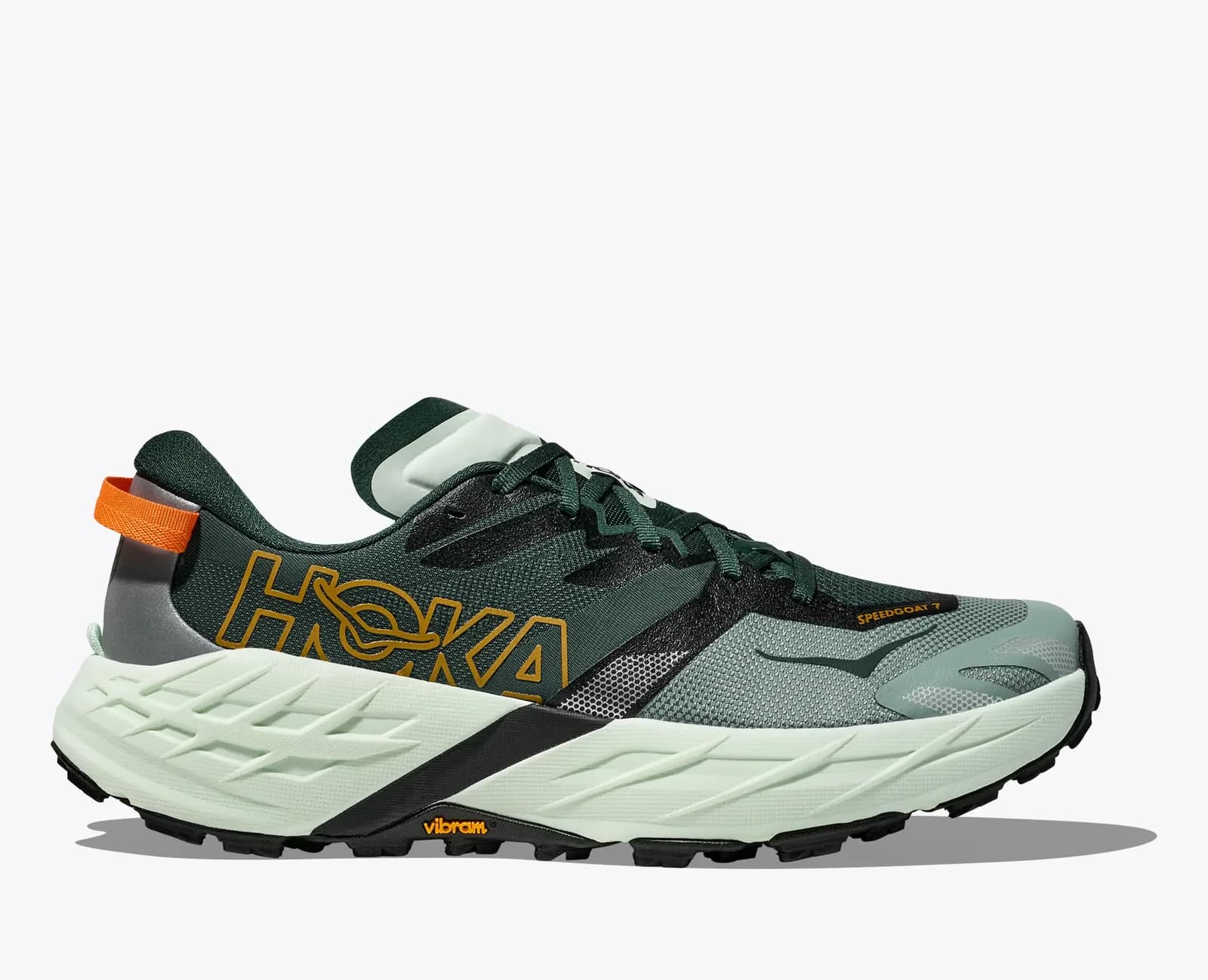
The Trail Running Shoe Buying Guide 2026: How to Pick the Right Shoe for Your Trail, Your Distance, and Your Feet
How to choose a trail running shoe in 2026: fit, drop, stack height, lugs, rock plates, and when to rotate. The complete shopping framework.
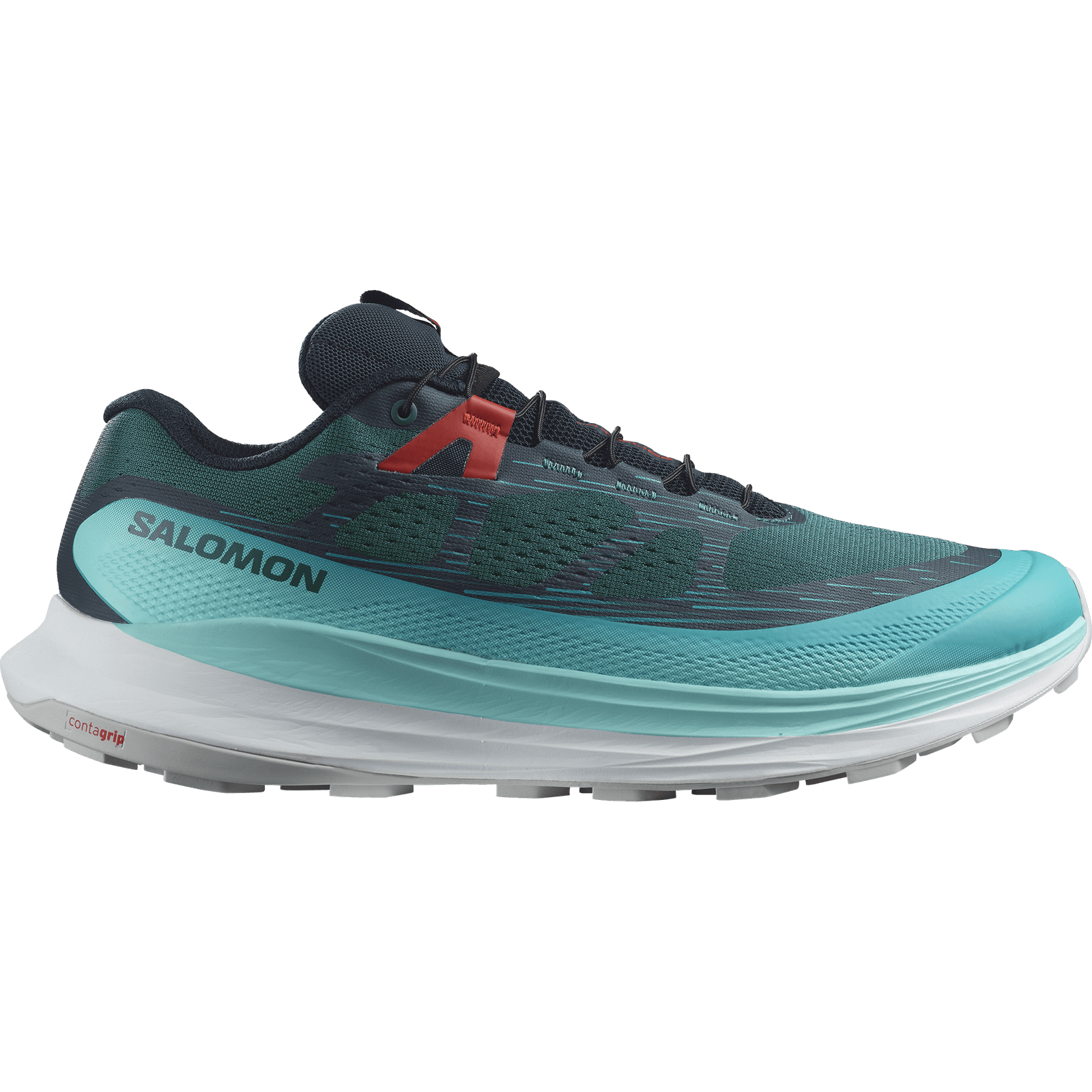
Hoka Speedgoat 7 vs Salomon Ultra Glide 2: The Trail Running Shoe That Fits Your Miles
The two trail-running shoes every ultra runner cross-shops. Here's how the Hoka Speedgoat 7 and Salomon Ultra Glide 2 actually compare.
The Best Trail Running Shoes in 2026, Ranked by People Who Actually Run in Them
Hoka, Salomon, La Sportiva, Brooks, Nnormal. Gavler's runners rank the trail shoes worth racing — daily trainers, ultras, and technical mountains.