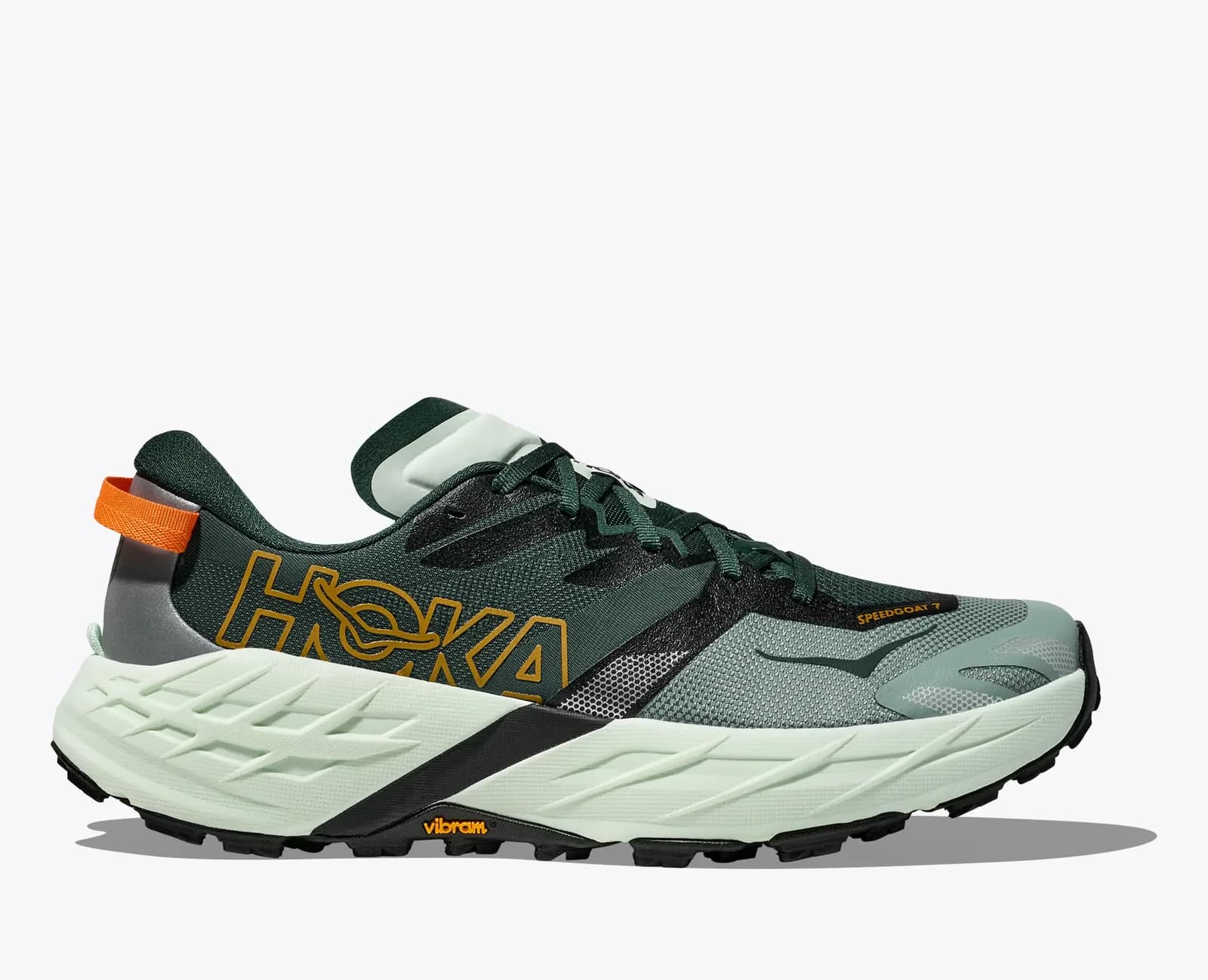
Hoka Speedgoat 7.
Speedgoat 7 swaps the XM6's stiff midsole for supercritical EVA foam — lighter, more responsive, better at absorbing punishment.
The Verdict.
Gavler Meta-Score
“The comeback trail runners were waiting for. iRunFar says 'Hoka got this line back on track, delivering good cushioning, good responsiveness, excellent grip, and a secure fit that makes technical terrain feel much more manageable.' Trades the 6's divisive stiffness for a foam that actually responds to your stride. Size up half a size — that's not a suggestion, it's a requirement.”
The Gavler Verdict
The Gavler Review.
Hoka Speedgoat 7 Review: The Trail Shoe Back on Track
The Hoka Speedgoat 7 sits at number one on our Best Trail Running Shoes list with a 9.6, and it gets there by fixing exactly what was wrong with its predecessor. Buy it if you want a trail shoe that handles both technical terrain and long-distance cushioning without the divisive stiffness that turned off runners on the Speedgoat 6. The one non-negotiable is sizing: order half a size up, no exceptions. For runners who live almost entirely on smooth, rolling trail and want an even softer ride, the Salomon Ultra Glide 2 is the honest alternative. For everyone else running real trail — rocks, roots, and all — this is the default.
What it actually is
The Speedgoat 7 is Hoka's course correction after a genuinely divisive prior generation. The new supercritical EVA midsole replaces the Speedgoat 6's criticized stiff compound with something lighter and measurably more responsive — energy return you can feel whether you're running a short technical loop or grinding through mile 40 of an ultra. The 40mm stack height (men's) delivers maximum cushioning without tipping into the wobbly, unstable feel that plagues some max-cushion trail shoes when the foam gets too tall and too soft.
Underfoot, Vibram Megagrip with 5mm lugs handles wet rock, loose gravel, and packed dirt with genuine confidence — this is not a fair-weather outsole. The upper was redesigned too, with improved collar padding that eliminates the tongue-bite complaint that dogged the Speedgoat 6. At 9.3 ounces (men's), it's heavier than minimalist trail shoes but notably light for how much cushioning it's carrying. At $165, it sits in premium trail-shoe territory, priced to match its performance rather than its category average.
In use
The consensus across independent testers is unusually tight for a category where opinions on cushioning and stiffness normally diverge sharply. Tom's Guide didn't hedge: "The Speedgoat 7 is an excellent all-round trail-running shoe that can handle long and short, fast and slow runs alike, while providing reliable support and grip on pretty much any terrain." That range — short and long, fast and slow — is the shoe's real selling point. Most trail shoes specialize; this one covers the spread.
iRunFar's framing is the most useful for anyone who remembers the Speedgoat 6's reputation: "The Speedgoat 7 feels like Hoka got this line back on track, delivering good cushioning, good responsiveness, excellent grip, and a secure fit that makes technical terrain feel much more manageable." That's a direct acknowledgment that Hoka had drifted off course with the 6 and actively corrected it — not just an incremental update, but a shoe built to answer specific, well-documented complaints from the prior generation.
The midsole swap is the mechanical reason for that turnaround. Tom's Guide called it out specifically: "The best model of the shoe I've tested, with an improved midsole foam that offers a more energetic ride without sacrificing stability." That's the balance that's hard to strike in a max-cushion shoe — enough foam to protect your legs on a 50-mile day, but not so much that the platform feels vague or tippy on technical singletrack.
Where it shines
- Supercritical EVA that actually responds. The new midsole compound is the single biggest upgrade over the Speedgoat 6, delivering energy return that's noticeable on both short, fast efforts and multi-hour ultras.
- Vibram Megagrip traction you can trust on variable terrain. 5mm lugs handle wet rock, loose gravel, and packed dirt without hesitation — this is a shoe built for real trail conditions, not groomed paths.
- A redesigned upper that fixes a known problem. The improved collar padding eliminates the tongue-bite issue from the previous generation while providing a more secure, locked-down fit on technical descents.
The trade-offs — who should skip it
This is the best all-around trail shoe on the list, not a shoe without caveats, and the honest reasons to think twice are specific:
- It runs small — plan for that, don't fight it. This isn't a minor sizing quirk; it's the single most repeated note across every review. Order half a size up or you'll be dealing with cramped toes on long descents, when swelling makes the fit even tighter.
- At 9.3 ounces, it's heavier than minimalist options. If you're chasing the lightest possible shoe for short, fast technical runs and don't need max cushioning, something like the Altra Lone Peak trades cushion for weight.
- If your trails are smooth and your runs are long, a softer-riding shoe may suit you better. The Speedgoat 7 is built for versatility across terrain types; if you almost never see technical ground, the Salomon Ultra Glide 2's rockered, max-cushion ride is purpose-built for exactly that.
How it compares
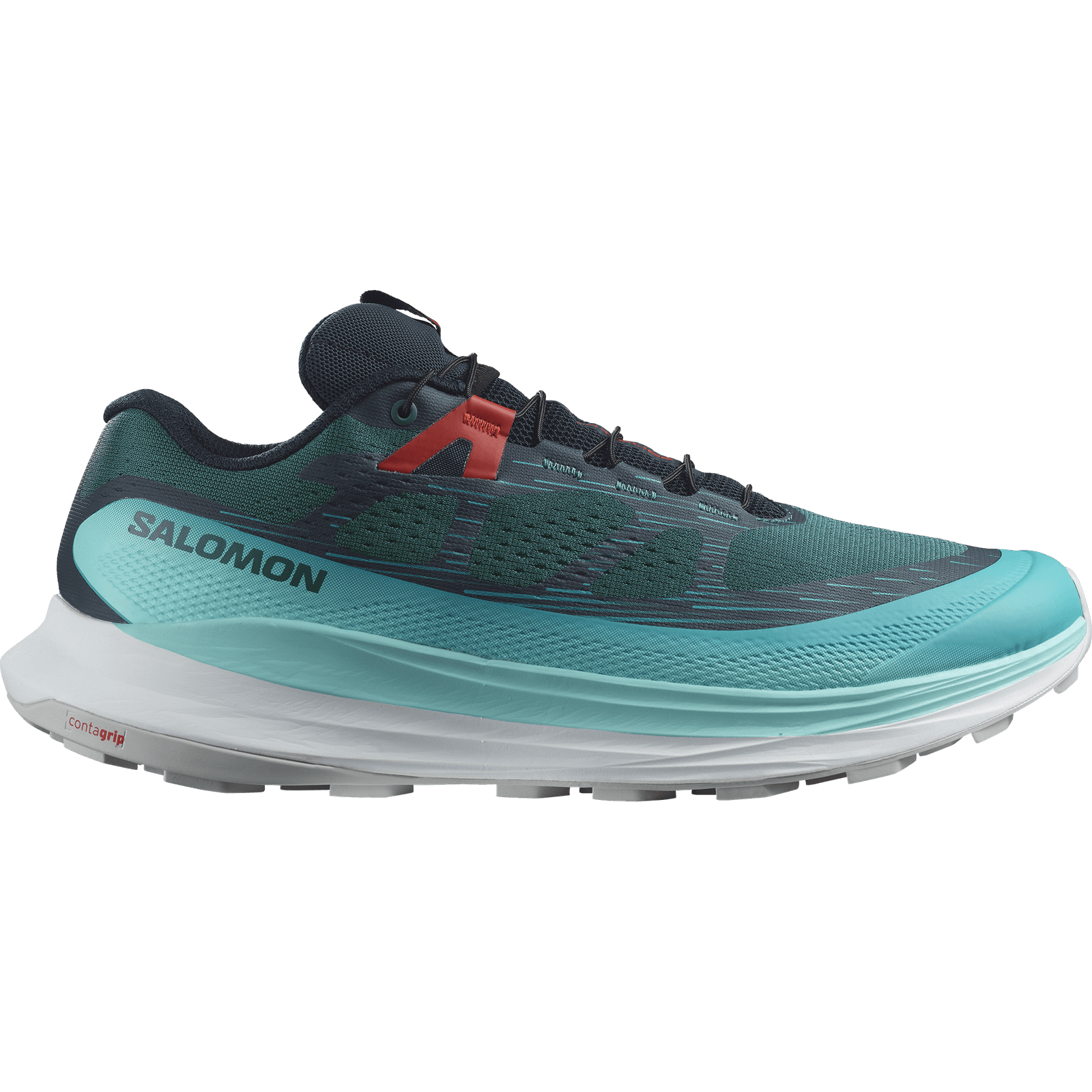
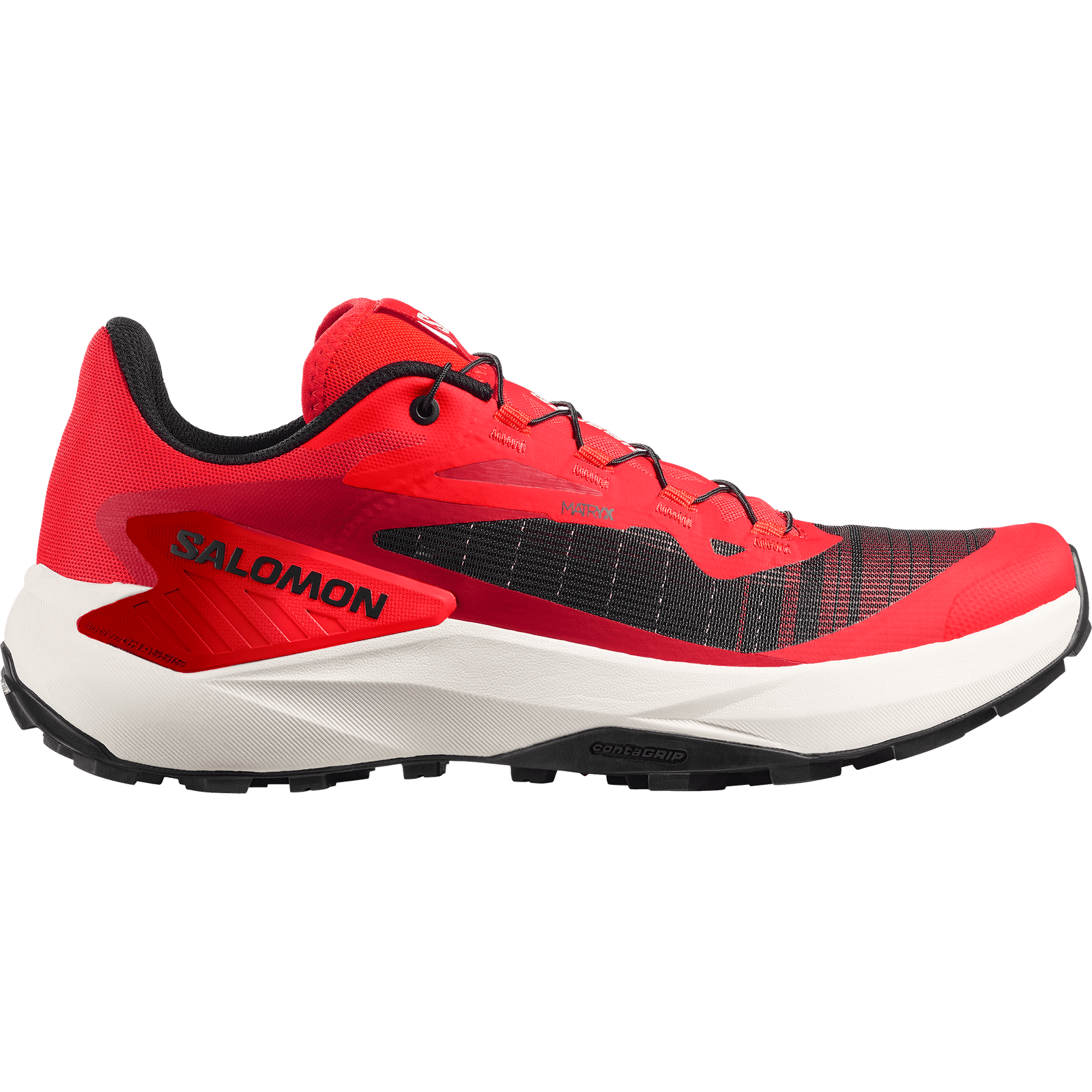
On its own list, the clearest cross-shop is the Salomon Ultra Glide 2 at rank two — a genuinely different philosophy rather than a direct competitor. The Ultra Glide 2 is built for ultra-distance efforts on smooth to moderately technical terrain, with a taller, softer EnergyFoam midsole and a rockered ride that eats up flat and rolling ground; it lacks a rock plate and isn't built for aggressive technical terrain the way the Speedgoat 7 is. For runners who want maximum comfort over long, non-technical rolling singletrack, the ASICS Trabuco Max 5 at rank ten is another smooth-trail specialist worth knowing about, though it explicitly trades technical capability for cushioned comfort in the same way. The Speedgoat 7's advantage over both is that it doesn't force that trade — it handles technical and non-technical terrain credibly in the same shoe.
The Gavler verdict
A 9.6, backed by near-universal agreement that this is the best Speedgoat since the well-regarded 5th generation. The supercritical EVA midsole and redesigned upper directly answer the specific complaints that dogged the Speedgoat 6, and the result is a trail shoe that genuinely covers the full range from short technical runs to 50-mile ultras. Buy it as your default trail shoe — just remember to size up half a size, because that's the one caveat standing between you and the fit this shoe is capable of delivering.
Common Questions
Yes, especially if you skipped the divisive Speedgoat 6. It ranks first on Gavler's Best Trail Running Shoes list with a 9.6, and the new supercritical EVA midsole replaces the 6's stiff, criticized foam with something lighter and more responsive. At $165 it's priced in line with premium trail shoes, and near-universal reviewer consensus calls it the best Speedgoat since the 5.
Yes — this is the single most consistent piece of feedback across every review. The Speedgoat 7 runs about half a size small, and virtually every reviewer recommends sizing up. Order your normal trail-running size plus a half size, especially if you plan to run technical terrain or long distances where your feet swell.
The headline change is the midsole: the 7 replaces the 6's stiffer CMEVA compound with supercritical EVA foam, which is lighter and returns more energy underfoot. The upper was also redesigned with improved collar padding that eliminates the tongue-bite issue reviewers flagged on the 6. iRunFar summarized it as Hoka getting 'this line back on track' after a divisive prior generation.
Both — that versatility is the point. Reviewers specifically praise its performance across short technical runs and 50-mile ultras alike, thanks to the 40mm stack height providing max cushioning without the instability that plagues some max-cushion shoes. If your runs are almost entirely on flat, non-technical fire roads over very long distances, the smoother-riding Salomon Ultra Glide 2 is worth a look too.
Where to Buy.
Prices checked regularly
90-day price history
Price History
Steady at $185 for the entire 90-day tracking window — no increases, no discounts, across 91 tracked days.
Tracked daily across retailers. Vote Want itabove and we’ll alert you the moment the price drops.
Some links are affiliate links — Gavler may earn a commission. This never affects rankings or scores. Learn more.
Precision Engineering
Vibram Megagrip Outsole
5mm multi-directional lugs with angled forefoot pattern for aggressive cornering grip on wet rock, loose gravel, and packed dirt.
Supercritical EVA Midsole
New foam compound is lighter and more responsive than the Speedgoat 6's CMEVA — better energy return without sacrificing the cushioning Speedgoat is known for.
Redesigned Lockdown Upper
Improved collar padding and gusseted tongue eliminate the tongue-bite issue from the Speedgoat 6 while providing a more secure fit on technical descents.
Technical Specifications
The Scoreboard
Tom's Guide calls it 'an excellent all-round trail-running shoe.' iRunFar praises the return to form after the Speedgoat 6. Near-universal consensus that this is the best Speedgoat since the 5. Primary criticism: runs small, size up half a size.
Cast Your Vote
Do you think Hoka Speedgoat 7 deserves the #1 spot in Best Trail Running Shoes?
Global Critique
“The Speedgoat 7 is an excellent all-round trail-running shoe that can handle long and short, fast and slow runs alike, while providing reliable support and grip on pretty much any terrain.”
“The Speedgoat 7 feels like Hoka got this line back on track, delivering good cushioning, good responsiveness, excellent grip, and a secure fit that makes technical terrain feel much more manageable.”
“The best model of the shoe I've tested, with an improved midsole foam that offers a more energetic ride without sacrificing stability.”
More from Best Trail Running Shoes.
See how other top picks compare in this category.
The Trail Running Shoe Buying Guide 2026: How to Pick the Right Shoe for Your Trail, Your Distance, and Your Feet
How to choose a trail running shoe in 2026: fit, drop, stack height, lugs, rock plates, and when to rotate. The complete shopping framework.
Hoka Speedgoat 7 vs Salomon Ultra Glide 2: The Trail Running Shoe That Fits Your Miles
The two trail-running shoes every ultra runner cross-shops. Here's how the Hoka Speedgoat 7 and Salomon Ultra Glide 2 actually compare.
The Best Trail Running Shoes in 2026, Ranked by People Who Actually Run in Them
Hoka, Salomon, La Sportiva, Brooks, Nnormal. Gavler's runners rank the trail shoes worth racing — daily trainers, ultras, and technical mountains.