Wildlife for $2,500 v $4,000: Nikon Edition
Tony & Chelsea Northrup
S-line super-telephoto with VR and weather sealing. Pairs naturally with the Z9 for stadium sports and field wildlife.
Gavler Meta-Score
“Nikon's best native Z super-telephoto zoom: best-in-class build, very strong optics wide open to 400mm, effective 5.5-stop VR, and 0.38x close-focus versatility. The knocks are price and an external-zoom design — Digital Camera World notes a 70-200 f/2.8 S plus a 2x TC costs little more with greater range. Buy it for a weather-sealed Z8/Z9 wildlife lens; skip it if value is the priority.”
The Gavler Verdict
Nikon Z 100-400mm f/4.5-5.6 VR S Review: The Native Reach Lens for Z8 and Z9 Shooters
The Nikon Z 100-400mm f/4.5-5.6 VR S ranks number 7 on Gavler's Best Telephoto Zoom Lenses list with an 8.8, and it's the lens Gavler recommends to the Z8 or Z9 shooter who wants a native, weather-sealed reach zoom and is willing to pay S-line prices for it. Photography Life rated its build quality "best in class," and PetaPixel summed up the whole package bluntly: "a sharp and fast lens with few problems that can't be fixed by firmware updates." The real trade-off isn't optical — it's value. Digital Camera World's sharpest critique is that a Z 70-200mm f/2.8 S plus a 2x teleconverter "isn't much more expensive... and gives greater shooting versatility." At $2,696, this is a purchase you make for the focal range in a single barrel, not because it's the cheapest way to reach 400mm.
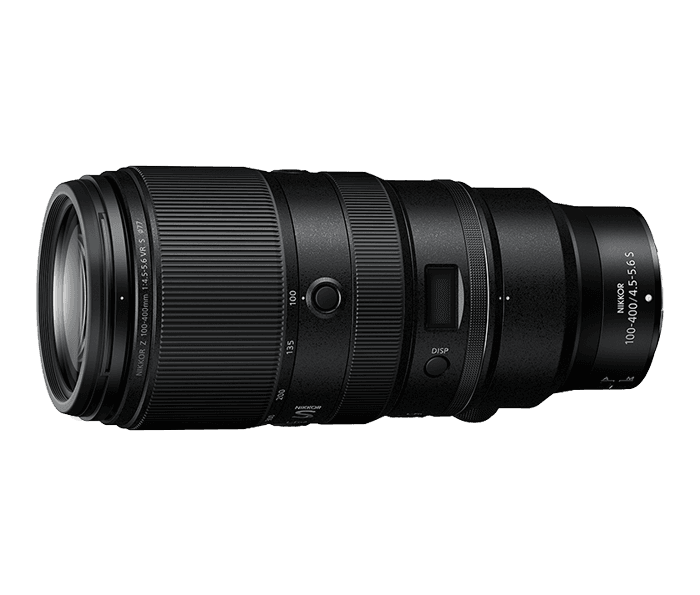
This was the Z-mount system's first native super-telephoto zoom, and Nikon built it to S-line standards rather than cutting corners to hit a price. Inside is a 25-element, 20-group optical formula with six ED and two Super ED elements, paired with Nikon's ARNEO and Nano Crystal coatings to control flare and ghosting. PetaPixel's testing over several weeks found "no color fringing to any noticeable degree" and strong flare control even in harsh backlit conditions. The lens is dust- and drip-sealed with a fluorine-coated front element, and it introduced Nikon's "inner balance technology" — a zoom mechanism engineered specifically to keep the lens's center of gravity stable as it extends, which matters for anyone mounting it on a gimbal.
Stabilization is rated at 5.5 stops with VR and in-body IS combined, and a 0.38x maximum magnification at 400mm lets it double as an improvised close-up lens — genuinely unusual versatility for glass built primarily for wildlife and sports.
PetaPixel's reviewer, testing with a full-grip Z9, found the lens easy to live with in the field: light enough to hold up for extended shooting, and compact enough that "the combination to be easy enough to stow away" horizontally in a pack rather than requiring the vertical storage bigger telephotos demand. The Phoblographer's Hillary Grigonis, shooting the lens with a Z7 II in winter conditions, echoed that portability, noting it's "compact enough to hike with and shoot handheld easily" at 3.2 pounds, and that "even though snow was hanging on in small clumps, the lens was unfazed."
Autofocus is where the two independent reviews diverge slightly, and the difference is instructive. PetaPixel used the Z9's animal-tracking AI to photograph dogs running at the camera "with very few missed shots." The Phoblographer, shooting a Z7 II without that body's more advanced subject detection, had a more mixed experience: "it does seem to take a little longer to lock on to a new subject," and she noted "there were definitely a handful of times that I missed the moment because the lens hadn't yet focused" when action started suddenly. Once locked on, though, both reviewers agreed tracking held up well through bursts. The takeaway: this lens rewards being paired with Nikon's best autofocus bodies — Z8 or Z9 — where its two stepping motors have the AI subject-detection to work with.
Photography Life's assessment is the strongest of the bunch: "an excellent lens with very strong optics across the board... one of the best telephotos for Nikon mirrorless shooters today," with build quality it called "best in class." Digital Camera World's testing backs that up on the practical side, finding the autofocus and 5.5-stop VR delivered "an excellent hit rate in demanding shooting scenarios" for action and wildlife work.
Image quality holds up under scrutiny at both ends of the zoom range. The Phoblographer described it as sharp enough that "when you zoom in to 100 percent, you can see the texture on a bird's feathers," with solid detail retained even toward the frame edges. Color rendering earned praise too — "rich, deep tones" without the green cast Grigonis said some other Nikon lenses show. And the close-focus versatility is a genuine bonus: 0.38x magnification at 400mm turns a wildlife zoom into something that can also shoot tight detail and quasi-macro work, a combination few super-telephotos offer.
The most pointed criticism doesn't come from a flaw in the glass — it comes from the value math. Digital Camera World's comparison is specific: "buying a Z 70-200mm f/2.8 VR S trinity zoom plus a Z 2x tele-converter isn't much more expensive than buying the Z 100-400mm on its own, and gives greater shooting versatility." That's a real consideration if you already own or are considering the 70-200, since the combination adds a constant f/2.8 aperture and wide-angle-to-portrait flexibility this lens doesn't have.
PetaPixel's testing also surfaced several real ergonomic quibbles worth knowing before buying: the lens lacks a VR mode switch, so changing between Normal and Sport stabilization modes requires digging into a camera menu rather than flipping a physical control — "it's so over the top to change something of this much importance." The focus limiter switch offers only Full or three-meters-to-infinity, with no option for close subjects. And the lens hood's release button is, in PetaPixel's words, "really hard to find and press even when you know what you're looking for." None of these are dealbreakers, but they're the kind of friction that shows up on a long shoot day.
The Phoblographer's review adds one more consideration for wildlife shooters specifically: without a body offering bird-eye AF, tracking small, fast subjects is harder — "I was also sorely missing bird eye AF, so this lens is going to be best paired with a body equipped with the feature." That's a Z9/Z8-and-newer-firmware consideration more than a lens flaw, but it affects who should buy this. Skip it if you're on an older Z body without advanced subject detection, if the 70-200mm-plus-teleconverter path already covers your needs, or if $2,696 is simply more than your telephoto budget — Sony and Canon's equivalents run close behind on price and reach.
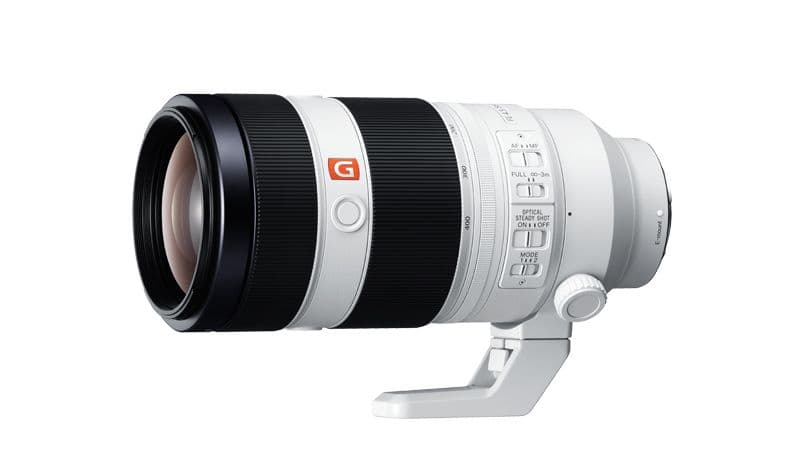
The most direct rival is the Sony FE 100-400mm f/4.5-5.6 GM OSS, which PetaPixel itself flagged as "around $200 less" than the Nikon. Dustin Abbott rated its autofocus "pretty close to perfect," and at 1,395 grams it's noticeably lighter than the Nikon's 1,435 grams with collar — though it's also, in Abbott's words, "easily the most expensive lens with this focal range" on Sony, so the price gap between the two systems' flagship 100-400s is smaller than it first appears.
For Nikon shooters weighing reach against aperture, the alternative worth knowing about on a different mount is the Sony FE 200-600mm f/5.6-6.3 G OSS — a true 600mm reach for $1,998, nearly $700 less than the Nikon, with a non-extending internal zoom Photography Life measured as having "exceptionally high" AF accuracy. It's heavier at 2,115 grams and its 600mm end is, per Photography Life, a touch softer than its shorter focal lengths, but it illustrates the same trade-off Digital Camera World raised about the Nikon: more affordable reach exists if a single native 100-400mm barrel isn't the priority.
The Nikon Z 100-400mm f/4.5-5.6 VR S earns its place as Nikon's best native Z super-telephoto zoom through measured strengths, not marketing: best-in-class build per Photography Life, strong optics across the zoom range, effective 5.5-stop stabilization, and unusual close-focus versatility at 0.38x. PetaPixel's conclusion — "few problems that can't be fixed by firmware updates" — is a fair summary of the ergonomic quibbles (the missing VR switch, the limited focus limiter, the fiddly hood release) that don't touch image quality. The real decision point is value: Digital Camera World's math on the 70-200mm-plus-teleconverter alternative is worth taking seriously before you spend $2,696. But for the Z8 or Z9 shooter who wants one weather-sealed, native zoom that does wildlife, sports, and close-up work without an adapter in the chain, this is the lens Gavler recommends.
If you shoot a weather-sealed Z8 or Z9 body for wildlife or sports, yes. Photography Life called it 'an excellent lens with very strong optics across the board... one of the best telephotos for Nikon mirrorless shooters today,' and PetaPixel's review concluded it's 'a sharp and fast lens with few problems that can't be fixed by firmware updates.' At $2,696 it's a considered purchase, not an impulse buy, but the optics and build back up the price.
Reviewers are split on speed of initial acquisition. The Phoblographer found it 'good, but not great,' noting 'it does seem to take a little longer to lock on a new subject,' though tracking held up well once locked. PetaPixel had a smoother experience, using animal tracking on the Z9 to photograph pets running toward the camera 'with very few missed shots' — the gap likely comes down to camera body, since the Z9's subject-detection AI outperforms the Z7 II used in The Phoblographer's test.
Value. Digital Camera World points out that 'buying a Z 70-200mm f/2.8 VR S trinity zoom plus a Z 2x tele-converter isn't much more expensive than buying the Z 100-400mm on its own, and gives greater shooting versatility.' If you don't need this exact focal range in one barrel, that combination — or an F-mount telephoto on the FTZ adapter — reaches further for close to the same money.
Prices checked regularly
90-day price history
Steady at $2,696 for the entire 90-day tracking window — no increases, no discounts, across 91 tracked days.
Tracked daily across retailers. Vote Want itabove and we’ll alert you the moment the price drops.
Some links are affiliate links — Gavler may earn a commission. This never affects rankings or scores. Learn more.
Photography Life rated the build "best in class" — fully weather-sealed with a fluorine-coated front element, using a 25-element/20-group design (6 ED + 2 Super ED).
Nikon-rated 5.5 stops of stabilization (VR plus IBIS) that Digital Camera World found delivered "an excellent hit rate in demanding shooting scenarios" for action and wildlife.
A 0.75m minimum focus at 100mm and 0.38x (1:2.6) maximum magnification let it double as a close-up lens — unusually versatile for a super-telephoto.
Expert 90 and community 89 land within a point: reviewers and owners agree the optics and build are class-leading, and both dock it the same modest amount for the high price and the external-zoom design that cheaper reach paths (70-200 + TC, or F-mount on FTZ) undercut on value.
Do you think Nikon Z 100-400mm f/4.5-5.6 VR S deserves the #7 spot in Best Telephoto Zoom Lenses?
“the Nikon Z 100-400mm f/4.5-5.6 S is an excellent lens with very strong optics across the board. Few lenses have such a useful combination of build quality, image quality, and focal length, making this lens one of the best telephotos for Nikon mirrorless shooters today.”
“All in all, the build quality of the Nikon Z 100-400mm f/4.5-5.6 S is best in class. I still wish it had been an internally zooming lens like the Nikon Z 70-200mm f/2.8 VR S, but I admit that the external zoom hasn't caused any issues in my extensive field testing.”
“The Z 100-400mm performs superbly well in this respect, while sharpness in practical terms is boosted by the highly effective VR system. The net result is that you can expect an excellent hit rate in demanding shooting scenarios.”
“buying a Z 70-200mm f/2.8 VR S 'trinity' zoom plus a Z 2x tele-converter isn't much more expensive than buying the Z 100-400mm on its own, and gives greater shooting versatility.”
Watch
Hand-picked from creators we trust — playable inline.
Wildlife for $2,500 v $4,000: Nikon Edition
See how other top picks compare in this category.
A 70-200 hangtag is the wrong first question. Events at f/2.8, or wildlife at 500–600mm, is the reach you work. Then shop Gavler's live ranking.
Samyang's AF 60-180mm f/2.8 FE gives Sony a constant-aperture telephoto for about $1,000 and 730g — a third the price of the 70-200mm GM atop our list.