Sony RX10 V Review: The 24-600mm Camera That Does EVERYTHING
DPReview TV
Internal zoom, weather sealing, and 600mm of reach for under $2K. The overwhelming choice for E-mount birders.
Gavler Meta-Score
“The E-mount birding default: a true 600mm (1,200mm with the 2x TC) in a weather-sealed, sub-$2,000 body whose non-extending internal zoom stays gimbal-balanced and dust-resistant. The trade-offs are its 2,115g heft and 600mm sharpness that's very good rather than elite. Buy it for affordable reach on a monopod; choose the 100-400 GM if portability matters more than the extra length.”
The Gavler Verdict
Sony FE 200-600mm f/5.6-6.3 G OSS Review: 600mm Reach Without the 600mm Price
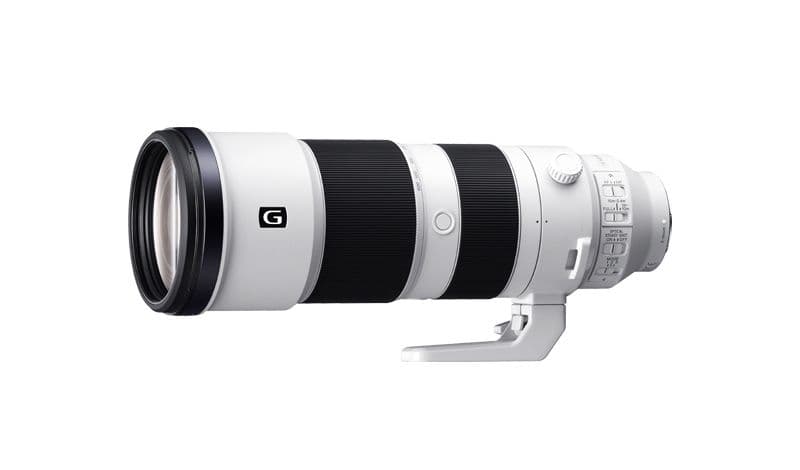
The Sony FE 200-600mm f/5.6-6.3 G OSS ranks sixth on Gavler's Best Telephoto Zoom Lenses list with an 8.9, and it holds that spot because nothing else on E-mount reaches 600mm this affordably. Amateur Photographer's Michael Topham, after a two-week field test at a UK nature reserve, called it a lens Sony "pulled it out the bag" with — strong, consistent image quality, fast and quiet autofocus, and pricing that "represents great bang for your buck." Buy it if you want serious reach on a monopod without a five-figure price tag. The honest trade-off is a slow variable aperture that asks a lot from your camera's sensor once the light drops.
The 200-600 G turned E-mount into a serious wildlife system almost by itself. It reaches a genuine 600mm — 840mm or 1,200mm with Sony's 1.4x and 2x teleconverters — in a weather-sealed body that costs under $2,000, a combination nothing else on the mount matches. The feature owners rave about most is the internal, non-extending zoom: the barrel length stays fixed as you zoom, which keeps the lens gimbal-balanced and considerably more dust-resistant than telescoping rivals. Topham noted this directly in his field test: unlike Sony's own FE 100-400mm GM, which extends as you zoom, "the distance between the front element and subject doesn't change when zooming," which also keeps the lens balanced on a monopod at any focal length.
Autofocus is driven by a linear Direct Drive SSM motor, and Photography Life measured its accuracy as "exceptionally high even in a lab environment." Topham's real-world testing backed that up: "I couldn't fault how fast and silently the lens acquired focus," even tracking small, erratic birds in flight using AF-C Zone mode.
The lens's honest limitation shows up the moment the light gets difficult. Its variable aperture runs f/5.6 between 200-300mm and drops to f/6.3 for the rest of the range up to 600mm — never fast by prime-lens standards, and Topham's field test made the practical cost explicit: "The difference in aperture between this zoom and other telephoto lenses with faster maximum apertures is indubitably its Achilles' heel. It forced me to use higher ISO settings than I would have liked in overcast conditions, and on brighter days I found I was still pushing up to ISO 800 and ISO 1600 to achieve shutter speeds above 1/2000th second to freeze birds in flight." In genuinely gloomy conditions, he pushed as high as ISO 25,600 to keep shutter speeds fast enough for erratic small-bird flight — usable on a modern high-ISO sensor, but real extra noise-reduction work in post.
Sharpness holds up well within that constraint. Center performance wide open at f/5.6 and f/6.3 is, in Topham's words, "nothing short of outstanding," with only a very slight gain from stopping down to f/8, though edge sharpness trails the center even stopped down — consistent with Photography Life's assessment that the lens "doesn't reach the heights of Sony's sharpest glass" at 600mm specifically, even while remaining very good throughout.
If you shoot wildlife primarily in good daylight from a monopod or gimbal, none of this outweighs the reach-per-dollar. If you frequently shoot at dusk, indoors, or need to travel light, the compromises are worth weighing against a shorter, faster alternative.
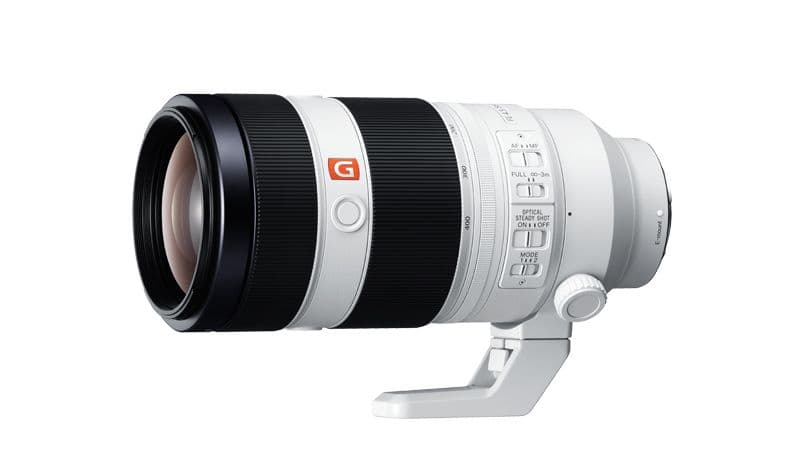
On the same Best Telephoto Zoom Lenses list, the Sony FE 100-400mm f/4.5-5.6 GM OSS sits two ranks above at number four — the lens Gavler's own scoring notes point to directly as the alternative "if portability matters more than the extra length." It's lighter and faster to carry, but at a meaningfully higher price, and it gives up 200mm of reach at the long end that birders specifically buy the 200-600 G to get. The choice between them comes down to a simple question: do you value the extra reach, or the extra 700-plus grams you'll save by leaving it at home?
An 8.9 that reflects a rare pattern: the community score of 94 actually outruns the expert score of 92, because owners weight the internal-zoom handling, genuine 600mm reach, and sub-$2,000 price more heavily than reviewers, who trim points for edge sharpness that trails Sony's best glass and the lens's real heft. Amateur Photographer's conclusion is the fairest summary — "there are very few full-frame telephoto zooms that cover as wide range, perform as well and represent as good value for money as this lens." Buy it if reach and price matter more than ultimate speed or portability; consider the 100-400mm GM if the reverse is true.
For E-mount wildlife and birding shooters on a budget, yes. It ranks sixth on Gavler's Best Telephoto Zoom Lenses list with an 8.9, and Amateur Photographer's Michael Topham called it a lens that 'delivers a strong, consistent optical performance' combined with 'fast, quiet focusing and a first-class build quality' at a price that 'represents great value.' The 200-600mm reach for under $2,000 has no direct equal on the mount.
Its slow variable aperture. Amateur Photographer's field test found the f/5.6-6.3 maximum 'forced me to use higher ISO settings than I would have liked in overcast conditions,' with the reviewer pushing to ISO 3200-6400 and beyond in dim light to keep shutter speeds fast enough to freeze bird flight. It's a lens that wants good light.
Buy the 200-600mm G for the extra reach and a sub-$2,000 price if you shoot from a monopod or gimbal and don't mind the 2,115-gram heft. Buy the 100-400mm GM if portability and cross-range sharpness matter more to you than the last 200mm of reach — it's lighter, though notably pricier.
Prices checked regularly
90-day price history
Steady at $1,998 for the entire 90-day tracking window — no increases, no discounts, across 91 tracked days.
Tracked daily across retailers. Vote Want itabove and we’ll alert you the moment the price drops.
Some links are affiliate links — Gavler may earn a commission. This never affects rankings or scores. Learn more.
The barrel length stays fixed through the zoom range — gimbal-balanced and far more dust-resistant than telescoping super-teles, the feature owners cite most.
A true 600mm reach that extends to 840mm (1.4x) or 1,200mm (2x) via Sony's teleconverters — the longest affordable reach on E-mount.
Direct Drive SSM focusing that Photography Life measured as "exceptionally high" in accuracy even under lab magnification, quick and near-silent for erratic wildlife.
Community 94 outruns expert 92: owners weight the internal-zoom handling, 600mm reach, and sub-$2K value more heavily than reviewers, who trim points for 600mm sharpness that trails Sony's best glass and the lens's considerable weight.
Do you think Sony FE 200-600mm f/5.6-6.3 G OSS deserves the #6 spot in Best Telephoto Zoom Lenses?
“One of my favorites things about the Sony 200-600mm f/5.6-6.3 is that the barrel does not extend when you zoom in. This is somewhat uncommon in zooms today, but it's always a nice feature to have, especially for a lens that you expect to use in adverse weather conditions.”
“The Sony FE 200-600mm f/5.6-6.3 G autofocuses quickly and almost silently, with very impressive accuracy both in the viewfinder and in live view.”
“The Sony FE 200-600mm F5.6-6.3 G OSS Lens offers a long range of long telephoto focal lengths, reaching an exceptionally long 600mm, in a relatively compact, handholdably light, weather-sealed body with very good image quality and an affordable price.”
“While this lens is relatively compact, there is no getting around the physical requirements that make a 200-600mm lens somewhat large and heavy relative to standard/normal zoom lenses.”
Watch
Hand-picked from creators we trust — playable inline.
Sony RX10 V Review: The 24-600mm Camera That Does EVERYTHING
I Tested Sony's New RX10 V on NYC Streets and Here's What Happened
Sony's NEW 100-400mm lens! Could this replace my 200-600mm?
See how other top picks compare in this category.
A 70-200 hangtag is the wrong first question. Events at f/2.8, or wildlife at 500–600mm, is the reach you work. Then shop Gavler's live ranking.
Samyang's AF 60-180mm f/2.8 FE gives Sony a constant-aperture telephoto for about $1,000 and 730g — a third the price of the 70-200mm GM atop our list.