New Balance FuelCell Rebel v4.
The Rebel v4's FuelCell midsole makes every easy run feel slightly faster than it should be. At 7.4 oz it's lighter than most race shoes, making it the rare daily trainer that doubles as a tempo-day weapon.
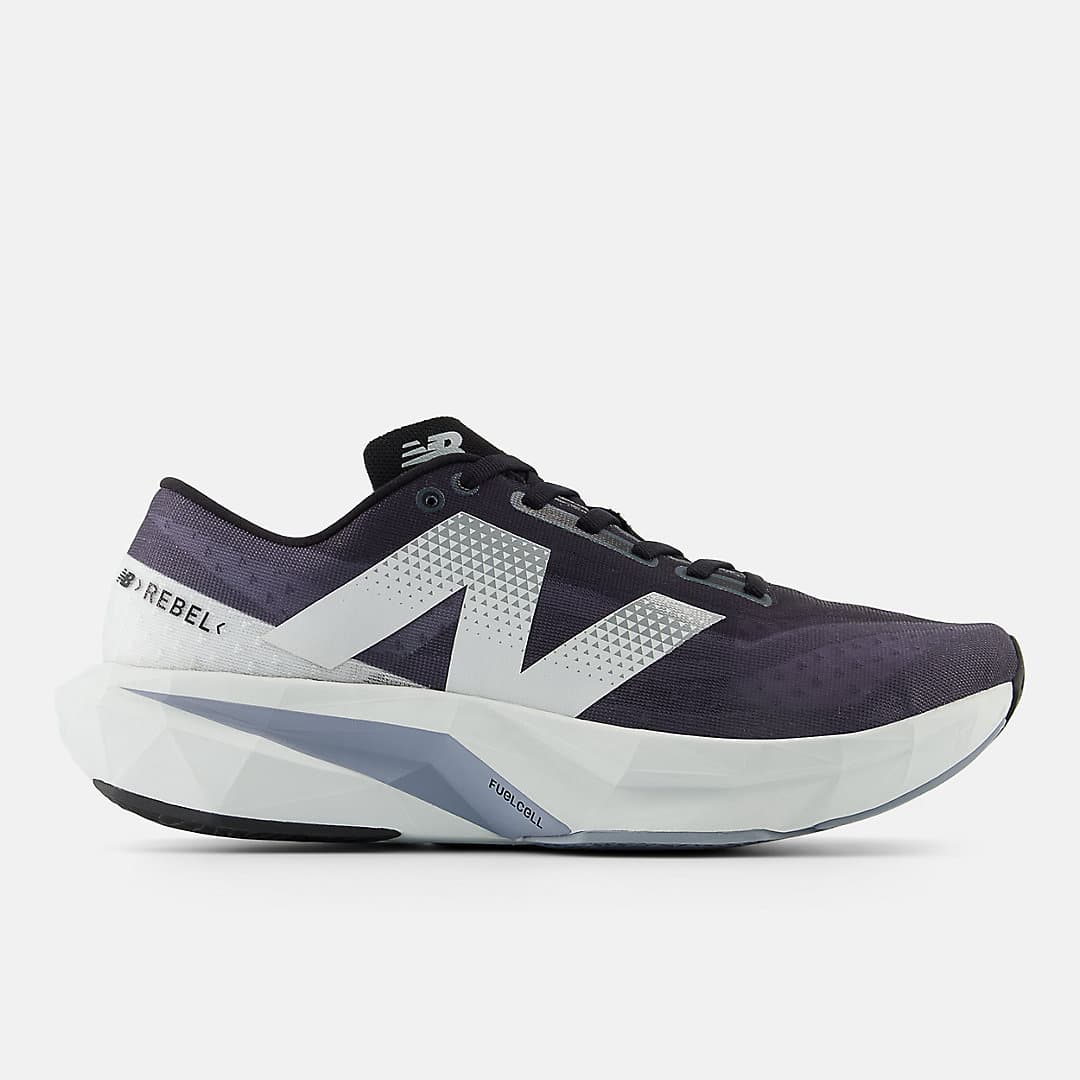
The Verdict.
Gavler Meta-Score
“The rare daily trainer light enough to actually race in. Buy it for one shoe that covers easy miles and tempo days — the PEBA-infused FuelCell is bouncy and fun at $140, and at ~7.5 oz it's lighter than most plated racers. The trade-off is the v4's wider, boxier fit, which a few testers say cost it the v3's lockdown and 'spark,' plus a thin outsole that raises durability questions.”
The Gavler Verdict
The Gavler Review.
New Balance FuelCell Rebel v4 Review: A Featherweight Trainer Now Selling at Closeout Prices
The Rebel v4 is the rare running shoe light enough to double as a workout shoe without a carbon plate doing the work. At roughly 7.5 oz / 213g, it undercuts most plated racers on weight while running on a reformulated FuelCell midsole — now blended with PEBA — that reviewers widely call the bounciest the Rebel line has ever felt. It sits at rank 14 on our Best Running Shoes list with an 8.5. Buy it now, specifically: New Balance has already moved on to the Rebel v5, which means this genuinely good shoe is currently selling well below its original $140 price at retailers clearing inventory.
What it is
New Balance built the Rebel line around a simple idea: what if a daily trainer were light enough to race in without needing a carbon plate to justify the weight? Version 4 pushes that idea further by reformulating FuelCell into roughly a 20% PEBA / 80% EVA blend — a genuine step up from the all-EVA foam in earlier versions. Fleet Feet's own reviewer captured the appeal directly: "I would liken running in the New Balance Rebel v4 to gliding effortlessly across the pavement... They are my new favorite alternative to carbon-plated shoes for workout days."
The context that matters for a 2026 buyer: the Rebel v4 is no longer New Balance's current shoe. The company's own site now lists only the newer Rebel v5, which bumps stack height and continues the same PEBA/EVA concept. The v4 hasn't vanished — it's still in stock at retailers like Fleet Feet, now discounted as older-generation inventory, which is precisely the situation that makes it worth a serious look.
In use
RunRepeat's lab measurements put the v4 at 28.0mm heel / 21.5mm forefoot stack with a 6.5mm drop and a notably soft 23.7 Asker C midsole reading — softer than the 35.8 AC category average, which tracks with what testers describe as a bouncy, connected ride rather than a tall, perched one. Believe in the Run's Ryan Haines summarized the feel this way: "The Rebel v4 feels like a smooth rock and roller" — a description that lands closer to the plush, flowing character of earlier Rebel versions than to a stiff, race-focused platform.
Where testers diverge is fit, and it's worth taking seriously because it splits opinion even within the same publication. Doctors of Running ran two testers through the shoe with opposite conclusions. Matt Klein: "This is the best version of the Rebel I have experienced." Andrea Myers, testing the same shoe: "I really wanted to love the Rebel v4, but the geometry does not line up with my foot shape or my mechanics." RunRepeat's own review lands closer to Myers's read, calling the update "bold" but noting "this update has lost some agility and spark due to its wider dimensions," and listing the fit as "too wide" among its cons.
Strengths
Genuine featherweight performance without a carbon plate is the headline: at roughly 7.5 oz, it's light enough to handle tempo and workout duty that most cushioned trainers can't touch, while still cushioning easy miles comfortably. The PEBA-infused FuelCell midsole is a real material upgrade over the prior all-EVA formula, and reviewers across outlets credit it with the bounciest ride the Rebel line has produced. Versatility is the other strength worth naming specifically — Fleet Feet's reviewer using it as a carbon-plate alternative for workout days is a meaningful endorsement, since few non-plated trainers earn that comparison. And now that it's the outgoing model, the value case is stronger than it was at full price: clearance pricing around $110 against an original $140 list is a genuinely good deal for a shoe with this feature set.
The trade-offs — who should skip it
Fit is the shoe's real dividing line. The wider, boxier platform that RunRepeat and Doctors of Running's Andrea Myers both flagged is a meaningful change from the v3's more locked-in feel, and it's not a minor nitpick — it directly affects how secure the shoe feels underfoot, especially for runners with narrower feet who loved the previous version specifically for that lockdown. Durability is a secondary concern worth flagging honestly: with limited outsole rubber coverage in some areas, exposed foam wear can show up faster than on a more heavily armored trainer. And because it's now a superseded model, expect variable sizing and color availability as retailers work through remaining stock — this is a buy-it-while-you-can situation, not a shoe you can count on being restocked once it's gone.
How it compares
Two spots up this list, the Asics Magic Speed 4 takes the opposite approach to a similar problem — a genuine carbon plate at a value price, but with a stiffer, heavier ride that Doctors of Running found "uncomfortably stiff" on easy days. The Rebel v4 is the better choice for runners who want daily-mile comfort with just enough pop for tempo work; the Magic Speed 4 is the better choice for runners who specifically want plated propulsion and don't mind a firmer ride. One rank down, the Hoka Mach 6 competes as a similarly versatile daily trainer, though it leans on a supercritical-EVA foam rather than FuelCell's PEBA blend — reviewers describe the Mach 6 as the more cushioned, forgiving option of the two, while the Rebel v4 stays closer to the ground and livelier underfoot.
The Gavler verdict
An 8.5, backed by an 86 expert consensus against an 83 community score — the modest gap tracking exactly what the reviews above describe: the wider platform and durability questions show up more in long-term ownership than in a single test run. Buy it now while it's discounted as New Balance's outgoing model, especially if you want a genuinely light daily trainer that can flex into workout duty without a carbon plate. Skip it if you have a narrow foot that loved the v3's snugger fit, or if you'd rather buy the current-generation Rebel v5 at full price instead of a discounted previous version.
Common Questions
Yes, especially now. It sits at rank 14 on Gavler's Best Running Shoes list with an 8.5, and New Balance has since replaced it with the Rebel v5 — which means the v4 is selling at clearance prices at retailers like Fleet Feet (as low as $109.95 against its original $140 list) while remaining a genuinely light, bouncy daily trainer that can double as a tempo shoe.
It's been superseded, not pulled from shelves entirely. New Balance's own site now lists only the Rebel v5 ($144.99), but third-party retailers still carry v4 stock, generally at a discount. Treat it as a closeout buy: a great price on a shoe that was New Balance's current-generation trainer as recently as last year.
For some runners, yes. RunRepeat's own review flags it directly, noting the redesign 'lost some agility and spark due to its wider dimensions' and listing it as 'too wide' as a con. Doctors of Running's Andrea Myers echoed the same issue personally: 'the geometry does not line up with my foot shape or my mechanics.' If you have a narrow foot and loved the locked-in feel of the v3, try it on before buying — this is the shoe's most consistent criticism.
Both, within reason. It has no carbon plate, so it isn't a race-day super shoe, but at roughly 7.5 oz / 213g it's light enough that Fleet Feet's own reviewer called it a 'new favorite alternative to carbon-plated shoes for workout days.' Use it for daily miles, tempo work, and shorter uptempo races; save a plated shoe for marathon-distance racing.
Where to Buy.
Prices checked regularly
90-day price history
Price History
Steady at $140 for the entire 90-day tracking window — no increases, no discounts, across 91 tracked days.
Tracked daily across retailers. Vote Want itabove and we’ll alert you the moment the price drops.
Some links are affiliate links — Gavler may earn a commission. This never affects rankings or scores. Learn more.
Precision Engineering
PEBA-Infused FuelCell Foam
A reformulated FuelCell, now ~20% PEBA / 80% EVA — bouncier than the v3, though RunRepeat notes it still trails the pure-PEBA foam in New Balance's plated SC Elite.
About 7.5 oz (213 g)
Lighter than most plated racers — the whole point: a non-plated daily trainer light enough to double as a tempo-day shoe.
Low Stack, No Plate
A sub-30 mm, plate-free platform tuned for a fun, connected, fast-feeling ride rather than tall max-cushion protection.
Technical Specifications
The Scoreboard
The 8.5 reflects near-universal praise for the best-yet FuelCell foam and featherweight value, docked for two recurring knocks: a wider, boxier upper that loosens the v3's locked-in feel, and a thin outsole some reviewers flag for early wear. The modest expert-over-community spread (86 vs 83) is the fit-and-durability caveat surfacing more in long-term owner miles than in launch reviews.
Cast Your Vote
Do you think New Balance FuelCell Rebel v4 deserves the #14 spot in Best Running Shoes?
Global Critique
“I would liken running in the New Balance Rebel v4 to gliding effortlessly across the pavement... They are my new favorite alternative to carbon-plated shoes for workout days.”
“...even though it remains as light as before, we found that this update has lost some agility and spark due to its wider dimensions.”
“The forefoot feels a little too boxy which contributed to a bit of an awkward feeling.”
More from Best Running Shoes.
See how other top picks compare in this category.
What Kind of Running Shoe Do Your Miles Actually Need?
A carbon plate is the wrong first question. Daily trainer vs max-cushion vs stability vs race-day super shoe is the job. Then shop Gavler's live ranking.
Superblast 3 vs Vomero 18 vs Novablast 6: The Best Daily Trainer of 2026 Costs $155, and It Isn't the Nike
Three shoes dominate every 2026 daily-trainer list: one's a recovery shoe in a trainer's badge, one costs $55 too much, one spec sheet won't survive a caliper.
The $500 Running Shoe Is Not the Fastest One. A $300 Shoe Is Lighter, and a $170 Shoe Is the Smart Buy.
Adidas broke the super-shoe price ceiling at $500. Every outlet that tested it says buy cheaper — and the lab data says the benefit was never about price.
The Best Running Shoes in 2026, Ranked by Runners Who Actually Race Them
Nike, Asics, Hoka, Saucony. Gavler's running community ranks the shoes worth lacing — from $140 daily trainers to $285 marathon weapons.