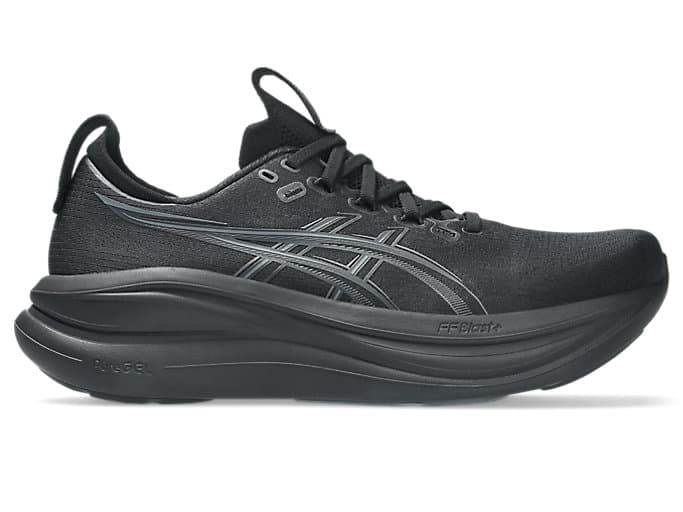
Asics Superblast 3.
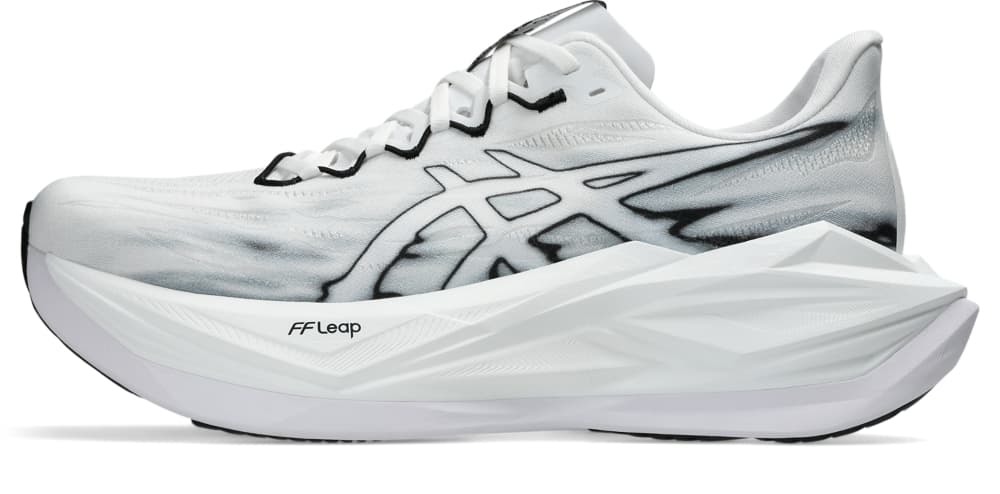
The rare shoe that makes a rotation optional. RunRepeat measured world-class shock absorption (154 SA heel and forefoot) and the best traction they have recorded to date, in an 8.3 oz package with a 45.8 mm heel. The new FF Leap foam fixes the firmness that kept v1 and v2 off easy-run duty — the catch is a $210 price that only makes sense if this genuinely replaces two shoes.
The Verdict.
Gavler Meta-Score
“The most capable single shoe in running right now, and the one to buy if you want to own one pair instead of three. Soft enough for recovery miles, stable and light enough for long runs and steady tempo work, with the best grip we have seen measured. Skip it if you want maximum bounce — the Megablast is livelier — or if $210 for a training shoe is not a trade you want to make.”
The Gavler Verdict
The Gavler Review.
Asics Superblast 3 Review: The One Shoe That Might Replace Your Whole Rotation
The Asics Superblast 3 sits at number one on our Best Running Shoes list with a 9.7 — the highest score on the roster, backed by a 96 expert consensus. It earns that spot by doing something most running shoes don't even attempt: being genuinely good at everything, from recovery jogs to marathon-pace long runs, without a carbon plate to lean on. Buy it if you want to own one pair instead of three. The one real objection is price — at $210, this only pays for itself if it actually replaces shoes you'd otherwise be buying separately.
What it actually is
The Superblast built its reputation over two generations on a trick that shouldn't work: a stack height north of 40mm that stays light and stable rather than mushy and vague. Version 3 keeps that trick and fixes the complaint that followed the shoe through both prior versions — it was too firm to enjoy at easy pace. Asics replaced the firmer FF Turbo+ top layer with FF Leap, a soft A-TPU foam borrowed from the brand's premium Metaspeed Ray racer, while shaving weight at the same time: RunRepeat's lab-measured a men's 9 at 8.3 oz / 235g, down from 8.9 oz on the Superblast 2, despite the heel stack growing to 45.8mm.
The engineering detail worth knowing about is a diamond-shaped channel cut into the top of the FF Leap layer, mirroring an indentation in the outsole directly below it. Believe in the Run's testing team — three reviewers logging independent mileage — singled this out as the reason the forefoot feels almost suspended on toe-off, a sensation none of them expected from a shoe with this much stack underfoot.
In use
This is where the lab numbers back up what testers feel on the road. RunRepeat recorded 154 SA of shock absorption in both the heel and forefoot — at the time of their review, the most protective forefoot measurement they'd recorded on any running shoe, ahead of the Nike Vomero Premium. Traction tells the same story from a different angle: a 0.96 grip score, the highest RunRepeat had logged on any running shoe, using Asics's own AsicsGrip compound in the forefoot.
Believe in the Run's three testers ran it across the full range the shoe is built for. Thomas Neuberger, the site's founder, logged over 60 miles in his review pair and reported the shoe felt as good at mile 60 as mile one. Robbe Reddinger described a "bouncy, almost independent suspension-type sensation" coming off the toe specifically — a sensation he initially assumed was subjective until he read that Asics had engineered the diamond channel to produce exactly that effect. And Meaghan Murray, who has run all three Superblast generations, noted the step-in feel is "noticeably more welcoming than its predecessors" — previous versions needed 25 to 50 miles before the shoe clicked, while this one is enjoyable from the first run.
The geometry does real work at speed, too. A wide 120.7mm forefoot base and 18.2 Nm of torsional rigidity keep landings controlled with no plate doing the stabilizing — RunRepeat's own lab conclusion is that this remains a shoe built for daily miles, long runs, and steady tempo work rather than all-out racing.
Strengths
- Category-leading protection, measured. 154 SA of shock absorption in both heel and forefoot isn't a marketing claim — it's a lab number, and at the time of testing it was the most protective forefoot RunRepeat had recorded on any running shoe, period.
- The best grip Asics — or RunRepeat — has measured. A 0.96 traction score is the highest figure the lab has logged on any running shoe, which matters as much on wet pavement in March as it does on a dry track in July.
- Genuinely lighter despite more foam. Shaving 10 grams off the Superblast 2 while growing the stack height by more than a millimeter is the kind of iteration that's rare in this category, where more cushioning almost always means more weight.
- A team of testers, not one reviewer, converged on the same conclusion. Believe in the Run ran three separate voices — Neuberger, Reddinger, and Murray — through this shoe, and all three independently landed on it replacing multiple pairs in their rotation.
The trade-offs — who should skip it
- The FF Blast+ carrier layer caps the bounce. RunRepeat measured 67.8% energy return — very good, but their own reviewers noted that swapping in FF Blast Max for the lower midsole layer would likely have pushed that number past 70%. If maximum bounce is what you're after, the Novablast 6's forefoot pod or a dedicated racer will feel livelier.
- It costs $210, and that's a real number. Believe in the Run's own reviewers flagged the price directly — Meg called it "not exactly an impulse buy," and Thomas admitted the jump to $210 "is still a lot of money, even for a shoe as good as this." The math only works if it displaces a daily trainer and a long-run shoe you'd otherwise buy separately.
- Stability took a step back from the Superblast 2. Runners who valued the previous version specifically for its planted, controlled platform may find version 3 slightly less locked-down underfoot — the trade Asics made for a livelier ride.
- The lower lacing system is a minor annoyance for some. Reddinger flagged the corded, stitched-in eyelets on the lower half of the shoe as a design choice he "abhors," having seen similar systems fail on other models — though Asics maintains the design held up over a full year of testing.
How it compares
The two shoes directly behind it on Gavler's rebuilt Best Running Shoes list make the trade-offs concrete. The Asics Novablast 6 at rank two is $60 cheaper and RunRepeat rates it strongly even for tempo and race duty thanks to a bouncier FF Turbo Squared forefoot pod — but both RunRepeat and Doctors of Running independently flag its heel and lateral stability as a step back for pronounced heel strikers, which the Superblast 3 does not share. The Nike Vomero 18 at rank three goes further in the opposite direction from the Novablast: it's a pure comfort specialist for easy and recovery miles, plush and forgiving, but RunRepeat scored it only 54 for tempo work against the Superblast 3's genuine range across paces.
Put the three side by side and the Superblast 3 is the generalist: not as cheap as the Novablast 6, not as plush for pure recovery miles as the Vomero 18, but the only one of the three that Believe in the Run's full testing team is comfortable recommending for daily miles, long runs, and tempo work in a single pair.
The Gavler verdict
A 9.7, the highest score on Gavler's Best Running Shoes list and backed by a 96 expert consensus. The gap to the 92 community score is small and traces to the same two things every reviewer flags: the FF Blast+ lower layer caps the bounce below the bounciest race-adjacent trainers, and $210 is genuinely a lot to spend on a training shoe. Buy it if you want to stop rotating between three pairs and start running in one. Skip it only if maximum bounce at a lower price is what you're after — in which case the Novablast 6, two spots down this same list, is the shoe to look at instead.
Common Questions
For most runners chasing one versatile shoe, yes. It sits at number one on Gavler's Best Running Shoes list with a 9.7, and RunRepeat's lab measured category-leading shock absorption and the highest traction score they had recorded on any running shoe. At 210 dollars it's expensive for a training shoe, but reviewers across outlets — RunRepeat, Believe in the Run, Doctors of Running — agree it can genuinely replace a daily trainer and a long-run shoe in one pair.
Both. Believe in the Run's testers used it for recovery jogs, marathon-pace long runs, and even a half-marathon-distance workout at goal pace. RunRepeat's lab data backs that range up: 67.8% energy return with no carbon plate, a wide forefoot base, and 18.2 Nm of torsional rigidity that keeps landings controlled when you push the pace. It's not a race-day shoe — save that for the Metaspeed Sky Paris or Alphafly 3 — but it covers everything from recovery jogs to steady tempo work in the same pair.
Mostly, with one caveat. Believe in the Run's testers found the redesigned engineered mesh upper fits true to size with a roomy toe box, though the brand's own reviewers note the lower half of the new lacing system runs a hair looser than the traditional eyelets up top — cinch down if you have a narrower foot. If you're between sizes, most testers stuck with their usual size rather than sizing down.
Buy the Superblast 3 if you want maximum range and comfort and can spend 210 dollars; buy the Novablast 6 if you're a forefoot-striking runner on a budget, since it's 60 dollars cheaper and RunRepeat rates it strongly even for tempo and race duty. The Superblast trades some of that liveliness for a plusher, more forgiving ride that works across a wider range of paces and strike patterns.
Where to Buy.
Prices checked regularly
90-day price history
Price History
Steady at $210 for the entire 90-day tracking window — no increases, no discounts, across 91 tracked days.
Tracked daily across retailers. Vote Want itabove and we’ll alert you the moment the price drops.
Some links are affiliate links — Gavler may earn a commission. This never affects rankings or scores. Learn more.
Precision Engineering
FF Leap Top Layer
A soft A-TPU foam replacing the firmer FF Turbo+, and the reason v3 finally works at easy pace; RunRepeat measured midsole softness at 22.8 AC against a 35.8 AC average.
8.3 oz / 235 g (men's 9)
Down from 8.9 oz on the Superblast 2, despite a 45.8 mm measured heel stack.
0.96 Traction Score
The highest forefoot grip figure RunRepeat had recorded on any running shoe at the time of review, using ASICSGRIP in the forefoot and AHAR LO in the heel.
Technical Specifications
The Scoreboard
The 9.7 reflects a near-unanimous expert verdict that this is the best Superblast yet and one of the most versatile trainers available, backed by measured category-leading shock absorption and traction. The small gap to the community score tracks the two consistent criticisms — the FF Blast+ carrier layer caps energy return below the bounciest rivals, and the $210 price is a real barrier.
Cast Your Vote
Do you think Asics Superblast 3 deserves the #1 spot in Best Running Shoes?
Global Critique
“In our lab test, we found that the ASICS Superblast 3 displayed world-class levels with 154 SA in the heel and 153 SA in the forefoot.”
“ASICS delivered meaningful upgrades, as we found in the lab a softer, more protective ride with even better grip and lower weight.”
“While this is a very solid number, we cannot help but think of what this shoe could have been with FF Blast Max in the lower layer instead of FF Blast+.”
“You should not expect a nimble or agile feel underfoot, as this shoe rides more like a luxury sedan than a 2-seat roadster despite its low weight.”
More from Best Running Shoes.
See how other top picks compare in this category.
What Kind of Running Shoe Do Your Miles Actually Need?
A carbon plate is the wrong first question. Daily trainer vs max-cushion vs stability vs race-day super shoe is the job. Then shop Gavler's live ranking.
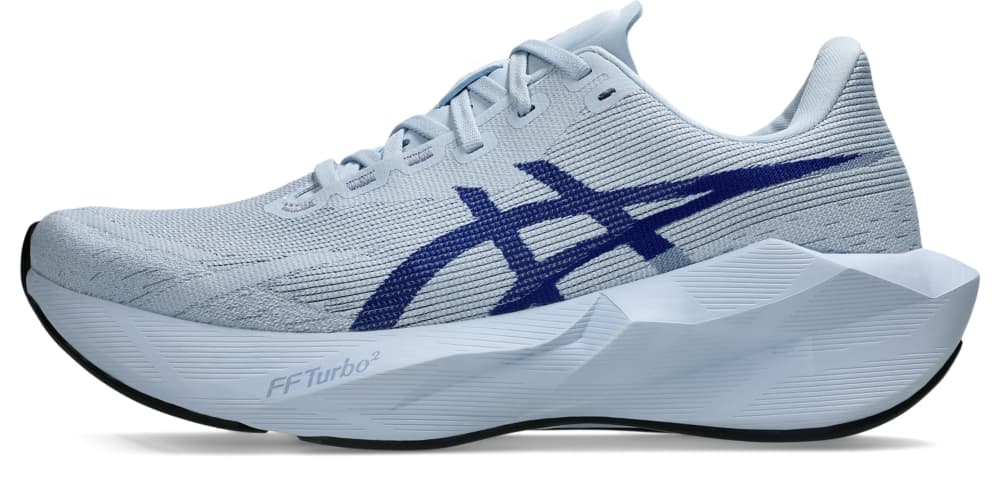
Superblast 3 vs Vomero 18 vs Novablast 6: The Best Daily Trainer of 2026 Costs $155, and It Isn't the Nike
Three shoes dominate every 2026 daily-trainer list: one's a recovery shoe in a trainer's badge, one costs $55 too much, one spec sheet won't survive a caliper.
The $500 Running Shoe Is Not the Fastest One. A $300 Shoe Is Lighter, and a $170 Shoe Is the Smart Buy.
Adidas broke the super-shoe price ceiling at $500. Every outlet that tested it says buy cheaper — and the lab data says the benefit was never about price.
The Best Running Shoes in 2026, Ranked by Runners Who Actually Race Them
Nike, Asics, Hoka, Saucony. Gavler's running community ranks the shoes worth lacing — from $140 daily trainers to $285 marathon weapons.