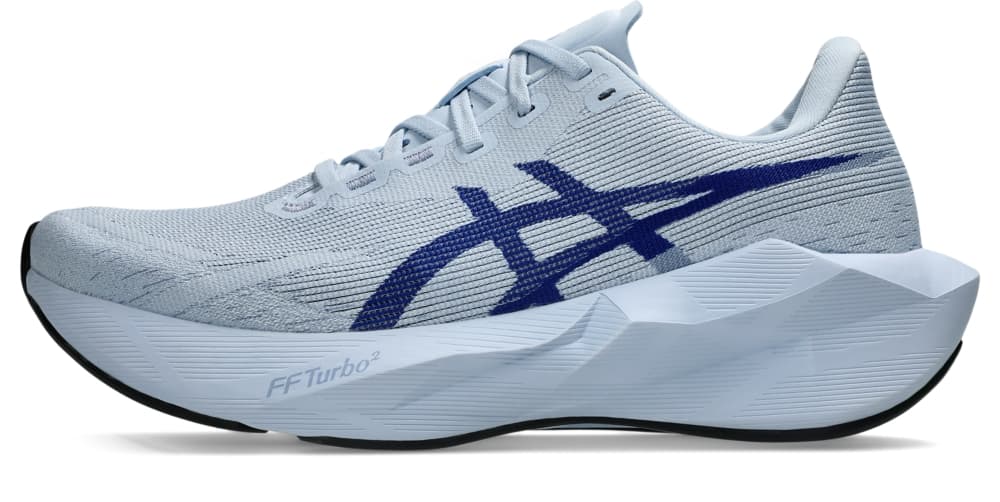
Asics Novablast 6.
The value pick, and the most versatile shoe on this list. A new FF Turbo Squared forefoot pod gives it real pop at tempo without giving up daily-mile comfort, and RunRepeat rates it strong across daily, tempo and even race duty — unusual at $150. Heel strikers should look hard at the Vomero instead: the softer FF Blast Max heel is the one place this shoe went backwards.
The Verdict.
Gavler Meta-Score
“The value pick on this list and the most versatile shoe here for the money. Buy it if you want one trainer that covers easy days and picks up honestly when you want to run fast. Do not buy it if you are a pronounced heel striker — both RunRepeat and Doctors of Running independently flag the heel and the stability, and the Gel-Kayano 33 or Vomero 18 will serve you better.”
The Gavler Verdict
The Gavler Review.
Asics Novablast 6 Review: The Best 150-Dollar Shoe in Running, If You Land on Your Forefoot
The Asics Novablast 6 ranks second on our Best Running Shoes list with a 9.5 and a 93 expert consensus — the value pick of Gavler's top tier, and arguably the most versatile shoe on the list for the money. At $150, it does something unusual: RunRepeat rates it strongly not just for easy daily miles but for tempo work and even race duty. Buy it if you run through your forefoot and want one shoe that covers most of your training. Skip it if you're a pronounced heel striker — two independent testers flag exactly that as the shoe's weak point.
What it actually is
The Novablast became Asics's best-selling shoe in 2025 by being unusually well-rounded for a max-cushion trainer, and version 6 sharpens that character rather than softening it. The headline change is a forefoot pod of FF Turbo Squared — a bouncier PEBA-family foam pulled from Asics's race-day line — sitting ahead of FF Blast Max in the heel. RunRepeat's lab measured a men's 9 at 8.8 oz / 249g on a 41.5mm heel / 33.5mm forefoot stack with an 8mm drop, and found the shoe lighter and more agile than both the 4 and 5 despite that stack height.
The result, per RunRepeat's summary, is a shoe with "a genuinely lively toe-off" that still handles easy miles competently — a combination that's rare enough in this price bracket that the lab specifically called out how strongly it scores across daily, tempo, and even race-day use categories.
In use
The forefoot is where this shoe earns its reputation. RunRepeat's lab testers wrote plainly that "the shoe feels faster and more agile than the previous version, bringing back some of the fun-loving character of the first editions" — a notable statement given how many generations of Novablast have come and gone since the original defined the category. The ASICSGRIP outsole holds up across conditions, and the upper breathes properly in warm weather, both qualities that matter more over a 10-mile tempo session than a spec sheet does.
The value case is straightforward: RunRepeat's own conclusion is "still amazing value despite price increase" — a shoe that scores well enough across three different use cases (daily, tempo, race) that it can legitimately anchor a runner's entire rotation at a price point where most competitors only do one job well.
Strengths
- A genuinely lively forefoot at a value price. The FF Turbo Squared pod is race-line foam technology filtering down into a $150 trainer — most shoes at this price don't attempt tempo-day performance, let alone deliver it.
- Broad use-case scoring that's rare at this price. RunRepeat's lab specifically flags strong scores across daily running, tempo, and race duty in the same shoe — the kind of range usually reserved for shoes twice this price.
- Lighter and more agile than its own predecessors. Coming in lighter than both the Novablast 4 and 5 while adding a livelier forefoot is real iteration, not just a refresh.
- A durable, breathable everyday package. The ASICSGRIP outsole and ventilated upper hold up to daily mileage without the compromises that sometimes come with performance-forefoot foams.
The trade-offs — who should skip it
This is the section that matters most for this specific shoe, because the criticism isn't vague — it's specific, and it comes from two directions independently.
- The heel is a genuine weak point for heel strikers. Doctors of Running's Matt Klein was direct: the transition is "clunky/slappy," the FF Blast Max "feels dead in the heel," and there's "excessive lateral forefoot flare" that causes a medial push during the gait cycle — a biomechanical observation, not a taste preference. RunRepeat reached a related conclusion independently, calling the shoe less stable than the Novablast 5 and specifically cautioning heel strikers against it.
- Fit runs slightly short in the heel. Klein also noted "excessive heel padding makes fit slightly short" — worth trying on rather than ordering blind if you're between sizes.
- It's not a specialist race shoe. The versatility that makes this shoe valuable also means it doesn't match a dedicated plated racer on race day — treat the "race duty" scoring as strong-for-a-trainer, not competitive with the Alphafly 3 or Metaspeed Sky Paris further down this same list.
How it compares
The shoe directly above it on Gavler's Best Running Shoes list is the clearest contrast. The Asics Superblast 3 at rank one costs $60 more but doesn't carry the Novablast 6's stability caveat — RunRepeat measured category-leading shock absorption and traction on the Superblast, with no equivalent heel-strike warning from either outlet that tested it. The trade is straightforward: pay more and get a shoe built for a wider range of strike patterns and paces, or pay less and get excellent value specifically if you're a forefoot- or midfoot-striking runner.
The Nike Vomero 18 at rank three sits at the opposite end of the spectrum entirely — a pure comfort-and-recovery specialist that RunRepeat scored only 54 for tempo work, versus the Novablast 6's genuine strength in exactly that category. A heel-striking runner who wants Novablast-adjacent value without the stability trade-off would be better served looking at the Vomero 18 or the Gel-Kayano 33 one rank up, rather than forcing the Novablast 6 to do a job it wasn't built for.
The Gavler verdict
A 9.5, with a 93 expert consensus that reflects broad agreement this is a lighter, livelier, still-excellent-value shoe than its predecessor. The score sits below the Superblast 3 not on a matter of taste but on a genuine, independently corroborated weakness: both RunRepeat and Doctors of Running identified the heel and lateral stability as a real step back from the Novablast 5. Buy it if you run through your forefoot and want the best $150 shoe in this category. If you're a pronounced heel striker, the Gel-Kayano 33 or Vomero 18 will serve you better than forcing this one to fit.
Common Questions
Yes, for the right runner. It ranks second on Gavler's Best Running Shoes list with a 9.5 and a 93 expert consensus, and at 150 dollars it's the value pick of the top tier — RunRepeat rates it strongly not just for daily running but for tempo and even race duty, which is unusual at this price. The caveat is real: it's built for forefoot and midfoot strikers, and two independent testers flag the heel as a weak point.
Not the best choice. Both RunRepeat and Doctors of Running's Matt Klein independently identified the same weakness — Klein described the FF Blast Max heel as feeling 'dead' with a clunky, slappy transition, and RunRepeat separately called the shoe less stable than its predecessor and cautioned heel strikers against it. If you land hard on your heel, Gavler's own testers point instead to the Asics Gel-Kayano 33 or the Nike Vomero 18.
The headline change is a new FF Turbo Squared forefoot pod — a bouncier PEBA-family foam borrowed from Asics's race line — sitting ahead of FF Blast Max in the heel. RunRepeat found it lighter and more agile than the 5, with a genuinely livelier toe-off, at the cost of some heel-area stability that both RunRepeat and Doctors of Running called out independently.
Buy the Novablast 6 if you're a forefoot- or midfoot-striking runner who wants excellent value — it's 60 dollars cheaper and RunRepeat rates it strongly even for tempo and race duty. Buy the Superblast 3 if you want more range across paces and strike patterns, or if you're a heel striker, since it doesn't carry the same stability caveat.
Where to Buy.
Prices checked regularly
90-day price history
Price History
Steady at $150 for the entire 90-day tracking window — no increases, no discounts, across 90 tracked days.
Tracked daily across retailers. Vote Want itabove and we’ll alert you the moment the price drops.
Some links are affiliate links — Gavler may earn a commission. This never affects rankings or scores. Learn more.
Precision Engineering
FF Turbo Squared Forefoot Pod
A bouncier PEBA-family foam borrowed from ASICS's race line, sitting ahead of FF Blast Max in the heel — the reason the forefoot has real pop.
8.8 oz / 249 g (men's 9)
Lighter and more agile than v4 and v5 despite a 41.5 mm heel stack.
41.5 / 33.5 mm Stack, 8 mm Drop
High stack with an accessible drop; a wider sole adds some passive guidance.
Technical Specifications
The Scoreboard
The 9.5 reflects broad expert agreement that v6 is lighter, livelier and still excellent value, with unusually strong scores across daily, tempo and race use. The score is held below the Superblast by a genuine and independently corroborated weakness rather than a preference: both RunRepeat and Doctors of Running identify the heel and lateral stability as a step back from v5.
Cast Your Vote
Do you think Asics Novablast 6 deserves the #2 spot in Best Running Shoes?
Global Critique
“The shoe feels faster and more agile than the previous version, bringing back some of the fun-loving character of the first editions.”
“Still amazing value despite price increase.”
“Cons: Clunky/slappy transition, FF Blast Max feels dead in the heel, excessive heel padding makes fit slightly short, excessive lateral forefoot flare causes a medial push”
“The midsole is a combination of softer but not responsive FF Blast Max in the heel with a large section of FF Turbo Squared in the forefoot.”
More from Best Running Shoes.
See how other top picks compare in this category.

What Kind of Running Shoe Do Your Miles Actually Need?
A carbon plate is the wrong first question. Daily trainer vs max-cushion vs stability vs race-day super shoe is the job. Then shop Gavler's live ranking.
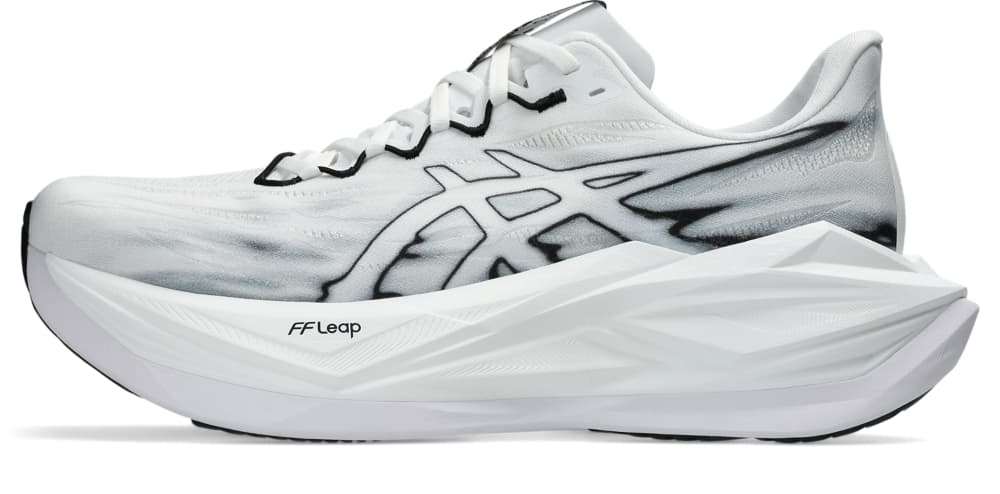
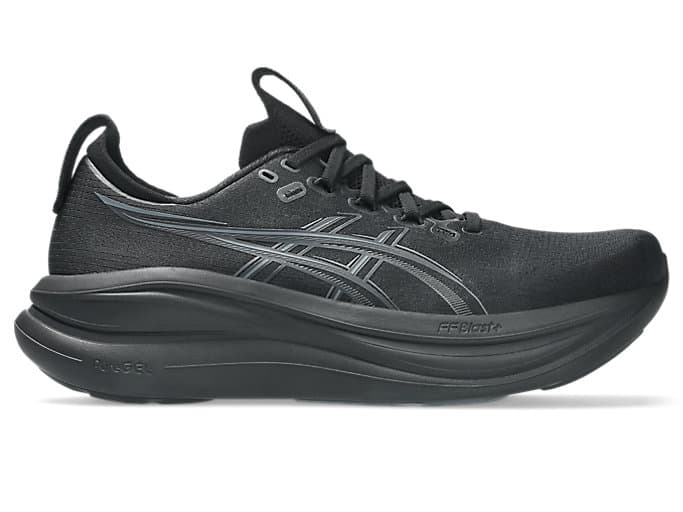
Superblast 3 vs Vomero 18 vs Novablast 6: The Best Daily Trainer of 2026 Costs $155, and It Isn't the Nike
Three shoes dominate every 2026 daily-trainer list: one's a recovery shoe in a trainer's badge, one costs $55 too much, one spec sheet won't survive a caliper.
The $500 Running Shoe Is Not the Fastest One. A $300 Shoe Is Lighter, and a $170 Shoe Is the Smart Buy.
Adidas broke the super-shoe price ceiling at $500. Every outlet that tested it says buy cheaper — and the lab data says the benefit was never about price.
The Best Running Shoes in 2026, Ranked by Runners Who Actually Race Them
Nike, Asics, Hoka, Saucony. Gavler's running community ranks the shoes worth lacing — from $140 daily trainers to $285 marathon weapons.