DJI Mini 4 Pro.
The proven workhorse with 34-minute flight time, 20km transmission, and omnidirectional obstacle sensing.
The Verdict.
Gavler Meta-Score
“For 80% of drone buyers — travelers, hobbyists, social media creators, enthusiast photographers — the Mini 4 Pro is the right purchase. The omnidirectional obstacle sensing alone justifies it over the cheaper DJI Flip, and the rotating gimbal for native 4K vertical video is a feature no other sub-250g drone matches. It won't replace a Mavic 4 Pro for professional work, but it's the drone most people will actually bring with them.”
The Gavler Verdict
The Gavler Review.
DJI Mini 4 Pro Review: A Smartphone Camera With Wings, Done Right
The DJI Mini 4 Pro ranks number 5 on Gavler's Best Drones list with a 9.1, and it's the drone Gavler recommends to most people who ask which one to buy. DroneDJ's review title said it plainly: "a sub-250 drone that can actually be used by the pros." The trade-off is honest and well-documented across multiple outlets — image quality that's closer to a good smartphone than a dedicated camera. For casual and enthusiast use, that trade barely registers; for professional deliverables, it's the reason to look elsewhere.
What it is
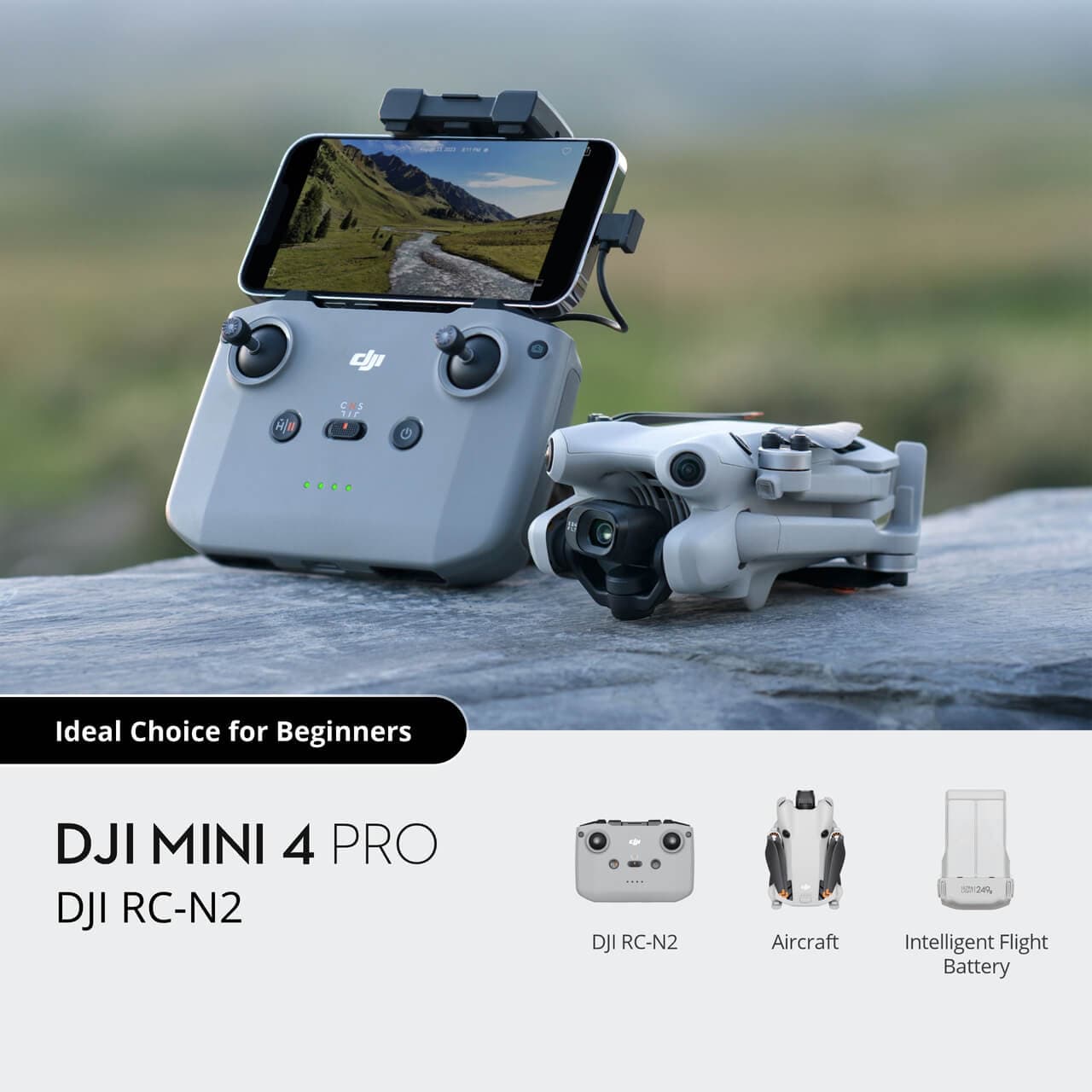
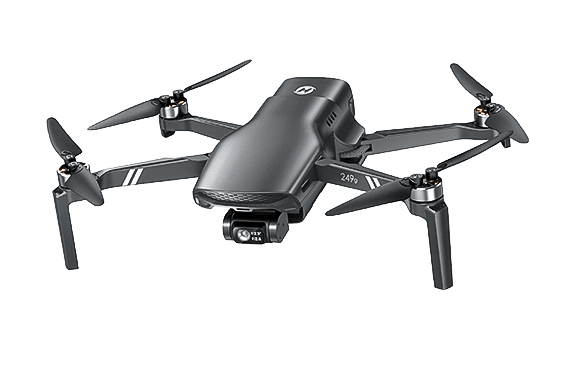
DJI kept the Mini 4 Pro under the 249-gram threshold that avoids registration requirements in the US while adding the one feature the Mini line had been missing: omnidirectional obstacle sensing, covering forward, backward, lateral, upward, and downward directions. The 1/1.3-inch sensor shoots 48MP stills and 4K/60fps HDR video with 10-bit D-Log M color — DJI's first time bringing that color depth to the Mini line — and a physically rotating gimbal enables true native vertical 4K video rather than a cropped simulation, a meaningful feature for social media creators. OcuSync 4 transmission pushes a stable 20km video feed, and the standard battery delivers 34 minutes of flight time, extending to 45 with the Plus battery.
At $759 for the base kit, it sits well above the Holy Stone HS720G in price but delivers a correspondingly larger jump in capability, particularly around safety and video versatility.
In use
DroneDJ's review, after a week of flying, was most impressed with the new obstacle sensing: "One of the first things I did with my Mini 4 Pro when it arrived was flying it right into a tree... Turns out it performed perfectly, missing the branches, leaves, and picnic table." That upgrade extends into ActiveTrack 360, which DroneDJ called "leaps and bounds better than what the Mini 3 Pro had" for subject tracking during travel and action shooting.
The Phoblographer's more camera-focused review reached a similarly positive verdict on usability, awarding it five out of five stars and calling it "an excellent option for any beginner or experienced pilot with a strict spending limit." Flight tutorials, built-in safeguards, and the new obstacle sensing combine to make it a genuinely confidence-inspiring drone for newer pilots — while veteran pilots get 34 minutes of battery per flight, enough, per The Phoblographer's testing, for a full aerial-portrait session without a low-battery warning.
Strengths
- The only sub-250-gram drone with full 360-degree obstacle sensing. This single feature is what separates the Mini 4 Pro from cheaper alternatives like the Holy Stone HS720G, and DroneDJ's tree-flying test confirmed it works as advertised.
- True native vertical 4K, not a crop. The physically rotating gimbal is a genuine engineering advantage over competitors that simulate vertical video by cropping a horizontal frame, and it matters enormously for creators shooting for social platforms.
- Manual controls and RAW shooting for a drone this size. The Phoblographer specifically praised the inclusion of "manual exposure controls and RAW shooting" as a pro-adjacent feature in a beginner-friendly package.
The trade-offs — who should skip it
Image quality is the Mini 4 Pro's one consistent, well-documented limitation, and it's worth understanding precisely where it falls short. The Phoblographer's detailed pixel-level testing found: "view the images at 100 percent, and you'll see why I call the Mini series a smartphone with wings. The image quality isn't terrible, but it's more in line with a good iPhone than a mirrorless camera." The high-resolution 48MP mode didn't help — "the high-resolution mode introduces more noise, even when shooting at the lowest possible ISO 100... I actually preferred the image quality coming from the default 12-megapixel mode."
Other specifics to weigh:
- RAW files come out underexposed. The Phoblographer measured "about one stop underexposed when compared to the JPEGs," requiring a routine exposure correction on every shot, with limited highlight recovery if skies blow out.
- Noise climbs quickly past ISO 400. The review recommends capping ISO at 400 or below for anything beyond casual sharing.
- Accessory compatibility changed from the Mini 3. DroneDJ flagged that DJI redesigned the ND filter and wide-angle lens mounting hooks, meaning Mini 3 accessories don't carry over even though the batteries do.
- Obstacle sensing isn't foolproof. The Phoblographer's review cautions that "the sensors can miss smaller objects, and they also don't work at very high speeds" — it's a safety net, not a replacement for maintaining line of sight.
How it compares
On the same list, the Holy Stone HS720G sits at rank 4 as the budget alternative — a genuine 4K camera with GPS at less than half the price, but without obstacle avoidance or the Mini 4 Pro's sensor quality. The DJI Avata 2 at rank 6 serves a different purpose entirely: an FPV-style immersive flying drone built for acrobatic, first-person footage rather than the Mini 4 Pro's stable, GPS-anchored photography and video work.
For most buyers choosing between the Mini 4 Pro and the HS720G, the decision comes down to budget versus safety features — the Mini 4 Pro's 360-degree obstacle sensing alone justifies the price gap for anyone flying regularly around obstacles.
The Gavler verdict
A 9.1 for the drone that gets recommended most often, and for good reason: DroneDJ's assessment that the Mini 4 Pro "closed whatever gap was left" between beginner and professional drones holds up under scrutiny. Obstacle sensing works as advertised, native vertical 4K is a genuine creative advantage, and the flight experience is confidence-inspiring for newer pilots without feeling limiting for experienced ones. The image quality ceiling — "more in line with a good iPhone than a good mirrorless camera," per The Phoblographer — is real and worth knowing before you buy, but for travel, hobbyist, and social-media use, it's rarely a dealbreaker. Professionals who need to pixel-peep their footage should save up for a Mavic; everyone else should start here.
Common Questions
For the vast majority of buyers, yes. DroneDJ's review title called it 'a sub-250 drone that can actually be used by the pros,' and Gavler's own testing concluded it's 'the right purchase' for 80% of drone buyers. It ranks number 5 on Gavler's Best Drones list with a 9.1.
Good for social media, not for pixel-peeping. The Phoblographer put it plainly: 'the image quality is more in line with a good iPhone than a good mirrorless camera, with muted details and grain when viewing at 100 percent.' The 12-megapixel mode looked cleaner than the 48-megapixel option in their testing — pros should look to the Mavic series instead.
DroneDJ's real-world testing was convinced: after deliberately flying it into a tree to test the system, they reported it 'performed perfectly, missing the branches, leaves, and picnic table.' It's the standout upgrade over the Mini 3 Pro's more limited tri-directional sensing.
Where to Buy.
Prices checked regularly
90-day price history
Price History
Steady at $759 for the entire 90-day tracking window — no increases, no discounts, across 91 tracked days.
Tracked daily across retailers. Vote Want itabove and we’ll alert you the moment the price drops.
Some links are affiliate links — Gavler may earn a commission. This never affects rankings or scores. Learn more.
Precision Engineering
Omnidirectional Obstacle Sensing
Forward, backward, lateral, upward, and downward sensors — the only sub-250g drone with full 360° obstacle avoidance.
1/1.3" Sensor with Rotating Gimbal
48MP stills, 4K/60fps HDR, 10-bit D-Log M, and native vertical 4K via physical camera rotation — not a crop.
34-45 Minute Flight Time
Standard battery delivers 34 minutes; Plus battery extends to 45 minutes for serious shooting sessions.
Technical Specifications
The Scoreboard
Near-universal expert praise. The only debate is whether you need the Fly More Combo ($959) or the base kit ($759).
Cast Your Vote
Do you think DJI Mini 4 Pro deserves the #5 spot in Best Drones?
Global Critique
“Is it even worth buying a heavier drone any more? The Mini 4 Pro's capabilities in this tiny package are remarkable.”
“After six months of daily use across seven countries, this is still the drone I grab first. The portability-to-quality ratio is unmatched.”
“The most popular beginner drone for good reason — proven reliability, excellent obstacle sensing, and genuinely useful 4K vertical video.”
More from Best Drones.
See how other top picks compare in this category.
Buy the Drone You'll Actually Fly
6K hangtags are the wrong first question. Under-250g travel vs pro cine is the weight class to pick. Then shop Gavler's live ranking.
A 25% Drone Tariff Lands September 3 — If You Want a DJI Mini, the Clock Is Running
A 25% tariff on imported drones lands September 3, and DJI's US supply is already thin. Here's which sub-250g Mini to buy before the window closes.
DJI Avata 360: The First 360° FPV Drone Is Better Than It Has Any Right to Be
The first FPV drone with a 360° camera changes what cinematic FPV means. Here's the spec sheet, the price, and what it actually fixes.
DJI Mini 4 Pro vs DJI Flip: The Sub-250g Drone That's Actually Worth Your Money
Two sub-250g DJI drones, two very different jobs. Here's which fits your shooting style — and where each one falls short.
DJI Mavic 4 Pro, Nine Months Later: The Drone Everyone Keeps Choosing
Nine months in, the Mavic 4 Pro is the most-flown drone in Gavler's community. Here's what holds up and what we'd flag before you buy.
The 10 Best Drones in 2026, From Cinematic Flagships to Pocket Flyers
DJI dominates, but Autel and Skydio still matter. Gavler's pilots rank the drones worth flying — for cinema, mapping, and weekend hobby use.