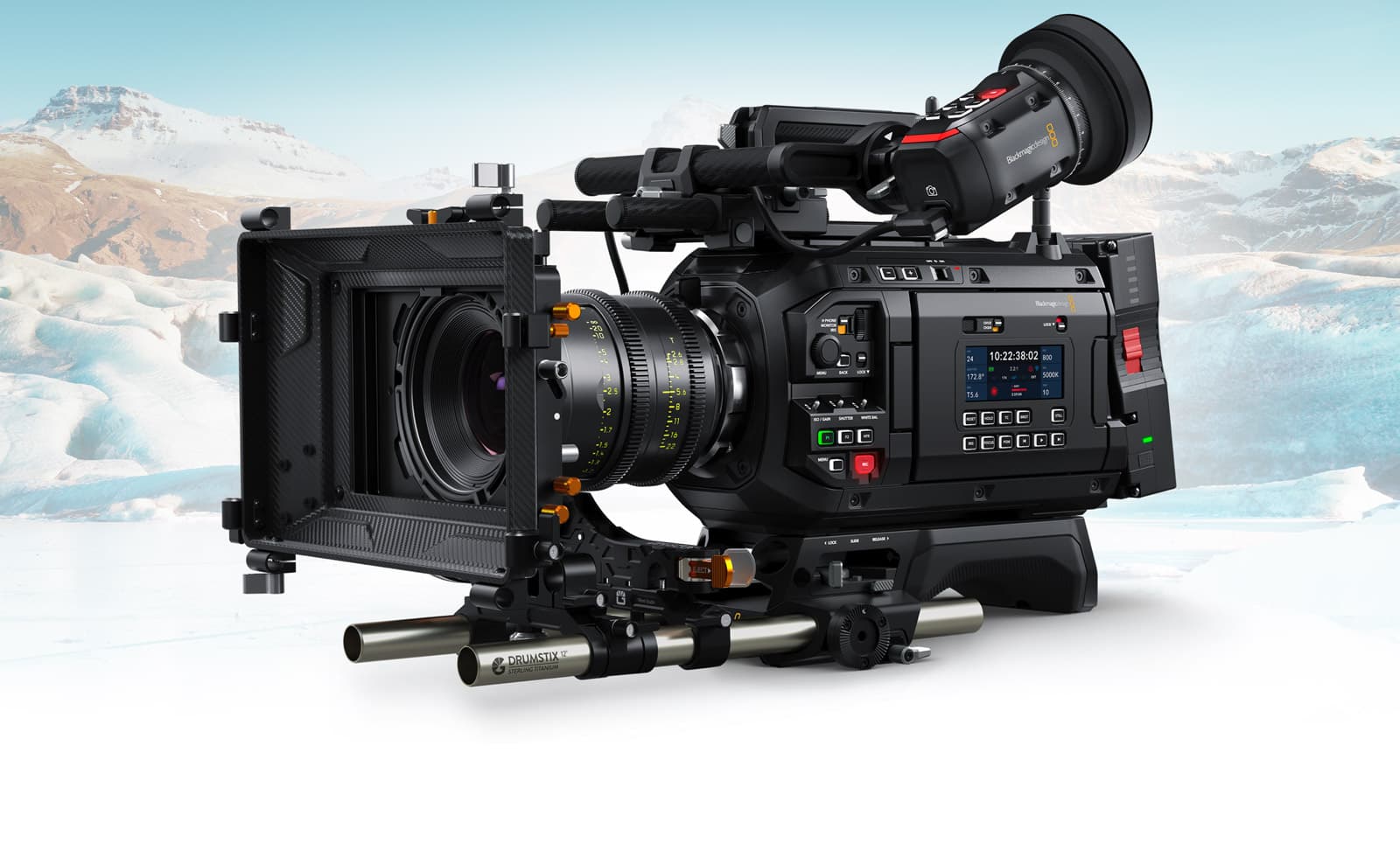
Blackmagic URSA Cine 12K LF.
Full-frame 12K sensor with 16 stops of dynamic range and Blackmagic RAW. A cinema flagship at a fraction of competitor pricing.
The Verdict.
Gavler Meta-Score
“The URSA Cine 12K LF is Blackmagic's most ambitious camera ever, and the value proposition is staggering. 12K full-frame resolution with 16 stops of dynamic range at $14,995 — that's one-quarter the price of comparable cinema flagships. The platform is still maturing, but the image quality is already world-class.”
The Gavler Verdict
The Gavler Review.
Blackmagic URSA Cine 12K LF Review: 12K RAW for a Fraction of Flagship Money
The Blackmagic URSA Cine 12K LF is the rare camera that makes a genuinely disruptive price argument and mostly backs it up in practice. Reviewers who've put real hours behind it consistently praise the image, the color science, and the operator experience, while flagging the same two costs every buyer needs to budget for honestly: proprietary media that adds up fast, and an accessory and rental ecosystem that's still catching up to ARRI and Sony. At current street pricing — well below its original $14,995 launch price after Blackmagic's 2025 kit price cuts — it's one of the strongest value plays in large-format cinema, which is exactly why it lands at rank 6 on our Best Cinema Cameras list.
Context: Democratizing the 12K Flagship Tier
Blackmagic built its reputation on undercutting the high end of the camera market, and the URSA Cine 12K LF is that strategy at its most aggressive. It's positioned squarely against cameras that cost three to four times as much — the ARRI ALEXA 35 and Sony Venice 2 both list well north of $50,000 once you account for typical kit configurations. The URSA Cine 12K LF launched at $14,995 for a PL-mount kit in 2024, and Blackmagic has since pushed pricing down further, cutting kit prices by roughly a third in August 2025 and introducing a body-only configuration as low as $6,995 for buyers who already own their own rigging accessories.
That pricing strategy tells you who this camera is for: independent DPs and owner-operators who want large-format, RAW-native image quality without flagship rental fees; small production companies buying rather than renting; and documentary and commercial shooters who need 12K resolution for VFX plates, heavy reframing, or IMAX-style deliverables but don't have ARRI-tier budgets. It's less obviously the right call for large studio productions that lean on deep rental-house support, same-day replacement bodies, and a bottomless accessory catalog — areas where ARRI and Sony still have a real head start.
In Use: Performance and Workflow
The core of the camera is a full-frame 36 x 24mm RGBW sensor capturing up to 12,288 x 6,480 pixels in 3:2 open gate, recording internally to Blackmagic RAW. Director Brett Danton, who spent three days with the camera for a hands-on piece on RedShark News, was struck first by build quality: "The first thing I noticed about this camera when I took it out is that it's built really well... I won't beat around the bush; it's a heavy camera, but you don't buy it for its weight. When you think about what it's doing, it's capturing 12K RAW large format. I've shot with the ALEXA 65, and that isn't exactly a light-format camera." He also singled out the integrated viewfinder as a relief in a market where "even some of the higher-end cameras now you've got to buy a third-party viewfinder," and called the menu system straightforward to operate from either of the camera's two side screens.
ProVideo Coalition's Brian Hallett ran the camera through documentary-style interview work, macro nature footage, and family video tests, shooting mostly solo. His verdict: "The Blackmagic URSA Cine 12K LF is a powerful cinema camera that delivers not only 12K resolution but also excellent color and dynamic range. At its price, one gets one helluva camera... Actually, a VERY REASONABLE Price." He also flagged a real operational wrinkle: to unlock the camera's highest frame rates you need B-mount or other high-voltage (24 to 28V) batteries, not standard 14.4V packs — a detail that changes your battery budget before you've even bought media.
Rob Redman's review for Digital Camera World is the most detailed independent test of image quality and workflow. His summary: "The Ursa Cine 12K is a powerhouse of a camera. Operation is a joy, although make sure the size and weight are suited to your needs. The picture is beautiful, even at higher compression settings, thanks to BRAW, and there are plenty of options to manage quality vs file size... Handling the files is less of a headache than you might imagine, even on older machines, plus the proxy system is ace. Blackmagic has hit a real home run with the Cine 12K. It produces images comparable to cameras that cost significantly more and pairs seamlessly with Resolve." He rated its feature set and value both at the top of his scale, calling it "pretty futureproof and adaptable to lots of shooting scenarios."
Officially, Blackmagic rates the sensor at 16 stops of dynamic range with its Generation 5 color science, tuned specifically to match DaVinci Resolve's image processing pipeline — a genuine advantage for anyone already cutting and grading in Resolve, since color and RAW debayering happen in the same ecosystem the camera was designed around.
Strengths
- Resolution headroom that actually gets used. Shooting in 12K and reframing, stabilizing, or cropping in post without visible quality loss came up repeatedly across reviews. Redman noted no sensor cropping penalty at lower resolutions, meaning 8K and 4K deliveries retain the full-frame field of view.
- Color science built for Resolve. Generation 5 color science and BRAW give a workflow advantage specifically for Resolve-based posts, which is most of Blackmagic's target audience already.
- A real, first-party EVF and dual-screen operation. Both hands-on reviewers called out the physical viewfinder and the second side screen for AC/focus puller use as differentiators against cameras that increasingly ship without either.
- Price-to-image ratio. At current street pricing in the $9,500 to $10,500 range for the standard kit, reviewers consistently frame the image quality as competitive with cameras costing multiples more.
- Flexible frame rates and formats. 12K 3:2 open gate up to 80fps, 8K up to 144 to 224fps depending on aspect ratio, and multiple anamorphic de-squeeze options give real creative range from a single body.
Trade-offs: Who Should Skip It
The most consistent criticism across every review is storage. Digital Camera World listed "high storage demands" as a top con, and Hallett at ProVideo Coalition put it bluntly: "If you're shooting 12K all the time, you'd better have a good storage solution." Blackmagic's optional 8TB Media Module costs roughly $1,695 on top of the camera, and while the camera also accepts standard CFexpress cards through its included dual-slot module, hitting the highest bitrates and frame rates generally means buying into Blackmagic's proprietary media system.
Weight and rigging are the second recurring flag. Redman's review noted that while the camera's heft helps damp micro-jitter, "it takes its toll on the shoulder after a while," and recommended a tripod or easy rig rather than extended handheld work — his explicit "don't buy it" case was "if you need a small light package." Power is a related concern: getting full performance requires 24 to 28V high-voltage batteries, an added line item if you're not already invested in that ecosystem.
The bigger-picture trade-off is maturity. Matthew Allard at Newsshooter, covering Blackmagic's pattern of price cuts on this camera, noted sympathy for "early adopters who bought the URSA Cine 12K LF Camera (PL Mount)" before the 2025 price reduction, pointing to "Blackmagic Design's history of discounting their cameras after release." That volatility, combined with a still-developing rental and third-party accessory ecosystem compared to ARRI and Sony, means this isn't necessarily the camera for a production that needs guaranteed same-day backup bodies or a deep bench of established support techs. If that's your priority, the rental infrastructure around ALEXA 35 and Venice 2 is simply more built out right now.
How It Compares
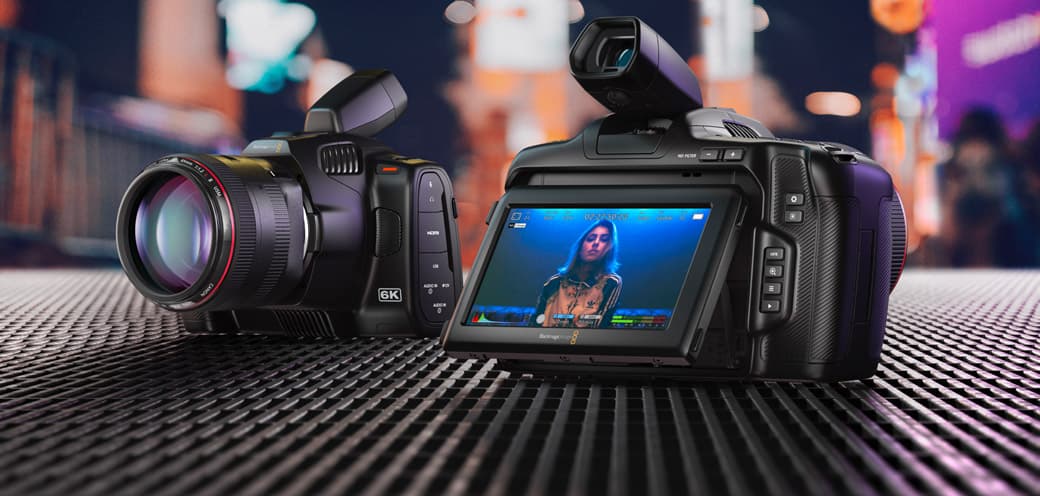
Within Blackmagic's own lineup, the natural entry point below the URSA Cine 12K LF is the Blackmagic Pocket Cinema Camera 6K G2, ranked 2 on our list. It shares BRAW recording and the same Resolve-first color philosophy at a fraction of the price and size, making it the obvious upgrade path in reverse: shooters who outgrow the Pocket 6K G2's smaller Super35 sensor and want full-frame 12K resolution, a proper media system, and studio-grade I/O land on the URSA Cine 12K LF next.
For a cross-brand budget alternative, the Sony FX3, our number 1 ranked cinema camera, takes a completely different approach — compact, full-frame, built for run-and-gun and hybrid shooters who value Sony's autofocus and a massive E-mount lens ecosystem over raw resolution or a large-format workflow. If your priority is a lightweight everyday camera with dependable autofocus, the FX3 wins. If your priority is maximum resolution, dynamic range, and a purpose-built cinema rig for controlled productions, the URSA Cine 12K LF is the more serious tool.
The Gavler Verdict
The Blackmagic URSA Cine 12K LF earns its place on our list by doing something genuinely rare: delivering image quality that reviewers repeatedly compare favorably to cameras costing multiples more, without cutting corners on build quality, color science, or operator ergonomics. It's not a free lunch — proprietary media costs add up, the camera is heavy enough to demand real support gear, and the rental and accessory ecosystem hasn't caught up to ARRI or Sony yet. But for owner-operators, small production houses, and DPs who live in DaVinci Resolve, it's one of the most compelling price-to-performance cinema cameras on the market today. Score: 8.9/10.
Common Questions
It launched in 2024 at $14,995 for the PL-mount kit. Blackmagic cut kit pricing by roughly a third in August 2025, and street pricing on the standard kit has settled in the $9,500 to $10,500 range depending on retailer and mount configuration, with a body-only option starting around $6,995. A newer 100G-networking variant introduced in 2026 starts even lower, near $8,995. Always check current retailer pricing before buying, since Blackmagic has a track record of adjusting prices after launch.
For image quality and dynamic range, reviewers consistently say yes, it competes. For production readiness, not quite yet. ARRI and Sony have decades of rental-house stock, accessory ecosystems, and on-set support built up that Blackmagic is still growing into. It's a strong choice for owner-operators and smaller productions, less of a slam dunk for a studio show that needs three backup bodies overnight.
It ships with a CFexpress-based Media Module using standard CFexpress cards, and Blackmagic sells an optional proprietary 8TB Media Module (about $1,695) that unlocks the camera's highest bitrates and frame rates. The 8TB module is fast but adds real cost on top of the camera body.
You can, but most reviewers who tested it recommend a tripod, gimbal, or easy rig for anything beyond short handheld bursts. It's a dense, well-built camera, and testers noted it takes a toll on the shoulder over a full day of operating without support.
To hit its top frame rates and power all onboard accessories, yes. It ships with a B-mount battery plate and wants 24 to 28V high-voltage batteries. Run it on lower-voltage 14.4V batteries and you lose access to frame rates above 60fps and some accessory power outputs.
Where to Buy.
Prices checked regularly
90-day price history
Price History
Steady at $14,995 for the entire 90-day tracking window — no increases, no discounts, across 91 tracked days.
Tracked daily across retailers. Vote Want itabove and we’ll alert you the moment the price drops.
Some links are affiliate links — Gavler may earn a commission. This never affects rankings or scores. Learn more.
Precision Engineering
12K Full-Frame Sensor
12,288 x 6,480 resolution with 16 stops of dynamic range — unlimited reframing in 4K/8K timelines.
PL Mount Cinema Body
Full-size PL mount with integrated 7-inch HDR touchscreen and modular battery system for professional film sets.
Blackmagic Media System
High-speed dedicated media drives sustain the write speeds needed for 12K RAW at high frame rates.
Technical Specifications
The Scoreboard
Experts recognize the extraordinary resolution-to-price ratio as industry-disrupting. Community scores reflect the newer platform's limited rental house presence and accessory ecosystem compared to established cinema systems from ARRI and Sony.
Cast Your Vote
Do you think Blackmagic URSA Cine 12K LF deserves the #6 spot in Best Cinema Cameras?
Global Critique
“12K full-frame with 16 stops of dynamic range for under $15,000. Blackmagic just changed the economics of cinema.”
“The resolution is staggering. Reframe from a wide to a close-up in 4K post and you cannot tell the difference from a dedicated close-up.”
“Blackmagic's Generation 5 color science is genuinely beautiful. It's the closest any camera has come to ARRI's skin tone rendering at this price.”
More from Best Cinema Cameras.
See how other top picks compare in this category.
A Compact Cinema Body, an ND Workhorse, or a RAW Cube?
A 12K hangtag is the wrong first question. Compact cinema body, ND workhorse, or RAW cube is the camera. Then shop Gavler's live ranking.
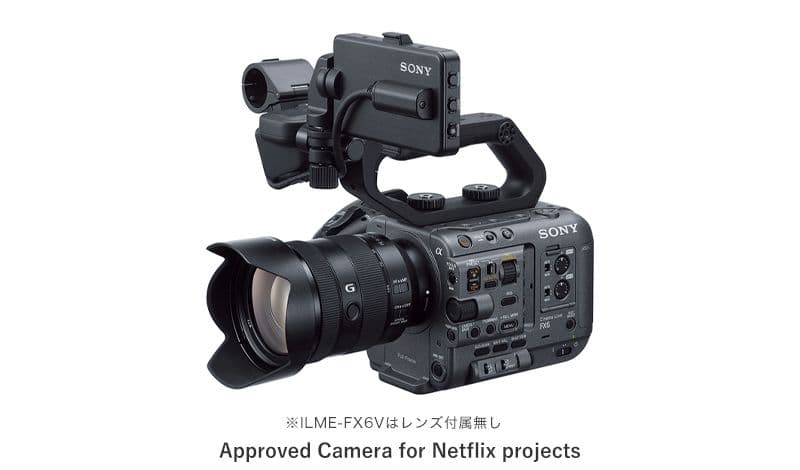
Sony's New FX5 Gives the Compact Cinema Camera Everything the FX3 Was Missing — For $1,000 More
Sony's FX5 adds a stacked sensor, 5K Open Gate, and internal RAW — the compact FX line's biggest leap. But it drops photo mode and still has no built-in ND.
The Best Cinema Cameras in 2026, Ranked by the Filmmakers Who Shoot Them
From a $1,795 Blackmagic Pocket 6K to a 12K full-frame flagship, Gavler's community ranks the cinema cameras worth buying in 2026.