The Best Trekking Poles in 2026: Buy for the Trail, Not the Gram Count
Carbon and aluminum, folding and telescoping, ultralight to budget. Gavler ranks the best trekking poles of 2026 — and how to pick for the trail you hike.
Updated June 30, 2026 — we are in the heart of hiking season and heading into the steep-descent months, when poles do the most for your knees on fall peak-bagging and larch-season descents. Below: the poles from Gavler's Best Trekking Poles list worth buying, grouped by how you actually hike.
Here is the most useful way to shop trekking poles: stop chasing the lowest gram count and start with the trail you hike and how you carry the poles when you are not using them. The lightest carbon poles save you ounces but snap if you lean on them wrong. The toughest poles shrug off rocky abuse but weigh you down on a long climb. The most packable poles vanish into a running vest but cannot be adjusted. There is no universally best pole — only the right pole for your terrain, your pack, and how hard you are on gear.
So ignore the badge and match the pole to the work. Counting grams on a smooth thru-hike? Go ultralight and plant your poles gently. Running technical trails? You want folding and packable. Logging hard miles on rocky descents for years? Buy durable and forget about it. Below, Gavler's list grouped the way you should actually shop it.
The Ultralight Benchmark — Gossamer Gear LT5
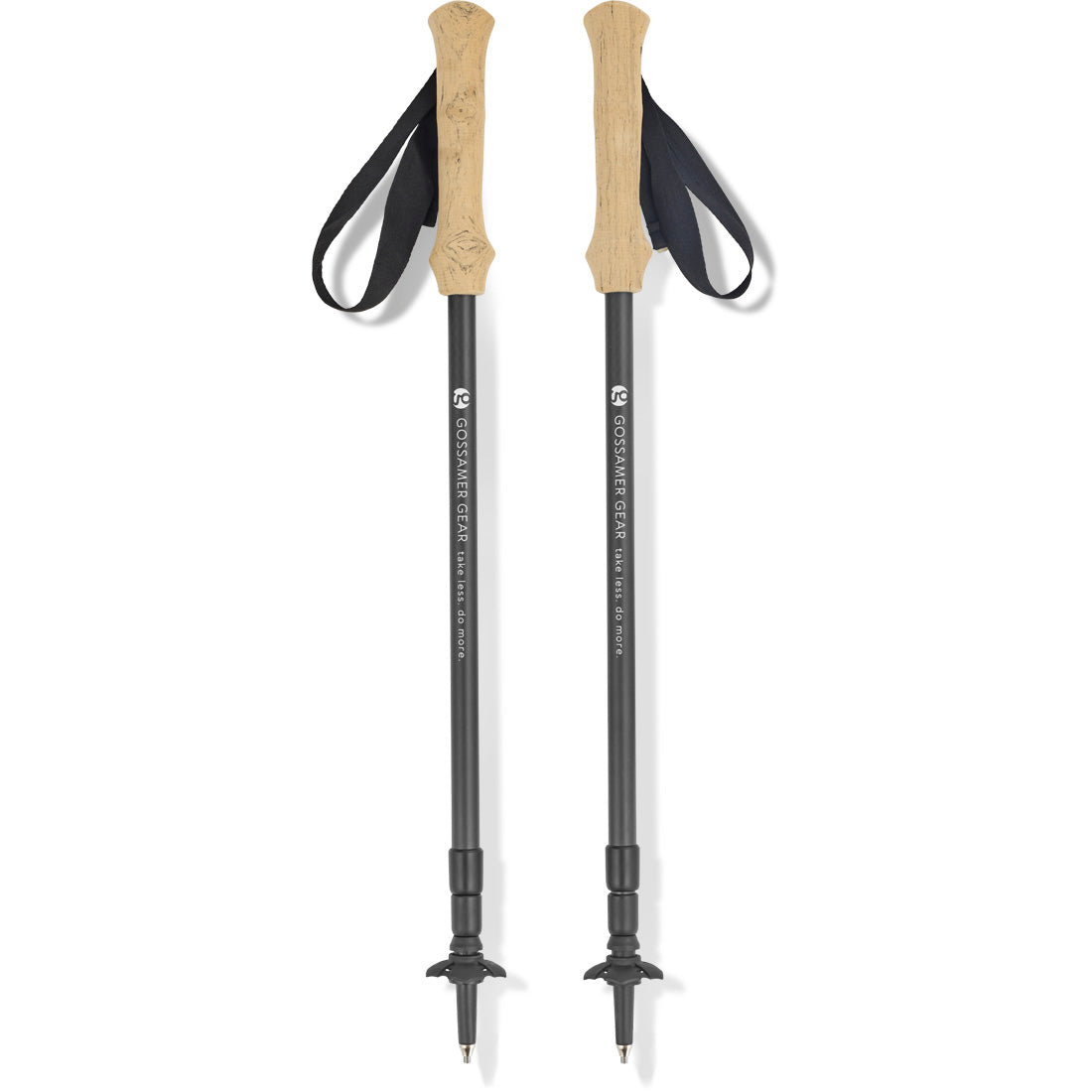
Gossamer Gear LT5
4.6 oz per pole carbon fiber trekking poles designed by ultralighters for ultralighters. The lightest credible trekking poles in production.
Amazon affiliate · price subject to change
The Gossamer Gear LT5 tops Gavler's list at 9.6 because it answers one question better than anything else: how light can a usable trekking pole get? OutdoorGearLab, weighing them against the field, found that "with carbon fiber shafts, plastic twist-lock mechanisms, and foam grips, they are among the lightest poles we have ever tested," and CleverHiker calls them flatly "our favorite ultralight trekking poles." Roughly half the weight of mainstream poles, the LT5 is a three-section carbon shaft with a simple twist-lock and a spartan foam grip — every non-essential gram engineered out.
The honest caveat is durability, and reviewers do not soften it: OutdoorGearLab notes "the LT5 does not promise longevity. In fact, we broke our poles during the test period." The twist-lock is also fussier to set than the lever locks most poles have moved to. This is a pole for the dialed-in ultralight hiker who treats poles as featherweight balance aids — not for someone planting them hard on rocky descents.
The cottage alternative is the Zpacks Carbon Fiber Poles at rank 6 (around $99), which double as tent poles for a Zpacks shelter. One correction worth making, because the marketing implies otherwise: these are not a featherweight. Road Trail Run measured them at about 7.2 ounces per pole and put it plainly — "they're not the lightest on the market, but they strike a good balance between weight, strength and price." They are an adjustable, flip-lock pole for hikers already in the Zpacks ecosystem, not a gram-counting trophy.
Packable and Fast — Folding Poles
If you trail run or hike fast-and-light, the metric that matters is collapsed length: a pole you can stash in a vest the moment the trail flattens.
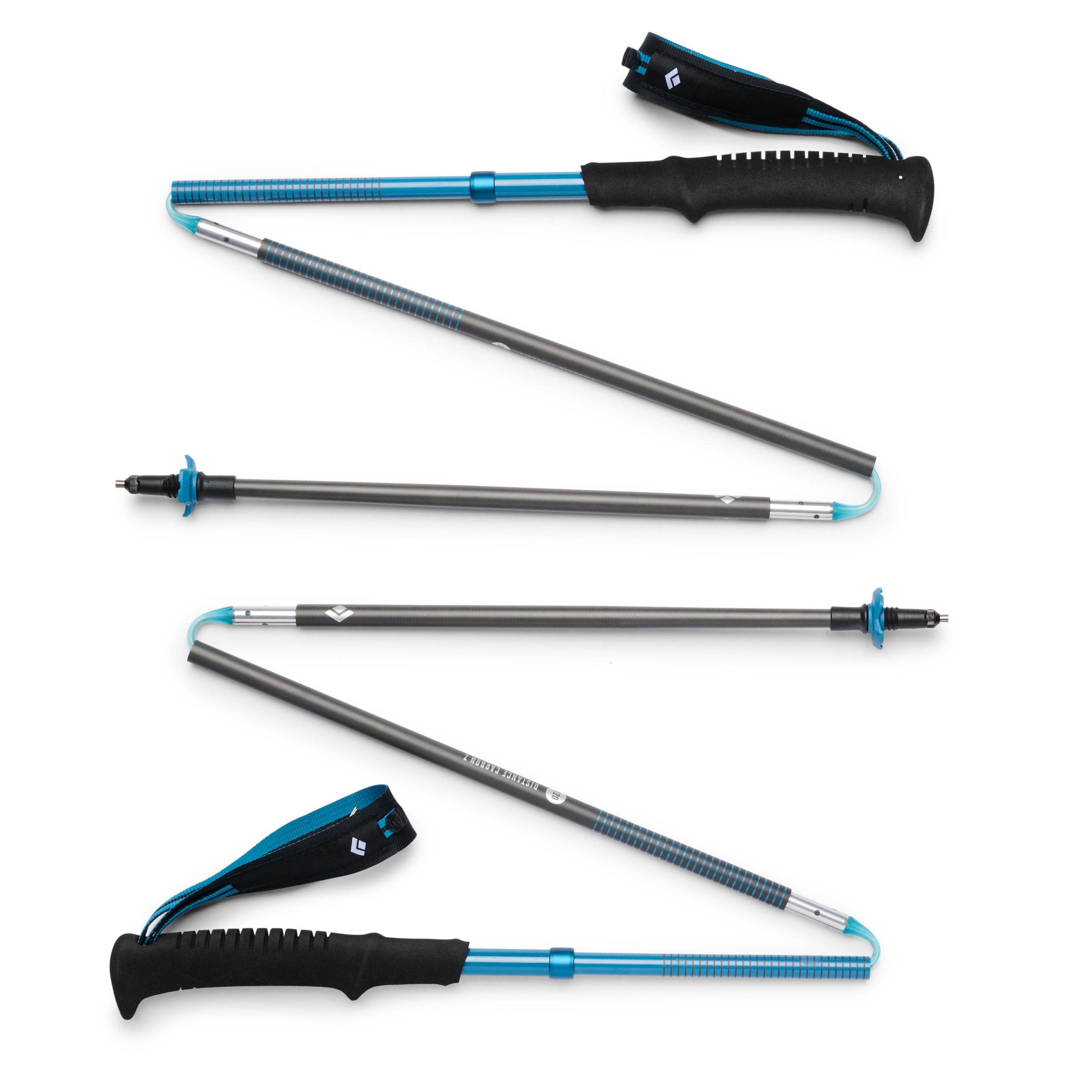
Black Diamond Distance Carbon Z
Z-fold carbon fiber poles that pack down to 15 inches and deploy in seconds. The folding pole that solved the stow-and-go problem for trail runners and fast hikers.
Amazon affiliate · price subject to change
The Black Diamond Distance Carbon Z at rank 2 is the folding benchmark. OutdoorGearLab describes how it "packs down small thanks to its three-section Z-pole design, folding into a compact length that's easy to stash in a running vest or attach to the outside of a pack" — roughly 14 inches collapsed. The trade-off is rigidity of length: as the same review warns, "you can't adjust the length for different terrain or users of different heights," and the slim foam grips "lack the plush, ergonomic shaping found on heavier trekking poles." For a runner who wants poles that disappear, those are easy compromises.

Leki Makalu FX Carbon
German-engineered carbon fiber poles with the SpeedLock 2 adjustment system. The durability benchmark — Leki's poles survive abuse that snaps competitors.
Amazon affiliate · price subject to change
The Leki Makalu FX Carbon at rank 3 is the folding pole for people who are hard on gear. It pairs Z-fold packability with Leki's Speed Lock 2 Plus lever lock — The Big Outside reports the "Speedlock 2 Plus lever locks that never failed, even in rugged terrain." The cost is weight: the same reviewer measured "17.9 ounces per pair," which "places them in a category with the heaviest hiking poles. But they are more durable than lighter poles, a selling point in rocky terrain and to backpackers who use trekking-pole tents." The Aergon Air grip is a genuine highlight — Wildland Trekking calls it "the epitome of ergonomic handle design." Buy these to abuse them.
All-Day Comfort and Durability — Black Diamond Alpine Carbon Cork
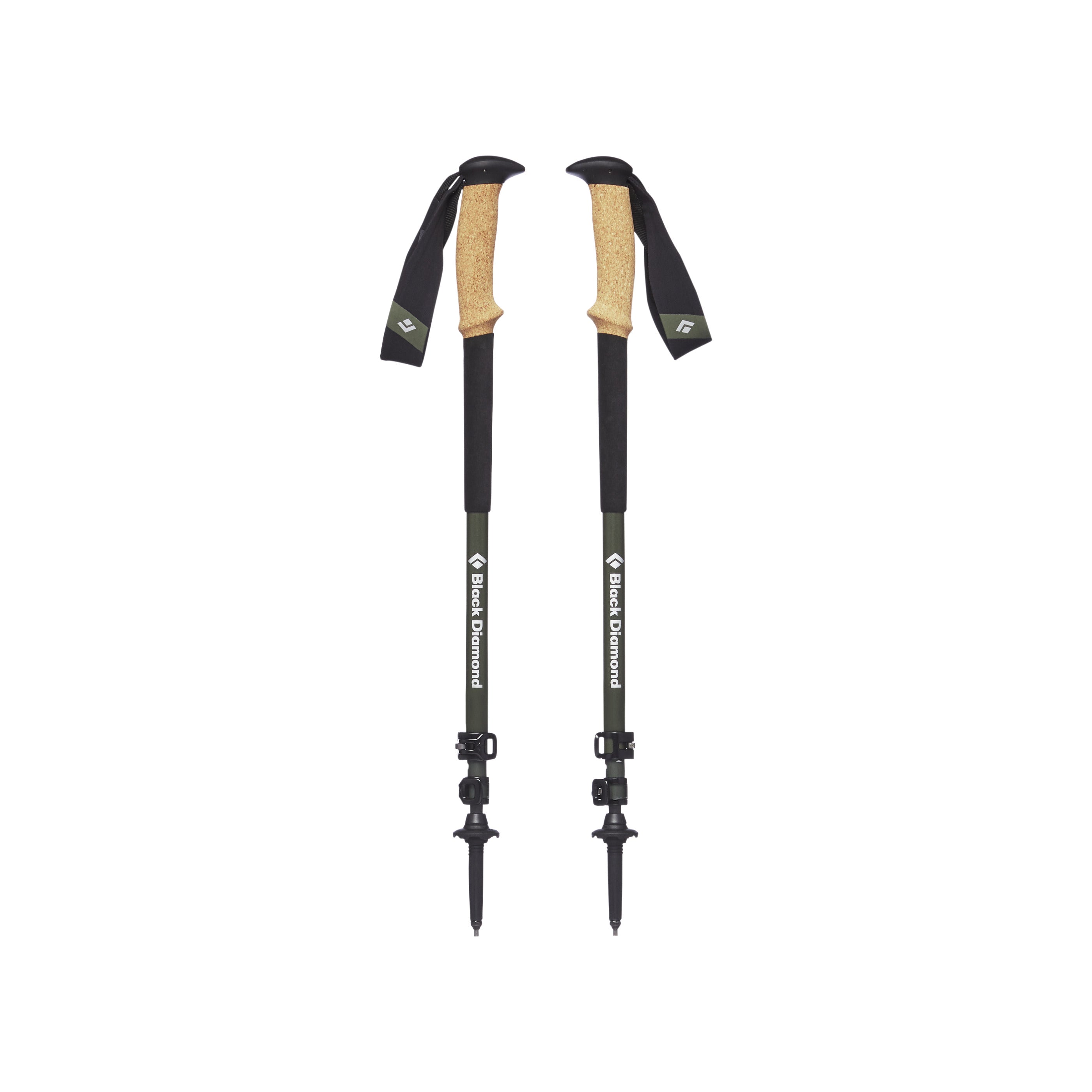
Black Diamond Alpine Carbon Cork
Cork-grip carbon fiber poles built for all-day comfort on long descents. The classic Black Diamond pole that serious hikers replace — with the same pole.
Amazon affiliate · price subject to change
The Black Diamond Alpine Carbon Cork at rank 5 is the telescoping pole hikers buy, wear out, and replace with the exact same model. The cork grip is the reason — OutdoorGearLab says "cork is our favorite grip material for trekking poles," molding to your hand and wicking sweat over long days. The all-metal FlickLock Pro is "one of the most robust and secure on the market," and the durability is proven: "one of our testers used this set of poles for over seven years, and they held up well." The honest limit is weight — "these aren't the lightest or most packable poles we tested, so they aren't good options for mountain running or peakbagging." For an all-day backpacking pole with full length adjustment, it is the comfort default.
The Value Picks — REI, Cascade, and the Aluminum Tanks
You do not need to spend $150 for a good pole. You do need to spend a little above rock-bottom to get a lock you can trust.
REI Co-op Trailmade Carbon
REI's house-brand carbon fiber poles at $80 — the price-performance benchmark. Surprisingly capable for a store-brand pole, with REI's no-questions return policy as insurance.
Amazon affiliate · price subject to change
The REI Co-op Trailmade at rank 4 ($80) is the smart-money value pick. SectionHiker found it "sturdy and well-made," noting that "the quality of their manufacture is apparent as soon as you pick them up... They have a solid feel, are stiff, and bear weight well," and an "excellent option for new or occasional hikers who want a quality set of poles that won't break the bank." Add REI's no-questions return policy and it is the closest thing to a zero-risk pole purchase. (One honest note from the same review: the included baskets are "too small for proper flotation" in snow, so add snow baskets if you need them.)
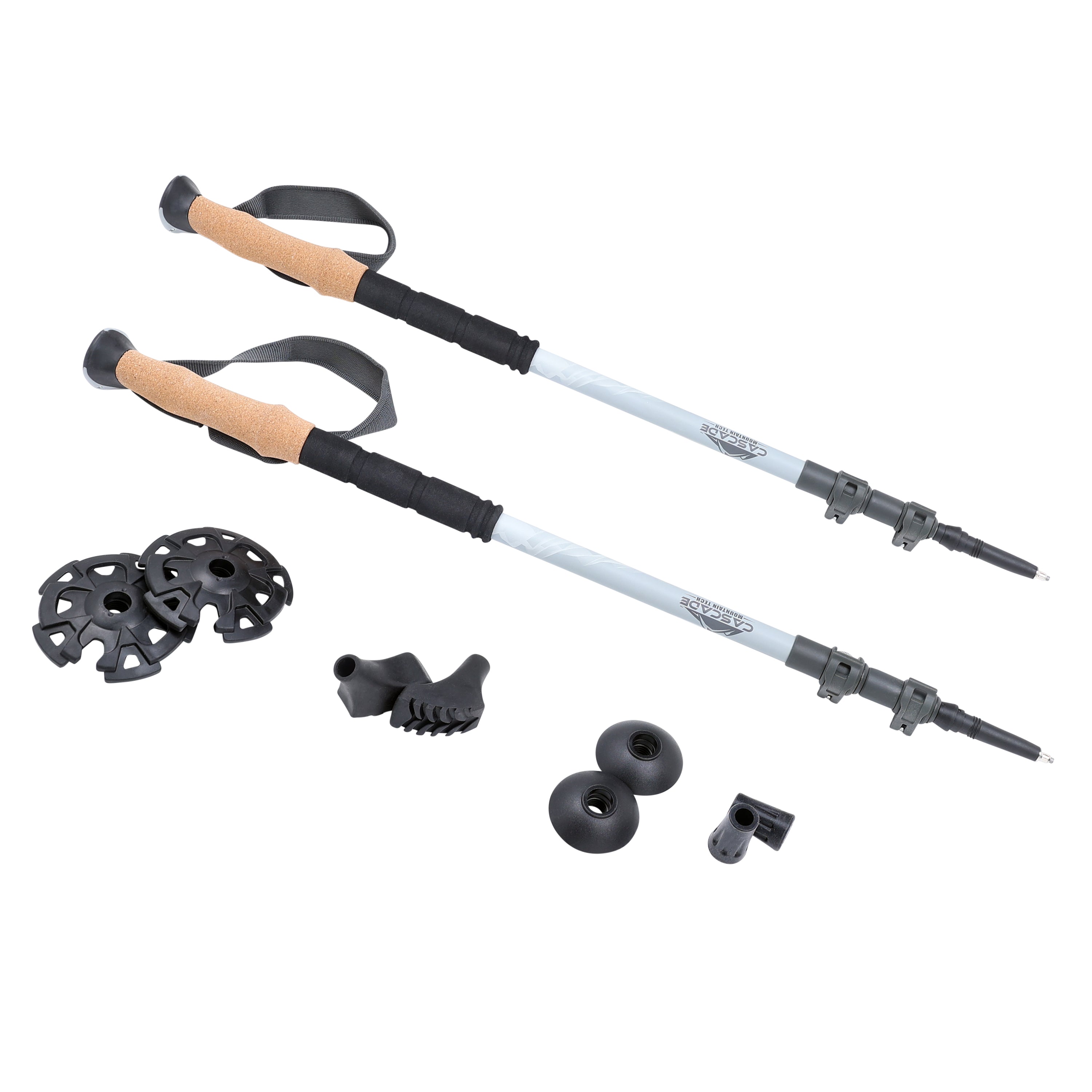
Cascade Mountain Tech Carbon Fiber
Full carbon fiber trekking poles at $40 — the Amazon best-seller that proved you don't need to spend $150+ for functional carbon poles.
Amazon affiliate · price subject to change
The Cascade Mountain Tech Carbon Fiber at rank 7 is the famous around-$40 budget carbon pole, and it deserves a clear-eyed verdict. OutdoorGearLab grants it is "an accessible entry point into carbon fiber gear... a reasonable option for casual hikers looking to keep costs low," but the same testing is blunt about the weak point: "the poles often collapsed on us when unexpectedly weighted, which felt unsafe on uneven terrain or steeper slopes," and reviewers cite reports of shafts "prone to snapping under lateral stress." Fine for mellow trails and learning pole technique; not a pole to lean on hard.
On the aluminum side, the Kelty Range 2.0 (rank 9, $60) and Montem Ultra Strong (rank 10, $35 with a lifetime warranty) trade weight for toughness — they bend before they break, which is the right failure mode for rocky, off-trail abuse.
A 2026 Note Worth Knowing
If you have shopped this category before, you may look for CNOC's folding poles (rank 8). Worth flagging: CNOC has exited trekking poles entirely and now focuses on hydration gear, with the pole line moving to a sister brand, Diorite Gear. The folding-aluminum value pole still exists — it just wears a different name now. It is a small sign of a larger 2026 trend: folding poles like the Leki and Black Diamond Z above keep winning ground from fixed ultralight poles, because packability has become the feature hikers actually pay for.
The Bottom Line
Match the pole to the trail. Go Gossamer Gear LT5 if you count grams and plant poles gently; the Black Diamond Distance Carbon Z if packability rules your kit; the Leki Makalu FX Carbon if you are hard on gear and want a folding pole that survives it; the Black Diamond Alpine Carbon Cork for all-day telescoping comfort; the REI Trailmade for the zero-risk value buy; the Cascade Mountain Tech only for casual, mellow-terrain use; and the aluminum Kelty Range 2.0 or Montem Ultra Strong if you want something nearly impossible to kill. The Zpacks Carbon Fiber Poles round out the list for the Zpacks-shelter crowd.
See the full community ranking, vote for your pick, and compare expert and community scores on our Best Trekking Poles list. Architecture first — thin-wall carbon vs a durable all-day shaft vs poles under $80 — is the trekking-pole buying guide. Building out the rest of the kit? Cross-shop the Best Backpacking Tents (many pitch with your poles), Best Backpacking Packs, and Best Backpacking Water Filters briefs, or browse the full lineup across the backpacking category.
See all 10 products ranked by the community
Best Trekking Poles
See Full Rankings →250 community votes cast
Common Questions
There is no single best pole — the right one depends on how you hike and how you pack. For ultralight backpacking, the Gossamer Gear LT5 tops Gavler's list at 9.6: among the lightest credible carbon poles in production, though reviewers warn the thin shafts are not for hard, off-trail abuse (OutdoorGearLab actually broke a pair in testing). For packability, the Black Diamond Distance Carbon Z (rank 2) folds to about 14 inches to stash in a running vest. For durability and a lock you never think about, the Leki Makalu FX Carbon (rank 3) and Black Diamond Alpine Carbon Cork (rank 5) are the workhorses. For value, REI's $80 Trailmade (rank 4) is the zero-risk entry. Pick for your trail and your pack, not the lowest gram count.
Carbon is lighter and stiffer; aluminum is tougher and fails more gracefully. A carbon pole saves ounces and transmits less vibration, which adds up over a long day — most of Gavler's top picks are carbon for exactly that reason. The catch is the failure mode: carbon can snap suddenly under a hard sideways load (OutdoorGearLab flagged exactly this on the budget Cascade poles), while aluminum tends to bend before it breaks, and a bent pole still gets you back to the trailhead. If you hike rocky, off-trail terrain or you are simply tough on gear, aluminum poles like the Kelty Range 2.0 (rank 9) or Montem Ultra Strong (rank 10) are the safer, cheaper call. For weight-conscious trail hiking, carbon wins.
The Gossamer Gear LT5 (rank 1, around $155) is the ultralight benchmark — roughly half the weight of mainstream poles, with a minimalist three-section carbon build and a simple twist-lock. The trade-off is durability: the thin shafts and plastic locks are not built for hard leaning or off-trail abuse, and OutdoorGearLab broke a pair during testing. The Zpacks Carbon Fiber Poles (rank 6, around $99) are the cottage alternative and double as tent poles for a Zpacks shelter — but despite the reputation, they are a well-rounded, roughly seven-ounce-per-pole adjustable pole, not a featherweight, so do not buy them expecting the lowest number. True gram-counters who plant poles gently should start with the LT5; anyone harder on gear should weigh a sturdier pick.
Folding (Z-fold) poles like the Black Diamond Distance Carbon Z (rank 2) and Leki Makalu FX Carbon (rank 3) collapse far shorter — roughly 14 to 16 inches — so they stash in a running vest or strap cleanly to a small pack, and they deploy in seconds via an internal cord. The downsides: most fold to fixed lengths (the BD Z cannot be adjusted at all), and a folded pole is bulkier in the hand than a collapsed telescoping pole. Telescoping poles like the Black Diamond Alpine Carbon Cork (rank 5) adjust freely across a range — shorten for climbs, lengthen for descents, dial in height to pitch a tent — but they pack longer. Trail runners and fast-and-light hikers want folding; backpackers who pitch trekking-pole tents or share poles across heights usually want telescoping.
For the most pole at the lowest price, the Cascade Mountain Tech Carbon Fiber (rank 7, around $40) is the famous budget carbon option — but buy it with eyes open: OutdoorGearLab found its lever locks slip under load and flagged user reports of shafts snapping under lateral stress, so it is best for mellow terrain and casual use. The smarter budget buy for most people is REI's Trailmade (rank 4, $80): sturdier, with REI's no-questions return policy as insurance — the closest thing to a zero-risk pole purchase. On the aluminum side, the Kelty Range 2.0 (rank 9, $60) and Montem Ultra Strong (rank 10, $35, lifetime warranty) trade weight for toughness and are hard to kill. Spend a little above rock-bottom and you get a lock you can actually trust.
For a lot of hiking, yes — they earn their weight. On descents, poles take a meaningful share of the load off your knees and ankles, which matters most on the long, steep downhills of fall peak-bagging season. They add stability on stream crossings, loose scree, and snow, and they set a steadier rhythm on big-mileage days. There is also a gear reason: many ultralight tents, including the Zpacks and Durston shelters on Gavler's backpacking lists, pitch with trekking poles instead of dedicated tent poles, so the poles do double duty. If you only walk smooth, flat trails you can skip them — but for backpacking, technical terrain, or anyone protecting their knees, they are among the highest-value purchases in a kit.
Set the pole so your elbow sits at a roughly 90-degree angle with the tip on the ground on flat terrain — that is the neutral starting point, and it lands most hikers in the 110 to 125 cm range. Adjustable telescoping poles like the Black Diamond Alpine Carbon Cork let you fine-tune on the fly: shorten about 5 to 10 cm for sustained climbs and lengthen the same amount for descents. Fixed and folding poles such as the Gossamer Gear LT5 and Black Diamond Distance Carbon Z are ordered to a size, so measure first — most brands publish a height-to-length chart. If you are between sizes or share poles across a household, an adjustable pole is the safer pick.
Gavler's Best Trekking Poles list is ranked by community vote — one vote per person, with no affiliate commissions or manufacturer sponsorships steering the order. Hikers vote for the poles they would actually recommend, which is why the list rewards what spec sheets miss: whether the locks hold under load, whether carbon shafts survive real trail abuse, and whether a pole is still a joy after a 20-mile day. The expert score and community score sit side by side on the live list, so you can see where lab testing and owner experience agree — and you can vote yourself and watch the ranking move.
Products Mentioned
Jump to the full ranking and community verdict for each pick named above.
- Gossamer Gear LT5Backpacking · Best Trekking Poles
- Zpacks Carbon Fiber PolesBackpacking · Best Trekking Poles
- Black Diamond Distance Carbon ZBackpacking · Best Trekking Poles
- Leki Makalu FX CarbonBackpacking · Best Trekking Poles
- Black Diamond Alpine Carbon CorkBackpacking · Best Trekking Poles
- Cascade Mountain Tech Carbon FiberBackpacking · Best Trekking Poles
- Kelty Range 2.0Backpacking · Best Trekking Poles
- Montem Ultra StrongBackpacking · Best Trekking Poles