The Best Backpacking Packs in 2026, Ranked by the Thru-Hikers Who Live in Them
Zpacks, Hyperlite, Gossamer Gear, Osprey, Gregory. Gavler's thru-hikers rank the backpacking packs worth carrying — by frame, fit, and full-season abuse.
Published June 2026 — trail season is here. Below: the backpacking packs from Gavler's Best Backpacking Packs list worth carrying this summer, ranked by community vote and sorted by what the pack needs to do.
The 2026 backpacking pack market is the cleanest it has been in a decade. Zpacks finally landed the suspension geometry on the Arc Haul Ultra that the original Arc Haul promised. Hyperlite shipped a redesigned Southwest body with 10x the abrasion resistance of the prior generation. Osprey kept the Exos and the Atmos as the mainstream defaults the entire category measures itself against. Granite Gear, Gregory, ULA, Durston, Gossamer Gear, and REI fill in the price-to-weight quadrants between the cottage flagships and the mainstream warranties. The result is a roster where every pick has a defined buyer — there is no longer a lazy middle.
What follows are the picks from Gavler's Best Backpacking Packs list worth buying for the 2026 trail season, ranked by community vote and sorted by what the pack needs to do — carry a sub-25-pound base weight comfortably, haul a 40-pound family carry, survive rough off-trail terrain, or cost under $200 and still work.
The Ultralight Benchmark — Zpacks Arc Haul Ultra 60L $369
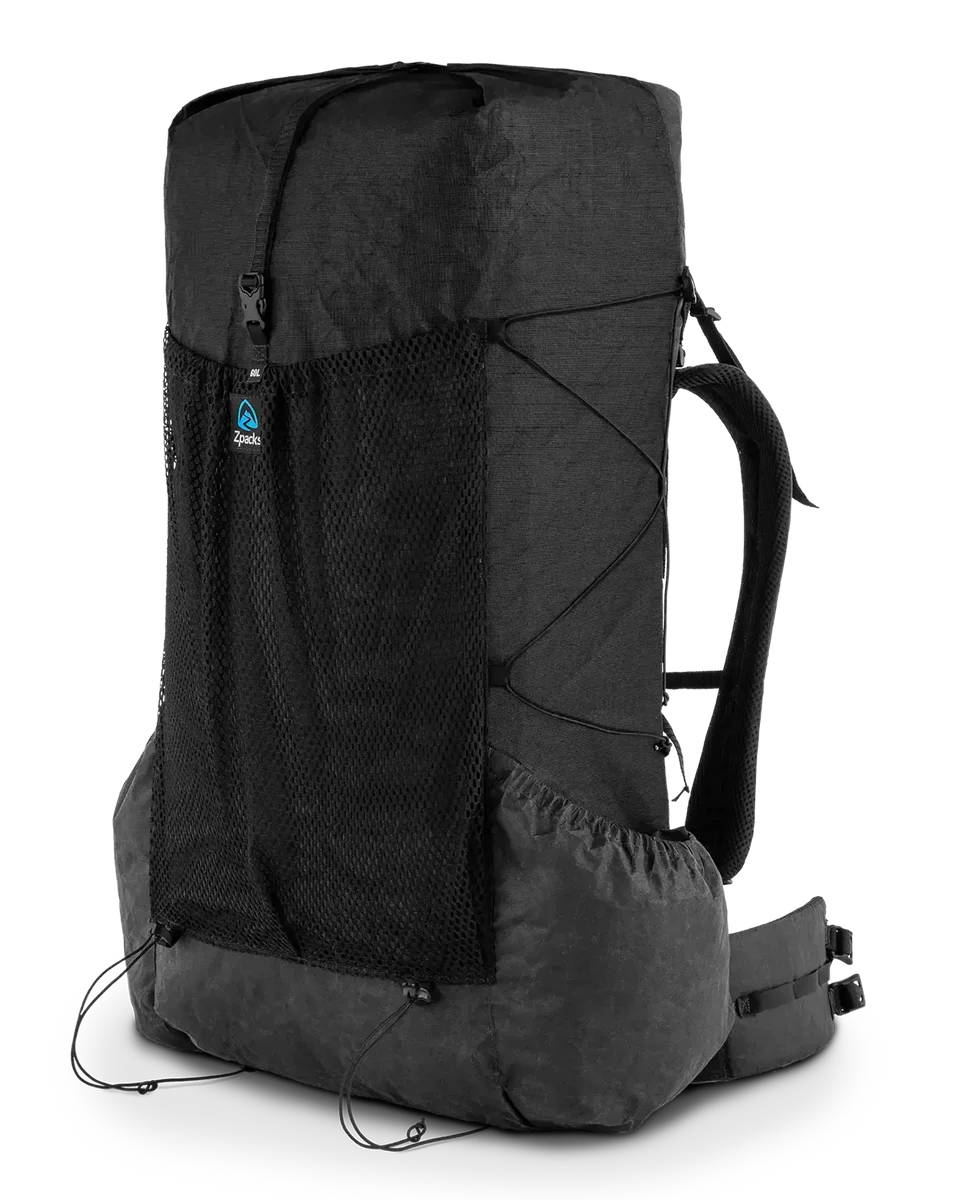
Zpacks Arc Haul Ultra 60L
21.7 oz framed pack with carbon-fiber arch suspension and a UHMWPE body that survives long-trail mileage.
If the base weight is under 15 pounds and the priority is hauling 30-plus pounds comfortably for 20-mile days, this is the pack. The Arc Haul Ultra is GearJunkie's overall pick, OutdoorGearLab's best ultralight choice, Adventure Alan's primary recommendation, Backpacker's ultralight pick, CleverHiker's overall pick, and Switchback Travel's overall pick — six independent editorial endorsements in the same 2026 window. The carbon-fiber frame creates an air gap between the pack body and the hiker's back that solves the sweat-shirt problem that plagues every flat-against-the-back pack, the Dyneema Composite Fabric body shrugs off rain and shrugs off most abrasion, and the suspension carries 35 pounds the way packs twice its weight do.
The Arc Haul Ultra ranks first on Gavler with a 9.7 community score. The trade-off is price ($369) and abrasion durability — the DCF body survives normal trail abuse but does not love sandstone scrambling, granite slot canyons, or off-trail bushwhacking through aggressive vegetation. For Pacific Crest Trail, Appalachian Trail, Continental Divide Trail, and most National Scenic Trail through-hiking, the Zpacks is the apex pick. For genuinely rough terrain, see the Hyperlite Southwest below.
The Thru-Hiker Favorite — Gossamer Gear Mariposa 60 $265
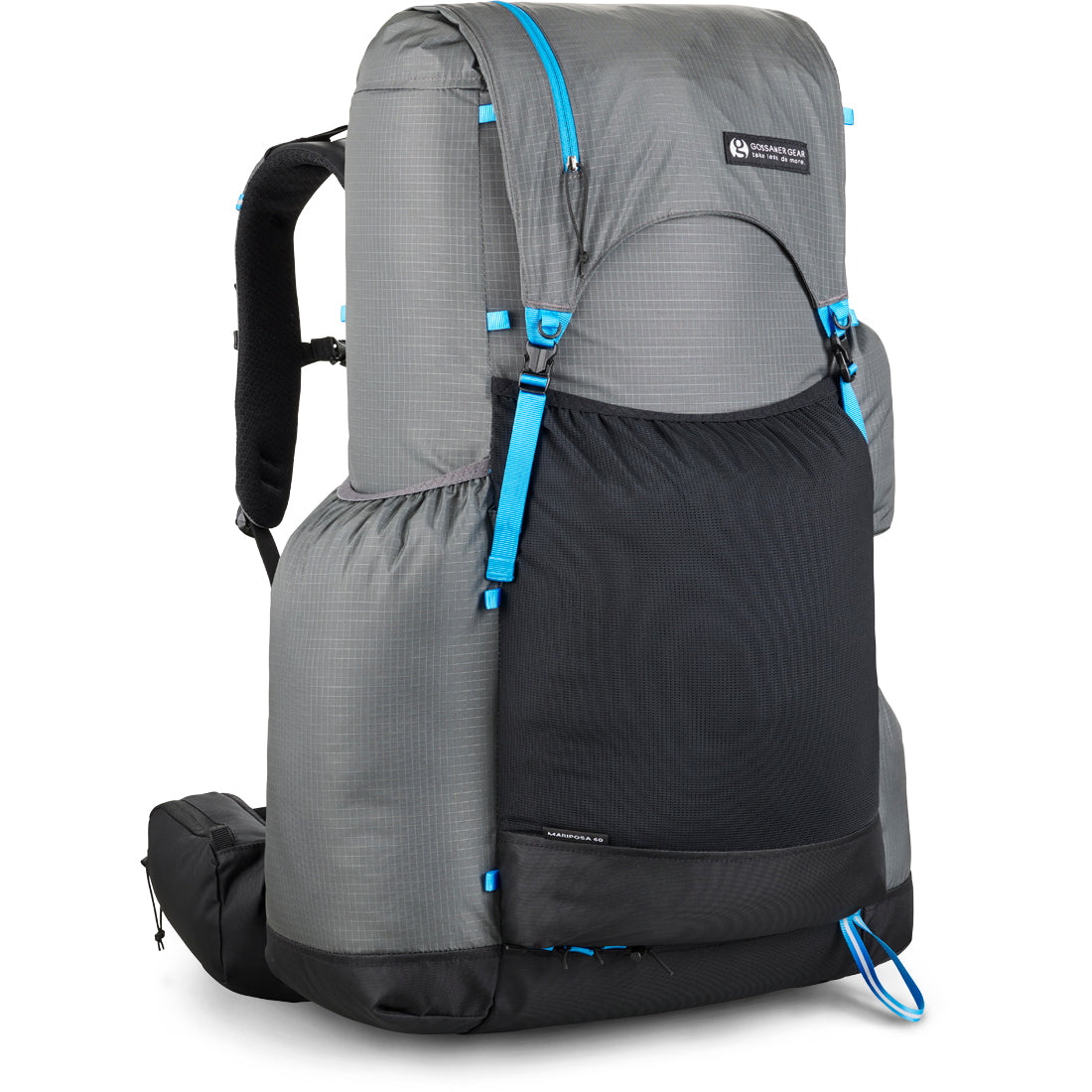
Gossamer Gear Mariposa 60
26 oz, removable sit-pad frame, massive mesh back pocket — the cottage UL pack thru-hikers actually carry.
Amazon affiliate · price subject to change
The Mariposa is the pack the long-trail community actually carries when it is not testing gear for editorial. The removable sit-pad frame doubles as camp seating and a sleeping-pad insert, the massive mesh pocket on the back swallows wet rain gear without infecting the dry packed kit inside, and the 26-ounce base weight carries 30 pounds comfortably — the Mariposa is the rare pack that is genuinely ultralight without being precious about it.
The Mariposa ranks second on Gavler with a 9.5 community score. CleverHiker's long-term test framed it as the pack the editor actually packs for personal trips when no one is watching. The trade-off is the comparatively basic suspension — a single aluminum stay, no carbon arching, no active ventilation — which means the Mariposa stops being the right answer above about 32 pounds. For weekend trips through 5-day section hikes carrying refined ultralight kits, this is the pack.
The Mainstream All-Rounder — Osprey Exos 58 $220
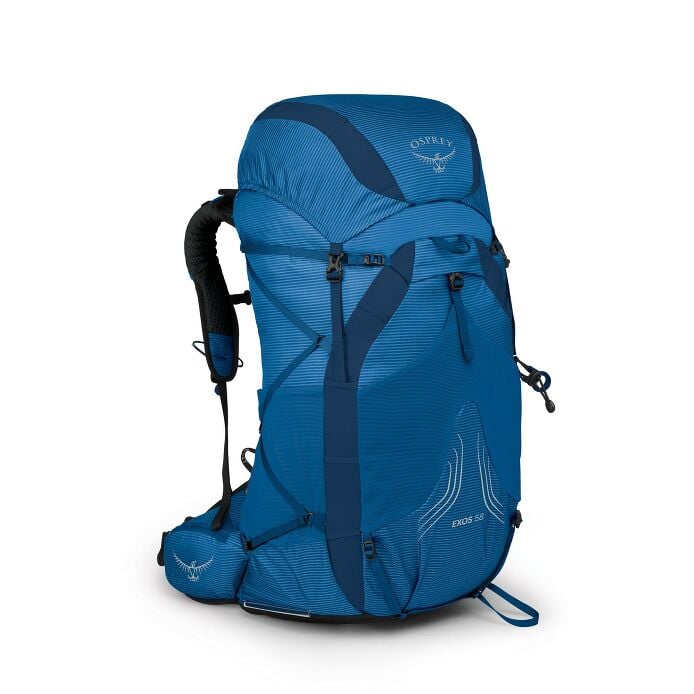
Osprey Exos 58
AirSpeed suspended mesh back panel, top-loading design, and the Osprey lifetime warranty in a 2 lb 6 oz ultralight package.
Amazon affiliate · price subject to change
The Exos is the right pack for a first thru-hike, a first cottage-to-mainstream upgrade, or a backpacker who wants the Osprey warranty and the REI return policy in an ultralight format. The AirSpeed suspended-mesh back panel — Osprey's pre-Arc-Haul answer to the air-gap problem — runs cool through summer heat, the top-loading design with a removable lid is the format every long-trail hiker eventually packs into, and the 2-pound 6-ounce trail weight competes directly with the cottage brands at half the price. The Osprey All Mighty Guarantee replaces or repairs the pack for life.
The Exos ranks third on Gavler with a 9.3 community score. For a first ultralight pack, the Exos is the right entry — the suspension forgives a slightly-too-heavy carry, the design forgives a slightly-disorganized packing approach, and the warranty forgives a strap that gets snagged on barbed wire. For a refined long-trail kit, the cottage picks above save weight at meaningful cost premium. For everything in between, the Exos is the answer.
The Heavy-Load Pack — Osprey Atmos AG 65 $300
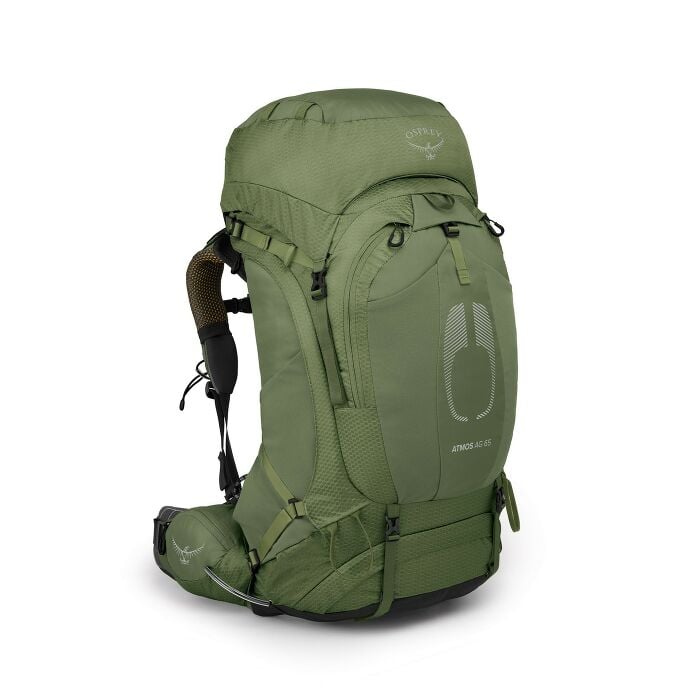
Osprey Atmos AG 65
The gold standard for multi-day treks — distributes weight like no other pack in its class.
Amazon affiliate · price subject to change
If the load is over 35 pounds — early-spring snow trips with a 4-season tent and a synthetic bag, a family trip carrying shared gear for two, a photography-heavy carry with a tripod and a full-frame body, a week-plus food carry with no resupply — the Atmos is the pack. Osprey's Anti-Gravity suspension is the most comfortable heavy-load system in production: the trampoline-style mesh back panel distributes load across the entire back rather than concentrating it at the shoulders and hips, and a 40-pound carry on the Atmos rides like a 30-pound carry on a flat-frame pack.
The Atmos ranks eighth on Gavler with an 8.6 community score. The trade-off is weight (4 pounds 8 ounces — roughly triple the cottage ultralight picks) and a price-to-weight ratio that does not flatter the pack on paper. The Atmos is the comfort pick for everything the ultralight picks make miserable: long water carries, cold weather, kids' gear shared in, or any trip where weight is determined by the trip rather than the kit philosophy.
The Bombproof Off-Trail Pick — Hyperlite Mountain Gear 3400 Southwest $369
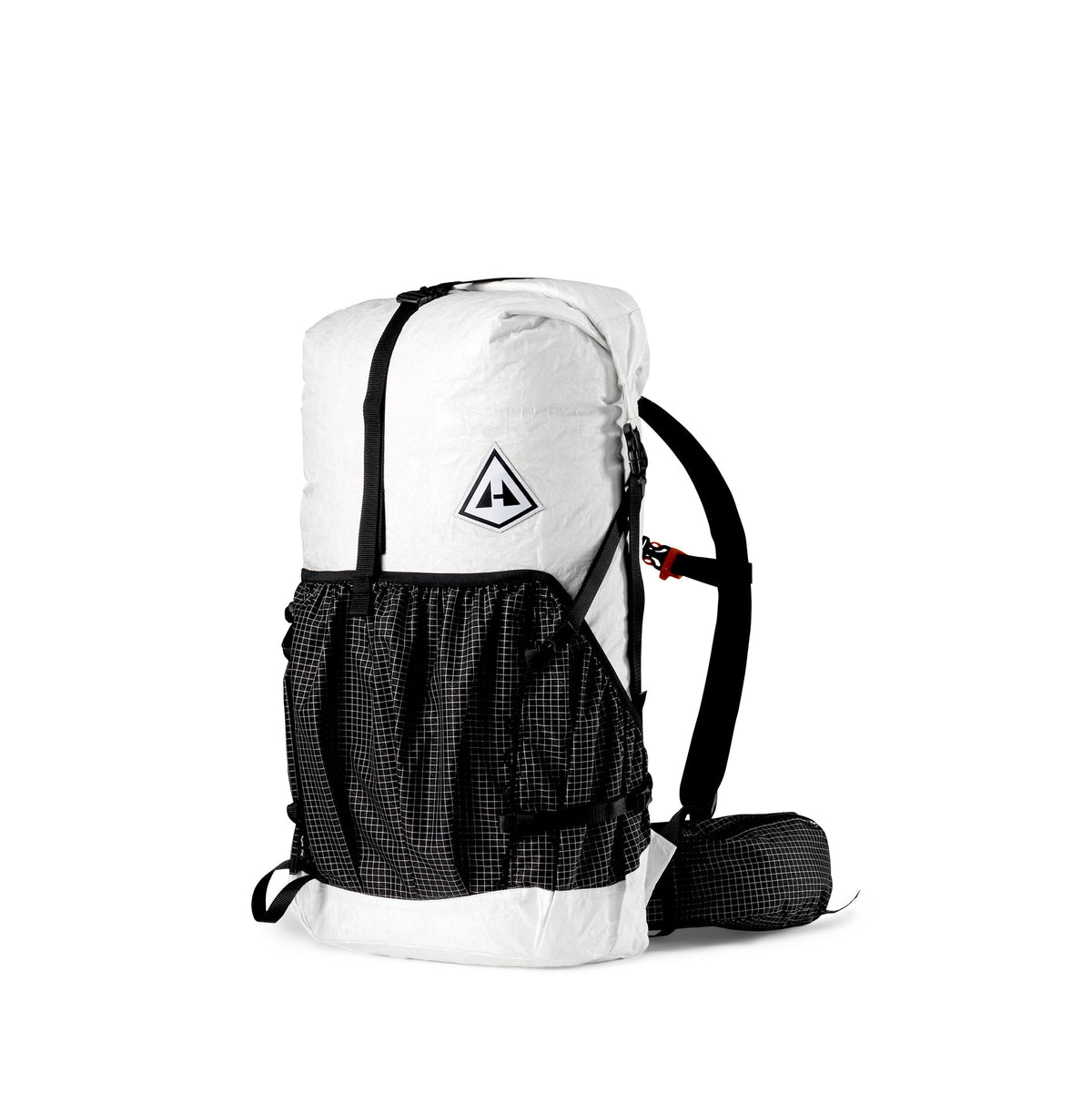
Hyperlite Mountain Gear 3400 Southwest
DCF body with Dyneema hardline bottom — 26 oz and abrasion-resistant enough for off-trail scrambling and bushwhacking.
Amazon affiliate · price subject to change
The Southwest is the pack for terrain that would shred a DCF body inside one trip. The Dyneema hardline bottom is the abrasion shield that lets the Southwest survive sandstone slot canyons, granite scrambling, and aggressive off-trail bushwhacking — the use cases that broke the original Zpacks Arc Haul body in field testing for years. The 2026 Southwest redesign added 10x the abrasion resistance of the prior generation per Hyperlite's published testing.
The Southwest ranks seventh on Gavler with an 8.8 community score. For canyon country, alpine scrambling, Sierra granite, or any trip where the pack is going to make incidental contact with rock walls, the Southwest is the right call. For maintained-trail thru-hiking on the PCT, AT, or CDT where the trail surface is dirt, the Zpacks Arc Haul Ultra remains the better-suspension pick at the same price point.
The Value-to-Weight Pick — Granite Gear Crown3 60 $200
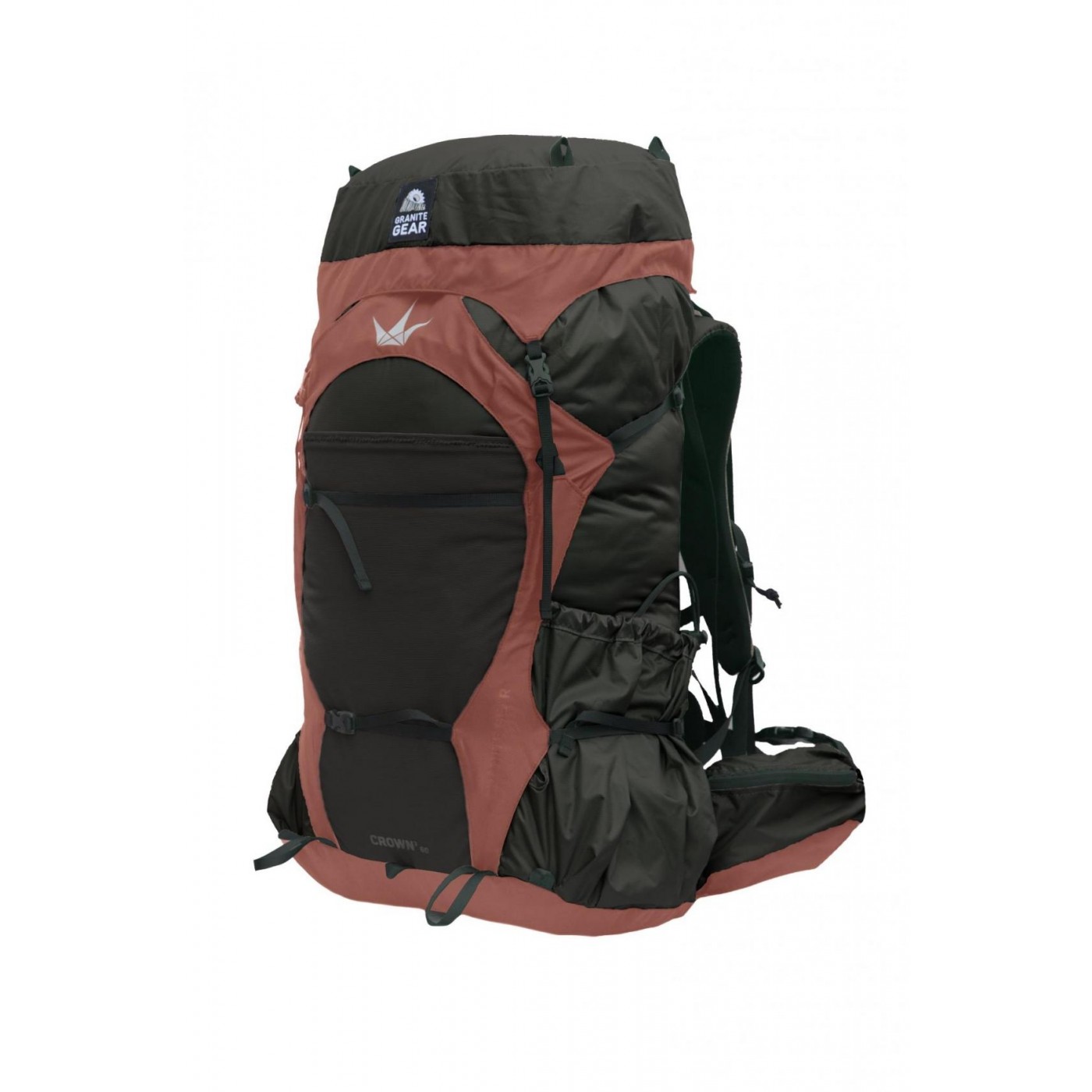
Granite Gear Crown3 60
Re-Fit hip belt and HDPE framesheet in a 2 lb 5 oz pack at $200. The budget ultralight pack that punches above its price.
Amazon affiliate · price subject to change
The Crown3 is the pack that hits an unreasonable price-to-weight target. 2 pounds 5 ounces, 60 liters of capacity, a Re-Fit hip belt that adjusts on-trail to a hiker's hip size change over a multi-month trip, and an HDPE framesheet that transfers load comfortably up to about 32 pounds — all at $200. Granite Gear's lifetime warranty covers manufacturing defects.
The Crown3 ranks fourth on Gavler with a 9.2 community score. For a first ultralight pack with a budget cap of $200, this is the answer — it saves a full pound versus the Osprey Atmos at a $100 lower price, and it is meaningfully more capable above 25 pounds than the REI Co-op Flash 55 at $180. For a one-pack thru-hike kit, the Crown3 is the most under-rated pick on this list.
The 2026 Trail Season Angle
Most National Scenic Trail thru-hikers started their northbound seasons between mid-April (PCT) and mid-May (CDT), and the long-trail crowd will be deep in trail miles through August and September. For section hikers planning a 2026 summer trip, every pack on this list is in stock at the manufacturer or at REI as of June. Zpacks ships from Florida and Hyperlite ships from Maine — order by mid-June to guarantee delivery before a July departure. The mainstream picks (Osprey Exos, Osprey Atmos, Gregory Focal, REI Flash 55) are stocked at REI nationwide for same-day pickup if a trip is going out this week.
This is the first installment in Gavler's backpacking cluster. Future briefs will cover Best Backpacking Tents, Best Backpacking Sleeping Bags, Best Backpacking Sleeping Pads, and Best Backpacking Stoves — see also Gavler's Best Hiking Backpacks, Best Camping Tents, and Best Camping Stoves lists for the broader outdoor cluster.
See all 10 products ranked by the community
Best Backpacking Packs
See Full Rankings →272 community votes cast
Common Questions
For most thru-hikers carrying a sub-25-pound base weight, the Zpacks Arc Haul Ultra 60L at $369 is the consensus answer. GearJunkie, OutdoorGearLab, Adventure Alan, Backpacker, CleverHiker, and Switchback Travel all rank it as the best ultralight pack of 2026. The carbon-fiber frame transfers a 35-pound load to the hips the way packs twice its weight do, the Dyneema Composite Fabric body shrugs off rain and abrasion, and the suspension geometry is what every cottage maker has spent the last decade trying to copy. For backpackers carrying 35 pounds and up — heavier food carries, photography gear, kids on family trips — the Osprey Atmos AG 65 at $300 with Anti-Gravity suspension is the right call. For a do-it-all mainstream pick with the Osprey warranty in a 2-pound 6-ounce package, the Osprey Exos 58 at $220 is the value answer.
Match the pack capacity to a full water and food carry, not to the gear list. A weekend pack (one to three nights) lives in the 40 to 50 liter range — the Durston Kakwa 55 or REI Co-op Flash 55 are the right scale. A standard 5 to 7 night thru-hike pack lives in the 55 to 65 liter range — Zpacks Arc Haul Ultra 60L, Gossamer Gear Mariposa 60, Hyperlite Mountain Gear 3400 Southwest, Granite Gear Crown3 60. A heavy-load pack for early-season cold-weather trips or week-plus food carries lives at 65+ liters — Osprey Atmos AG 65 is the mainstream pick. Buy the smaller pack first. A pack that runs full disciplines packing weight; a pack that runs half-empty rewards over-packing. Most thru-hikers downsize one capacity bucket within their first long trail.
For a first thru-hike with a base weight over 15 pounds, start mainstream. The Osprey Exos 58 at $220 and the Gregory Focal 48 at $230 are the right entry points — both have load-transferring suspension that makes 30-plus pound packs carry comfortably, both have warranties that survive a season of mileage, and both are stocked at REI for in-person sizing and returns. For a first thru-hike with a base weight under 12 pounds, the cottage ultralight picks (Zpacks Arc Haul Ultra, Hyperlite Southwest, Durston Kakwa 55) are the upgrade — they save 1 to 2 pounds versus the mainstream picks at roughly twice the price. The cottage packs assume a refined kit; the mainstream packs forgive a beginner one. Most hikers progress from mainstream to cottage over their first 1,000 trail miles.
Pick the Zpacks Arc Haul Ultra if comfort under load and active back ventilation are the priorities. The carbon-fiber arched frame creates a gap between the pack body and the hiker's back, the air gap solves the sweat-soaked-shirt problem that affects every flat-against-the-back pack, and the suspension carries 35 pounds as well as anything in the category. Pick the Hyperlite Southwest if rough off-trail terrain, scrambling, or abrasive sandstone is the use case. The Southwest's Dyneema hardline bottom and abrasion-resistant body survive contact with rock walls that would shred a Zpacks DCF body inside a season. Both are $369 and both weigh about 1 pound 14 ounces. Different packs for different terrain — Pacific Crest Trail and Continental Divide Trail thru-hikers tend toward the Zpacks; Wind River Range and Sierra Nevada scramblers tend toward the Hyperlite.
Yes, if the carry weight is over 35 pounds. Osprey's Anti-Gravity suspension is the most comfortable heavy-load system in production — the trampoline-style mesh back panel distributes load across the entire back rather than concentrating it at the shoulders and hips, and the 4-pound 8-ounce pack body is the price of that suspension. For a sub-25-pound base weight, the Atmos is overkill and the cottage ultralight picks are the better answer. For an early-spring trip with a synthetic sleeping bag and a winter tent, a multi-day family trip with shared gear, or a photography-loaded carry with a tripod and a full-frame camera body, the Atmos is the pack that makes a 40-pound load disappear. The Osprey All Mighty Guarantee replaces or repairs the pack for life — the only mainstream pack in the category with that warranty.
The REI Co-op Flash 55 at $180. It is REI's own ultralight pack with a ventilated back panel, a removable top lid, and a 2-pound 5-ounce trail weight at a price below every cottage pick on this list and below every mainstream Osprey, Gregory, or Granite Gear option in the same capacity range. The REI return policy adds a year of trial; the pack is also stocked at every REI store for in-person sizing. The trade-off is suspension comfort under heavy loads — the Flash 55 is designed for sub-30-pound carries and starts to feel like a budget pack above that. For a first thru-hike, a sub-25-pound base weight, and a sub-$200 budget, the Flash 55 is the answer. For the same budget but a heavier carry, the Granite Gear Crown3 60 at $200 is the upgrade — Re-Fit hip belt, HDPE framesheet, and the best value-to-weight ratio in the category.
Mainstream packs win on warranty. Osprey's All Mighty Guarantee repairs or replaces any Osprey pack for life regardless of damage cause. Gregory's lifetime warranty covers manufacturing defects. Granite Gear's lifetime warranty covers the same. REI's one-year satisfaction guarantee adds a trial period the cottage brands cannot match. Cottage brands — Zpacks, Hyperlite Mountain Gear, Gossamer Gear, Durston, ULA — typically offer a 2-year limited warranty against manufacturing defects, but the cost of repair on a damaged Dyneema body is meaningful and turnaround is measured in weeks, not days. The trade-off is the cottage brands save 1 to 2 pounds and 5 to 15 liters of efficient packing geometry that the mainstream brands have not matched. For a long-trail thru-hike where weight matters most, the cottage trade-off is worth it. For a once-a-year section hike, the mainstream warranty is worth it.
Products Mentioned
Jump to the full ranking and community verdict for each pick named above.
- Zpacks Arc Haul Ultra 60LOutdoor · Best Hiking Backpacks
- Gossamer Gear Mariposa 60Outdoor · Best Hiking Backpacks
- Osprey Exos 58Backpacking · Best Backpacking Packs
- Osprey Atmos AG 65Outdoor · Best Hiking Backpacks
- Hyperlite Mountain Gear 3400 SouthwestBackpacking · Best Backpacking Packs
- Granite Gear Crown3 60Backpacking · Best Backpacking Packs
- REI Co-op Flash 55Backpacking · Best Backpacking Packs