The Best Camping Gear in 2026: What to Buy Before Summer Starts
Tents, stoves, packs, power, footwear. The five Gavler lists that actually matter for summer 2026, ranked by people who sleep outside.
Published April 2026 — the summer camping window is officially open. Memorial Day weekend is five weeks out, the 2026 gear cycle is in stock, and every category covered below has seen meaningful updates since last summer. If you're assembling a kit for the season, this is the short list we'd buy from.
Camping gear is the one category where "best" genuinely means something different to every person. A car camper at a state park needs gear a thru-hiker would laugh at, and a thru-hiker needs gear a car camper would find absurd. What follows is not a universal list — it's the gear the Gavler community keeps voting to the top of each category as we head into the 2026 summer season. We've sorted it by the five decisions that matter most: what you sleep in, what you cook on, what you carry, what you power with, and what you run in.
The Tent: Big Agnes Copper Spur HV UL2
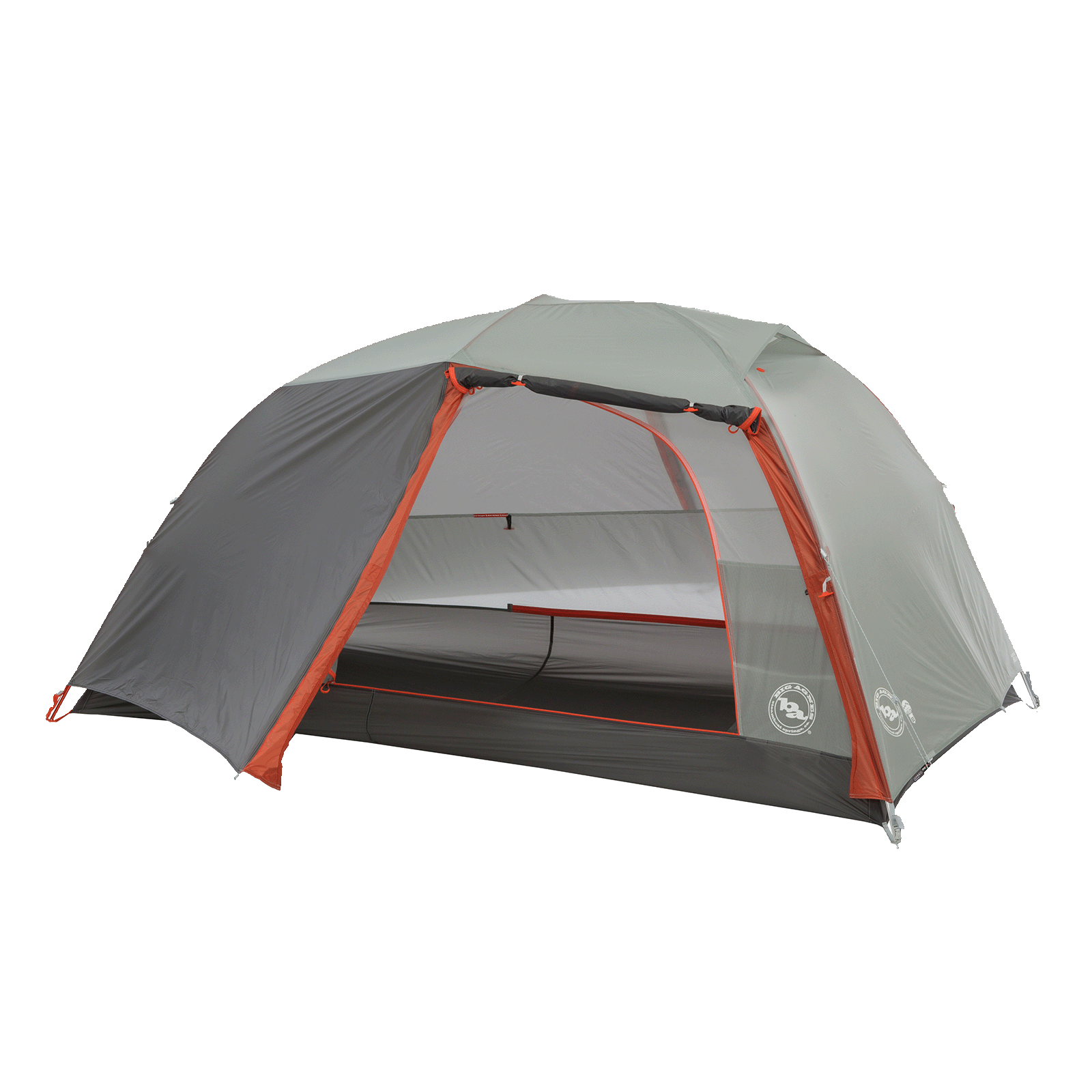
Big Agnes Copper Spur HV UL2
2 lbs 10 oz of freestanding shelter with near-vertical walls and massive vestibule.
Amazon affiliate · price subject to change
The Copper Spur HV UL2 is a 2.5-pound freestanding two-person tent that doesn't force a single meaningful trade-off between weight, livability, and weather protection. Near-vertical walls mean you can actually sit up inside. Two doors and two vestibules mean two people can get in and out without climbing over each other. DAC Featherlite NFL poles pitch in under three minutes. The 2026 HyperBead fabric is PFAS-free with better hydrostatic head than the previous silnylon fly.
It scores 9.7 on Gavler's Best Camping Tents list because it's the tent that experienced backpackers recommend to new backpackers — the shelter that doesn't develop a deal-breaker after the first season. If your camping is mostly three-season and mostly two people, this is the default. If you camp in sustained high wind or snow, step up to a four-season shelter like the Hilleberg Niak.
The Stove: Jetboil Flash 1.8L
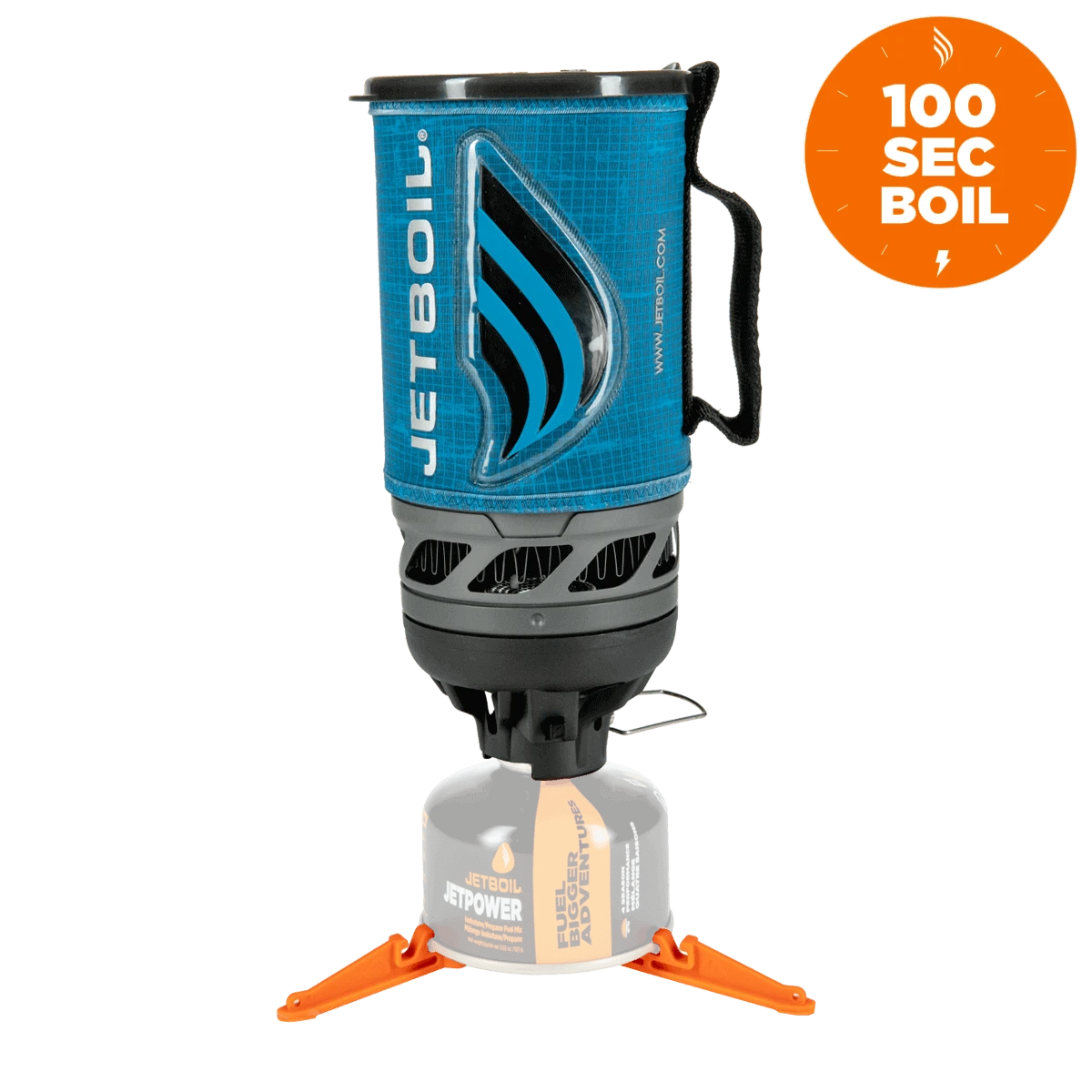
Jetboil Flash 1.8L
Boils 1.8 liters in about 100 seconds with a color-changing strip on the cozy that signals when water's ready — the fast, foolproof solo system for dehydrated meals and morning coffee, not actual cooking.
Amazon affiliate · price subject to change
We're highlighting the Flash here rather than the category's #1-ranked Jetboil Genesis Basecamp System because the Flash is the right answer for the largest slice of campers — specifically, backpackers who want hot water in 100 seconds, weigh under a pound, and don't need a full two-burner cookset. The Genesis Basecamp is the right pick if you're cooking for a group at a campsite; the Flash is the right pick if you're boiling water for coffee and freeze-dried meals in a one- or two-person kit.
The 2025 Flash refresh improved the wind screen and tightened the regulator behavior at cold temps. The integrated pot-and-burner design is the Jetboil pattern that every other brand is still chasing. See Best Camping Stoves for the full community ranking, including the MSR Reactor (cold-weather specialist), Soto Windmaster (ultralight darling), and the Genesis Basecamp two-burner for car camping.
The Pack: Osprey Atmos AG 65
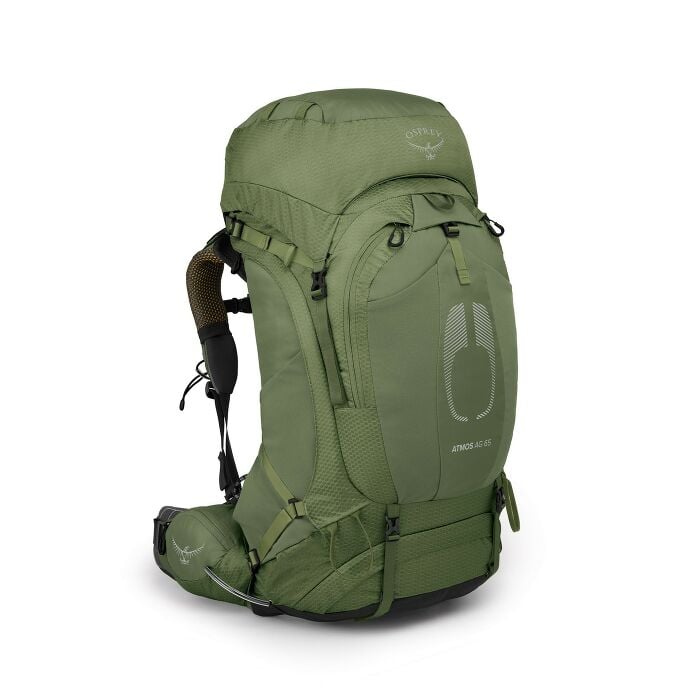
Osprey Atmos AG 65
The gold standard for multi-day treks — distributes weight like no other pack in its class.
Amazon affiliate · price subject to change
The Atmos AG 65 is the pack that made Osprey's Anti-Gravity suspension a category standard — the mesh panel hugs the back and hipbelt so closely that loads up to 40 pounds disappear into the system rather than pressing on a single point. The 65-liter volume is the right size for most 3-to-7 day trips; shorter trips use the Atmos 50, longer ones step up to the Gregory Baltoro 75.
It scores a 9.7 on Best Hiking Backpacks because it's the pack that the most experienced backpackers recommend to intermediate hikers who are about to buy their second (serious) pack. Ultralight purists prefer the Hyperlite Mountain Gear 3400 or a Gossamer Gear Mariposa — lighter, no frame, 30-pound ceiling. If you carry more than 30 pounds, get the Atmos or the Baltoro.
The Power Station: Anker Solix C1000
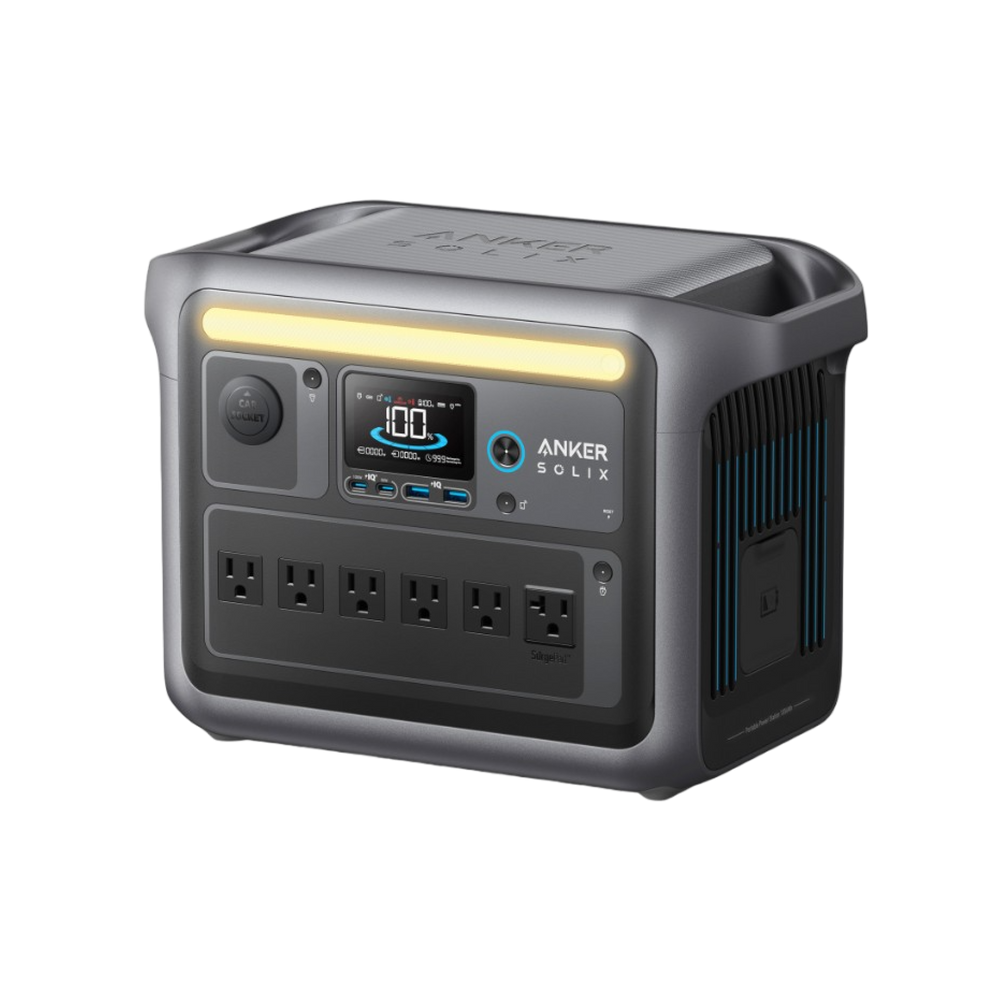
Anker Solix C1000 (Gen 1)
Original 1,024Wh / 1,800W C1000 — succeeded by the Gen 2 (rank 2). Still in catalog as legacy stock and a viable cheaper-when-discounted alternative.
Amazon affiliate · price subject to change
The Solix F3800 is the Best Portable Power Stations #1 at 3,840 Wh and 6,000 W — the whole-home-backup flagship — but it weighs 132 pounds and runs $1,799. For the camping use case specifically, the Solix C1000 is the honest pick: 1,056 Wh, 1,800 W continuous, 28 pounds, $699. It runs a 12V fridge for 2-3 days, recharges in 58 minutes on AC, and fits in a vehicle's trunk without a loading strategy.
If you're tent-backpacking, skip the power station entirely and carry a 10,000 mAh battery pack. If you're car camping, overlanding, or basecamping with a Starlink Mini and lighting, the C1000 is the sweet spot. If you're running a CPAP plus a fridge plus powering a trailer's 12V system, step up to the EcoFlow Delta 2 Max or the Solix F3800.
The Footwear: Hoka Speedgoat 7
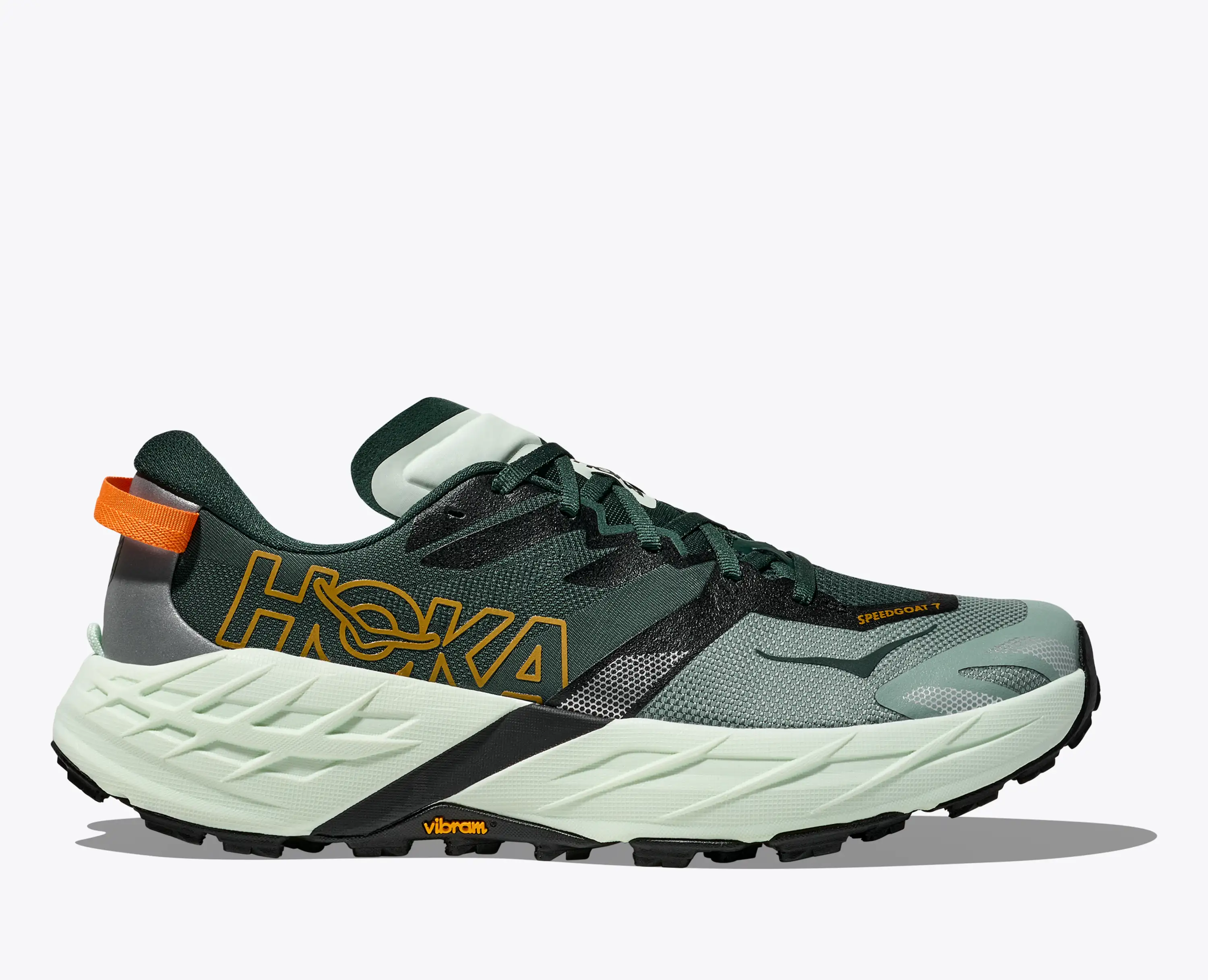
Hoka Speedgoat 7
Speedgoat 7 swaps the Speedgoat 6's stiff midsole for supercritical EVA foam — lighter, more responsive, better at absorbing punishment.
Amazon affiliate · price subject to change
Most camping gear roundups skip footwear, which is strange because your shoes determine whether you enjoy getting to the campsite. The Speedgoat 7 is a trail runner, not a boot — but that's precisely the point. For 3-season camping on maintained and semi-maintained trail, a well-cushioned trail runner is faster, lighter, and dries faster than a traditional boot, and your ankles are protected more by strength than by a boot cuff.
It scores 9.8 on Best Trail Running Shoes because the Vibram Megagrip outsole, the stack height, and the Hoka midsole cushioning combine into a shoe that makes miles stop hurting. If you specifically need ankle support for heavy loads or rough scrambles, stick with a proper boot; for everything else, trail runners are the quiet revolution in how backpackers move.
What We Didn't Cover (And Why)
Three categories intentionally left off: sleeping bags and pads (Gavler doesn't yet have a dedicated ranked list — on the curator roadmap), coolers (car-camping only, narrow use case), and headlamps (a solved problem — buy any Petzl or Black Diamond at the 300-lumen tier and move on). When Gavler ships the sleep-system list, we'll update this guide.
The 2026 Gear Trends Worth Knowing
PFAS-free is now the default, not the premium. Big Agnes's HyperBead line, MSR's 2026 fly refresh, and most major tent brands have moved to PFAS-free durable water repellents this year. If you're replacing a tent you bought before 2024, 2026 is a good year to upgrade for the fabric alone.
Power stations stopped getting bigger and started getting more efficient. 2026's story is not "bigger batteries"; it's better power electronics, faster AC recharge, and solar input that actually matches the spec sheet. The Solix F3800 at 3,840 Wh and 6,000 W is the practical ceiling for most homes; the C1000 is the practical floor for most campsites.
Trail runners have fully replaced boots for 3-season backpacking. This shift has been building for a decade and is now unambiguous: the majority of long-distance hikers use trail runners. If you're buying your first "hiking boot" for a summer trip and you don't carry more than 35 pounds, consider a trail runner first.
How to Actually Buy This Kit
Don't buy it all at once. Start with the tent and pack — those are the hardest to swap later and the most category-defining decisions. Add the stove on your second trip when you've figured out your cooking style. Add the power station only if you have a specific use case for it (car camping, overlanding, basecamp). Add footwear last, because it's the one piece of gear you'll replace on a regular cycle anyway — treat it like a consumable.
Then actually go camping. The best gear is the gear you use. The second-best gear is whatever the person you're camping with swears by — because at least you'll learn what you do and don't like, for free.
See all 10 products ranked by the community
Best Camping Tents
See Full Rankings →338 community votes cast
Common Questions
Your shelter. A good tent protects you from weather, bugs, and condensation, and it determines how well you sleep — which in turn determines whether the rest of the trip is enjoyable. Get the tent right and the rest of your kit has room to evolve. The Big Agnes Copper Spur HV UL2 is the community's #1 pick for 2026 because it makes the fewest compromises across weight, livability, and weather protection.
If you're a weekend car camper, value gear is fine — weight doesn't matter at the campsite. If you're carrying everything on your back for more than a night, ultralight pays back every mile. A good rule: prioritize ultralight for the 'big three' (tent, pack, sleep system) and buy value elsewhere. You'll feel the difference in your shoulders and hips before you feel it anywhere else.
Only if you're car camping or running specific gear — a CPAP, a cooler, camera batteries for a multi-day shoot, a Starlink Mini. For tent-only backpacking, a power station is dead weight; a small 10,000 mAh power bank is all you need. For overlanding, van-life, or basecamps, a 1,000-2,000 Wh station like the Anker Solix C1000 is the sweet spot between runtime and portability.
Hot food and hot drinks are morale. You can absolutely do cold meals on a one- or two-night trip — many thru-hikers do. But a stove adds less than a pound to your kit, extends your meal options to everything from freeze-dried dinners to real coffee, and becomes genuinely important in cold or wet conditions. The Jetboil Flash and Soto Windmaster are the two stoves that most backpackers end up owning.
Buying too much, too expensive, too soon. The instinct is to over-research and buy the ultralight flagship in every category. The better move: buy mid-tier gear, go camping, figure out what actually bothers you, and upgrade one piece at a time. Most people discover their real preferences only after three or four trips — and the gear they would have bought on day one is often wrong for how they actually camp.
Tent fabrics are the biggest 2026 shift: PFAS-free waterproofing is now standard on Big Agnes's HyperBead line and MSR's 2026 refresh. Portable power stations got more efficient with the Anker Solix F3800's whole-home output at the top end. Trail runners got better cushioning curves (Hoka Speedgoat 7, Salomon Ultra Glide 2). Most people don't need to upgrade if their current gear still works — but if you're starting fresh, 2026 is a better year to buy than 2024 was.
Products Mentioned
Jump to the full ranking and community verdict for each pick named above.
- Big Agnes Copper Spur HV UL2Outdoor · Best Camping Tents
- Jetboil Flash 1.8LOutdoor · Best Camping Stoves
- Jetboil Genesis Basecamp SystemOutdoor · Best Camping Stoves
- Soto WindMasterBackpacking · Best Backpacking Stoves
- Osprey Atmos AG 65Outdoor · Best Hiking Backpacks
- Gregory Baltoro 75Outdoor · Best Hiking Backpacks
- Hyperlite Mountain Gear 3400Outdoor · Best Hiking Backpacks
- EcoFlow Delta 2 MaxOutdoor · Best Portable Power Stations
- Hoka Speedgoat 7Outdoor · Best Trail Running Shoes