It's finally time for Wi-Fi 7 - TP Link Deco 7 Pro
ShortCircuit
33 Gbps aggregate across four bands, 10 Gbps ports on every node, and HomeShield baseline features with no recurring subscription.
Gavler Meta-Score
“The BE95 is the enthusiast flagship pick: full quad-band Wi-Fi 7 with dedicated backhaul, the best wired I/O in the category, and a price tag that leaves room for a proper smart-home investment with the savings. If you can forgive a mobile app that looks like it was designed two years before the Eero Max 7's, this is the smarter spend of the two.”
The Gavler Verdict
TP-Link Deco BE95 Review: Flagship WiFi 7 Mesh for Half the Orbi's Price
The TP-Link Deco BE95 sits at number three on our Best Mesh WiFi Systems list with a 9.1, and it answers a question the flagship mesh market has mostly avoided: can you ship quad-band WiFi 7 with dedicated backhaul without four-figure flagship pricing? At $1,199, the Deco BE95 does exactly that, splitting the 6 GHz spectrum into two separate radios — a first among consumer mesh systems — while carrying the richest wired I/O in its category. Buy it if you want the architectural benefits of flagship mesh without the flagship price tag. Skip it if app polish is a dealbreaker for you, or if your home genuinely needs the Orbi 970's higher coverage ceiling.
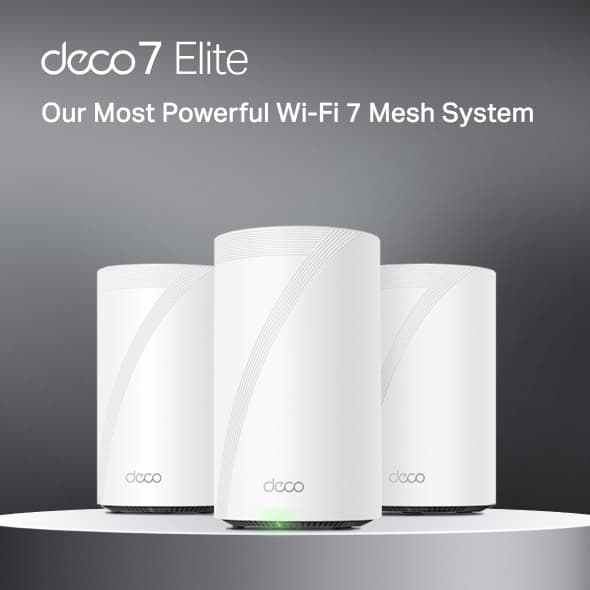
The Deco BE95 — rebranded Deco 7 Elite BE95 in TP-Link's early-2026 lineup refresh — is a quad-band system that splits its 6 GHz spectrum into two independent radios: one dedicated to client devices, one reserved exclusively for node-to-node backhaul. Combined with the 5 GHz and 2.4 GHz bands, that's a BE33000-class rating of 33 Gbps aggregate across 16 spatial streams — genuinely flagship-tier architecture at a price that undercuts the category's true flagship by more than half.
The standout feature at this price is wired I/O. Every node carries multiple 10 Gbps ports — a mix of 10G Ethernet and 10G SFP+ depending on SKU — making the BE95 the only mesh on Gavler's list that puts a multi-gig uplink and multi-gig LAN at every single satellite. That's a meaningful advantage for wired-backhaul enthusiasts who don't want to rely purely on wireless mesh links. Coverage for the three-pack runs up to 7,800 sq ft; the two-pack covers roughly 5,200.
TP-Link's HomeShield includes parental controls, QoS, and basic threat protection at no subscription cost, with the more advanced real-time IoT threat prevention gated behind HomeShield Pro — a lighter paywall than some competitors apply to baseline security features.
Mini PC Reviewer's assessment captures the core proposition: as "one of the very first Wi-Fi 7-certified mesh systems, the Deco BE95 packs an impressive array of next-gen wireless technology to deliver blazing speeds, expanded capacity, and rock-solid signal strength." That's not faint praise dressed up — it's a straightforward acknowledgment that the BE95 is playing in the same tier as much more expensive competitors.
Dong Knows Tech zeroed in on the architectural detail that matters most: "The BE95 is the first consumer quad-band mesh to split the 6 GHz band in two — a genuine architectural win that most buyers will never directly observe but will quietly benefit from." That's the honest way to describe a feature like dedicated backhaul: it doesn't show up as a headline number most shoppers notice, but it's the difference between a mesh network that holds its throughput as devices pile on and one that visibly degrades.
The port count draws specific praise from WiFi Guy: "Delivers fast, stable Wi-Fi across huge areas; the port count on every node is what separates this from everything else in the Wi-Fi 7 flagship tier." CGMagazine's review lands on the same honest caveat every WiFi 7 mesh review shares right now: it's "a complete mesh Wi-Fi system with impressive speeds and range, though Wi-Fi 7 clients are still scarce enough that most buyers should weigh whether they need the full performance ceiling." That caveat applies to the entire category, not a BE95-specific weakness.
This is the enthusiast value pick in flagship mesh, not the most polished daily-use experience:
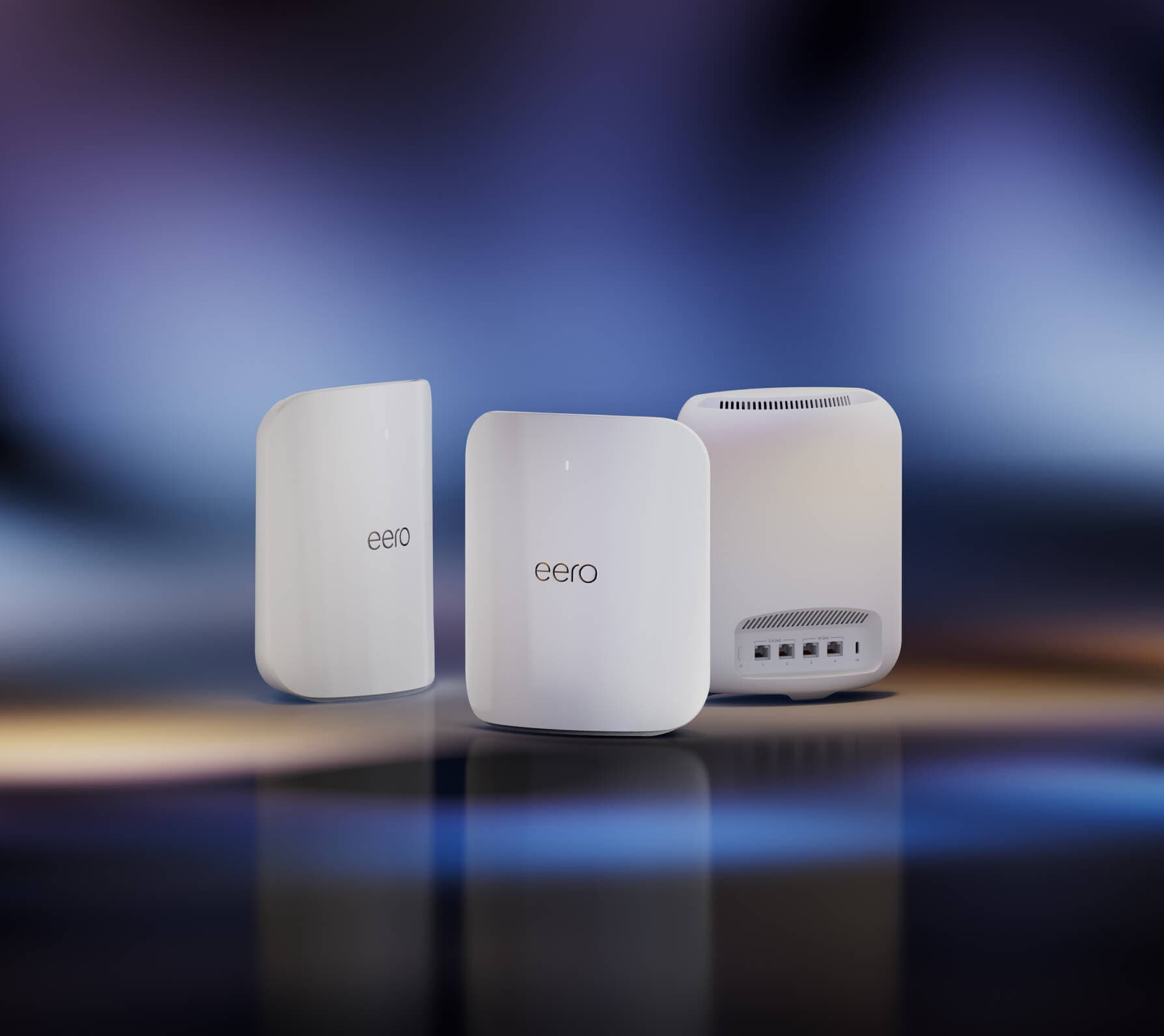
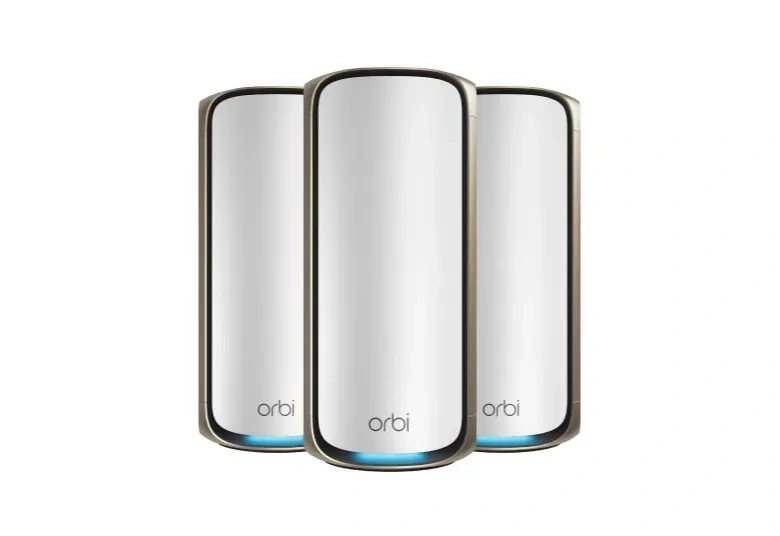
On its own list, the Deco BE95 sits between two different flagship philosophies. The Amazon Eero Max 7 at rank one leads on daily-use polish and app experience, running tri-band architecture at $1,699. The Netgear Orbi 970 Series at rank two goes further on raw coverage and throughput ceiling with its own dedicated 6 GHz backhaul, at $2,299 — a full $1,100 more than the Deco.
The BE95's case is that it captures the core architectural advantage of true flagship mesh — dedicated backhaul that keeps client throughput from degrading as the network scales — without asking buyers to pay flagship prices for it, and adds the best wired I/O in the category on top.
A 9.1, backed by a 90 expert consensus and 88 community rating that both land solidly in flagship territory without the price to match. Expert reviews consistently praise the port count and throughput; community scores dock it modestly for the Deco app's UI density relative to Eero. If you want the architectural benefits of the highest tier of WiFi 7 mesh — dedicated backhaul, real multi-gig wired options — without paying Orbi-level prices, the TP-Link Deco BE95 is the smartest spend in flagship mesh.
Yes, if you want quad-band WiFi 7 with dedicated backhaul architecture without paying flagship-tier pricing. It ranks third on Gavler's Best Mesh WiFi Systems list with a 9.1, splitting the 6 GHz band into two separate radios — a genuine architectural first among consumer mesh systems — at $1,199, roughly half the price of the Netgear Orbi 970. The honest trade-off is the Deco app, which is functionally complete but a generation behind Eero in polish.
Buy the Orbi 970 only if your home is large enough and your internet plan fast enough to actually use its higher 27 Gbps aggregate rating and 10,000 sq ft coverage — it costs $1,100 more. Buy the Deco BE95 if you want the same core architectural advantage — dedicated backhaul on a quad-band system — with the best wired I/O in the category, at nearly half the price.
It's the same principle behind the Orbi 970's dedicated backhaul, applied at a lower price: one 6 GHz radio handles client device traffic while a second, separate 6 GHz radio is reserved for node-to-node backhaul. Dong Knows Tech called it a genuine architectural win most buyers will never directly observe but will quietly benefit from, since client throughput doesn't degrade as heavily as more nodes and devices join the network.
No — TP-Link's HomeShield feature set, which includes parental controls, QoS, and basic threat protection, is included at no subscription cost. Only the more advanced real-time IoT threat prevention requires upgrading to HomeShield Pro, a lighter paywall than some competitors that gate more baseline features behind a subscription.
Prices checked regularly
90-day price history
Steady at $1,199 for the entire 90-day tracking window — no increases, no discounts, across 91 tracked days.
Tracked daily across retailers. Vote Want itabove and we’ll alert you the moment the price drops.
Some links are affiliate links — Gavler may earn a commission. This never affects rankings or scores. Learn more.
First consumer mesh to split the 6 GHz spectrum into two separate radios — dedicated backhaul plus a full client 6 GHz band.
Every node carries 10 Gbps Ethernet (plus 10G SFP+ on the router) — the richest wired backhaul option among flagship mesh.
Parental controls, QoS, and basic threat scanning included without subscription; HomeShield Pro adds advanced IoT threat prevention.
Value benchmark for quad-band WiFi 7 mesh. Expert reviews consistently praise the port count and throughput; community scores ding the Deco app's UI density relative to Eero.
Do you think TP-Link Deco BE95 deserves the #3 spot in Best Mesh WiFi Systems?
“As one of the very first Wi-Fi 7-certified mesh systems, the Deco BE95 packs an impressive array of next-gen wireless technology to deliver blazing speeds, expanded capacity, and rock-solid signal strength.”
“The BE95 is the first consumer quad-band mesh to split the 6 GHz band in two — a genuine architectural win that most buyers will never directly observe but will quietly benefit from.”
“Delivers fast, stable Wi-Fi across huge areas; the port count on every node is what separates this from everything else in the Wi-Fi 7 flagship tier.”
“The TP-Link Deco BE95 is a complete mesh Wi-Fi system with impressive speeds and range, though Wi-Fi 7 clients are still scarce enough that most buyers should weigh whether they need the full performance ceiling.”
Watch
Hand-picked from creators we trust — playable inline.
It's finally time for Wi-Fi 7 - TP Link Deco 7 Pro
See how other top picks compare in this category.
Gbps hangtags are the wrong first question. Wi-Fi 7 vs 6E vs 6 is the generation to buy. Then shop Gavler's live ranking.
TP-Link showed the first Wi-Fi 8 routers at IFA 2026. But the standard isn't final until 2028 and no client devices exist yet. Here's what to actually buy.
Is Wi-Fi 7 worth it? What MLO actually does, when 6 GHz matters, what to pay in 2026, and the buyers who should honestly skip the upgrade.
The two flagship Wi-Fi 7 mesh systems most worth comparing. Updated July 2026 with current pricing, corrected firmware-support terms, and the Wi-Fi 8 timeline.
Eero Max 7, Orbi 970, Deco BE95. Gavler's networkers rank the Wi-Fi 7 mesh systems worth buying — for whole-home coverage at speed.