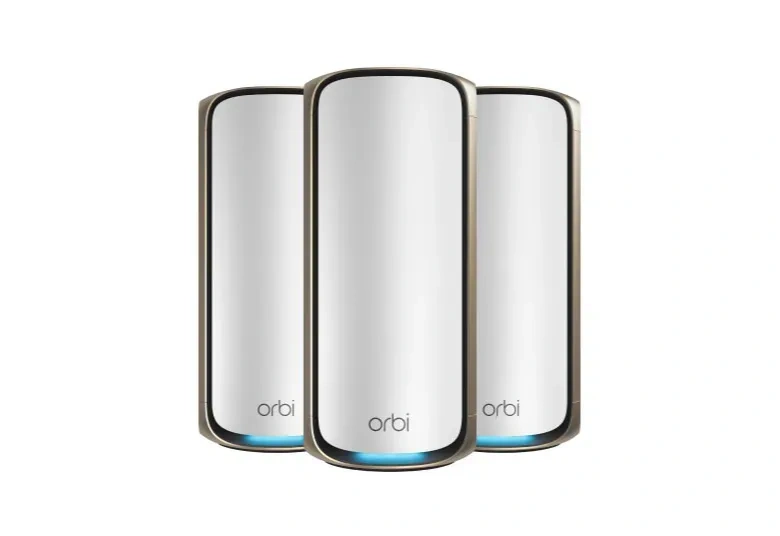
Netgear Orbi 970 Series.
Quad-band WiFi 7 with a dedicated 10 Gbps wireless backhaul and 10,000 sq ft of coverage for homes that actually need it.
The Verdict.
Gavler Meta-Score
“The Orbi 970 is the mesh you buy when spec-sheet dominance isn't a vanity — it's a requirement. For 5,000+ sq ft homes with multi-gig fiber and 80+ active clients, nothing else matches the dedicated-backhaul headroom. For anyone else, it's $1,600 worse than the eero Pro 7 and $600 worse than the Deco BE95. Know which category you're in before you buy.”
The Gavler Verdict
The Gavler Review.
Netgear Orbi 970 Series Review: The Mesh WiFi 7 System for Homes That Actually Need It
The Netgear Orbi 970 Series sits at number two on our Best Mesh WiFi Systems list with a 9.3, and it's the rare product on that list where the spec sheet isn't marketing — it's the entire reason to buy it. This is a true quad-band WiFi 7 mesh with a second 6 GHz radio reserved exclusively for backhaul, the architectural feature that keeps performance from degrading as you add nodes and devices. Buy it if you have a large, densely built home with multi-gig fiber and dozens of active clients. Skip it if you're a typical household — the $2,299 price tag buys headroom that most homes will never fill, and the Eero Max 7 or TP-Link Deco BE95 will get you 90% of the daily experience for a fraction of the cost.
What it actually is
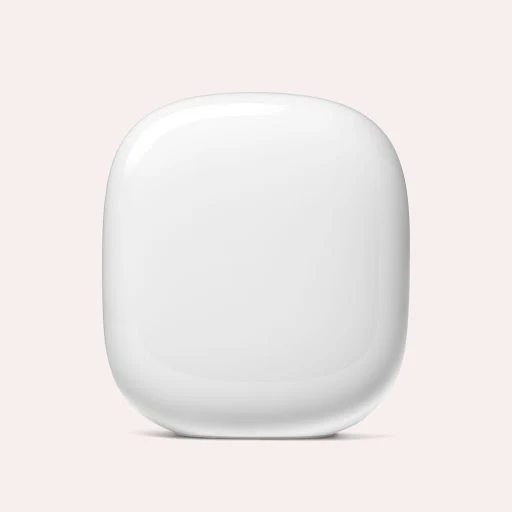
The Orbi 970 runs four simultaneous radios: 2.4 GHz, 5 GHz, a 6 GHz band for client devices, and a second, dedicated 6 GHz channel used exclusively for node-to-node backhaul traffic. That last radio is the entire story. On most mesh systems — including flagship tri-band designs — client traffic and inter-node backhaul share bandwidth, so as you add satellites or connect more devices, the pool of available throughput gets divided further. The Orbi 970's dedicated backhaul channel means client devices never compete with mesh traffic, which is why it holds peak throughput as the network scales in ways that mid-tier and even some flagship competitors don't.
The three-pack — one router plus two satellites — covers up to 10,000 square feet with an aggregate wireless rating of 27 Gbps. There's one 10 Gbps WAN port and a 10 Gbps LAN port on the router node, with multiple 2.5 Gbps ports on every satellite for wired backhaul or direct device connections. Netgear backs the platform with five years of firmware updates, longer than any competitor in the mesh category, and ships Armor, its Bitdefender-powered threat-protection suite, with the first year included.
At $2,299, it's the single most expensive system on Gavler's mesh list — by a wide margin.
In use
The reviews are consistent on one point: the Orbi 970 is genuinely the fastest mesh system tested, and genuinely overpriced for most people. TechRadar's assessment captures both halves at once: it's "a state-of-the-art Wi-Fi 7 mesh system for larger homes and offices" that "reliably handles high-bandwidth tasks like 4K streaming, gaming, and multiple VR devices without noticeable lag." HighSpeedInternet.com went further, calling it "the fastest mesh system we've tested to date" — with the important caveat that "you need Wi-Fi 7 devices to see its full potential."
The price criticism shows up everywhere. Tom's Hardware's take is blunt: "The Orbi 970 offers excellent performance, with a price tag that's tough to swallow." Dong Knows Tech's framing is the most useful for a buyer trying to decide: "Good performance, but stupidly overpriced — this is the right system only if your home legitimately demands the dedicated backhaul ceiling." That's not a knock on the hardware; it's a statement about fit. The Orbi 970 was engineered for a specific scenario — large square footage, dense construction, heavy device counts, multi-gig internet — and it performs best precisely there.
Where it shines
- Dedicated 6 GHz backhaul is a real architectural advantage, not a spec-sheet gimmick. As nodes and clients scale up, the Orbi 970 doesn't trade client bandwidth for mesh bandwidth the way tri-band systems do — this is the single biggest differentiator in flagship mesh right now.
- 10,000 sq ft of coverage and 10 Gbps WAN mean it can actually saturate a multi-gig fiber plan wirelessly. It's the only system on Gavler's list built to fully use a 5 Gbps or 10 Gbps ISP connection without a wired-everything workaround.
- Five years of committed firmware updates outlasts every competitor's stated support window — a meaningful factor for a purchase this expensive, where longevity matters as much as day-one performance.
The trade-offs — who should skip it
This is the highest ceiling on the list, not the right buy for most homes:
- You don't have a large or densely built home. Under roughly 5,000 square feet with standard drywall construction, you likely won't notice the dedicated-backhaul advantage over a well-reviewed tri-band or even a quad-band competitor at half the price.
- You want the best day-to-day experience for the money. The Amazon Eero Max 7 tops the list at rank one with a 9.5, priced at $1,699 — $600 less — and its setup and app polish remain the category benchmark. For most households, that's the smarter buy.
- You're price-sensitive but still want quad-band architecture. The TP-Link Deco BE95 delivers full quad-band WiFi 7 with its own dedicated 6 GHz backhaul split for roughly half the Orbi's price — the best value play for enthusiasts who want the architecture without the flagship tax.
- The satellite footprint matters to you. Community scores note each Orbi 970 satellite is roughly the footprint of a stacked pair of Eero Max 7 nodes — a real consideration for smaller rooms or visible placement.
How it compares
On its own list, the Orbi 970 is bracketed by two very different value propositions. The Amazon Eero Max 7 at rank one leads with the smoothest setup and app experience in the category, tri-band architecture, and a $1,699 price that's still steep but far more defensible for the households actually buying mesh WiFi. The TP-Link Deco BE95, meanwhile, undercuts the Orbi by roughly $1,100 while matching its quad-band, dedicated-backhaul architecture — the enthusiast's smart-money pick, if you can live with a less polished app.
The Orbi 970's case rests entirely on one argument: if your home and internet plan can genuinely use 27 Gbps of aggregate wireless capacity and a backhaul channel that never competes with client traffic, nothing else in the category gets you there. That's a narrower audience than the spec sheet implies, but for that audience, the Orbi 970 is unmatched.
The Gavler verdict
A 9.3, with a 92 expert consensus that's notably higher than its 85 community rating — a gap that tells its own story. Experts uniformly praise the peak performance and 10,000 sq ft coverage; the community pulls the score down over the price and the sheer physical size of the satellites. If you're the buyer this was built for — a large home, multi-gig fiber, 80-plus active devices — the Orbi 970 is the clear pick and nothing else on Gavler's list will fully satisfy you. If you're not, the Eero Max 7 or the Deco BE95 will deliver nearly all of the real-world experience for meaningfully less money. Know which category you're in before you buy.
Common Questions
Only if your home and internet plan can actually use it. It ranks second on Gavler's Best Mesh WiFi Systems list with a 9.3, built around a dedicated 6 GHz backhaul channel that keeps peak throughput intact as you add nodes — a real advantage in large or densely built homes above roughly 5,000 square feet with multi-gig fiber. At $2,299 for a three-pack, it's $1,600 more than the Eero Max 7 and $1,100 more than the Deco BE95, and most households simply won't extract that premium back out in daily use.
Buy the Eero Max 7 if you want the single most polished setup and app experience on the market, at a price that's still steep but far more defensible for most homes. Buy the Orbi 970 if you have a 5,000+ square foot home, dense construction like brick or plaster-and-lath, multi-gig fiber, and 80-plus active clients — the dedicated backhaul is engineered specifically for that scenario, and nothing else in the category matches it there.
Not entirely, but you'll only see the full 27 Gbps aggregate rating with WiFi 7 clients. HighSpeedInternet.com called it the fastest mesh system they'd tested to date, with the explicit caveat that you need WiFi 7 devices to see its full potential — older WiFi 6/6E devices still benefit from the improved backhaul and coverage, just not the headline throughput numbers.
Tri-band systems like the Eero Max 7 share one 6 GHz band between client traffic and node-to-node backhaul, which can cost peak speed on dense networks. The Orbi 970 adds a second, dedicated 6 GHz radio used exclusively for inter-node communication, so client devices never compete with backhaul traffic for bandwidth — the reason the Orbi 970 holds its throughput as you scale to more nodes and more devices where tri-band systems visibly degrade.
Where to Buy.
Prices checked regularly
90-day price history
Price History
Steady at $2,299 for the entire 90-day tracking window — no increases, no discounts, across 90 tracked days.
Tracked daily across retailers. Vote Want itabove and we’ll alert you the moment the price drops.
Some links are affiliate links — Gavler may earn a commission. This never affects rankings or scores. Learn more.
Precision Engineering
Quad-Band with Dedicated 6 GHz Backhaul
Four simultaneous radios including a 6 GHz channel reserved exclusively for node-to-node traffic — the single biggest architectural differentiator in flagship mesh.
10 Gbps WAN + 10 Gbps LAN
Saturates multi-gig fiber plans up to 10 Gbps and hands off to a 10 Gbps LAN port on the router node for NAS or workstation use.
NETGEAR Armor (Bitdefender)
Automatic threat blocking across every device on the network, with one year of Armor included at purchase.
Technical Specifications
The Scoreboard
Experts uniformly praise peak performance and coverage. Community scores reflect the high price and the physical size of each satellite (roughly the footprint of a stacked pair of Eero Max 7 nodes).
Cast Your Vote
Do you think Netgear Orbi 970 Series deserves the #2 spot in Best Mesh WiFi Systems?
Global Critique
“The Orbi 970 offers excellent performance, with a price tag that's tough to swallow.”
“A state-of-the-art Wi-Fi 7 mesh system for larger homes and offices — reliably handles high-bandwidth tasks like 4K streaming, gaming, and multiple VR devices without noticeable lag.”
“The fastest mesh system we've tested to date, but you need Wi-Fi 7 devices to see its full potential.”
“Good performance, but stupidly overpriced — this is the right system only if your home legitimately demands the dedicated backhaul ceiling.”
More from Best Mesh WiFi Systems.
See how other top picks compare in this category.
Do You Need Wi-Fi 7 Mesh, or Will 6E Do?
Gbps hangtags are the wrong first question. Wi-Fi 7 vs 6E vs 6 is the generation to buy. Then shop Gavler's live ranking.
Wi-Fi 8 Just Showed Up at IFA — Here's Why You Shouldn't Wait for It
TP-Link showed the first Wi-Fi 8 routers at IFA 2026. But the standard isn't final until 2028 and no client devices exist yet. Here's what to actually buy.
Wi-Fi 7 Buying Guide 2026: Who Actually Needs It, Who Doesn't, and How to Not Overpay
Is Wi-Fi 7 worth it? What MLO actually does, when 6 GHz matters, what to pay in 2026, and the buyers who should honestly skip the upgrade.
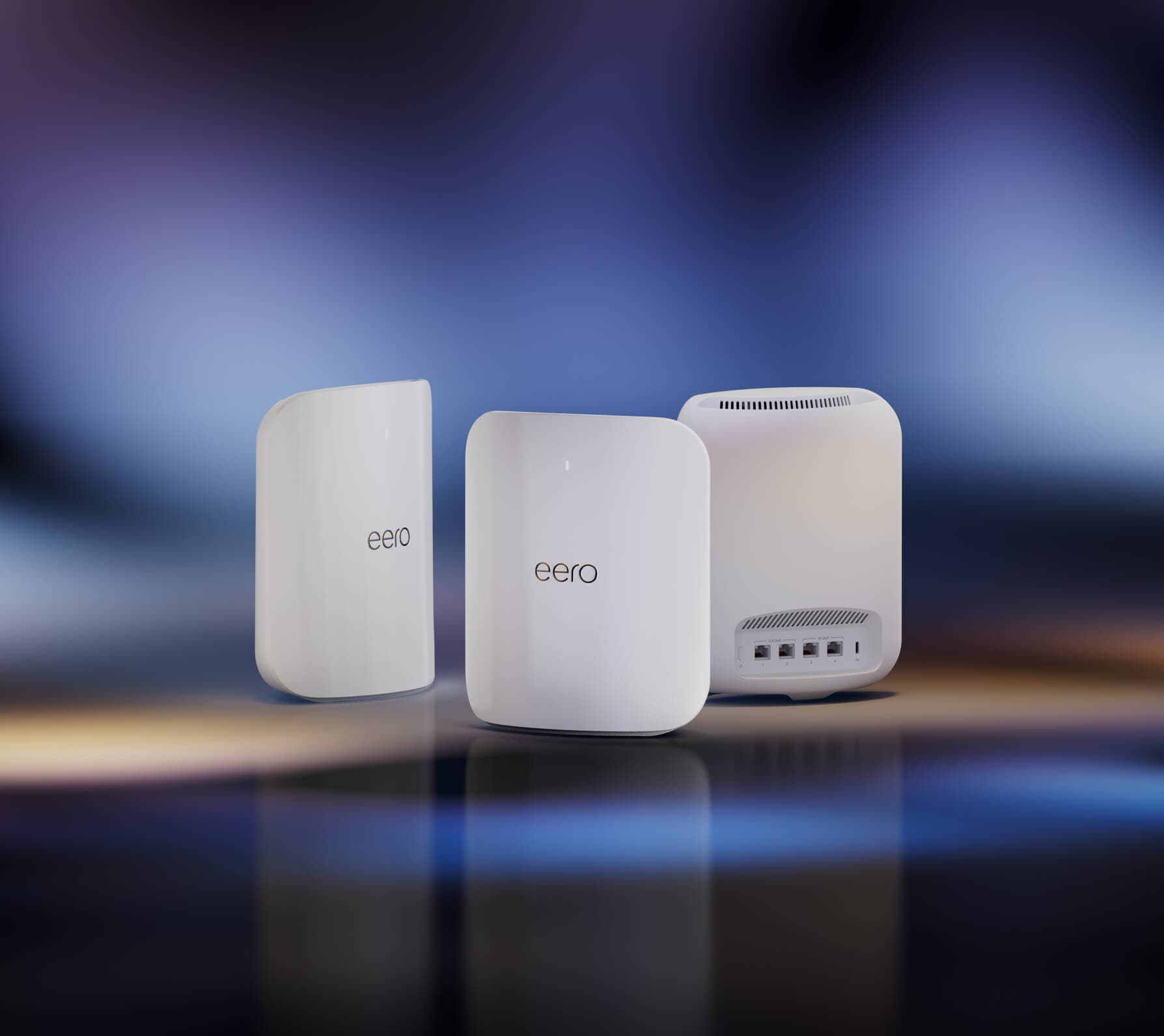
eero Pro 7 vs Netgear Orbi 970: The Wi-Fi 7 Mesh Decision That Actually Matters in 2026
The two flagship Wi-Fi 7 mesh systems most worth comparing. Updated July 2026 with current pricing, corrected firmware-support terms, and the Wi-Fi 8 timeline.
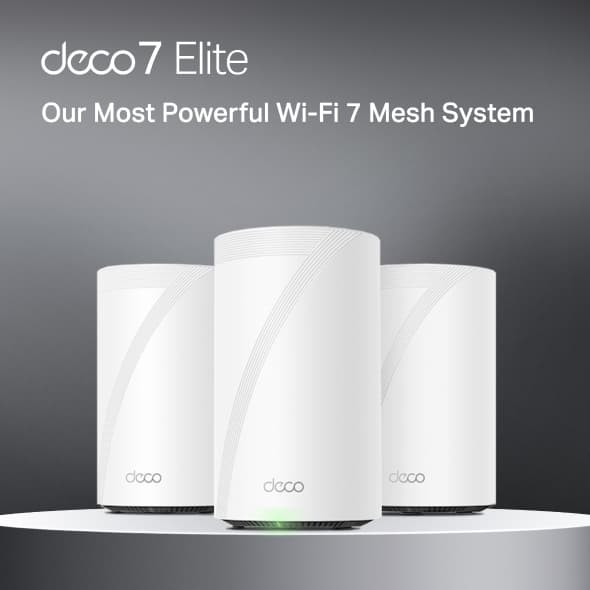
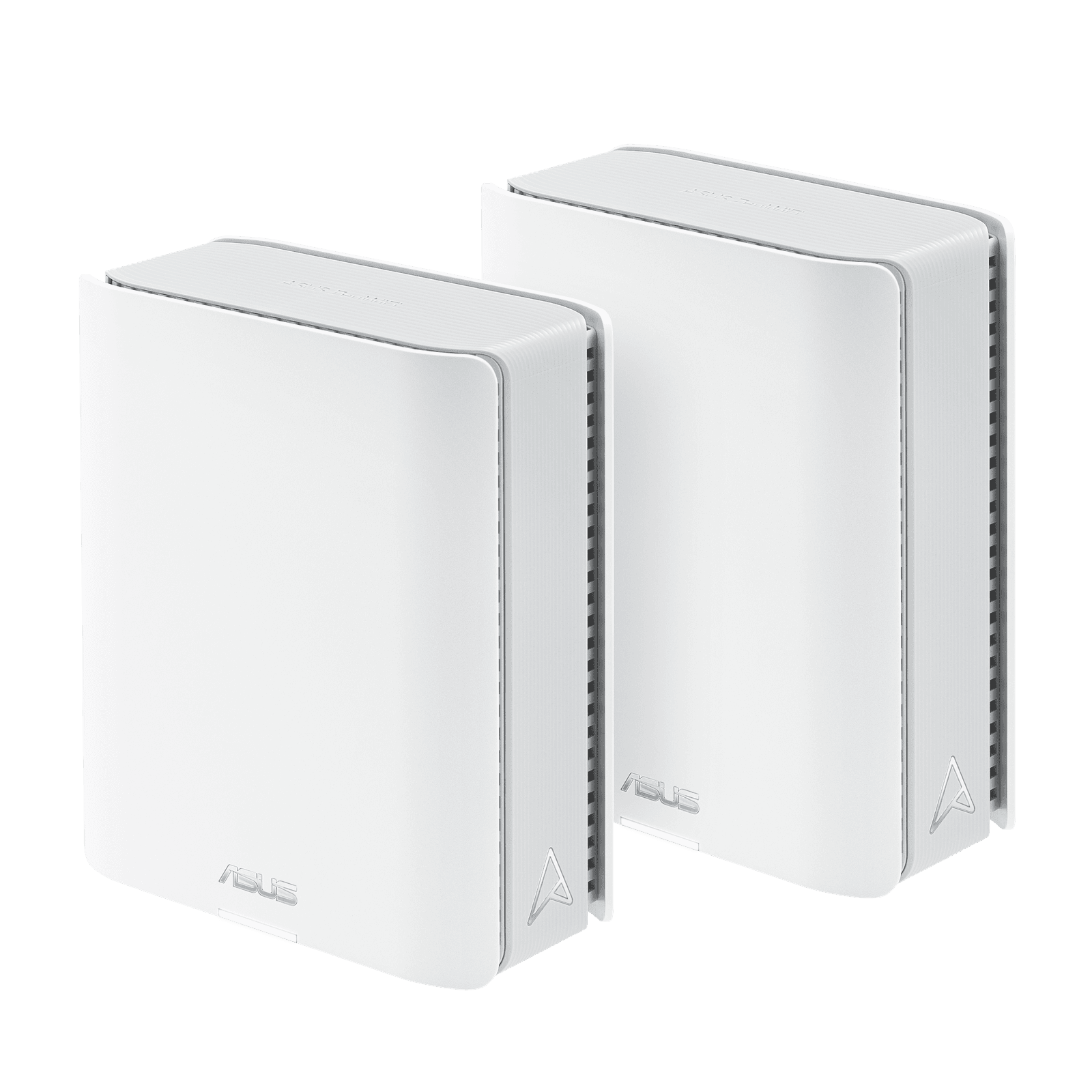
The Best Mesh WiFi Systems in 2026, Ranked by People Who Actually Cover Their Whole House
Eero Max 7, Orbi 970, Deco BE95. Gavler's networkers rank the Wi-Fi 7 mesh systems worth buying — for whole-home coverage at speed.