Amazon Eero Max 7.
Tri-band WiFi 7 with 10 Gbps wired ports and the most polished mesh app on the market.
The Verdict.
Gavler Meta-Score
“The Max 7 is the rare flagship that earns its price through experience, not raw spec dominance. If you have multi-gig fiber or a dense smart home and you've ever lost a weekend to Orbi admin menus, this is the one to buy. Just accept that you're paying the Amazon ecosystem tax — and that the full Eero Plus suite is the real price.”
The Gavler Verdict
The Gavler Review.
Amazon Eero Max 7 Review: The WiFi 7 Mesh That Wins on Simplicity, Not Specs
The Amazon Eero Max 7 sits at number one on our Best Mesh WiFi Systems list with a 9.5, and it earns that spot without winning a single spec-sheet category outright. What it wins is the experience: genuine 10 Gbps wired ports, WiFi 7 speeds that hold up at close range, and a setup and app experience the rest of the mesh category is still chasing. Buy it if you have multi-gig fiber or a dense smart home and have ever lost a weekend to a competitor's admin menus. Skip it only if your home is large and dense enough to need the Netgear Orbi 970's dedicated backhaul, or if 500 dollars matters more to you than the Eero app's polish — in which case the TP-Link Deco BE95 is the honest alternative.
What it actually is
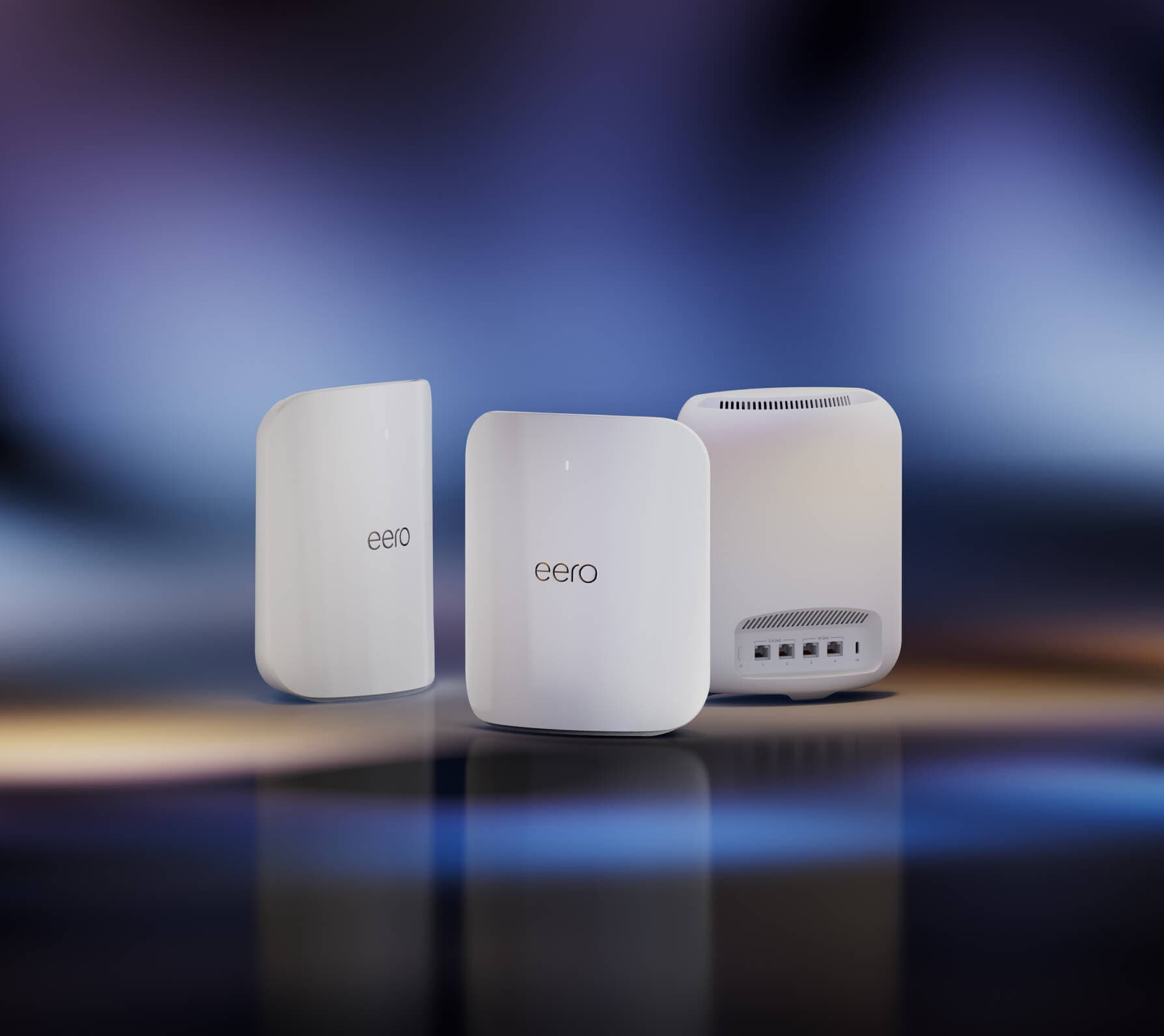
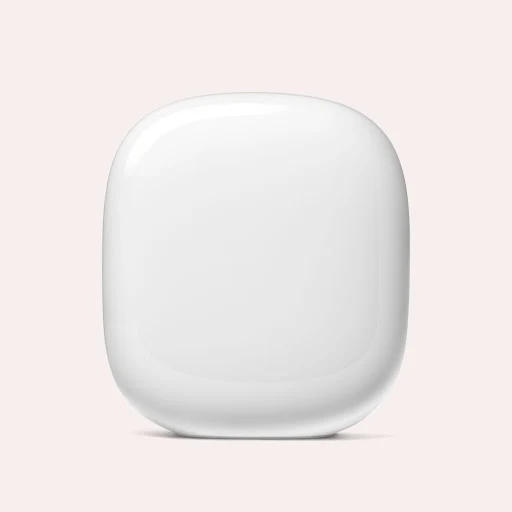
The Max 7 is Amazon's flagship answer to a question most WiFi 7 mesh systems fail to ask: what if the most capable mesh on the market also had the simplest setup? Each node in the three-pack carries a BE27000-class tri-band radio — 2.4 GHz, 5 GHz, and 6 GHz with full 320 MHz channel support — plus two 10 Gbps auto-sensing ports and two 2.5 Gbps ports per node, the richest wired I/O of any consumer mesh Gavler has reviewed. A three-pack covers up to 7,500 square feet, with Eero's TrueMesh routing handling client handoff, band steering, and backhaul path selection automatically, with no manual configuration required.
At $1,699, it's not the cheapest WiFi 7 system on the list, and the tri-band architecture — one 6 GHz band shared between client traffic and mesh backhaul — is a deliberate trade-off against quad-band rivals like the Orbi 970, which reserves an entire radio exclusively for backhaul. For most buyers, that trade is the right one: you get real 10 Gbps WAN capability and MLO-class latency without opening a single configuration page.
In use
Tom's Guide's testing captures the Max 7's actual shape as a product: "Amazon's eero Max 7 has the ability to push a lot of data close up, with everything most home users crave — but its performance doesn't hold up at longer distances and extra security and parental controls require a paid subscription." That's the honest read — strong near-node performance, real limitations at range, and a subscription dependency for the full feature set.
Where the Max 7 separates itself is polish. AppleInsider called it "the fastest networking hardware I've tested, and the app experience is in a different league from everything else at this tier." CNN Underscored's framing is the practical buyer's calculus: "If you're going to spend this much on a mesh router, the Max 7's setup simplicity is worth the premium over spec-sheet competitors." Setup typically runs under five minutes guided entirely through the Eero app, and Amazon's four-plus years of active firmware improvements on prior Eero generations is a real, verifiable track record — not just a promise.
PC Gamer's take is the useful caveat for value-conscious buyers: "At this price point, the Eero Max 7 is the right buy only if you're genuinely going to use the multi-gig ports and the Thread/Matter integration — otherwise the Pro 7 will feel identical." That's worth taking seriously before paying flagship price for headroom you won't use.
Where it shines
- The richest wired I/O in consumer mesh. Two 10 Gbps and two 2.5 Gbps ports on every node means you can wire a NAS, a workstation, and a switch at multiple points in the house without hunting for the one port that supports real speed.
- Setup and daily-use polish that's still the category benchmark. Guided setup under five minutes, automatic firmware updates, and an app that doesn't require a manual — this is where the Max 7's premium over quad-band competitors is easiest to justify.
- Thread and Matter built into every node. Each Max 7 unit doubles as a Thread and Matter border router, which quietly future-proofs the smart-home side of the network without a separate hub purchase.
The trade-offs — who should skip it
This is the best all-around WiFi 7 mesh experience on the list, not the highest-ceiling one, and the honest reasons to buy something else are specific:
- You have a large, dense, or device-heavy home. The tri-band architecture shares one 6 GHz band between clients and backhaul, which trades some peak speed for simplicity. Homes over 5,000 square feet with brick, plaster, or concrete construction and 80-plus active clients are the case where the Netgear Orbi 970 Series's dedicated backhaul radio actually pays off.
- Advanced security behind a subscription bothers you. Eero Plus gates the deeper parental controls and threat protection. Budget for it if security is a real priority, not an afterthought.
- You want maximum port count for less money. The TP-Link Deco BE95 undercuts the Max 7 by 500 dollars with more raw wired I/O and a dedicated split-6-GHz backhaul, at the cost of a less polished app.
How it compares
Directly beneath the Max 7 sits the Netgear Orbi 970 Series at rank two — the spec-sheet apex of the category, a true quad-band system with a dedicated 6 GHz backhaul channel, 10,000 square feet of coverage, and a five-year firmware commitment, for $2,299. It's the right buy only for homes that can actually extract that headroom. At rank three, the TP-Link Deco BE95 is the value-conscious quad-band alternative at $1,199, splitting 6 GHz into dedicated backhaul and client bands with the richest port count in the category, trading Eero's app polish for real savings.
The Max 7's case isn't that it wins any individual spec battle — the Orbi has more coverage, the Deco has more ports for less money — it's that it wins the experience most buyers actually live with day to day.
The Gavler verdict
A 9.5, backed by a 94 expert consensus against a 91 community rating — a gap that traces almost entirely to price and the Eero Plus paywall rather than any performance complaint. The Eero Max 7 is the mesh system to buy when you want flagship WiFi 7 performance without a flagship learning curve. If your home genuinely demands the Orbi 970's dedicated-backhaul ceiling, buy that instead; if 500 dollars and a slightly rougher app are an acceptable trade for more ports, the Deco BE95 is the smarter spend. For nearly everyone else, the Max 7 is the confident default.
Common Questions
For most households with multi-gig fiber or a dense smart home, yes. It ranks first on Gavler's Best Mesh WiFi Systems list with a 9.5, and the reason is experience over raw spec dominance: genuine 10 Gbps wired ports, MLO-class low latency, and a setup that typically takes under five minutes. The honest caveat is the Eero Plus subscription — advanced security and parental controls sit behind a paywall, so the sticker price is not the full cost of the ecosystem.
Buy the Eero Max 7 unless your home is over 5,000 square feet with dense construction and 80-plus active devices — that's the narrow case where the Orbi 970's dedicated 6 GHz backhaul and 10,000 square foot coverage actually pay off. For everyone else, the Orbi 970 costs 600 dollars more, comes with noticeably larger satellite units, and asks you to manage a more complex admin interface for headroom most homes will never use.
The Deco BE95 is the value-conscious quad-band alternative at 1,199 dollars versus the Max 7's 1,699 dollars, with more raw port I/O and a dedicated split 6 GHz backhaul that the Eero's tri-band design doesn't match. The trade is app polish: Eero's app remains the category benchmark for daily-use simplicity, while TP-Link's Deco app is functionally complete but a generation behind in refinement. If setup and day-to-day polish matter more than saving 500 dollars, buy the Eero.
Not to use the network, but to get the full security picture. Basic mesh WiFi 7 performance, TrueMesh routing, and Thread/Matter smart-home support all work without a subscription. Eero Plus adds advanced parental controls and deeper threat protection — treat it as part of the real cost of ownership if security features matter to your household, not an optional add-on.
Where to Buy.
Prices checked regularly
90-day price history
Price History
Steady at $1,699 for the entire 90-day tracking window — no increases, no discounts, across 91 tracked days.
Tracked daily across retailers. Vote Want itabove and we’ll alert you the moment the price drops.
Some links are affiliate links — Gavler may earn a commission. This never affects rankings or scores. Learn more.
Precision Engineering
Tri-Band WiFi 7 with MLO
BE27000 tri-band radios (2.4/5/6 GHz) with Multi-Link Operation for simultaneous dual-band connections on capable clients.
Two 10 Gbps Ports Per Node
Every node has two 10 Gbps and two 2.5 Gbps auto-sensing ports — the richest wired I/O of any consumer mesh.
TrueMesh + Thread Built-In
Dynamic mesh routing steers clients to the strongest node, and every Max 7 node doubles as a Thread and Matter border router.
Technical Specifications
The Scoreboard
Consensus pick for best overall WiFi 7 mesh experience in mainstream reviews. Community scores reflect strong real-world reliability; primary reservations are the price and Eero Plus paywalling advanced security.
Cast Your Vote
Do you think Amazon Eero Max 7 deserves the #1 spot in Best Mesh WiFi Systems?
Global Critique
“Amazon's eero Max 7 has the ability to push a lot of data close up, with everything most home users crave — but its performance doesn't hold up at longer distances and extra security and parental controls require a paid subscription.”
“The Eero Max 7 is the fastest networking hardware I've tested, and the app experience is in a different league from everything else at this tier.”
“At this price point, the Eero Max 7 is the right buy only if you're genuinely going to use the multi-gig ports and the Thread/Matter integration — otherwise the Pro 7 will feel identical.”
“If you're going to spend this much on a mesh router, the Max 7's setup simplicity is worth the premium over spec-sheet competitors.”
More from Best Mesh WiFi Systems.
See how other top picks compare in this category.
Do You Need Wi-Fi 7 Mesh, or Will 6E Do?
Gbps hangtags are the wrong first question. Wi-Fi 7 vs 6E vs 6 is the generation to buy. Then shop Gavler's live ranking.
Wi-Fi 8 Just Showed Up at IFA — Here's Why You Shouldn't Wait for It
TP-Link showed the first Wi-Fi 8 routers at IFA 2026. But the standard isn't final until 2028 and no client devices exist yet. Here's what to actually buy.
Wi-Fi 7 Buying Guide 2026: Who Actually Needs It, Who Doesn't, and How to Not Overpay
Is Wi-Fi 7 worth it? What MLO actually does, when 6 GHz matters, what to pay in 2026, and the buyers who should honestly skip the upgrade.
eero Pro 7 vs Netgear Orbi 970: The Wi-Fi 7 Mesh Decision That Actually Matters in 2026
The two flagship Wi-Fi 7 mesh systems most worth comparing. Updated July 2026 with current pricing, corrected firmware-support terms, and the Wi-Fi 8 timeline.
The Best Mesh WiFi Systems in 2026, Ranked by People Who Actually Cover Their Whole House
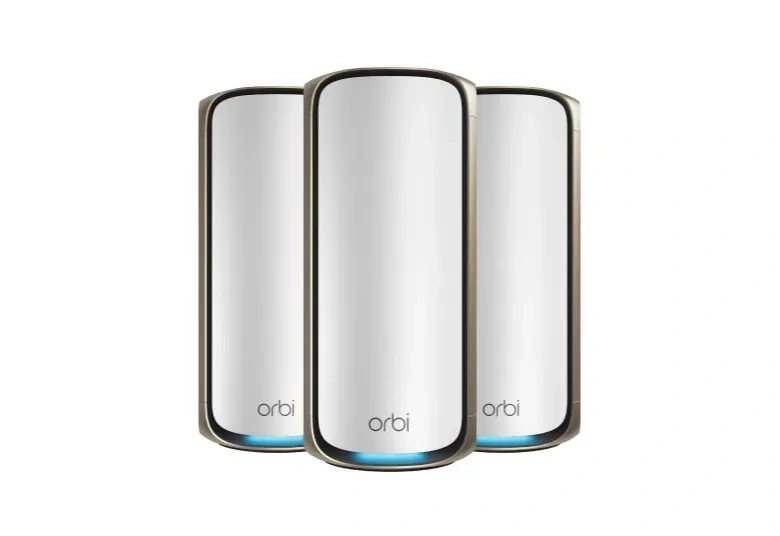
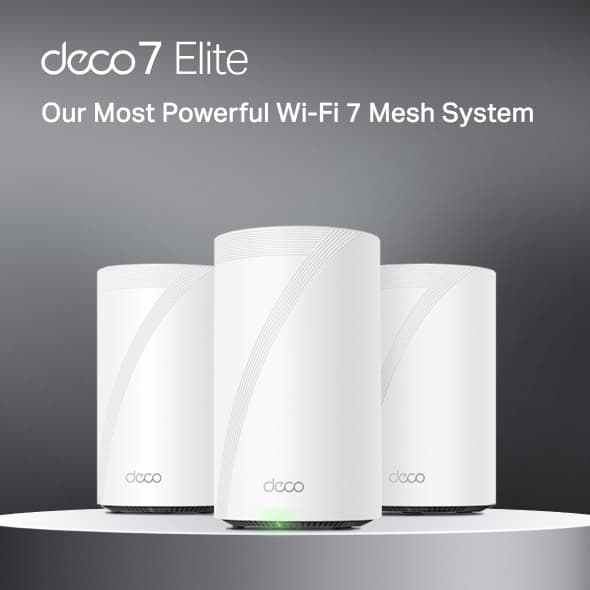
Eero Max 7, Orbi 970, Deco BE95. Gavler's networkers rank the Wi-Fi 7 mesh systems worth buying — for whole-home coverage at speed.