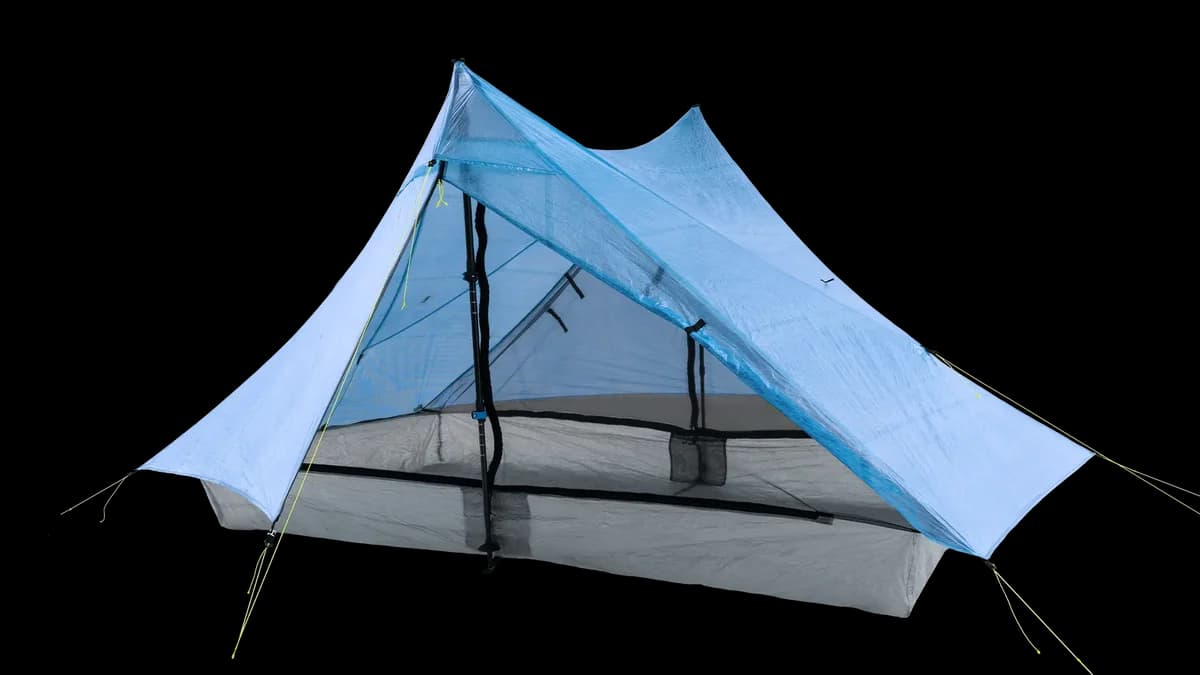
Tarptent Double Rainbow Li.
Single-wall DCF construction with a side-entry layout that ventilates better than competing pyramids. Cottage-built in Nevada with a 25-year design pedigree.
The Verdict.
Gavler Meta-Score
“The dark-horse pick for ventilation-conscious backpackers and shoulder-season trips. Cottage construction, faster ship-out than Durston or Zpacks, and a side-entry geometry that solves the single-wall condensation problem.”
The Gavler Verdict
The Gavler Review.
Tarptent Double Rainbow Li Review: The Cottage Tent That Ships in Two Weeks
The Tarptent Double Rainbow Li ranks number 4 on Gavler's Best Backpacking Tents list with an 8.9, and it's the pick Gavler's editors describe as the "dark-horse" of the category — the tent for backpackers who actually sleep inside their shelter through shoulder-season nights rather than treating it as a place to store a sleeping bag between miles. Switchback Travel called it the "best-ventilating single-wall DCF shelter we've slept in," and that ventilation claim is the whole thesis of this tent. The trade-off: at 26 oz it's heavier than the class-leading Duplex Pro and X-Mid Pro 2, and it doesn't have the brand recognition either of those carries on the trail.
What it is
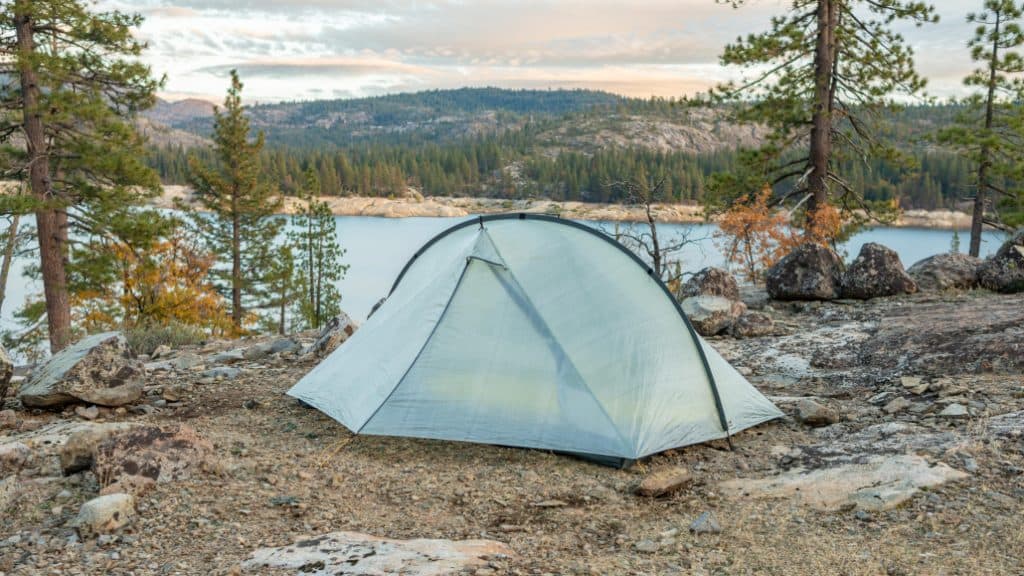
Henry Shires has been building Tarptents since 1999 — longer than Dyneema Composite Fabric (DCF) has existed as an outdoor material — and the Double Rainbow Li is what happens when that design pedigree gets applied to a modern cottage DCF shelter. It's a single-wall, trekking-pole-adjacent design built around a single arched pole, with two trekking poles used to stake out the vestibules. Where most DCF pyramids and A-frames put the door at the peak or the narrow end, the Double Rainbow Li uses a side-entry layout: the door sits perpendicular to the direction wind and airflow typically move through a campsite.
That geometry decision is the tent's entire identity. Single-wall DCF shelters are notorious for condensation — the fabric doesn't breathe, and without careful venting, moisture from your breath and the ground collects on the interior walls overnight. Most competitors manage this with complicated high-low door combinations (the Durston X-Mid Pro 2's chimney-effect venting is the best-known example). The Double Rainbow Li instead lets the shape of the tent do passive work: air moves through the side-entry door naturally, without you having to manage vents mid-storm.
At $695, it sits in the same price band as the Hyperlite Mountain Gear Mid 1, just below the Zpacks Duplex Pro's $799, and above the Durston X-Mid Pro 2's $599.
In use
Trail weight is 26 oz (737 g) — heavier than the Duplex Pro's 20.1 oz or the X-Mid Pro 2's 20 oz, but the extra grams buy real livability. Peak height is 44 inches, floor area is 30 square feet, and there are two doors, both side-entry. The single-pole arch simplifies the pitch considerably compared to a four-corner trekking-pole pyramid: there's one primary structural element to manage, plus the two trekking poles for the vestibules.
The side-entry design also has a practical footprint benefit that doesn't show up in a spec sheet: because the pitch doesn't require the wide stake-out radius that pyramid shelters need, the Double Rainbow Li fits into tighter campsites than a Duplex Pro or X-Mid Pro 2 can. On a busy shoulder-season weekend when the good flat spots are taken, that matters more than most reviews give it credit for.
The one thing you're not buying here is the lightest possible pack weight. If you're planning a Pacific Crest Trail thru-hike where every ounce compounds over 2,650 miles, the Double Rainbow Li's extra 5-6 oz over the class leaders is a real cost. The Gavler team is direct about this trade-off: it's "not the tent for a Pacific Crest Trail thru-hike where every ounce matters."
Strengths
The ventilation is the headline, and it's earned. DCF doesn't breathe the way silnylon or polyester does, so how a single-wall shelter manages moisture is the single biggest variable in how much you'll enjoy sleeping in it during humid or cold-and-wet conditions. The Double Rainbow Li's side-entry geometry does this passively and reliably, which is why Switchback Travel singled it out specifically for ventilation performance among DCF shelters.
The second strength is availability. Cottage ultralight gear has a reputation problem around lead times — waiting eight to twelve weeks for a Durston X-Mid Pro 2 during peak season is common, and Zpacks has had similar backlogs during high-demand stretches. Tarptent's sub-two-week ship time in most seasons is a genuine differentiator for anyone planning a trip on a deadline rather than building out gear a year in advance.
Third, this is a shelter built by a company with two and a half decades of dedicated tent-making experience, not a newer entrant pivoting into DCF. The Trek noted that "Henry Shires has been making Tarptents longer than DCF has existed" — that's not marketing copy, it's a genuine fact about how long the underlying pole geometry and stitching techniques have been refined.
The trade-offs — who should skip it
Weight-obsessed thru-hikers are the clearest group who should look elsewhere. At 26 oz, the Double Rainbow Li gives up 5-6 oz to the category leaders, and on a 2,000+ mile trail that's not a trivial difference when you're also carrying food, water, and a full UL kit. If your primary metric is base weight, the Zpacks Duplex Pro or Durston X-Mid Pro 2 will beat it on paper every time.
Brand recognition is a real, if soft, factor too. Tarptent doesn't have the same forum-driven cult following that Zpacks and Durston have built, which means less used-market liquidity and fewer trailside repair anecdotes floating around if something goes wrong three weeks into a long trail.
And like every DCF shelter, this is not a beginner's first tent. The single-pole arch is more forgiving than a four-point pyramid pitch, but you're still learning a trekking-pole-adjacent system, staking DCF taut, and living with a single-wall shelter's condensation quirks even with good ventilation design.
How it compares
The most relevant comparison on Gavler's list is the Durston X-Mid Pro 2, which ranks one spot higher at 9.4 and undercuts the Double Rainbow Li on price at $599. The X-Mid Pro 2 wins on interior livability for two people — its offset-pole geometry was specifically engineered to let two adults sleep side-by-side without foot brush — and it manages condensation through an engineered high-low door system rather than passive geometry. But Durston is a one-person operation with lead times that can stretch to 8-12 weeks in peak season, while Tarptent ships in under two.
Within Tarptent's own price bracket sits the Hyperlite Mountain Gear Mid 1 at the same $695, though it's a different animal entirely — a 16.5 oz solo pyramid built for bombproof wind performance rather than two-person livability or ventilation. If you're choosing between the two at the same price, the decision comes down to solo vs. two-person use, not which brand makes a better tent.
The Gavler verdict
The Double Rainbow Li earns its 8.9 by solving a real problem — DCF condensation — better than most of its category, and by being buildable and shippable on a timeline that actually works for people who don't plan gear purchases a year out. It gives up some weight to do it, and it won't be the tent PCT thru-hikers reach for first. But for shoulder-season backpackers, buyers who value cottage craftsmanship with fast turnaround, and anyone who has been burned by a soggy DCF pyramid before, it's exactly the underrated pick Gavler's scoreNote describes. Loyal Tarptent owners aren't wrong to keep coming back.
Common Questions
Yes, for the right buyer. It ranks number 4 on Gavler's Best Backpacking Tents list with an 8.9, and Gavler's own scoreNote calls it an 'underrated cottage pick' whose owners are 'some of the most loyal customers in the UL community.' At $695 it isn't cheap, but you're paying for DCF construction, a side-entry design that actually solves single-wall condensation, and a builder who ships in under two weeks.
Better than most. Switchback Travel called it the 'best-ventilating single-wall DCF shelter we've slept in,' a direct result of placing the door perpendicular to prevailing airflow instead of relying on high-low vent tricks like the X-Mid Pro 2 does.
Tarptent hand-builds shelters in Nevada with sub-two-week turnaround in most seasons — a real advantage over cottage rivals like Durston or Zpacks, where lead times can stretch to eight or more weeks during peak season.
Where to Buy.
Prices checked regularly
90-day price history
Price History
Steady at $695 for the entire 90-day tracking window — no increases, no discounts, across 91 tracked days.
Tracked daily across retailers. Vote Want itabove and we’ll alert you the moment the price drops.
Some links are affiliate links — Gavler may earn a commission. This never affects rankings or scores. Learn more.
Precision Engineering
Side-Entry Geometry
Door perpendicular to airflow ventilates passively — solves the single-wall condensation problem without complex venting systems.
Cottage-Built in Nevada
Sub-2-week ship-out times in most seasons — a rare advantage in cottage UL.
Single-Pole Arch
Single arched pole simplifies setup and reduces the campsite footprint required to pitch.
Technical Specifications
The Scoreboard
Underrated cottage pick. Tarptent owners are some of the most loyal customers in the UL community.
Cast Your Vote
Do you think Tarptent Double Rainbow Li deserves the #4 spot in Best Backpacking Tents?
Global Critique
“Best-ventilating single-wall DCF shelter we've slept in.”
“Henry Shires has been making Tarptents longer than DCF has existed.”
More from Best Backpacking Tents.
See how other top picks compare in this category.