Nemo Hornet Osmo 2P.
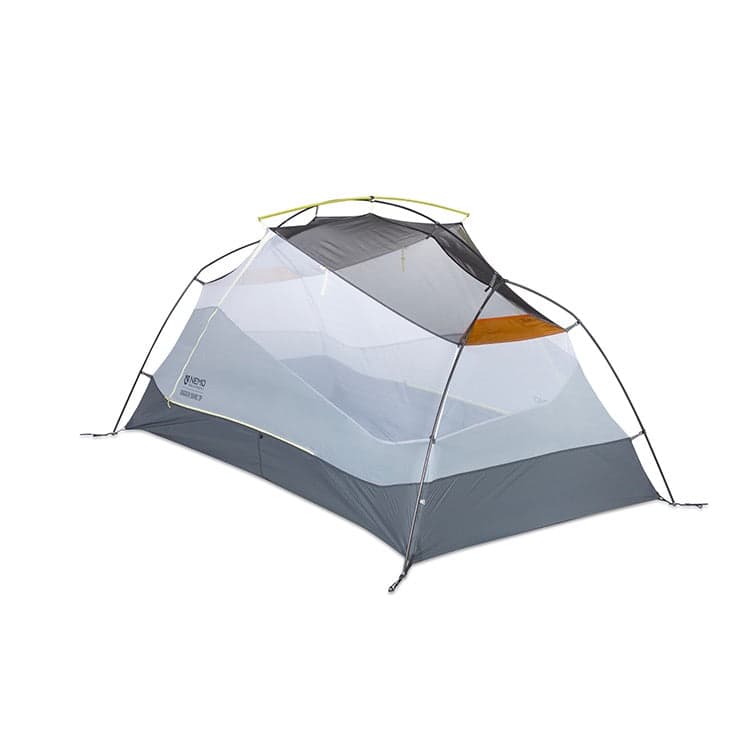
OSMO fabric dries 3x faster than competing nylons and resists stretching when wet. The semi-freestanding ultralight pick for buyers wary of trekking-pole pitches.
The Verdict.
Gavler Meta-Score
“The semi-freestanding ultralight pick for solo backpackers who want a fast, conventional pitch and don't want to learn DCF and trekking-pole shelters. Tight at two people; ideal at one.”
The Gavler Verdict
The Gavler Review.
Nemo Hornet Osmo 2P Review: Ultralight Weight, Familiar Pitch
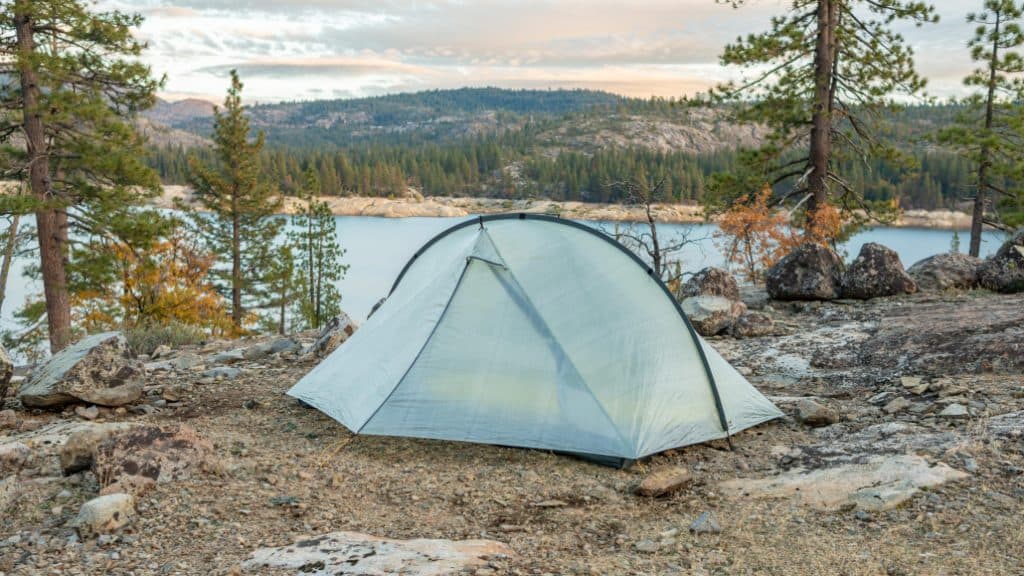
The Nemo Hornet Osmo 2P sits at rank three on our Best Backpacking Tents list with a 9.1, and it earns that spot as the answer for ultralighters who want serious weight savings without abandoning the conventional, freestanding pitch they already know. At 2 lb 1 oz packaged and a 1 lb 14 oz trail weight, it's among the lightest semi-freestanding two-person tents in the industry — only a few ounces heavier than DCF cottage tents, while pitching with real poles in about 90 seconds. Buy it as an exceptional solo shelter, or as a couple's tent if you're comfortable with genuinely close quarters. Skip it if two-person comfort is non-negotiable — the Durston X-Mid Pro 2 at rank two is the honest step up for that.
What it actually is
The Hornet Osmo 2P is Nemo's semi-freestanding answer to the trekking-pole-supported DCF tents that dominate the top of the ultralight tent category. Instead of asking you to learn trekking-pole pitch technique and site-selection discipline, it uses a conventional two-pole hub system that pitches essentially like any other freestanding tent — just built from dramatically lighter materials than a traditional backpacking tent.
The headline material is OSMO, Nemo's proprietary 100% recycled polyester ripstop, and the fabric choice is the whole reason this tent can claim near-DCF weight while using a conventional pole architecture. Nylon — the traditional lightweight tent fabric — stretches up to roughly 3% when wet, which is why nylon tents sag overnight and need re-tensioning after a storm rolls through. OSMO's wet stretch is closer to 0.5%, and it dries measurably faster: in side-by-side comparisons, an OSMO tent rained on overnight is typically pitch-ready two to three hours sooner the next morning than a comparable nylon tent.
In use
The 90-second pitch is the Hornet Osmo 2P's core selling point, and it's a genuinely different experience from the trekking-pole shelters that rank above it on Gavler's list. There's no site-selection anxiety about stake angles or guyline tension — the hub-and-pole system is self-supporting and forgiving of imperfect ground, the same as any conventional backpacking tent generations of hikers have used.
Backpacker Magazine's assessment of the OSMO fabric itself is unambiguous: "OSMO is a genuine material science improvement — the dry-time advantage is real." That's a meaningful claim from a publication that tests fabric performance rigorously rather than taking manufacturer marketing at face value. OutdoorGearLab frames the tent's specific niche precisely: "best ultralight tent if you specifically want a freestanding pitch" — which correctly identifies that the Hornet Osmo 2P isn't trying to out-weight the DCF trekking-pole tents above it on the list, it's serving hikers who've decided the trekking-pole learning curve isn't worth it for them.
The honest limitation, and it's one Gavler's own product notes are direct about, is interior space. This is a 2P-rated tent that's most comfortable with one person and their gear — two adults sleeping pad-to-pad will feel the walls close in, particularly at the foot end. For solo backpacking with a full kit stowed inside, the extra room the "2P" rating provides over a true 1P tent is a real, appreciated luxury. For couples actually sharing the tent nightly, it's tight enough to matter.
Where it shines
- OSMO fabric that solves a real problem. Roughly 0.5% wet stretch versus nylon's roughly 3%, plus a measurably faster dry time — this isn't a marginal fabric upgrade, it changes how the tent behaves after a rainy night.
- The lightest semi-freestanding 2P tent in production. At 2 lb 1 oz packaged, it closes most of the weight gap to DCF trekking-pole tents while keeping a conventional pole architecture.
- A pitch that requires zero new skills. The 90-second hub-and-pole setup is identical in spirit to any freestanding tent a hiker has already used — no trekking-pole technique or careful site selection required.
The trade-offs — who should skip it
Nemo built the Hornet Osmo 2P around weight and pitch simplicity, not maximum interior space, and the honest reasons to look elsewhere are specific:
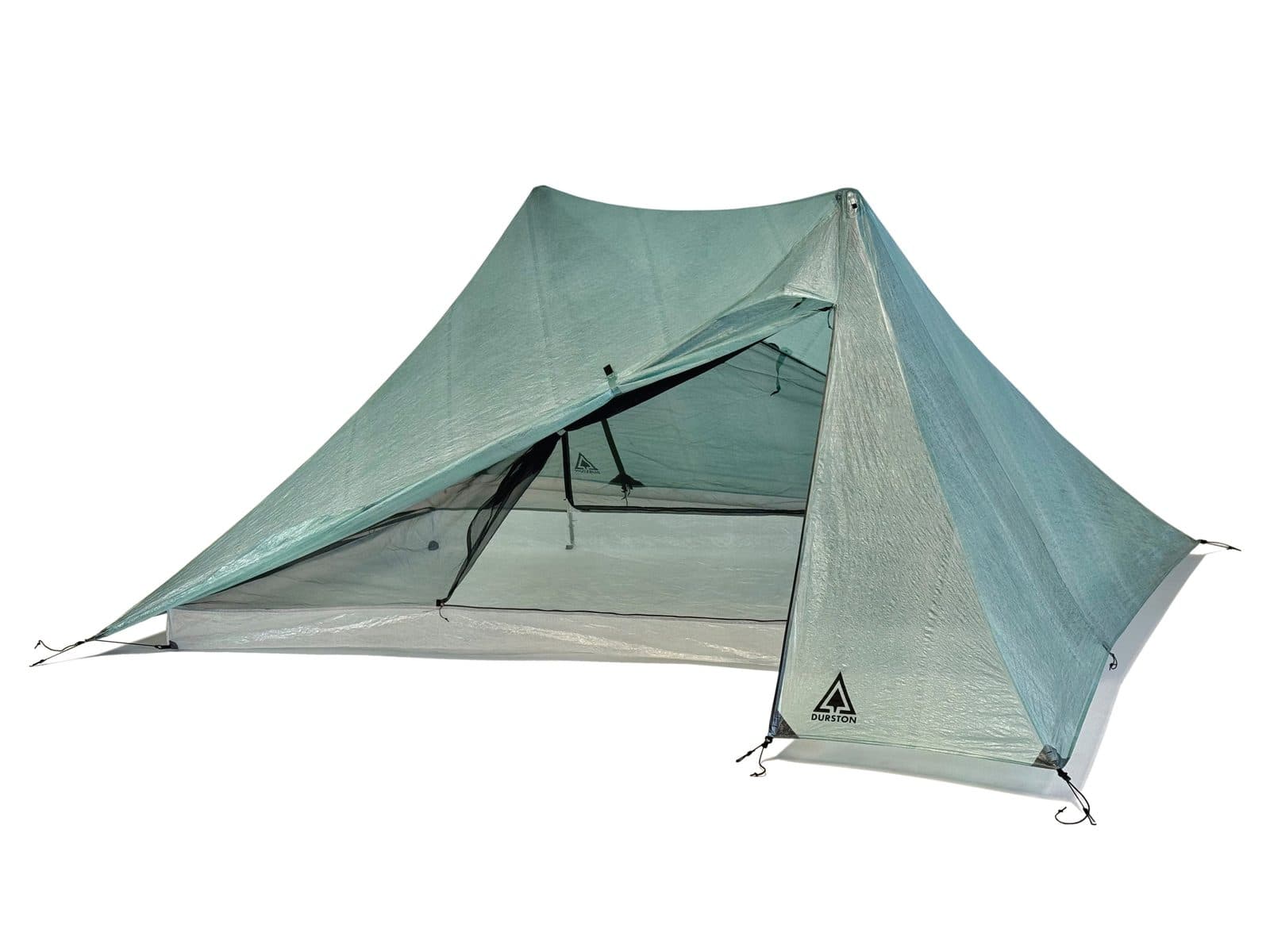
- You're backpacking as a couple and space matters. Two adults with gear will feel genuinely cramped. The Durston X-Mid Pro 2 is purpose-built with offset-pole geometry specifically so two adults can sleep side-by-side without foot brush at the door — a real, felt difference for couples who share a tent nightly.
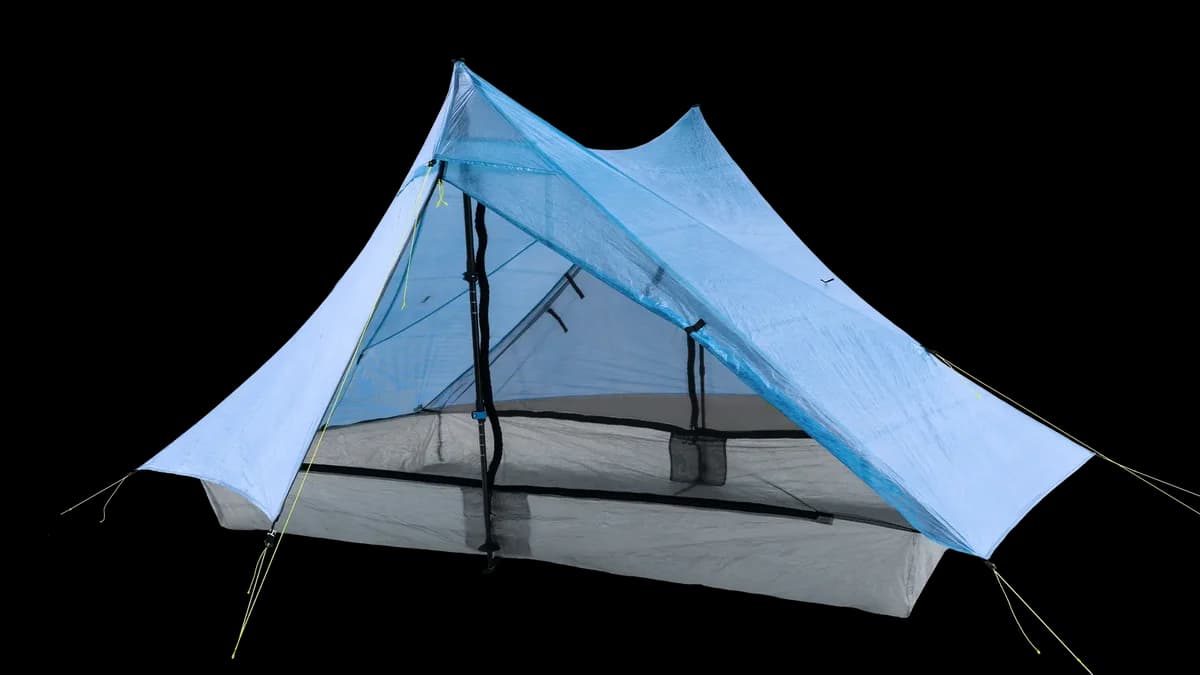
- You want the absolute lightest possible shelter and are willing to learn the technique. The Zpacks Duplex Pro weighs roughly 6 ounces less at 20.1 oz and offers genuinely more two-person floor area at 28 square feet, in exchange for the trekking-pole learning curve the Hornet Osmo 2P is specifically designed to avoid.
- You need maximum peak height and headroom. At 39 inches, the Hornet Osmo 2P's peak height is lower than most trekking-pole shelters on this list, a consequence of its compact, low-profile pole architecture.
How it compares
Within its own list, the Hornet Osmo 2P sits below two DCF trekking-pole tents that solve the weight-versus-livability trade differently. The Zpacks Duplex Pro at rank one is lighter still and offers more floor area, but demands a real trekking-pole pitch learning curve that frustrates beginners through their first several pitches. The Durston X-Mid Pro 2 at rank two undercuts the Duplex Pro on price with offset-pole geometry built specifically for two-person comfort, but shares the same trekking-pole-pitch requirement.
The Hornet Osmo 2P's case against both is straightforward: it trades a few ounces and some peak-season floor area for a pitch experience that requires no new skills and no site-selection discipline. For a solo ultralighter who wants DCF-adjacent weight without the learning curve, or a hiker who simply prefers the certainty of a conventional pole system, that trade is worth making.
The Gavler verdict
A 9.1, with strong expert consensus (90) and community rating (89) that reflect a tent doing exactly what it promises rather than overreaching on its 2P claim. The Nemo Hornet Osmo 2P earns its rank three position by being the honest, accessible on-ramp to ultralight tent weight — genuine OSMO fabric gains, a familiar pitch, and a clear-eyed acknowledgment that two-person comfort isn't its strength. Buy it as a spacious solo shelter or a cozy two-person setup if you're comfortable with close quarters; if true two-person livability is the priority, step up to the X-Mid Pro 2 or Duplex Pro instead.
Common Questions
Yes, specifically for solo backpackers who want ultralight weight without learning a trekking-pole pitch. It ranks third on Gavler's Best Backpacking Tents list with a 9.1, and at 1 lb 14 oz trail weight it's among the lightest semi-freestanding two-person tents in production. The honest caveat is the '2P' label — two adults with gear will feel the walls. It shines as an exceptional solo shelter.
OSMO is Nemo's proprietary 100% recycled polyester ripstop. It stretches only about 0.5% when wet, versus roughly 3% for standard nylon, which means an OSMO tent stays taut through rain without the sagging and re-tensioning nylon tents need. Backpacker Magazine calls it 'a genuine material science improvement,' and in side-by-side comparisons OSMO tents are typically pitch-ready two to three hours faster the morning after rain, since the fabric dries roughly three times faster than nylon.
For two adults with full gear stored inside, yes, most reviewers and Gavler's own testing agree it's genuinely tight — walls will be felt. It's a 2P-rated tent that performs best as a spacious solo shelter or a cozy setup for two people who don't mind close quarters. Couples prioritizing shared space should size up to the Nemo Dagger Osmo 2P or consider the Durston X-Mid Pro 2's offset-pole geometry.
Buy the Hornet Osmo 2P if you want a conventional, foolproof 90-second pitch with two hub-and-pole sections and no trekking-pole technique to learn — it's the gentler entry point into ultralight tents. Buy the Duplex Pro if you're committing to serious ultralight backpacking and are willing to learn a trekking-pole pitch in exchange for roughly 6 fewer ounces of shelter weight and true two-person livability at 28 square feet of floor area.
Where to Buy.
Prices checked regularly
90-day price history
Price History
Steady at $500 for the entire 90-day tracking window — no increases, no discounts, across 91 tracked days.
Tracked daily across retailers. Vote Want itabove and we’ll alert you the moment the price drops.
Some links are affiliate links — Gavler may earn a commission. This never affects rankings or scores. Learn more.
Precision Engineering
OSMO Fabric
100% recycled polyester ripstop with 0.5% wet stretch (vs. ~3% for nylon) and 3x faster dry time.
2 lb 1 oz Packaged
Lightest semi-freestanding 2P tent in production.
Conventional 90-Second Pitch
Two pole hub system pitches like a normal freestanding tent — no trekking-pole skill required.
Technical Specifications
The Scoreboard
Best-in-class for solo users. Two-person livability is the main caveat — buyers expecting a true 2P should size up.
Cast Your Vote
Do you think Nemo Hornet Osmo 2P deserves the #3 spot in Best Backpacking Tents?
Global Critique
“OSMO is a genuine material science improvement — the dry-time advantage is real.”
“Best ultralight tent if you specifically want a freestanding pitch.”
More from Best Backpacking Tents.
See how other top picks compare in this category.