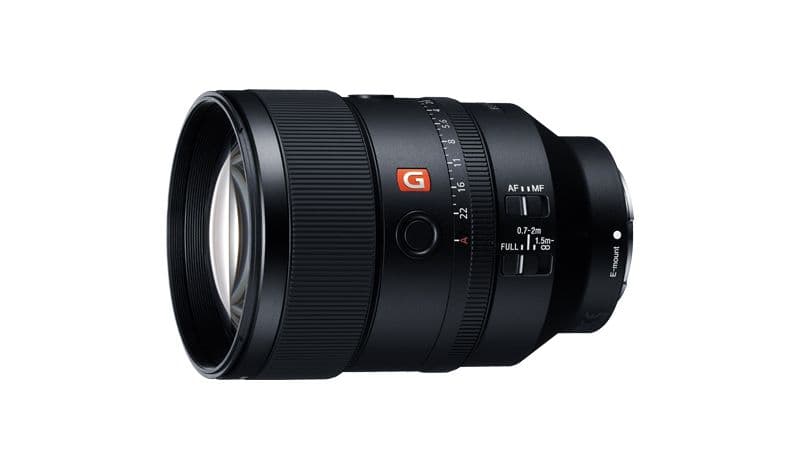
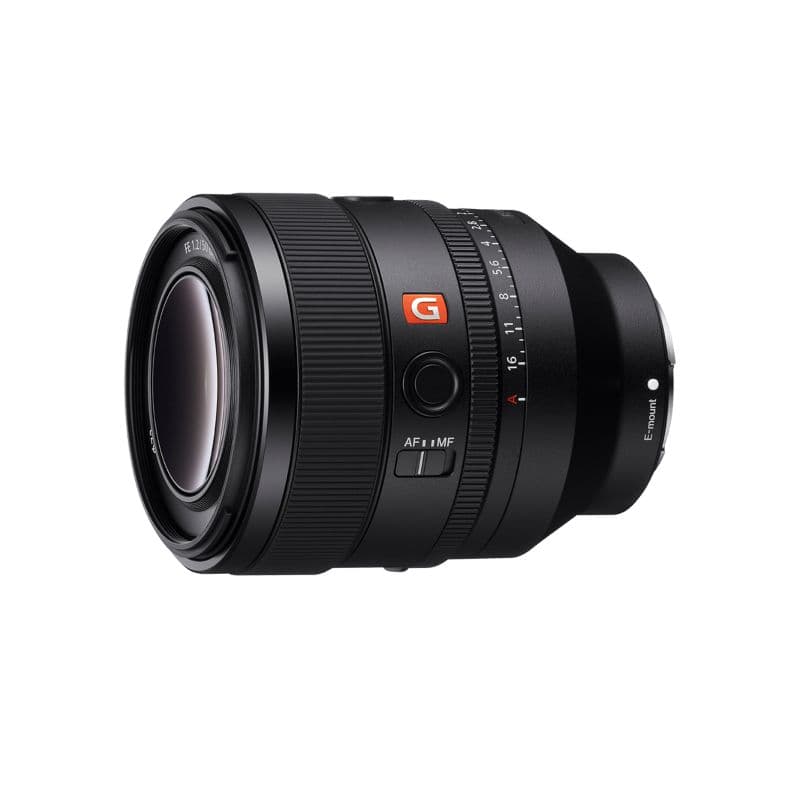
Sony FE 135mm f/1.8 GM.
The cleanest 135mm rendering in any system. Sony's GM line at its sharpest — and the second body that lives on most portrait shooters' belts.
The Verdict.
Gavler Meta-Score
“The sharpest short telephoto Sony makes and a reference-grade portrait and event lens — provided you can carry it. You trade 950 grams and any optical stabilization (plus a real premium over third-party 135s) for wide-open sharpness so high some shooters wish for a little softness back.”
The Gavler Verdict
The Gavler Review.
Sony FE 135mm f/1.8 GM Review: Almost Too Sharp for Its Own Good
The Sony FE 135mm f/1.8 GM ranks number 9 on Gavler's Best Portrait Lenses list with an 8.6, and it's the lens Sony shooters reach for when a headshot or wedding portrait needs to be unimpeachable. OpticalLimits called its performance "almost impeccable," and Amateur Photographer's Andy Westlake put it more bluntly after his lab tests: sharpness is "stupendous, even at f/1.8, to the extent that for portraits you might find yourself wishing for a touch of flattering softness instead." The trade-off is size, weight, and money — at 950 grams with no optical stabilization and a genuine premium over third-party rivals, this is a lens you commit to, not one you casually add to a bag.
What it is
Sony's short telephoto prime is built around 13 elements in 10 groups, mixing XA (extreme aspherical), Super ED, and ED glass to control the aberrations that typically limit fast telephoto primes. An 11-blade aperture keeps specular highlights round as you stop down, and Nano AR coating plus a fluorine-coated front element handle flare and weather resistance. Four XD linear motors drive a floating focus system across two groups — engineering aimed squarely at making a 950-gram f/1.8 prime focus fast enough for moving subjects, not just static studio work.
Westlake's Amateur Photographer review, tested on both a current Alpha 7R III and an older Alpha 7 II, gives useful context on price: at $2,098 in his review period (Gavler tracks current retail closer to $1,998), the Sony sits well above the Sigma 135mm f/1.8 DG HSM Art ($1,399 in Sony E-mount) and the Zeiss Batis 135mm f/2.8 ($1,750, lighter and stabilized), and far above the manual-focus Samyang 135mm f/2 ED UMC at $499. Build is magnesium alloy with a traditional clicking aperture ring, a de-click switch for video, dual AF-stop buttons for landscape and portrait orientation, and a focus limiter switch. The minimum focus distance is a class-leading 0.70m, giving 0.25x magnification for closer work than most 135mm primes manage.
In use
The defining trait of this lens is how little it seems to compromise optically to hit f/1.8. Westlake's MTF testing on a 42.4MP Alpha 7R III found not just breathtaking central resolution but corners that come remarkably close to matching it — performance that holds "at all focus distances, from infinity to close-ups." Wide open, the zone of sharp focus "fades away beautifully to defocused blur, with almost no perceptible colour fringing," and the 11-blade diaphragm combined with an Advanced Aspherical element that eliminates onion-ring bokeh produces backgrounds Westlake calls "lovely smoothness."
Autofocus is the pleasant surprise for a lens this heavy. OpticalLimits rated it "very snappy... despite the heavy lens elements and the floating system," and on current-generation bodies like the Alpha 7R III, Westlake found it "focused quickly, silently, and unerringly accurately," with Eye AF locking onto portrait subjects with confidence. That confidence erodes somewhat on older hardware — on the Alpha 7 II specifically, autofocus is "not as fast, and more likely to hunt for focus in marginal light," which matters if you're pairing this lens with an aging body rather than a current-generation Alpha.
Handling is solid rather than elegant. The aperture ring has well-judged click stops, but Westlake's one real ergonomic complaint is that the focus mode and limiter switches "are both a bit too stiff," with the portrait-range limiter position especially fiddly to hit. At 90mm in diameter and 950 grams, this isn't a lens you forget you're carrying, though it balances well on Alpha 7-series bodies with the aperture ring naturally under your thumb.
Strengths
- Reference-class sharpness wide open. Both OpticalLimits and Amateur Photographer independently landed on the same conclusion: this lens resolves at a level that makes f/1.8 usable as a working aperture, not just a specification.
- Bokeh that avoids the usual 135mm pitfalls. The 11-blade aperture and Advanced Aspherical element keep out-of-focus rendering smooth and free of onion-ring texture, even in busy backgrounds.
- Autofocus fast enough for events, not just studio work. OpticalLimits' "very snappy" verdict, backed by Amateur Photographer's real-world testing on current bodies, means this lens keeps pace with weddings rather than living only on a tripod.
The trade-offs — who should skip it
- 950 grams with zero optical stabilization. You are fully dependent on in-body stabilization, and on older bodies with weaker IBIS or slower autofocus systems like the Alpha 7 II, both handling and focus speed noticeably soften.
- A real price premium over equally capable rivals. Amateur Photographer's own verdict flags this directly: Sigma and Zeiss alternatives "are capable of producing equally fine images at a significantly lower price." You're paying for the aperture ring, native compatibility, and Sony's build quality — not necessarily for better pictures.
- Mild axial chromatic aberration wide open. OpticalLimits' only real nitpick, and a minor one, but worth knowing if you pixel-peep high-contrast edges at f/1.8.
How it compares
Within Sony's own portrait lineup, the direct rival worth knowing about is the Sigma 85mm f/1.4 DG DN Art, ranked 7 on the same Best Portrait Lenses list — a different focal length but the same value proposition of GM-adjacent optics at a lower price, at 625g versus the Sony's 950g. Photographers debating systems entirely should also look at the Canon RF 135mm f/1.8L IS USM, ranked 10 on this list — Canon's answer adds genuine optical stabilization the Sony lacks, at the cost of being a touch heavier in the hand and priced about $100 above the Sony.
For Sony shooters specifically, though, there isn't a native alternative that beats this lens optically. The choice is really about whether you need the Sony ecosystem's guaranteed compatibility and control layout, or whether a third-party 135mm gets you 90% of the result for meaningfully less money.
The Gavler verdict
An 8.6 that reflects near-unanimous critical acclaim for sharpness, bokeh, and a surprisingly capable autofocus system, weighed against the honest costs of carrying 950 grams with no stabilization and paying a premium that rivals don't fully justify on image quality alone. This is the sharpest short telephoto Sony makes, and for portrait, wedding, and event photographers who want the best glass available on E-mount, it remains the pick — provided you can carry it, and you're buying it for the Sony ecosystem rather than the absolute best price-per-sharpness ratio in the class.
Common Questions
For portrait, wedding, and event shooters on Sony E-mount, yes. It ranks number 9 on Gavler's Best Portrait Lenses list with an 8.6, and Amateur Photographer's Andy Westlake found sharpness 'stupendous, even at f/1.8, to the extent that for portraits you might find yourself wishing for a touch of flattering softness instead.' At $1,998 and 950g with no stabilization, it's a serious commitment, not a casual buy.
No. It relies entirely on in-body stabilization from the camera. Amateur Photographer's own testing was done partly on an older Alpha 7 II, where the reviewer noted autofocus 'is not as fast, and more likely to hunt for focus in marginal light' — a body-dependent caveat worth knowing before you buy.
Amateur Photographer's review is blunt about this trade-off: 'its Sigma and Zeiss rivals are capable of producing equally fine images at a significantly lower price.' The Sigma 135mm f/1.8 DG HSM Art runs roughly $600 less. Buy the Sony for the aperture ring, the build, and guaranteed native compatibility for stills and video; buy third-party if raw image quality per dollar is your only criterion.
Where to Buy.
Prices checked regularly
90-day price history
Price History
Steady at $1,998 for the entire 90-day tracking window — no increases, no discounts, across 91 tracked days.
Tracked daily across retailers. Vote Want itabove and we’ll alert you the moment the price drops.
Some links are affiliate links — Gavler may earn a commission. This never affects rankings or scores. Learn more.
Precision Engineering
Reference-Class Sharpness at f/1.8
13 elements in 10 groups (with XA, Super ED, and ED glass) resolve hard from the moment you open up — sharpness OpticalLimits called 'almost impeccable,' corner to corner.
11-Blade Rounded Aperture
An 11-blade circular diaphragm keeps specular highlights round as you stop down, preserving the smooth 135mm bokeh that defines the focal length for portraits.
Fast AF for a Heavy Prime
Dual linear motors and a floating focus group give autofocus OpticalLimits rated 'very snappy' — quick enough to track portraits and events, not just studio work.
Technical Specifications
The Scoreboard
Near-unanimous acclaim for sharpness, bokeh, and surprisingly quick autofocus (OpticalLimits: 'almost impeccable'); the consistent caveats are the 950g heft, the absence of optical stabilization, and mild axial CA wide open.
Cast Your Vote
Do you think Sony FE 135mm f/1.8 GM deserves the #9 spot in Best Portrait Lenses?
Global Critique
“The Sony FE 135mm f/1.8 FE delivers an almost impeccable performance.”
“I found that sharpness is stupendous, even at f/1.8, to the extent that for portraits you might find yourself wishing for a touch of flattering softness instead.”
“The AF is very snappy as well despite the heavy lens elements and the floating system.”
“If we are nitpicky, there is one dark spot, though - axial CAs.”
More from Best Portrait Lenses.
See how other top picks compare in this category.
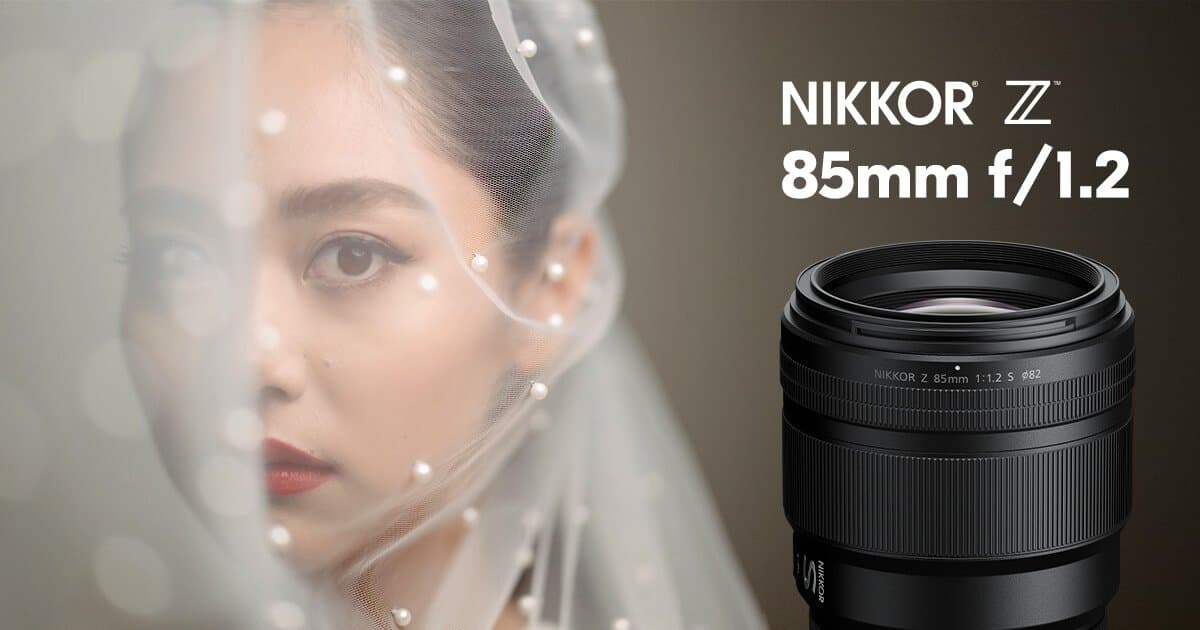
How Close Do You Stand to the Face?
An f/1.2 hangtag is the wrong first question. 50mm, 85mm, or 135mm is the distance you work. Then shop Gavler's live ranking.
The Best Portrait Lenses in 2026, Ranked by the Photographers Who Shoot Faces for a Living
Canon, Nikon, Sony, and Sigma's fastest 50mm, 85mm, and 135mm primes — Gavler's community ranks the portrait lenses worth the money, from $1,199 to $2,799.