Sigma 85mm f/1.2: Don't Buy a Portrait Lens Until You See This!
Tony & Chelsea Northrup
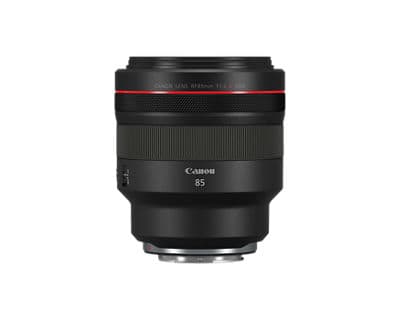
Canon's portrait flagship. Optically corrected to a degree EF never reached, with bokeh that defines the modern wedding look.
Gavler Meta-Score
“The definitive Canon portrait rendering — but a heavy, unstabilized, $2,699 specialist you build a shoot around, not a lens you carry all day. Buy it if the three-dimensional wedding look is your signature; reach for the far lighter RF 85mm f/2 if you shoot events on the move.”
The Gavler Verdict
Canon RF 85mm f/1.2L USM Review: The Portrait Lens Canon Built to Prove a Point
The Canon RF 85mm f/1.2L USM sits at number two on our Best Portrait Lenses list with a 9.6, and Canon built it as a direct argument for why photographers should switch to the RF mount. Buy it if the three-dimensional, "painterly" rendering that defines the modern wedding portrait is your signature look and you're prepared to build a shoot around a heavy, unstabilized specialist lens. Skip it if you need something you can carry all day without thinking about it — the lighter RF 85mm f/2 gives up some of the wide-open character for a lens you'll actually want on your camera between shots.
The old EF 85mm f/1.2L was legendary among portrait photographers but genuinely flawed: slow to focus and prone to color fringing wide open. The RF version keeps everything that made the original beloved and fixes what didn't work. Blue-spectrum Refractive (BR) optics all but eliminate the chromatic fringing that plagued the EF lens, and DPReview found sharpness "already superb at f/1.2, right up to the edges of the frame" — a lens that's genuinely usable at its widest aperture rather than something you stop down to earn sharpness from.
Three aspherical elements and one UD element, across 13 elements in 9 groups, control the aberrations that historically define f/1.2 lens designs. A ring-type ultrasonic motor drives autofocus fast enough for moving subjects even at f/1.2 — a real technical achievement given how razor-thin the depth of field is at that aperture, where even slight focus error is the difference between a decisive portrait and one that looks merely "almost sharp." At $2,699 and 1,195 grams, it's built and priced as a professional's specialist tool, with full weather sealing in an L-series body.
What you're actually paying for with this lens is the look, and every review circles back to the same word: creaminess. DPReview described the out-of-focus rendering as having "a heavy creaminess at their most blurred," with "a gentle roll-off from focused areas" — the three-dimensional transition from a tack-sharp eye to a softly dissolved background that defines the modern wedding portrait aesthetic. That rendering is the entire reason working Canon photographers accept the lens's real compromises in weight and price.
The sharpness claim holds up under scrutiny too, and it matters because it separates this lens from older f/1.2 designs that traded sharpness for character. DPReview's edge-to-frame testing found the lens delivers usable sharpness from f/1.2 on, not just at the center. The one recurring optical criticism is the aperture shape at smaller apertures: "a couple more aperture blades would help to retain perfect the roundness of the aperture, which is lost from f/2 onwards," per DPReview — a minor point for photographers shooting wide open, more relevant if you stop down for group portraits.
This is Canon's optical statement piece, not a practical everyday lens, and the honest reasons to buy something else are specific:
On its own list, the RF 85mm f/1.2L sits just behind the category leader. The Sony FE 85mm f/1.4 GM II at rank one is the lighter, more practical alternative for Sony shooters — half a pound lighter than its own predecessor, with faster autofocus, though it doesn't chase the same razor-thin f/1.2 depth of field. For Canon shooters weighing options within the RF lineup, the far lighter RF 85mm f/2 is the honest alternative for anyone who shoots events on the move and needs a portrait prime they'll actually carry all day.
The RF 85mm f/1.2L's case isn't practicality — it's that no other 85mm lens in the Canon lineup, or arguably any system, produces quite this rendering. Photographers who've built a business around a specific look don't compromise on it lightly.
A 9.6, reflecting near-universal critical praise for the wide-open sharpness and bokeh, tempered by the 1.2kg weight, the lack of stabilization, and the aperture-roundness falloff past f/2. Community and expert scores track closely — both place it just behind the lighter Sony GM II on sheer practicality, never on optics. This is the definitive Canon portrait rendering: a heavy, unstabilized, $2,699 specialist you build a shoot around, not a lens you carry all day. Buy it if that rendering is your signature; reach for the RF 85mm f/2 if you shoot events on the move and need something lighter.
For working portrait and wedding photographers who build sessions around a signature look, yes. It ranks second on Gavler's Best Portrait Lenses list with a 9.6, and DPReview found sharpness 'already superb at f/1.2, right up to the edges of the frame.' At 2,699 dollars and 1,195 grams with no stabilization, it's a specialist tool, not an everyday carry — buy it because the rendering is worth building your workflow around, not because it's convenient.
The RF version keeps the beloved rendering of the EF original and fixes its two biggest complaints: slow autofocus and color fringing wide open. A Blue-spectrum Refractive element controls the chromatic aberration that plagued the EF lens, and the ring-type USM motor focuses fast enough for real working use at f/1.2 — something the EF version struggled with.
No — it relies entirely on in-body stabilization from the camera, such as the R5 Mark II's 8.5-stop IBIS. Combined with a fast shutter speed for portrait work, this is rarely a practical problem, but it's worth knowing before you buy, especially if you shoot on an older body with weaker or no IBIS.
Buy the f/1.2L if the three-dimensional, heavy-creaminess rendering at maximum aperture is your signature look and you're willing to carry 1.2 kilograms for it. Buy the RF 85mm f/2 if you shoot events on the move and need something light enough to carry all day without a second thought — you'll give up some of the wide-open character, but gain a lens you'll actually want to bring everywhere.
Prices checked regularly
90-day price history
Steady at $2,699 for the entire 90-day tracking window — no increases, no discounts, across 91 tracked days.
Tracked daily across retailers. Vote Want itabove and we’ll alert you the moment the price drops.
Some links are affiliate links — Gavler may earn a commission. This never affects rankings or scores. Learn more.
A Blue-spectrum Refractive element corrects the longitudinal chromatic aberration that plagued the EF 85mm f/1.2L — clean color wide open where the old lens fringed.
DPReview found central sharpness superb from the widest aperture out to the frame edges — no need to close down to f/2 for critical work.
A ring-type ultrasonic motor drives autofocus quietly for a lens moving this much glass, inside full weather-sealed L-series construction.
9.6 reflects near-universal critical praise for wide-open sharpness and bokeh (DPReview), lightly tempered by the 1.2kg weight, the absence of stabilization, and the bokeh-roundness falloff past f/2. Community and expert scores track closely — both place it just behind the lighter Sony GM II on practicality, not optics.
Do you think Canon RF 85mm f/1.2L USM deserves the #2 spot in Best Portrait Lenses?
“Sharpness is already superb at F1.2, right up to the edges of the frame.”
“Out-of-focus areas are rendered beautifully at the widest apertures, with a gentle roll-off from focused areas and a heavy creaminess at their most blurred.”
“A couple more aperture blades would help to retain perfect the roundness of the aperture, which is lost from F2 onwards.”
Watch
Hand-picked from creators we trust — playable inline.
Sigma 85mm f/1.2: Don't Buy a Portrait Lens Until You See This!
See how other top picks compare in this category.
An f/1.2 hangtag is the wrong first question. 50mm, 85mm, or 135mm is the distance you work. Then shop Gavler's live ranking.
Canon, Nikon, Sony, and Sigma's fastest 50mm, 85mm, and 135mm primes — Gavler's community ranks the portrait lenses worth the money, from $1,199 to $2,799.