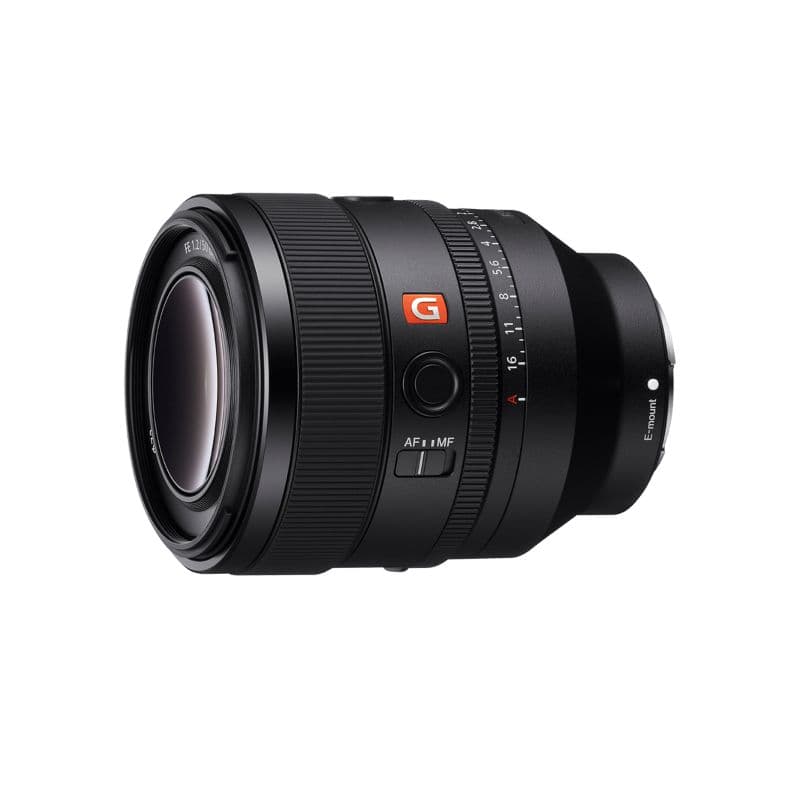
Sony FE 50mm f/1.2 GM.
Sony's first f/1.2 G Master. Surprisingly compact, weather-sealed, and sharp wide-open in a way the Canon and Nikon equivalents rarely match.
The Verdict.
Gavler Meta-Score
“The only f/1.2 you can hand-hold all day — 778 grams against the kilogram-plus Canon and Nikon primes, with sharpness OpticalLimits calls 'almost mindblowing' stopped down. The trade-offs are honest: visible color fringing wide open, and a $1,998 tag that, as OpticalLimits puts it, is 'quite an entry hurdle' over Sony's f/1.4 fifties.”
The Gavler Verdict
The Gavler Review.
Sony FE 50mm f/1.2 GM Review: The Only f/1.2 You'll Actually Carry All Day
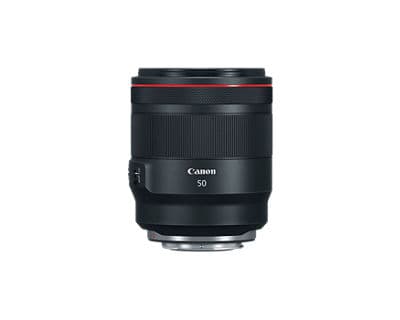
The Sony FE 50mm f/1.2 GM ranks number 5 on Gavler's Best Portrait Lenses list with a 9.2, and it solves a problem every f/1.2 lens has struggled with: weight. OpticalLimits found it "extremely sharp in the image center at f/1.2 already," turning "almost mindblowingly sharp" once stopped down — but the standout achievement here isn't just the optics, it's that Sony packed genuine f/1.2 performance into a 778-gram body, nearly half a kilogram lighter than Canon's and Nikon's own f/1.2 primes.
What it is
Every f/1.2 lens fights the same physics problem: gathering that much light demands large glass elements, which is why Canon's RF 50mm f/1.2L and Nikon's Z 50mm f/1.2 S both cross a kilogram in weight. Sony's answer is the exception. Built around 14 elements in 10 groups, including three extreme-aspherical (XA) elements, the FE 50mm f/1.2 GM delivers the light-gathering and shallow depth-of-field of a true f/1.2 design in a body you can realistically hand-hold through a full shooting session.
Four XD linear autofocus motors drive fast, quiet focus, and a de-clickable aperture ring makes the lens equally suited to video work, where the abrupt steps of a traditional clicked aperture ring would be audible or visually jarring during exposure pulls. As a 50mm, it's positioned for environmental portraits and everyday fast shooting — waist-up and context shots rather than tight headshots — a role distinct from a longer, more compressed portrait prime.
In use
OpticalLimits' lab and field testing is the most detailed independent assessment available, and it's consistently glowing on optics: "it's extremely sharp in the image center at f/1.2 already and the outer image field is pretty good here. Stopped down a little, and the results are almost mindblowingly sharp up into the corners." The review specifically praised bokeh quality from the three XA elements, noting "the quality of these aspherical elements is so high that the inner zone of the discs is perfectly rendered. There's also almost no outlining of the discs" — a technical way of saying out-of-focus highlights render cleanly rather than showing the onion-ring or outlined-disc artifacts that plague lesser aspherical designs.
Build quality drew no complaints either. OpticalLimits' assessment was simple and direct: "the build quality is excellent," consistent with the weather sealing and fluorine coating expected of Sony's G Master tier.
Strengths
- 778 grams — genuinely the lightest f/1.2 prime available. This isn't a marginal advantage; it's the difference between a lens you can shoot handheld all day and one that fatigues your wrist by the second hour.
- Sharpness that improves rather than plateaus stopped down. OpticalLimits' "almost mindblowingly sharp" description at f/1.4-f/2 is a meaningfully stronger result than most f/1.2 lenses deliver even stopped down.
- Bokeh quality from the triple-XA-element design. Clean, evenly rendered discs with minimal outlining set this lens apart from cheaper fast primes that show busier, harder-edged out-of-focus rendering.
- De-clickable aperture ring built for video shooters who need smooth, silent exposure adjustments during a take.
The trade-offs — who should skip it
The two honest caveats OpticalLimits identified are specific and worth weighing directly. On optics: "the Sony FE 50mm f/1.2 GM isn't fully corrected in this respect. You should be able to spot the color fringing at f/1.2 up to f/2." Longitudinal chromatic aberration — color fringing in front of and behind the focal plane — is visible at the widest apertures, though it fades by roughly f/2.8. For photographers who shoot high-contrast scenes wide open regularly, that's worth test-shooting before committing.
On price, OpticalLimits was equally direct: at $1,998, it's "quite an entry hurdle" compared to Sony's own, far more affordable f/1.4 fifties. Other considerations:
- No optical stabilization. The lens relies entirely on the camera body's IBIS, which is standard for a fast prime but worth noting for older Sony bodies with less capable in-body stabilization.
- Close-focus distance of 0.40m is workable but not exceptional — photographers wanting tighter headshot framing may find themselves needing to crop rather than fill the frame optically.
- The price gap over the f/1.4 GM is substantial for a half-stop of additional light — buy the f/1.2 specifically for the character and speed, not as a default upgrade.
How it compares
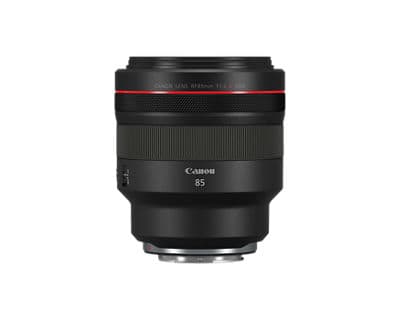
On the same list, the Canon RF 85mm f/1.2L USM sits at rank 2, offering the longer portrait focal length photographers traditionally favor for tighter headshots, at over a kilogram of weight — the direct illustration of the size penalty Sony's 50mm f/1.2 GM avoids. The Nikon Z 135mm f/1.8 S Plena at rank 6 takes yet another approach, trading the 50mm's versatility for a longer, more compressed portrait look that Photography Life rated as having "the sharpest corners of any lens" it had reviewed — a specialist choice for deliberate, posed portrait work rather than the environmental, everyday use case this Sony lens targets.
Against both, the Sony's case is about carrying it: nothing else in the f/1.2-and-faster portrait category is this light, and that changes how often photographers actually bring it along.
The Gavler verdict
A 9.2, rewarding a near-unique combination: f/1.2 speed at close to f/1.4 portability, backed by G Master-tier optics. Community and expert scores align closely in Gavler's data, which tracks with how OpticalLimits framed its own conclusion — shooters rate this lens on how well it solves the weight problem that has defined every f/1.2 prime before it, not purely on MTF charts. The visible chromatic aberration wide open and the steep price over Sony's own f/1.4 are real, honest trade-offs. But for Sony shooters who want true f/1.2 rendering without carrying a kilogram-plus lens, nothing else on the market fits the description.
Common Questions
For Sony shooters who want genuine f/1.2 rendering without the usual weight penalty, yes. OpticalLimits found it 'extremely sharp in the image center at f/1.2 already,' and at 778 grams it's roughly half a kilogram lighter than Canon's and Nikon's own f/1.2 primes — though the $1,998 price is, in OpticalLimits' words, 'quite an entry hurdle.'
The f/1.2 buys you a half-stop more light and noticeably lighter weight than Canon's or Nikon's f/1.2 rivals, but at meaningfully more money than Sony's own f/1.4. Buy the f/1.2 specifically for the extra stop of speed and the character of true f/1.2 rendering; the f/1.4 remains the more sensible choice for most portrait and event work.
Yes, and OpticalLimits was specific about it: the lens 'isn't fully corrected' for longitudinal color fringing, 'and you should be able to spot the color fringing at f/1.2 up to f/2.' It largely resolves by f/2.8, but it's worth knowing about before shooting high-contrast scenes wide open.
Where to Buy.
Prices checked regularly
90-day price history
Price History
Steady at $1,998 for the entire 90-day tracking window — no increases, no discounts, across 91 tracked days.
Tracked daily across retailers. Vote Want itabove and we’ll alert you the moment the price drops.
Some links are affiliate links — Gavler may earn a commission. This never affects rankings or scores. Learn more.
Precision Engineering
778g — the Lightest f/1.2
Nearly half a kilogram lighter than Canon's RF 50mm f/1.2L, making it the only f/1.2 prime you can realistically hand-hold all day.
Triple XA-Element Sharpness
Three extreme-aspherical elements deliver center sharpness OpticalLimits calls 'almost mindblowing' stopped down, and already excellent wide open.
Quad XD Linear AF + De-Click Ring
Four XD linear motors drive fast, silent focus, and a de-clickable aperture ring makes it as ready for video as for stills.
Technical Specifications
The Scoreboard
9.2 rewards a near-unique combination — f/1.2 speed at close to f/1.4 portability with G Master optics — while accounting for the longitudinal chromatic aberration OpticalLimits flags wide open and the steep price over Sony's own 50mm f/1.4 GM. Expert and community scores align closely; shooters rate it on how well it solves the weight problem, not just the MTF chart.
Cast Your Vote
Do you think Sony FE 50mm f/1.2 GM deserves the #5 spot in Best Portrait Lenses?
Global Critique
“It's extremely sharp in the image center at f/1.2 already and the outer image field is pretty good here. Stopped down a little, and the results are almost mindblowingly sharp up into the corners.”
“the quality of these aspherical elements is so high that the inner zone of the discs is perfectly rendered. There's also almost no outlining of the discs.”
“The Sony FE 50mm f/1.2 GM isn't fully corrected in this respect. You should be able to spot the color fringing at f/1.2 up to f/2.”
“The build quality is excellent.”
More from Best Portrait Lenses.
See how other top picks compare in this category.

How Close Do You Stand to the Face?
An f/1.2 hangtag is the wrong first question. 50mm, 85mm, or 135mm is the distance you work. Then shop Gavler's live ranking.
The Best Portrait Lenses in 2026, Ranked by the Photographers Who Shoot Faces for a Living
Canon, Nikon, Sony, and Sigma's fastest 50mm, 85mm, and 135mm primes — Gavler's community ranks the portrait lenses worth the money, from $1,199 to $2,799.