Six Moon Designs Lunar Solo.
Single-wall trekking-pole shelter that has been on Pacific Crest Trail thru-hikers' backs for over twenty years. The credibility-purchase entry to ultralight.
The Verdict.
Gavler Meta-Score
“The credibility-purchase UL tent. $260 buys a shelter that the long-trail community has carried for 20+ years. Right entry-point to ultralight for budget-conscious backpackers.”
The Gavler Verdict
The Gavler Review.
Six Moon Designs Lunar Solo Review: The $260 Tent Long-Trail Hikers Actually Carry
The Six Moon Designs Lunar Solo ranks 7th on Gavler's Best Backpacking Tents list with an 8.3, but that number undersells how the long-trail community actually feels about it — community ratings hit 90 against an editorial consensus of 82, a gap Gavler attributes directly to two decades of thru-hikers carrying this tent on the AT, PCT, and CDT and recommending it to everyone they meet. Section Hiker's Philip Werner, who has personally owned four generations of the tent across more than a decade, put it plainly in his long-term review: it "remains one of the best deals money can buy when it comes to ultralight 1-person tents and shelters from 'cottage' manufacturers." At $260, it's the credibility-purchase entry point to ultralight — the tent that will teach you whether UL backpacking is for you before you spend $700-plus on Dyneema.
What it is
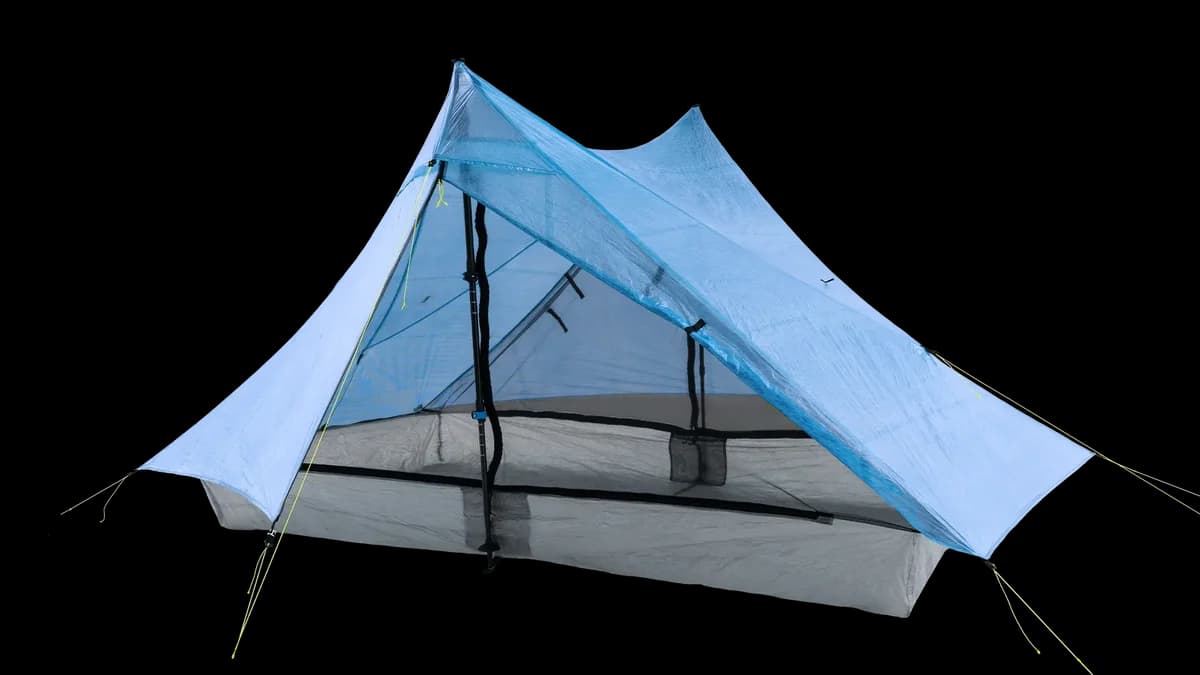
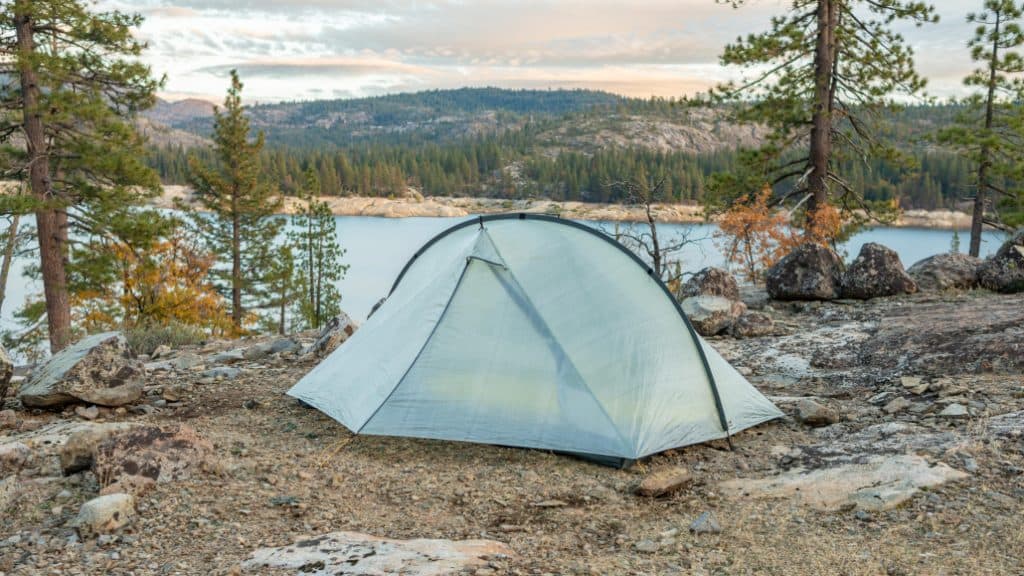
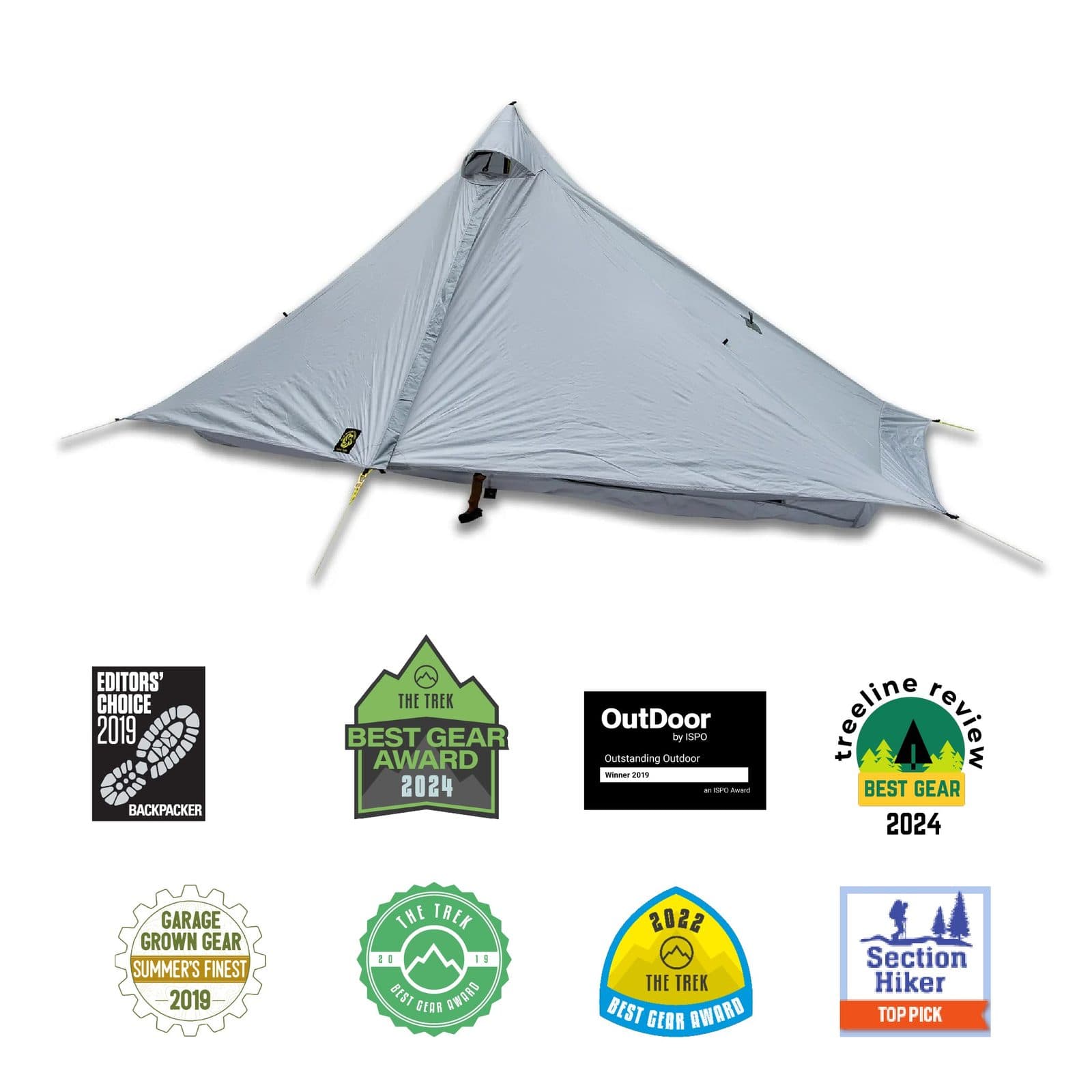
The Lunar Solo is a single-wall, trekking-pole-supported shelter shaped like a half-pyramid, with a mesh side door for ventilation and a hexagonal floor plan that Six Moon Designs has refined since the early 2000s. At 26 ounces trail weight, it lands in the same weight class as some cottage DCF tents at less than half their price — the catch is the fabric: sil-coated woven material rather than Dyneema Composite Fabric, which trades DCF's minimal stretch for a lower price and better puncture resistance.
It pitches with a single trekking pole (or an optional dedicated pole), and the floor is a "floating" design attached to the canopy by mesh rather than sewn directly in — a detail that lets the tent adapt to uneven ground and stealth campsites, but that also means getting a taut, even bathtub-floor pitch takes a bit of practice. Section Hiker's review is candid about this learning curve: getting the sidewall height consistent "can be very hit or miss," and the recommended fix is good campsite selection over fighting the pitch.
In use
The interior is genuinely roomy for a solo shelter. Section Hiker describes it as "quite comfortable and spacious, with plenty of headroom to sit up or change your clothing inside," and the 90-inch interior length combined with the hexagonal footprint leaves room to store gear along the side that narrower rectangular one-person tents don't offer. The pyramid shape also handles wind reasonably well — you can lower the peak in bad weather for a lower profile, and the tent has additional mid-wall guy-out points for storms.
The vestibule has one quirk worth knowing before you buy: it doesn't reach the ground. That gap is intentional, built in to promote airflow and reduce condensation, but it means you need to think about wind direction when you pitch. Get it wrong on a cold night and a breeze blows straight in under the door — precisely the mistake Section Hiker's reviewer admits making on at least one memorably cold night. The tent also isn't sold pre-sealed; new owners either pay Six Moon Designs a modest fee to seam-seal it or do it themselves before the first real rain.
Strengths
- Two decades of proven trail mileage. This isn't marketing — it's a shelter that's been carried across thousands of miles of the AT, PCT, and CDT since the early 2000s, with a deep well of community troubleshooting and repair knowledge to draw on.
- Real interior space for a one-person tent. The hexagonal floor and 90-inch length deliver headroom and gear storage that narrower single-wall competitors don't match.
- Price that makes ultralight accessible. At $260, it's a fraction of DCF cottage tent pricing, letting new UL backpackers test the category without a $700 commitment.
The trade-offs — who should skip it
The Lunar Solo earns its reputation on value and track record, not on cutting-edge materials, and that means specific buyers should look elsewhere:
- You want DCF's stretch resistance. Silicone-coated fabric will sag and require re-tensioning during a heavy overnight rain in a way Dyneema Composite Fabric doesn't — a real annoyance on a first stormy night until you learn the re-tension routine.
- You need the tent pre-sealed out of the box. Seam sealing is either a paid add-on or a DIY step, not a given — skip it and you'll find out the hard way in a downpour.
- You're sharing the tent with a partner. This is a one-person shelter through and through; gear goes in the vestibule, not a second sleeper.
How it compares
Against the Zpacks Duplex Pro at the top of this list, the Lunar Solo gives up DCF's weather performance and two-person capacity but costs roughly a third as much for a comparable trail weight — a trade that makes sense for a solo hiker on a budget rather than a couple splitting shelter weight. Against the Big Agnes Tiger Wall UL2 further up the list, the comparison is about setup style as much as price: the Tiger Wall's semi-freestanding DAC pole system pitches faster and doesn't require learning trekking-pole tension, but it costs nearly double what the Lunar Solo does and serves two people rather than one.
The Gavler verdict
An 8.3 with a community rating that outpaces the editorial score by eight full points — a rare and telling gap that reflects just how much trust the long-trail hiking community has built up around this shelter over twenty-plus years. The Lunar Solo isn't the lightest, driest, or most refined tent on Gavler's list, and Six Moon Designs doesn't pretend otherwise. What it delivers instead is a proven, well-ventilated, genuinely roomy solo shelter at a price that makes ultralight backpacking an easy yes rather than a $700 leap of faith. For budget-conscious solo hikers testing whether UL is for them, this is still the tent the community points to first.
Common Questions
For a UL beginner on a budget, yes. It ranks 7th on Gavler's Best Backpacking Tents list with an 8.3, and community ratings (90) run well ahead of editorial scores (82) because the long-trail hiking community has carried it for over two decades. Section Hiker's Philip Werner, who has owned and reviewed multiple generations, calls it 'one of the best deals money can buy when it comes to ultralight 1-person tents and shelters from cottage manufacturers.'
Yes, and this catches new owners off guard. Section Hiker's long-term review notes the tent isn't sold pre-sealed — Six Moon Designs will seam-seal it for a fee, or you can do it yourself with a tube of seam sealer for a few dollars. Skipping this step means a wet first night in real rain.
Generally yes. Section Hiker describes the interior as 'quite comfortable and spacious, with plenty of headroom to sit up or change your clothing inside,' thanks to the hexagonal floor plan and 90-inch interior length. The trade-off is a non-floor-length vestibule with a ventilation gap at the bottom, which requires pitching the door away from prevailing wind on cold nights or risking a cold draft across your gear.
Buy the Lunar Solo if budget is the deciding factor — at $260 it costs roughly a third of the Duplex Pro's $799 while delivering a comparable 26 oz trail weight and a similar trekking-pole pitch. Buy the Duplex Pro if you want DCF's lower stretch-when-wet and a two-person floor plan; the Lunar Solo is a single-person tent built around value, not the last word in materials or livability.
Where to Buy.
Prices checked regularly
90-day price history
Price History
Steady at $260 for the entire 90-day tracking window — no increases, no discounts, across 91 tracked days.
Tracked daily across retailers. Vote Want itabove and we’ll alert you the moment the price drops.
Some links are affiliate links — Gavler may earn a commission. This never affects rankings or scores. Learn more.
Precision Engineering
20+ Year Track Record
Carried by thru-hikers on the AT, PCT, and CDT since the early 2000s — the long-trail community's default UL pick.
26 oz Trail Weight
Trail weight matches DCF cottage tents at less than half the price.
Silnylon Construction
Less weight-efficient than DCF but more puncture-resistant and far cheaper to replace if damaged.
Technical Specifications
The Scoreboard
Community ratings significantly outpace editorial — long-trail thru-hikers carry this and recommend it widely. Editorial coverage is bounded by the silnylon vs. DCF spec gap.
Cast Your Vote
Do you think Six Moon Designs Lunar Solo deserves the #7 spot in Best Backpacking Tents?
Global Critique
“The most-recommended starter UL shelter on every long-trail forum.”
“20 years of trail mileage is hard to argue with at $260.”
More from Best Backpacking Tents.
See how other top picks compare in this category.