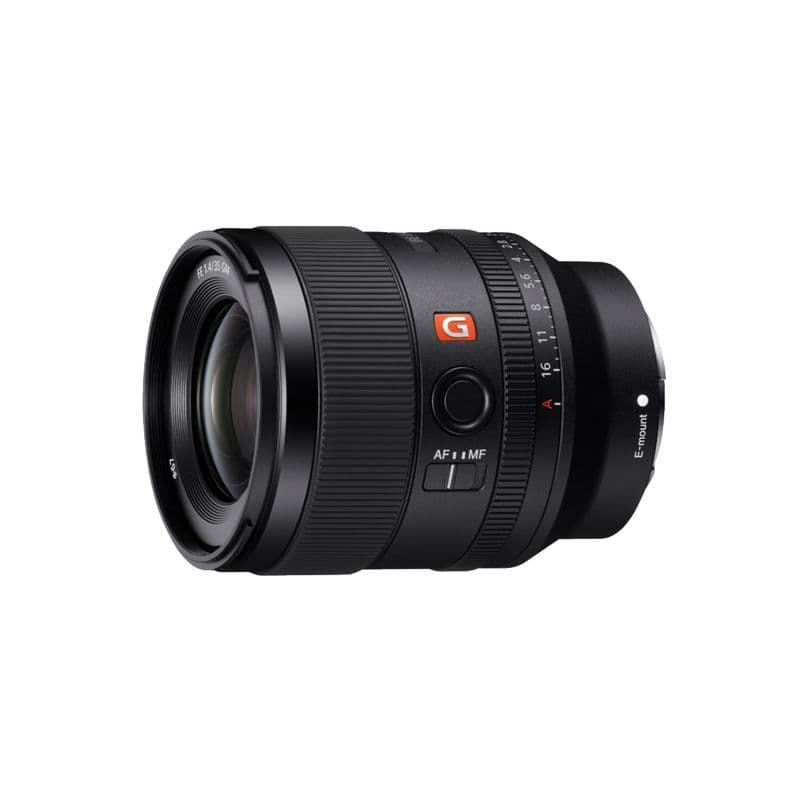
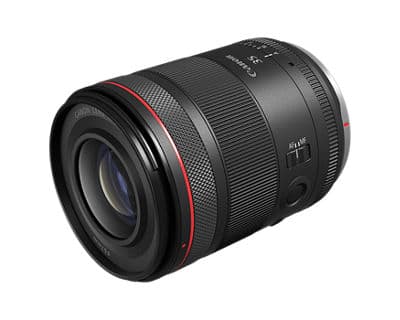
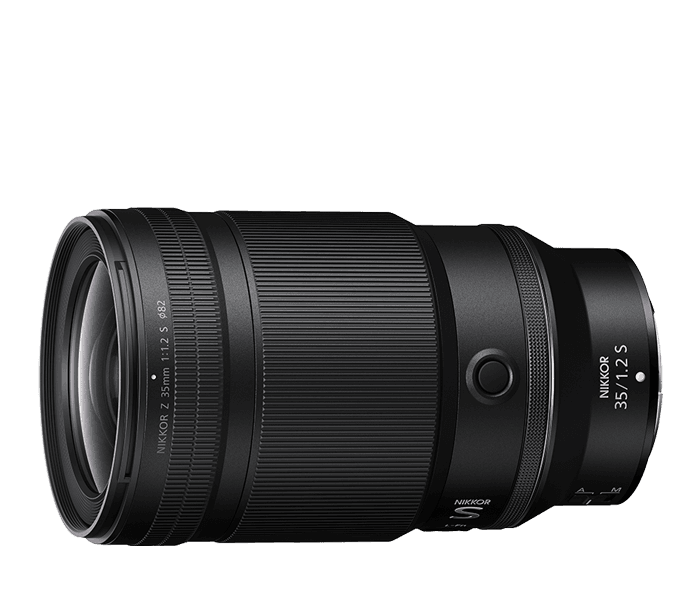
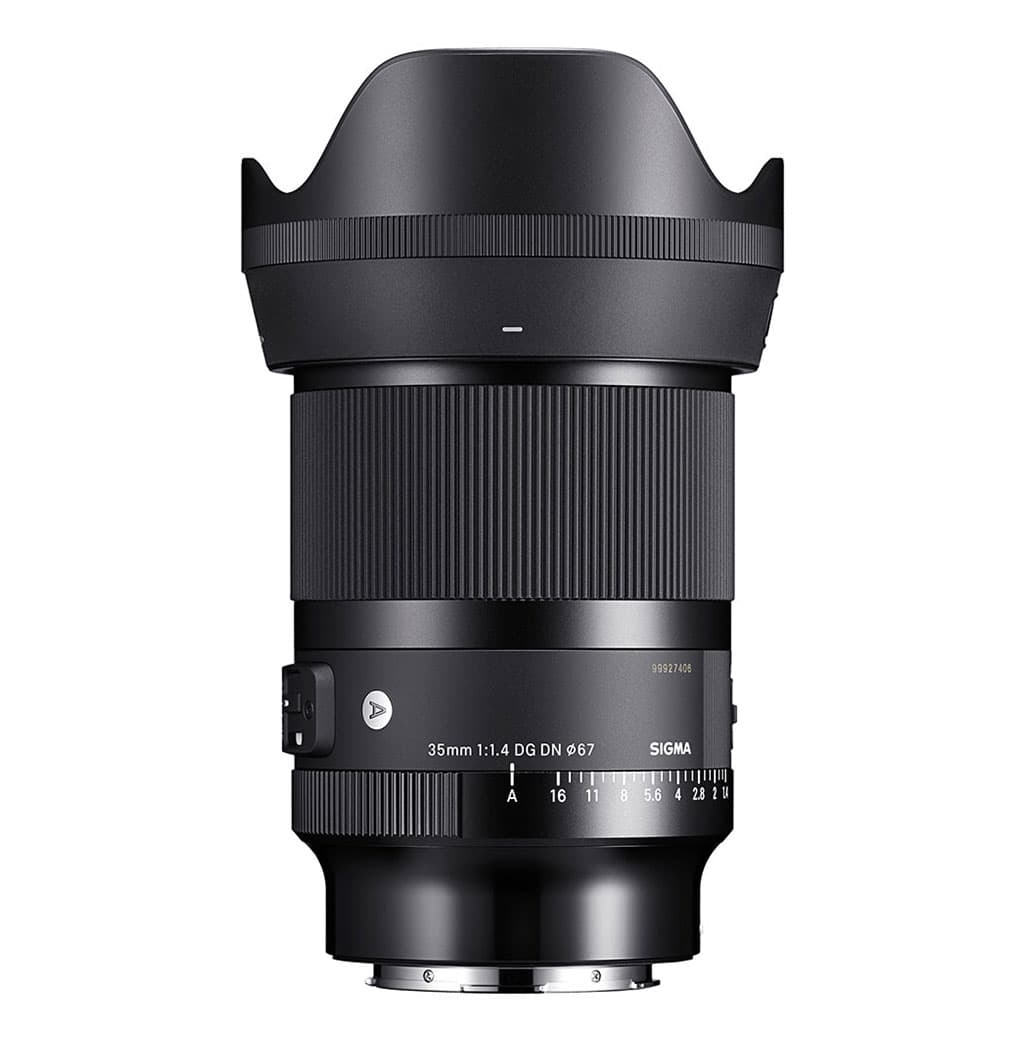
Sigma 24mm f/1.4 DG DN Art.
Sigma's wide Art for E-mount and L-mount. f/1.4 astro performance at half the price of first-party 24mm GM/L equivalents.
The Verdict.
Gavler Meta-Score
“The value play in the 24mm f/1.4 class: excellent center sharpness, fast silent autofocus, and a pro-grade weather-sealed body with a de-clickable aperture ring — all for roughly half the price of a first-party 24mm f/1.4. The catch is soft extreme corners wide open that don't fully sharpen until f/2–f/2.8, so landscape and astro shooters who need edge-to-edge bite at f/1.4 should stop down or spend up; for everyone else, it's the smart buy.”
The Gavler Verdict
The Gavler Review.
Sigma 24mm f/1.4 DG DN Art Review: Half the Price, Most of the Lens
The Sigma 24mm f/1.4 DG DN Art ranks number 7 on Gavler's Best Wide-Angle Prime Lenses list with an 8.5. It's the lens for wide-angle shooters who want f/1.4 speed and pro-grade build without paying first-party prices — at roughly $799 it undercuts Sony's and other native 24mm f/1.4 primes by close to half. OpticalLimits summed up the trade you're making bluntly: "The center performance is generally excellent, but the borders/corners leave a bit to be desired at f/1.4 - and being advertised as a lens suitable for astrophotography, that's certainly not ideal." If your work lives in the extreme corners of the frame wide open, that caveat matters. For nearly everyone else, it's the smart buy in the class.
What it is
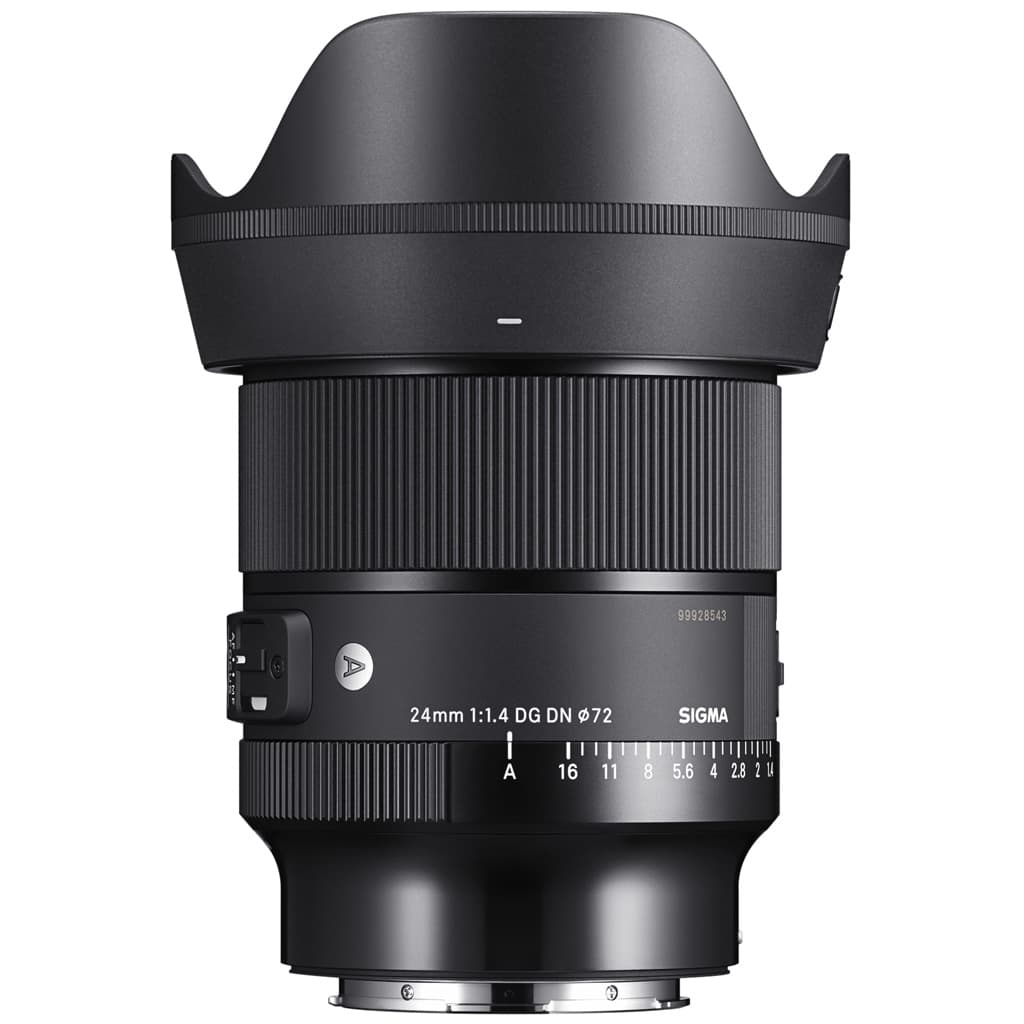
Sigma's mirrorless-native 24mm f/1.4 is part of the DG DN Art line built specifically for Sony E-mount and L-mount, sharing its control layout — a clicked, de-clickable aperture ring, a Manual Focus Lock switch, and a customizable focus-hold button — with the rest of Sigma's f/1.4 DG DN siblings, including the 20mm, 35mm, and 85mm. The optical formula runs 17 elements in 14 groups, with two FLD elements, one SLD element, and four aspherical elements, finished with Sigma's Super Multi-Layer and Nano Porous coatings to fight flare and ghosting.
It's a genuinely professional build: dust- and splash-resistant construction, an 11-blade rounded aperture, a 72mm front filter thread plus a rear gel-filter slot, and a compact 510-gram, 97.5mm body — smaller and lighter than Sigma's own 20mm f/1.4 companion lens. PetaPixel, testing both new Sigma wides side by side, called the build "a great feeling ring with no play or crunchiness," praising the tactile MFL switch as the kind of feature that "clearly [has] come straight from real photographers' requests." Sigma pitches the lens explicitly at astrophotography, citing its f/1.4 speed and control set — a claim that shapes most of the criticism reviewers level at it.
In use
Autofocus is handled by an older-style stepping motor (STM) rather than Sigma's newest linear designs, but reviewers found no real downside in practice. Dustin Abbott called it "silent, extremely fast" with accuracy that held up "image after image" — a genuine step up from the screw-drive autofocus of Sigma's DSLR-era Art lenses that some longtime Sigma shooters still remember unfavorably. OpticalLimits agreed the AF is "fast and noiseless."
For night photography, the lens performs close to its billing at the center of the frame. Abbott found "coma is pretty well controlled, with only a slight bit of 'winged' stars towards the edges of the frame," with star points that stay "very sharp and crisp even at f/1.4" in the middle of the image. Bokeh quality is a pleasant surprise for a fast wide-angle prime — OpticalLimits noted the rendering is "impressive" for the class, with a clean inner zone to out-of-focus highlights and only mild deterioration toward the edges of the frame, helped along by the 11-blade diaphragm holding a round shape well past f/1.4.
Strengths
- Excellent center sharpness from f/1.4. OpticalLimits rated dead-center quality "very good" wide open, with the whole frame reaching peak performance between f/2.8 and f/8.
- Fast, silent autofocus. Dustin Abbott's real-world testing found accuracy and speed that hold up shot after shot, a clear improvement over Sigma's older Art-line AF systems.
- A genuinely professional, weather-sealed body. Dust and splash resistance, a de-clickable aperture ring, a Manual Focus Lock switch, and dual front/rear filter options in a compact 510g package that OpticalLimits scored 9.5 out of 10 for build quality.
- Real value. At about half the price of Sony's FE 24mm f/1.4 GM, with center sharpness and autofocus speed that PetaPixel found broadly comparable in direct testing.
The trade-offs — who should skip it
The corners are the honest limitation, and multiple outlets flag it independently. OpticalLimits measured the outer image field as soft at f/1.4, only reaching "good levels" by f/2 and critically sharp from f/2.8 onward — a real mismatch for a lens marketed on its astrophotography credentials, where edge-to-edge star sharpness matters. The same review measured vignetting exceeding 3 stops in the extreme corners at f/1.4 in uncorrected RAW files, and noted axial color fringing (LoCA) that's "very obvious" wide open and still visible through f/2.8. None of this is unusual for a fast 24mm, but it does undercut the astro-specialist pitch Sigma leans on.
That leaves two groups who should think twice. Landscape and astrophotographers who need genuinely sharp corners at f/1.4 — not "acceptable once stopped down to f/2.8" — will be better served by a pricier first-party lens or by simply planning to stop down, which somewhat defeats the point of buying an f/1.4. And buyers who prioritize outright light weight above all else should note the Sigma, at 510 grams, is heavier than Sony's own 445-gram FE 24mm f/1.4 GM despite costing roughly half as much — the savings come from price, not from size or weight.
How it compares
On the same Gavler list, the lens it's most directly cross-shopped against is the Sony FE 24mm f/1.4 GM, which ranks one spot higher at an 8.9. The Sony is lighter (445g vs. 510g), edges ahead in corner sharpness and coma control for dedicated astro work, and costs nearly double at roughly $1,398 — OpticalLimits's own comparison found the GM "does have an edge in terms of sharpness" but conceded "both aren't ideal at f/1.4." For Canon shooters weighing systems rather than lenses, the Canon RF 24mm f/1.4L VCM is the closest equivalent in spirit — similarly weather-sealed, similarly positioned as the value-minded option in its own mount's lineup, though it can't physically mount to an E-mount or L-mount body.
The Gavler verdict
The Sigma 24mm f/1.4 DG DN Art earns its rank on value alone: excellent center sharpness, fast and silent autofocus, and a genuinely pro-grade weather-sealed body, all for roughly half what first-party 24mm f/1.4 primes cost. The corners don't fully catch up until f/2 to f/2.8, which matters if you bought it specifically for corner-sharp astro work — but for general wide-angle, environmental, and event photography, it remains the smart buy in the class.
Common Questions
For most wide-angle shooters, yes. OpticalLimits found the lens 'represents good value' with excellent center sharpness and impressive build quality for roughly half the price of Sony's own FE 24mm f/1.4 GM. The caveat is soft corners wide open, which matters most to astro and landscape specialists.
It's capable but not the outright best in its price class for the job. Dustin Abbott found coma 'pretty well controlled, with only a slight bit of winged stars towards the edges,' but OpticalLimits was more pointed: corner softness at f/1.4 is 'certainly not ideal' for a lens 'advertised as a lens suitable for astrophotography.' Stopping down to f/2-f/2.8 largely fixes it.
The Sigma costs roughly $799 versus the Sony's $1,398 and matches it closely on center sharpness and autofocus speed, per PetaPixel's side-by-side testing. The Sony is lighter (445g vs 510g) and edges ahead in corner performance and coma control for dedicated astro work. For general use, Sigma is the value pick.
Where to Buy.
Prices checked regularly
90-day price history
Price History
Steady at $799 for the entire 90-day tracking window — no increases, no discounts, across 91 tracked days.
Tracked daily across retailers. Vote Want itabove and we’ll alert you the moment the price drops.
Some links are affiliate links — Gavler may earn a commission. This never affects rankings or scores. Learn more.
Precision Engineering
Excellent Center Wide Open
OpticalLimits rates dead-center quality "very good" at f/1.4; 17 elements in 14 groups (2 FLD, 1 SLD, 4 aspherical), with corners sharpening from f/2.
Fast, Silent STM Autofocus
Dustin Abbott found the stepping-motor AF "silent, extremely fast" with near-perfect accuracy image after image — a leap over Sigma's DSLR-era Art focus.
De-Clickable 11-Blade Aperture Ring
Clicked 1/3-stop ring de-clicks for smooth video pulls, backed by a manual-focus lock switch and both 72mm front and rear filter slots.
Technical Specifications
The Scoreboard
Expert consensus (89) tracks just under the community score (90): reviewers praise the center sharpness, fast STM autofocus, build, and value, while the recurring caveat — flagged most sharply by OpticalLimits — is that border and corner sharpness lag the center at f/1.4 and only reach very good levels from about f/2.8, which softens its astrophotography case.
Cast Your Vote
Do you think Sigma 24mm f/1.4 DG DN Art deserves the #7 spot in Best Wide-Angle Prime Lenses?
Global Critique
“Coma is pretty well controlled, with only a slight bit of "winged" stars towards the edges of the frame. The star points in the center are very sharp and crisp even at F1.4.”
“The Sigma version employed here is one of the best, however, with silent, extremely fast autofocus that delivers good accuracy.”
“The center performance is generally excellent, but the borders/corners leave a bit to be desired at f/1.4 - and being advertised as a lens suitable for astrophotography, that's certainly not ideal.”
“As usual for Sigma Art lenses and priced considerably lower than Sony's similarly specced lens, the Sigma 24mm f/1.4 DG DN Art Lens is a strong value.”
More from Best Wide-Angle Prime Lenses.
See how other top picks compare in this category.