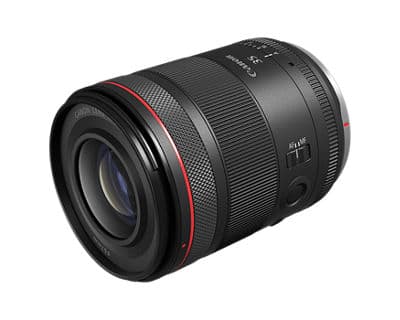
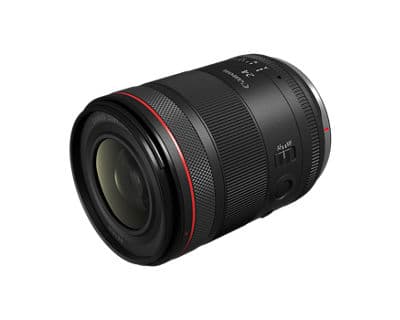
Canon RF 24mm f/1.4L VCM.
The wide companion to the 35mm L VCM. Same hybrid VCM autofocus, same compact L-grade build — Canon's wide prime for hybrid shooters.
The Verdict.
Gavler Meta-Score
“Sara Lin's take: the value pick of Canon's hybrid primes — fast, quiet VCM autofocus and weather-sealed L build for well under the usual L price. It isn't the sharpest or most characterful 24mm and leans on correction profiles, so buy it for the AF and the price, not for optical drama.”
The Gavler Verdict
The Gavler Review.
Canon RF 24mm f/1.4L VCM Review: L-Glass Speed Without the L-Glass Price
The Canon RF 24mm f/1.4L VCM ranks number 6 on Gavler's Best Wide-Angle Prime Lenses list with an expert-backed 8.7. It's built for Canon shooters who bounce between stills and video and want weather-sealed L-series build and fast hybrid autofocus without paying full L-series money — at $1,499 it undercuts what Canon typically charges for a red-ringed lens, and The Phoblographer flagged that as the headline: "I'm not used to Canon L glass being priced so low. But that's a pretty solid deal." The trade-off is optical character. Digital Camera World was "a little disappointed with the overall sharpness of the lens, not only when shooting wide open but even when stopped down to middle values like f/8," a verdict that sits oddly next to Ken Rockwell calling the same lens simply "Ultrasharp" on his own copy — a genuine split between outlets that buyers should know about going in.
What it is
The RF 24mm f/1.4L VCM is the wide-angle member of Canon's hybrid prime trio, launched alongside the RF 50mm f/1.4L VCM in late 2024 as a companion to the earlier RF 35mm f/1.4L VCM. All three share a focus system that pairs Canon's Voice Coil Motor (VCM) with Nano USM, a design built as much for video focus-pulling as for stills autofocus. The optical formula runs 15 elements in 11 groups, including two UD elements and one aspherical element, finished with Air Sphere and Sub-Wavelength coatings plus a fluorine-coated front element to shed water and smudges.
At 515 grams and 99.3mm long, it's built to match the size and weight of its 35mm and 50mm siblings closely enough that videographers can swap lenses on a gimbal without rebalancing — Canon designed the whole trio around that constraint. It takes 67mm filters (with a rear gel-filter slot as a backup), focuses down to 0.24m for a 0.17x magnification ratio, and carries L-series weather sealing throughout. This is a lens engineered first for hybrid shooters who need one wide, fast prime that behaves the same way in front of a camera operator as it does in a photographer's hand.
In use
Handling is straightforward: a programmable clicked control ring up front, a fat rubberized manual-focus ring, and an "Iris" aperture ring nearer the mount that's mostly a video feature — it has no clicks, so using it for stills feels unusual. Digital Camera World measured the autofocus as "super fast and snappy, as indeed it is on all three of the hybrid primes," and Ken Rockwell independently found it "fast, and nearly silent." Manual focus is entirely electronic, by-wire rather than mechanically coupled, and on Canon's current bodies the camera will resume autofocusing the instant you stop turning the ring in Servo AF mode — a quirk that will feel familiar to anyone who's used a modern mirrorless prime, but is worth knowing if you expect a true manual-focus override.
One oddity worth flagging before it worries anyone: Ken Rockwell noted the lens "feels like something's loose inside because there is. The focus groups flop around inside when it's not on a camera to control it electronically." It's normal for internally-focusing VCM designs, but it can catch new owners off guard when they pick the lens up out of the box. In the field, DCW summed up the appeal well: the hybrid trio is "brilliantly portable, light, feature-packed and absolutely fantastic for sucking in loads of light in dimly-lit situations" — exactly the profile of a wide prime you'd want mounted for run-and-gun documentary, event, or low-light video work.
Strengths
- Fast, near-silent hybrid autofocus. The VCM-plus-Nano-USM combination delivers on Canon's promise of quick, quiet focus for both stills and video, confirmed independently by Digital Camera World and Ken Rockwell.
- Genuine L-series value. At $1,499, it's priced well under where Canon usually lands its L glass, while still delivering weather sealing and the fluorine-coated front element expected of the line.
- A body built for hybrid work. The shared size and weight across the 24mm, 35mm, and 50mm VCM primes means gimbal rigs and lens swaps stay balanced — a detail aimed squarely at working videographers.
- Close focusing and useful handling. A 0.24m minimum focus distance, a customizable control ring, and a dedicated AF/MF switch make it flexible for both environmental portraits and tighter detail shots.
The trade-offs — who should skip it
The sharpness story is genuinely mixed rather than uniformly great. Digital Camera World's test copy disappointed even stopped down to f/8, and the review noted the lens's RAW files depend heavily on software correction profiles — a real consideration for anyone shooting RAW in a workflow that doesn't apply Canon's corrections automatically. Ken Rockwell's more positive "Ultrasharp" verdict suggests sample variation or shooting conditions play a role, but it means buyers chasing guaranteed lab-grade resolution shouldn't take sharpness for granted sight unseen.
The Phoblographer's other complaint cuts closer to the lens's identity: while praising the image quality overall, it called the lens "kind of boring," wishing for more optical character — the kind of distinctive rendering, swirl, or bokeh signature that makes some fast primes memorable rather than merely competent. Ken Rockwell's build notes add a couple of practical dings, too: a plastic exterior and "crappy plastic filter thread" on a lens priced well into four figures, plus the absence of any distance or depth-of-field scale, infrared focus index, or teleconverter compatibility.
Put together, this is not the lens for photographers hunting for optical drama, nor for pixel-peepers who want a 24mm proven sharp corner-to-corner in every published test. It's also Canon RF-only — there's no adapting it to another mount — so shooters outside Canon's ecosystem should look elsewhere entirely. For everyone shooting Canon who wants dependable, fast-focusing, weather-sealed glass at a price that doesn't sting, it delivers.
How it compares
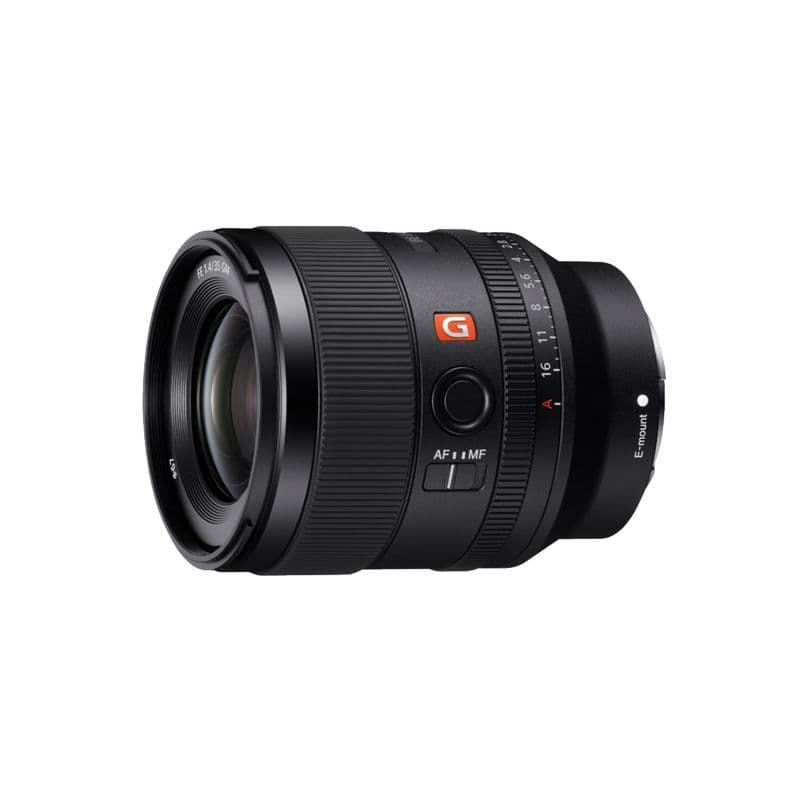
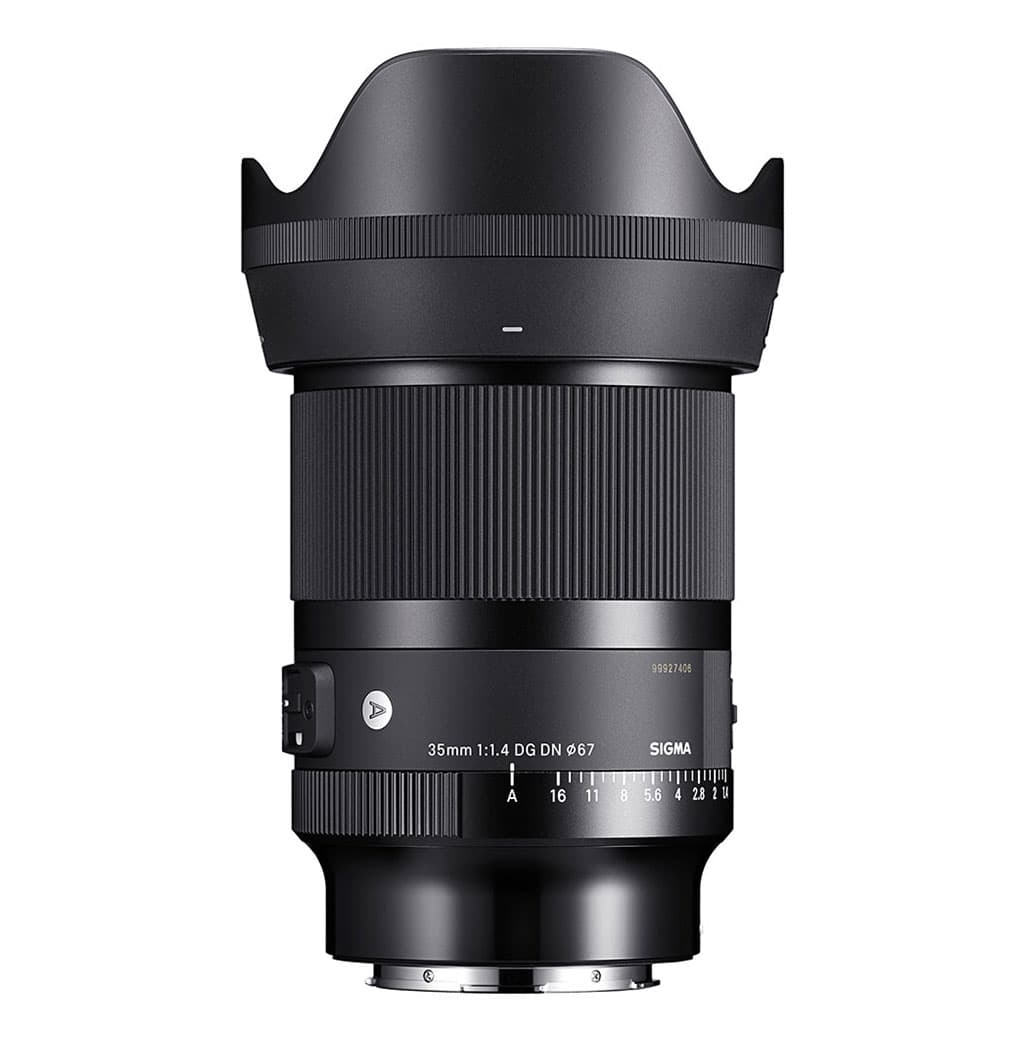
Within the same Gavler list, the closest rival in spirit is the Sigma 24mm f/1.4 DG DN Art — Sigma's E-mount and L-mount 24mm f/1.4, which undercuts even the Canon at roughly $799 and posts a similarly center-strong, corner-soft performance profile, though obviously it can't mount to an RF-mount Canon body. For Canon-adjacent shoppers weighing systems, the Sony FE 24mm f/1.4 GM sits above the RF 24mm on Gavler's list at an 8.9, built around a lighter 445-gram body with astro-favorite coma control, for roughly the same $1,398–$1,499 price bracket — proof that Sony's flagship glass, not just Sigma's value play, is the RF 24mm's real competition on paper if you're choosing a camera system from scratch.
The Gavler verdict
The RF 24mm f/1.4L VCM earns its spot as the value pick of Canon's hybrid prime trio: fast and quiet autofocus, genuine weather sealing, and a price that finally makes L glass feel attainable. It won't win a sharpness shootout against its priciest rivals, and reviewers agree it plays it safe optically rather than delivering standout character — but for Canon shooters who need a dependable wide prime that works as hard behind the camera as it does in front of it, that's a fair trade for the savings.
Common Questions
For Canon shooters who want fast, quiet hybrid autofocus and weather-sealed L-series build without full L-series pricing, yes. The Phoblographer called it 'weather-resistant and fairly affordable at around $1,499... I'm not used to Canon L glass being priced so low.' It's a value pick within Canon's own lineup, not the sharpest 24mm on the market.
Opinions split by outlet. Digital Camera World was 'a little disappointed with the overall sharpness of the lens, not only when shooting wide open but even when stopped down to middle values like f/8,' and noted its RAW files lean on correction profiles. Ken Rockwell, testing a different copy, called it simply 'Ultrasharp.' Treat it as good-not-great rather than a lab benchmark.
No. It has no optical stabilizer of its own and relies entirely on in-body stabilization when mounted to an IS-equipped Canon body, which is standard for this class of fast wide prime.
Where to Buy.
Prices checked regularly
90-day price history
Price History
Steady at $1,499 for the entire 90-day tracking window — no increases, no discounts, across 91 tracked days.
Tracked daily across retailers. Vote Want itabove and we’ll alert you the moment the price drops.
Some links are affiliate links — Gavler may earn a commission. This never affects rankings or scores. Learn more.
Precision Engineering
Dual VCM + Nano USM AF
Fast, near-silent focus that Digital Camera World called "super fast and snappy" — with an Iris ring and smooth pulls tuned for video.
515g Weather-Sealed Hybrid Body
Shares the compact, sealed design of the 35mm and 50mm VCM primes, with a 67mm filter thread and a close 24cm minimum focus.
L Glass Under $1,500
At around $1,499 it undercuts typical Canon L pricing — the value the production reviews single out most.
Technical Specifications
The Scoreboard
Expert score credits fast dual-motor AF, weather-sealed hybrid build, and an unusually low L-glass price. Reviewers split on optics — Digital Camera World's beta sample was "a little disappointed with the overall sharpness" and its reliance on correction profiles, keeping it behind the sharper first-party wides.
Cast Your Vote
Do you think Canon RF 24mm f/1.4L VCM deserves the #6 spot in Best Wide-Angle Prime Lenses?
Global Critique
“The autofocus on the Canon RF 24mm f/1.4L VCM is super fast and snappy, as indeed it is on all three of the hybrid primes.”
“They're brilliantly portable, light, feature-packed and absolutely fantastic for sucking in loads of light in dimly-lit situations.”
“I was a little disappointed with the overall sharpness of the lens, not only when shooting wide open but even when stopped down to middle values like f/8.”
“It's weather-resistant and fairly affordable at around $1,499... I'm not used to Canon L glass being priced so low. But that's a pretty solid deal.”
More from Best Wide-Angle Prime Lenses.
See how other top picks compare in this category.