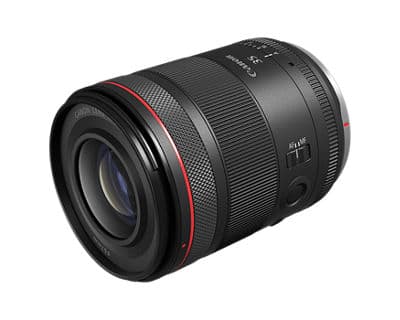
Canon RF 35mm f/1.4L VCM.
Canon's first hybrid-focused L prime with a Voice Coil Motor. Silent, fast, and built for stills shooters who also pull focus on video.
The Verdict.
Gavler Meta-Score
“A genuinely sharp fast wide built for hybrid work — low focus breathing, a declickable aperture ring, and silent VCM autofocus make it as much a video lens as a stills one. The trade-off is heavy reliance on correction profiles, plus axial CA and a manual-focus focus shift that stills purists shooting RAW should weigh.”
The Gavler Verdict
The Gavler Review.
Canon RF 35mm f/1.4L VCM Review: Canon's First Hybrid-Built L Prime
The Canon RF 35mm f/1.4L VCM holds rank three on Gavler's Best Wide-Angle Prime Lenses list with a 9.2, and it stakes its claim on a specific idea: a fast 35mm prime engineered as much for video as for stills. Buy it if you're a hybrid Canon shooter who pulls focus on video as often as you shoot RAW stills. Skip it if you're a stills purist who wants sharpness and distortion control that doesn't depend on a correction profile.
What it actually is
Canon's fast 35 is built around a Voice Coil Motor (VCM) — a focusing mechanism chosen specifically for its silence and speed, and one that signals where this lens's priorities sit. OpticalLimits was blunt about the strength of the result: "if image sharpness is what you value the most, this is certainly a lens for you." In testing, the lens measured "sharp at f/1.4 already and downright superb from f/2 to f/8" — a real, wide-aperture-to-stopped-down sharpness curve that most fast primes can't match end to end.
The optical formula runs 14 elements in 11 groups, including two UD and two aspherical elements, feeding an 11-blade aperture. But the feature that actually defines the lens's identity is its behavior during video work: very low focus breathing, paired with a declickable aperture ring, makes it function as much as a cinema lens as a stills prime. At $1,499, it sits in the same competitive range as Sony's 35mm f/1.4 GM, aimed at a similar audience with a different set of priorities.
In use
The sharpness holds up under scrutiny the way OpticalLimits' own numbers suggest — this isn't a lens that needs to be stopped down two full stops to look presentable, which is the more common story with fast wide primes. Excellent performance starting at f/1.4 and improving through f/8 gives stills shooters real confidence shooting wide open, not just a specification to admire on paper.
Where the lens genuinely differentiates itself is video behavior. OpticalLimits singled this out specifically: "important for videographers is the very low-focus breathing." That's not a generic praise line — focus breathing is a well-understood, specifically measurable characteristic that either ruins a rack-focus shot with a visible zoom effect or doesn't, and this lens lands firmly on the "doesn't" side. Combined with the declickable aperture ring and the VCM's silent, fast autofocus, the lens reads less like a stills prime with video capability bolted on and more like a lens designed from the ground up for hybrid use.
The honest complication is how the sharpness gets there. OpticalLimits found the lens "does, however, rely heavily on a correction profile to achieve this, which is a bit disappointing for a $1500 USD lens." That's a real, specific critique: uncorrected RAW files show close to 4% barrel distortion, and the correction profile "doesn't help with the high axial CAs" — chromatic aberration along the lens's optical axis that persists even after software correction. OpticalLimits also flagged that "the focus shift is a bit of a concern in manual focus mode." None of this shows up in profiled JPEGs or video output, where correction is applied automatically — but stills purists who shoot uncorrected RAW and prefer optics that hold up without software intervention should know exactly what they're buying into.
Where it shines
- Genuinely low focus breathing. This is the standout, independently measured trait that separates it from most stills-first primes adapted for video use after the fact.
- Sharp across the whole aperture range, not just stopped down. "Sharp at f/1.4 already and downright superb from f/2 to f/8" is a rare full-range endorsement.
- Purpose-built hybrid controls. The declickable aperture ring and silent VCM autofocus are features video shooters specifically look for and rarely find combined with this level of stills sharpness.
The trade-offs — who should skip it
The honest caveats here are specific and well-documented, not vague hedging:
- Heavy reliance on correction profiles. OpticalLimits called this "a bit disappointing for a $1500 USD lens" — a real critique from a testing outlet that measures uncorrected performance directly.
- Nearly 4% uncorrected barrel distortion. Invisible in profiled output, but a real characteristic for anyone shooting RAW and doing their own corrections.
- A documented manual-focus shift. OpticalLimits flagged this as "a bit of a concern" — worth testing yourself if you rely on manual focus regularly.
How it compares
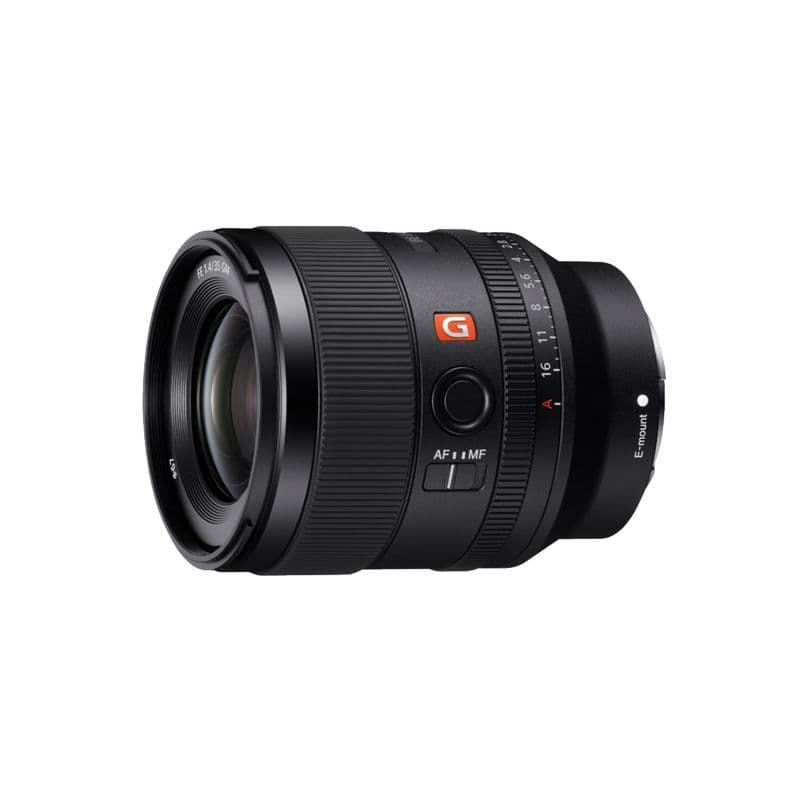
The direct rival on the same list is the Sony FE 35mm f/1.4 GM at rank two — a lens built around the opposite priority. Amateur Photographer found the Sony "resolves an astonishing amount of detail from corner to corner" wide open, with sharpness that holds up without leaning as heavily on in-camera correction. The Sony is also notably lighter at 524 grams. Stills-first photographers who want reference-grade optics straight off the sensor should lean Sony; hybrid shooters who value low focus breathing and video-specific controls should lean Canon.
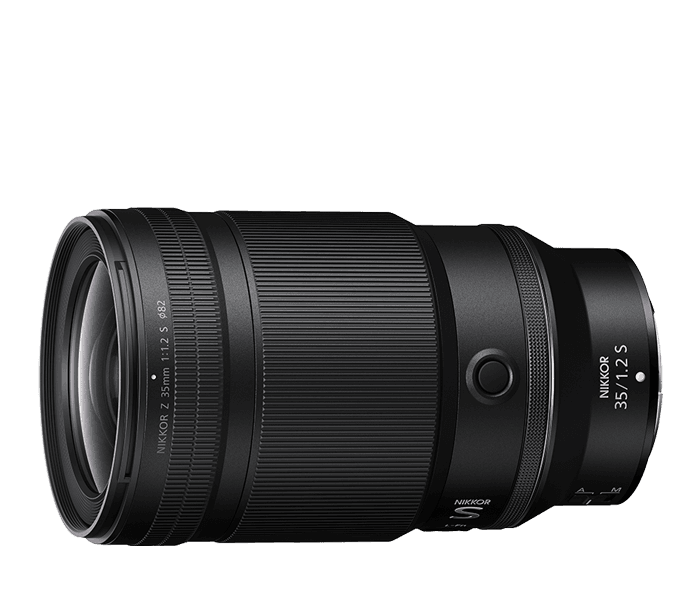
Also on the list, at rank four, the Nikon Z 35mm f/1.2 S represents the opposite trade-off entirely — a full stop faster and optically exceptional even by Nikon's demanding S-line standard, but over twice the weight at roughly 1,060 grams and priced nearly double. It's the lens for a photographer chasing the absolute rendering ceiling regardless of cost or weight; the Canon RF 35mm f/1.4L VCM is built for photographers who need one lens that performs equally well in front of both a camera body and a gimbal.
The Gavler verdict
A 9.2, with expert consensus (92) running just ahead of community rating (90) — reviewers rate it very sharp across its full aperture range and genuinely well-suited to video, while the recurring caveat is the correction-profile dependence and axial chromatic aberration that OpticalLimits called disappointing at this price. The Canon RF 35mm f/1.4L VCM is a legitimately sharp fast wide built with hybrid work specifically in mind — see how it ranks against the rest of the field on Gavler's Best Wide-Angle Prime Lenses list. For Canon shooters who move between stills and video regularly, it's an easy recommendation; stills-only purists working from RAW should know what the correction profile is doing before they buy.
Common Questions
For hybrid Canon shooters who split time between stills and video, yes — it ranks third on Gavler's Best Wide-Angle Prime Lenses list with a 9.2. OpticalLimits found it 'sharp at f/1.4 already and downright superb from f/2 to f/8,' with very low focus breathing that video shooters specifically value. Stills-only purists who shoot exclusively in RAW should weigh the lens's reliance on correction profiles before buying.
Focus breathing is the subtle change in a lens's field of view as it racks focus — distracting during a video pull-focus shot, where the frame appears to zoom slightly as focus shifts. OpticalLimits specifically called out this lens's 'very low-focus breathing' as 'important for videographers,' making it a stronger choice for hybrid shooters than lenses that weren't engineered with that in mind.
Yes, and OpticalLimits flagged it directly: the lens 'does, however, rely heavily on a correction profile to achieve this, which is a bit disappointing for a $1500 USD lens.' Uncorrected RAW files show close to 4% barrel distortion, and the correction profile doesn't fully resolve high axial chromatic aberration. In profiled JPEGs and video this isn't visible, but stills shooters working from RAW should know what the software is doing.
Both are excellent fast 35mm primes optimized for different priorities. The Canon leans hybrid, with a Voice Coil Motor, very low focus breathing, and a declickable aperture ring built for video work, but its sharpness depends more on in-camera correction profiles. The Sony GM is the lighter, more classically stills-first design, with corner-to-corner sharpness that holds up straight off the sensor. Video-forward hybrid shooters tend to prefer the Canon; stills-first photographers tend to prefer the Sony.
Where to Buy.
Prices checked regularly
90-day price history
Price History
Steady at $1,499 for the entire 90-day tracking window — no increases, no discounts, across 91 tracked days.
Tracked daily across retailers. Vote Want itabove and we’ll alert you the moment the price drops.
Some links are affiliate links — Gavler may earn a commission. This never affects rankings or scores. Learn more.
Precision Engineering
Voice Coil Motor AF, Low Breathing
Fast, silent VCM autofocus with very low focus breathing — OpticalLimits flagged the breathing control as 'important for videographers' — plus a declickable aperture ring for hybrid shooting.
Sharp at f/1.4, Superb Stopped Down
OpticalLimits found it 'sharp at f/1.4 already and downright superb from f/2 to f/8,' with 14 elements in 11 groups (2 UD, 2 aspherical) controlling aberrations.
Profile-Dependent Optics
Sharpness and low distortion lean on a correction profile; uncorrected RAW shows close to 4% barrel distortion and high axial CA, so stills purists should shoot with profiles applied.
Technical Specifications
The Scoreboard
Reviewers rate it very sharp (excellent at f/1.4, superb f/2 to f/8) and ideal for video thanks to low focus breathing; the caveats are heavy correction-profile reliance, high axial CA, and a manual-focus focus shift — OpticalLimits called the profile dependence disappointing at $1,500.
Cast Your Vote
Do you think Canon RF 35mm f/1.4L VCM deserves the #3 spot in Best Wide-Angle Prime Lenses?
Global Critique
“It's sharp at f/1.4 already and downright superb from f/2 to f/8.”
“Important for videographers is the very low-focus breathing.”
“The lens does, however, rely heavily on a correction profile to achieve this, which is a bit disappointing for a $1500 USD lens.”
“The correction profile doesn't help with the high axial CAs, and the focus shift is a bit of a concern in manual focus mode, at least.”
More from Best Wide-Angle Prime Lenses.
See how other top picks compare in this category.