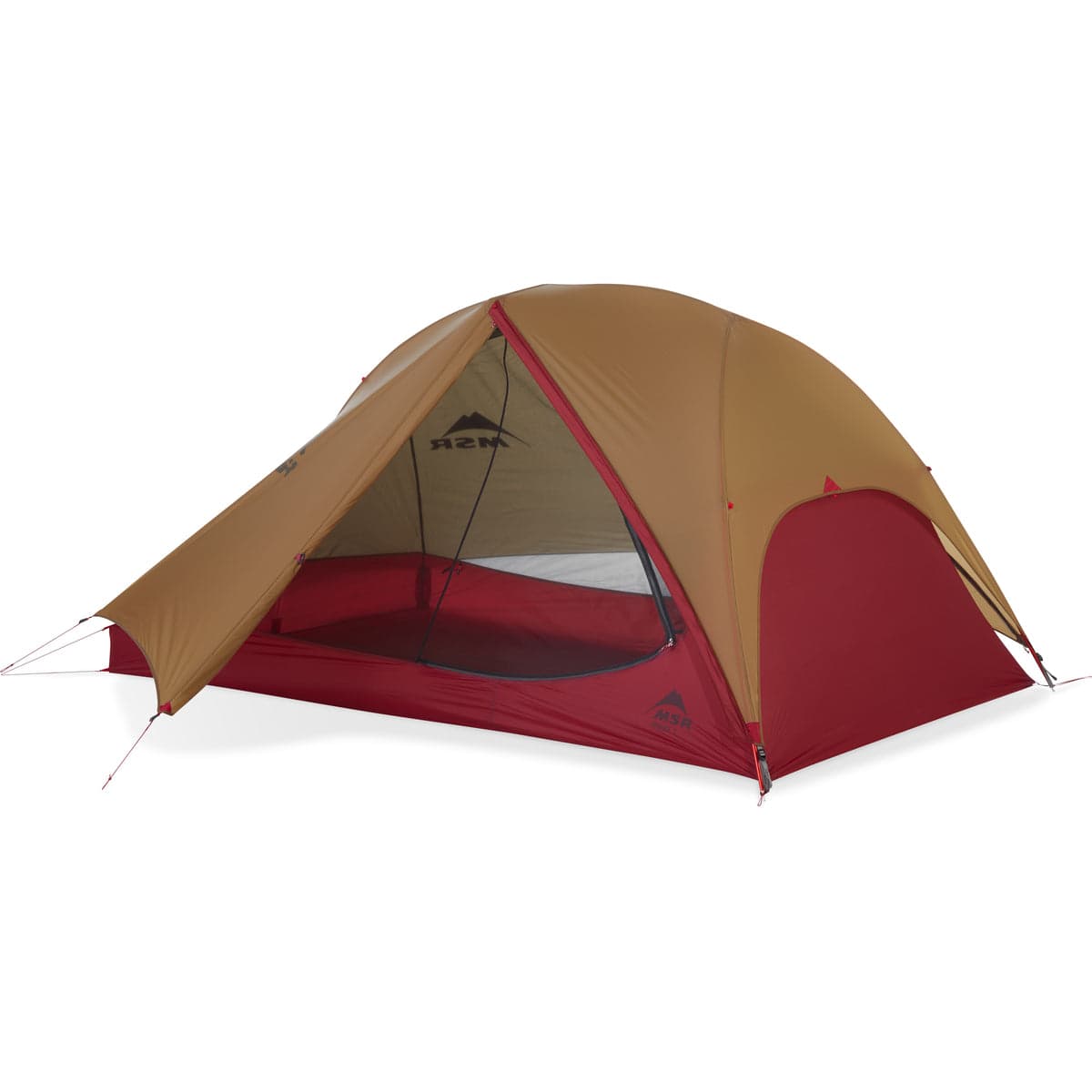
MSR FreeLite 2.
2 lb 5 oz semi-freestanding tent with MSR's storm-shedding pole geometry — the right pick if you've been burned by trekking-pole pitches in real weather.
The Verdict.
Gavler Meta-Score
“The storm-conscious UL pick. $520 buys a 2 lb 5 oz tent with MSR's reputation for handling real weather. Right call for alpine and exposed-site backpackers.”
The Gavler Verdict
The Gavler Review.
MSR FreeLite 2 Review: The UL Tent for People Who've Been Caught in a Storm
The MSR FreeLite 2 ranks No. 9 on Gavler's Best Backpacking Tents list with a 7.9, and it's on this list for one specific reason: it's the tent for backpackers who've had a lighter UL shelter flap and shudder through a windy night and decided never again. At $520 and 2 lb 5 oz packaged, it isn't the lightest or cheapest semi-freestanding tent in its class — the Big Agnes Tiger Wall UL2 undercuts it by $70 and several ounces — but OutdoorGearLab's testing found it handles 30+ mph gusts with less flap than the competition, and that's a real, measurable difference for anyone who camps above treeline or on exposed ridgelines.
What it is
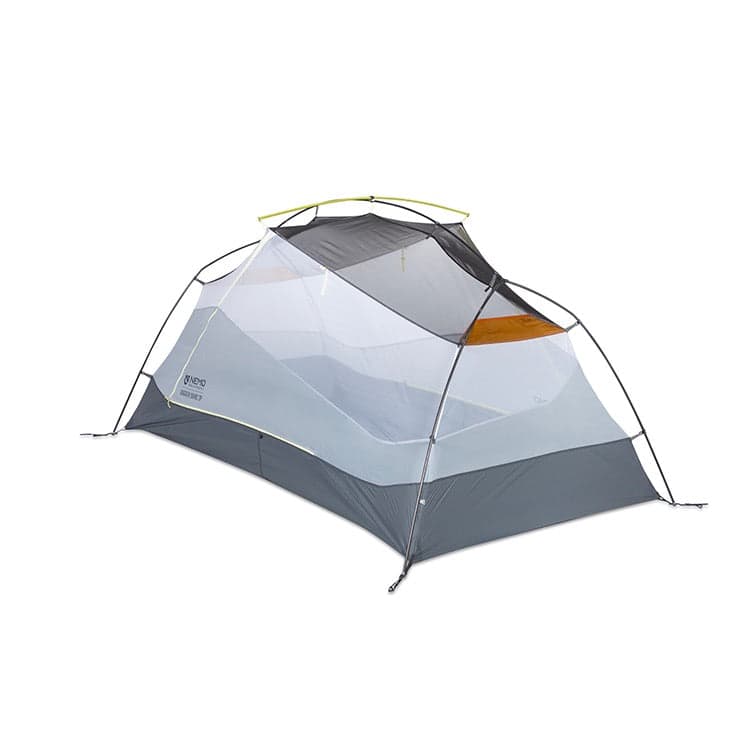
MSR built the FreeLite 2 as its ultralight counter-offering to the Big Agnes Tiger Wall and Nemo Hornet — a 2 lb 5 oz semi-freestanding, two-door, two-vestibule tent that borrows its pole geometry from MSR's Hubba Hubba and Access lines, both reference-class tents in MSR's mainstream (non-UL) lineup. The fly uses MSR's proprietary Xtreme Shield coating, a waterproofing treatment the company has refined across its full tent range rather than a UL-specific afterthought.
The core spec sheet: 2 lb 1 oz (936 g) minimum trail weight, 29 sq ft of floor area, 38-inch peak height, two doors, and proprietary nylon ripstop fabric. That trail weight sits within a few ounces of the Tiger Wall and Hornet Osmo, so the FreeLite isn't giving up much on paper — the differences show up in how the tent performs once the wind picks up.
In use
The hub-and-pole architecture is the FreeLite's core design decision, and it's what separates it from trekking-pole-supported shelters. Because the poles are dedicated and pre-shaped into the tent's structure, the FreeLite pitches into its intended geometry every time — there's no variance introduced by trekking-pole height or tensioning skill the way there is with a pyramid tent. That consistency matters most exactly when you need it most: pitching in the dark, in wind, after a long day.
OutdoorGearLab's side-by-side testing is the most useful independent data point here: the FreeLite 2 handled 30+ mph gusts with noticeably less flap and less guy-line tension than competing semi-freestanding tents. Backpacker Magazine frames the tent similarly, describing it as "MSR's UL pick for backpackers who actually camp in weather" — a distinction worth taking seriously, because a lot of UL tent marketing implicitly assumes fair-weather camping, and the FreeLite 2 doesn't.
The trade-off for that storm confidence is modest but real: interior space is tighter than some direct competitors once you account for the pole structure eating into usable volume, and the FreeLite is 4-5 oz heavier than the Tiger Wall at minimum trail weight. For a backpacker who's optimizing purely for grams, that's a real cost. For a backpacker who's been kept awake by a flapping fly at 12,000 feet, it's an easy trade.
Strengths
- Genuine, tested storm performance. OutdoorGearLab's wind testing found less flap and less guy-line tension than competing semi-freestanding UL tents at 30+ mph gusts — not a marketing claim, a measured result.
- MSR's Xtreme Shield waterproofing. The company's most-tested fly coating, inherited from tents with decades of field use rather than developed fresh for a UL line.
- Consistent pitch geometry. The hub-and-pole structure removes the pitch-quality variance that comes with trekking-pole-supported shelters.
- Pole architecture borrowed from proven tents. The Hubba Hubba and Access lineage means the FreeLite's storm performance isn't a first-generation guess.
The trade-offs — who should skip it
- Gram-counters chasing the lightest possible kit. At 2 lb 5 oz packaged, the FreeLite gives up 4-5 oz to the Tiger Wall UL2 and more to true UL pyramids. If minimum weight is the only variable that matters, this isn't the tent.
- Budget-conscious backpackers. At $520, it's a genuine premium over the $450 Tiger Wall and well above budget picks like the Gossamer Gear The Two. You're paying specifically for the storm-performance margin.
- Fair-weather car-adjacent backpackers. If your trips rarely put you above treeline or in genuinely exposed sites, the wind-performance advantage this tent is built around simply won't come up often enough to justify the premium.
How it compares
The FreeLite 2's most direct rival is the Big Agnes Tiger Wall UL2, ranked one spot above it at No. 6 with an 8.5. The Tiger Wall is cheaper ($450 versus $520), lighter, and backed by REI's distribution network — a genuinely strong all-around semi-freestanding pick. What it doesn't match is the FreeLite's demonstrated wind performance; buyers choosing between the two are essentially deciding whether that storm margin is worth $70 and a few ounces.
The Nemo Hornet Osmo 2P sits further up the list at No. 3 with a 9.1, built around OSMO fabric that dries three times faster than nylon and resists stretching when wet — a different approach to weather resilience than the FreeLite's storm-tested pole geometry. Between the two, the Hornet Osmo is the lighter, more universally praised tent; the FreeLite is the one built specifically around wind performance in exposed terrain, which is a narrower but real use case.
The Gavler verdict
A 7.9 — the lowest score of the three MSR/mainstream-adjacent tents near the bottom of this list, and that's a fair reflection of a genuine price-to-weight gap rather than a knock on the tent's core competency. The FreeLite 2 is not the lightest or cheapest semi-freestanding UL tent available, and it shouldn't be bought as one. It should be bought by alpine backpackers, ridge campers, and anyone who has been burned by a trekking-pole pitch flapping through real weather — for that specific buyer, MSR's storm-shedding reputation, backed by OutdoorGearLab's own wind testing, is worth the premium.
Common Questions
If storm performance matters more to you than shaving every last ounce, yes. OutdoorGearLab found it delivers 'best storm performance in the UL category — handles 30+ mph gusts with less flap than competing semi-freestanding tents.' It ranks No. 9 on Gavler's Best Backpacking Tents list with a 7.9, at $520, which is a real premium over lighter competitors that don't hold up as well in wind.
Semi-freestanding. The hub-and-pole architecture stands up most of the tent without stakes, but you still need to stake out the foot end and vestibules for the tent to reach its full, storm-rated shape. It's not a fully freestanding tent you can pick up and move once pitched, but it's far less dependent on perfect trekking-pole tension than a pyramid shelter.
About 4 to 5 ounces at packaged weight, and MSR's own trail-weight spec (2 lb 1 oz) sits close to the Tiger Wall's. The FreeLite trades that small weight penalty for MSR's Xtreme Shield waterproof coating and pole geometry inherited from the storm-tested Hubba Hubba and Access lines — a real difference in gusty, exposed terrain rather than a marketing footnote.
Where to Buy.
Prices checked regularly
90-day price history
Price History
Steady at $520 for the entire 90-day tracking window — no increases, no discounts, across 91 tracked days.
Tracked daily across retailers. Vote Want itabove and we’ll alert you the moment the price drops.
Some links are affiliate links — Gavler may earn a commission. This never affects rankings or scores. Learn more.
Precision Engineering
Xtreme Shield Waterproofing
MSR's proprietary fly coating — most-tested waterproof system in the backpacking-tent category.
MSR Storm Pedigree
Pole geometry inherited from MSR's Hubba Hubba and Access lines, both reference-class storm tents.
2 lb 5 oz Packaged
Among the lighter semi-freestanding 2P tents in the MSR lineup, while keeping the brand's storm performance.
Technical Specifications
The Scoreboard
Strongest in the UL category for wind performance per reviewer testing. Editorial coverage is bounded by the price-to-weight gap versus competitors.
Cast Your Vote
Do you think MSR FreeLite 2 deserves the #9 spot in Best Backpacking Tents?
Global Critique
“Best storm performance in the UL category — handles 30+ mph gusts with less flap than competing semi-freestanding tents.”
“MSR's UL pick for backpackers who actually camp in weather.”
More from Best Backpacking Tents.
See how other top picks compare in this category.