DJI Neo.
The most accessible drone DJI has ever made — 135g, palm-sized, no controller needed. 4K video with AI subject tracking for $149.
The Verdict.
Gavler Meta-Score
“The Neo is the drone that finally makes aerial content accessible to everyone. At $149, the barrier to entry is lower than ever, and the AI tracking means you get usable footage without any piloting skill. It's not a professional tool — the 18-minute flight time and 50-meter app-controlled range see to that — but as a pocket content creator or a gateway into the DJI ecosystem, nothing else comes close. The upgrade path is the genius: start controller-free, add RC Motion 3 for immersive flight, or pair with Goggles for full FPV.”
The Gavler Verdict
The Gavler Review.
DJI Neo Review: The Palm-Sized Drone That Removed Every Excuse
The DJI Neo ranks seventh on Gavler's Best Drones list with an 8.6 — not because it competes on imaging power, but because it removes every barrier that has historically kept people out of aerial photography. At 135 grams, it launches from an open palm, requires no controller, and starts at $149. PetaPixel summed up the pitch directly: "DJI is running with this in a way that makes it very accessible — not to mention affordable." The trade-off is real, too: no obstacle avoidance, a flight time reviewers consistently found optimistic, and a body light enough to get pushed around by wind. It's built for casual content creators and DJI-curious first-time flyers, not filmmakers who need a dependable, all-weather tool.
What it is
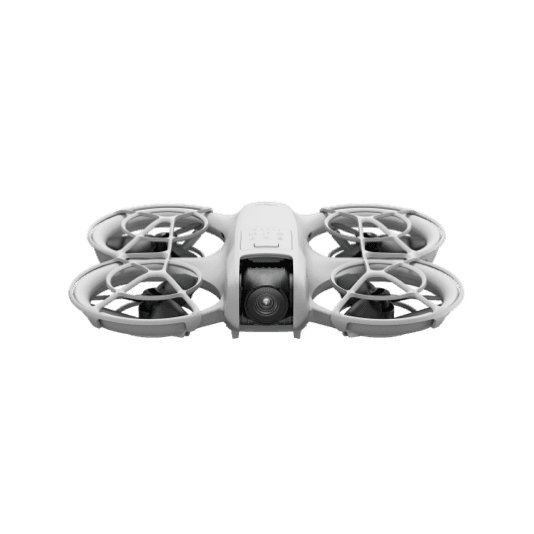
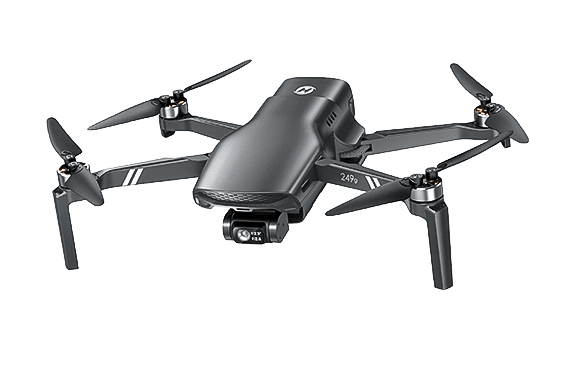
The DJI Neo is the most accessible drone DJI has built. It weighs 135 grams — far under the FAA's 250-gram registration threshold — and fits in the palm of a hand. Where every other drone in this category needs a dedicated controller to get off the ground, the Neo can launch straight from your hand and fly a pre-programmed path using nothing but its onboard sensors and your phone's camera as a framing guide. A 1/2-inch, 12MP sensor shoots 4K video at 30fps with RockSteady and HorizonBalancing stabilization, and 22GB of built-in storage means there's no memory card to manage.
The genius of the design is the upgrade path. You can fly it controller-free out of the box for $149, add the RC Motion 3 handheld controller for more precise FPV-style flight, or step up to the $509 Motion Fly More Combo with Goggles N3 for full immersive piloting. Every accessory talks to the same drone, so the entry price doesn't lock you out of a more serious flying experience later — it just doesn't force you into one up front.
In use
The palm launch and landing genuinely work as advertised, and it's the feature every reviewer singles out first. PetaPixel called it "as plug-and-play a lightweight drone as you'll find," noting that setup through the DJI Fly app takes under 10 minutes including firmware updates, with 30 in-app tutorials available for total beginners. The automated shooting modes — Follow, Circle, Dronie, Rocket, Spotlight, and DirectionTrack — cover most of what a casual creator wants without touching a joystick, and DJI illustrates each one with a short video preview before you commit to it.
Image quality is where expectations need calibrating. PetaPixel found that the Neo "can wow you in some instances and underwhelm in others," largely depending on lighting: "It loves good daylight and tends to work its best magic in the most ideal lighting conditions... the sensor is too small to do justice to low-light and night images." There's no RAW capture, dynamic range is limited, and detail softens noticeably at distance or in dim conditions. Reviewers agree it's a dawn-to-dusk tool, not an all-conditions one.
Flight time is the most consistent point of friction across every review. PetaPixel's tester wrote plainly: "DJI rates flying time at 17 minutes per charge (18 without the propeller guards), but you're not likely to get there unless you're in the most ideal conditions." Tom's Guide's review echoed this, listing "short flight time" alongside "susceptible to gusts of wind" and "no obstacle avoidance" as its three core cons. Because the Neo is light enough to skip FAA registration, it's also light enough to get pushed around in anything beyond a gentle breeze — something to plan around, not a flaw that ruins the experience, but a real limitation.
Worth flagging directly: published pricing for the Neo has moved around across outlets and time. PetaPixel's review cites a $179 starting price and a $319 Fly More Combo; Tom's Guide separately listed retailer prices ranging from $139 to $190. Gavler's verified listing has it at $149. Check current pricing at the retailer before buying — this is a fast-moving budget category.
Strengths
- Controller-free operation that actually works. Palm takeoff and landing, guided by 30 in-app tutorials, make this the easiest real drone to learn on.
- A genuine upgrade path. Start at $149 with no accessories, then add the RC Motion 3 or Goggles N3 later without buying a new drone.
- Under the 250-gram registration threshold, meaning no FAA registration or pilot certificate required for casual use in the U.S.
- Strong stabilization for the price. RockSteady and HorizonBalancing keep footage usable even with the odd gust pushing the airframe around.
- 22GB of built-in storage removes the need to manage a memory card, and transfers happen over a direct Wi-Fi link to your phone.
The trade-offs — who should skip it
- No obstacle avoidance whatsoever. Only downward sensors for takeoff and landing are included — fly it in open space until you know its behavior.
- Real-world flight time runs shorter than the rated figure, per PetaPixel's own testing. Budget for the Fly More Combo's extra batteries if you plan to shoot for more than a few minutes at a stretch.
- Wind sensitivity. At 135 grams, it's noticeably more affected by gusts than heavier drones — Tom's Guide flagged this as a core con, not a minor quibble.
- No RAW photo capture and a small sensor, so image quality drops fast once light gets low. This is a daylight content tool, not a low-light imaging system.
- Pricing has fluctuated across retailers — confirm the current price before ordering, since it hasn't stayed fixed at launch levels.
If you want a serious imaging tool for real estate, weddings, or professional aerial cinematography, the Neo isn't it — look at the flagship end of this list instead. If you want the lowest-friction way to get usable aerial footage of yourself or your trip without learning to fly a traditional quadcopter, it's hard to beat.
How it compares
At the top of the same Best Drones list, the DJI Mavic 4 Pro ranks first with a 9.8 — a completely different category of drone, built around a 100MP Hasselblad camera, a 51-minute flight time, and LiDAR obstacle avoidance, but weighing over 1,000 grams and costing roughly fifteen times as much. It's the tool for professionals who need imaging quality and reliability the Neo was never designed to deliver.
Closer in spirit and price is the Potensic Atom 2, ranked eighth with an 8.5. It requires a traditional controller and stays just under the 250-gram registration limit rather than launching from your palm, but in exchange offers a larger 1/2-inch Sony sensor shooting 48MP stills, a 31-minute flight time, and a 10km transmission range — all for around $350. Fstoppers called it "a fantastic little drone with impressive features and good image quality," though like the Neo it skips obstacle avoidance. If you want more range, longer flight time, and better stills and are comfortable with a standard controller from day one, the Atom 2 is the better buy; if you want the absolute lowest barrier to entry and controller-free operation, the Neo wins.
The Gavler verdict
The DJI Neo earns its 8.6 by solving a problem no other drone on this list solves: it makes aerial content genuinely accessible to someone who has never flown anything before. PetaPixel's closing judgment gets it right — "Yes. The DJI Neo won't be as intimidating as other drones because of the veritable training wheels placed on it. It's also much cheaper and far more adaptable to both pilot and location." The honest trade-offs are the short real-world flight time, the total absence of obstacle avoidance, and a body light enough to get bounced around by wind — none of which are surprising at this size and price, but all of which matter if you plan to fly anywhere other than open, calm spaces. As a pocket content creator or a first step into the DJI ecosystem, nothing else comes close to this combination of price and ease.
Common Questions
For casual content creators, yes. Gavler ranks it seventh on the Best Drones list with an 8.6, and PetaPixel's review concluded plainly: 'Yes. The DJI Neo won't be as intimidating as other drones because of the veritable training wheels placed on it. It's also much cheaper and far more adaptable to both pilot and location.' It's not built for professional cinematography — for that, look higher on Gavler's drone list — but as an accessible pocket flyer, nothing else matches the price-to-ease ratio.
DJI rates it at 18 minutes per charge, but PetaPixel's tester found 'DJI rates flying time at 17 minutes per charge (18 without the propeller guards), but you're not likely to get there unless you're in the most ideal conditions.' Tom's Guide separately listed 'short flight time' as one of the drone's three core cons, alongside no obstacle avoidance and sensitivity to wind. Buying the Fly More Combo with two spare batteries effectively solves this.
No. PetaPixel's review notes that 'without any obstacle avoidance sensors onboard, the Neo doesn't know if it's about to crash in any particular direction' — only downward sensors for takeoff and landing are included. Tom's Guide flagged the same limitation, along with the drone's susceptibility to gusts of wind given its 135-gram weight. Fly it in open, calm spaces if you're new to piloting.
Where to Buy.
Prices checked regularly
90-day price history
Price History
Steady at $149 for the entire 90-day tracking window — no increases, no discounts, across 91 tracked days.
Tracked daily across retailers. Vote Want itabove and we’ll alert you the moment the price drops.
Some links are affiliate links — Gavler may earn a commission. This never affects rankings or scores. Learn more.
Precision Engineering
135g Palm-Sized
Ultra-compact at 135 grams — fits in a pocket, no FAA registration required.
4K Video with AI Tracking
12MP sensor with AI subject tracking and QuickShots for automated cinematic content.
No Controller Required
Launch from palm, control via phone app. Upgradeable to RC Motion 3 or Goggles N3 for FPV.
Technical Specifications
The Scoreboard
Exceptional value and accessibility. Limited range and flight time are the main trade-offs.
Cast Your Vote
Do you think DJI Neo deserves the #7 spot in Best Drones?
Global Critique
“DJI's core experience miniaturized — the most accessible drone they've ever made. Palm takeoff makes traditional selfie sticks look prehistoric.”
“At $149, the barrier to entry for aerial content has never been lower. The AI tracking produces usable footage without piloting skill.”
“The DJI Neo is about the size of a large palm and weighs just 135g, meaning it fits into literally any backpack or even your jacket pocket.”
More from Best Drones.
See how other top picks compare in this category.
Buy the Drone You'll Actually Fly
6K hangtags are the wrong first question. Under-250g travel vs pro cine is the weight class to pick. Then shop Gavler's live ranking.
A 25% Drone Tariff Lands September 3 — If You Want a DJI Mini, the Clock Is Running
A 25% tariff on imported drones lands September 3, and DJI's US supply is already thin. Here's which sub-250g Mini to buy before the window closes.
DJI Avata 360: The First 360° FPV Drone Is Better Than It Has Any Right to Be
The first FPV drone with a 360° camera changes what cinematic FPV means. Here's the spec sheet, the price, and what it actually fixes.
DJI Mini 4 Pro vs DJI Flip: The Sub-250g Drone That's Actually Worth Your Money
Two sub-250g DJI drones, two very different jobs. Here's which fits your shooting style — and where each one falls short.
DJI Mavic 4 Pro, Nine Months Later: The Drone Everyone Keeps Choosing
Nine months in, the Mavic 4 Pro is the most-flown drone in Gavler's community. Here's what holds up and what we'd flag before you buy.
The 10 Best Drones in 2026, From Cinematic Flagships to Pocket Flyers
DJI dominates, but Autel and Skydio still matter. Gavler's pilots rank the drones worth flying — for cinema, mapping, and weekend hobby use.