Brooks Ghost 18.
The no-fuss workhorse — the neutral daily trainer millions of runners default to. RunRepeat frames it as a shoe that preserves the familiar, comfortable, durable ride rather than chasing trends: reliable and stable, but heavier and firmer than newer rivals. It lacks the bounce and rocker of modern super-foam trainers, but that was never the point.
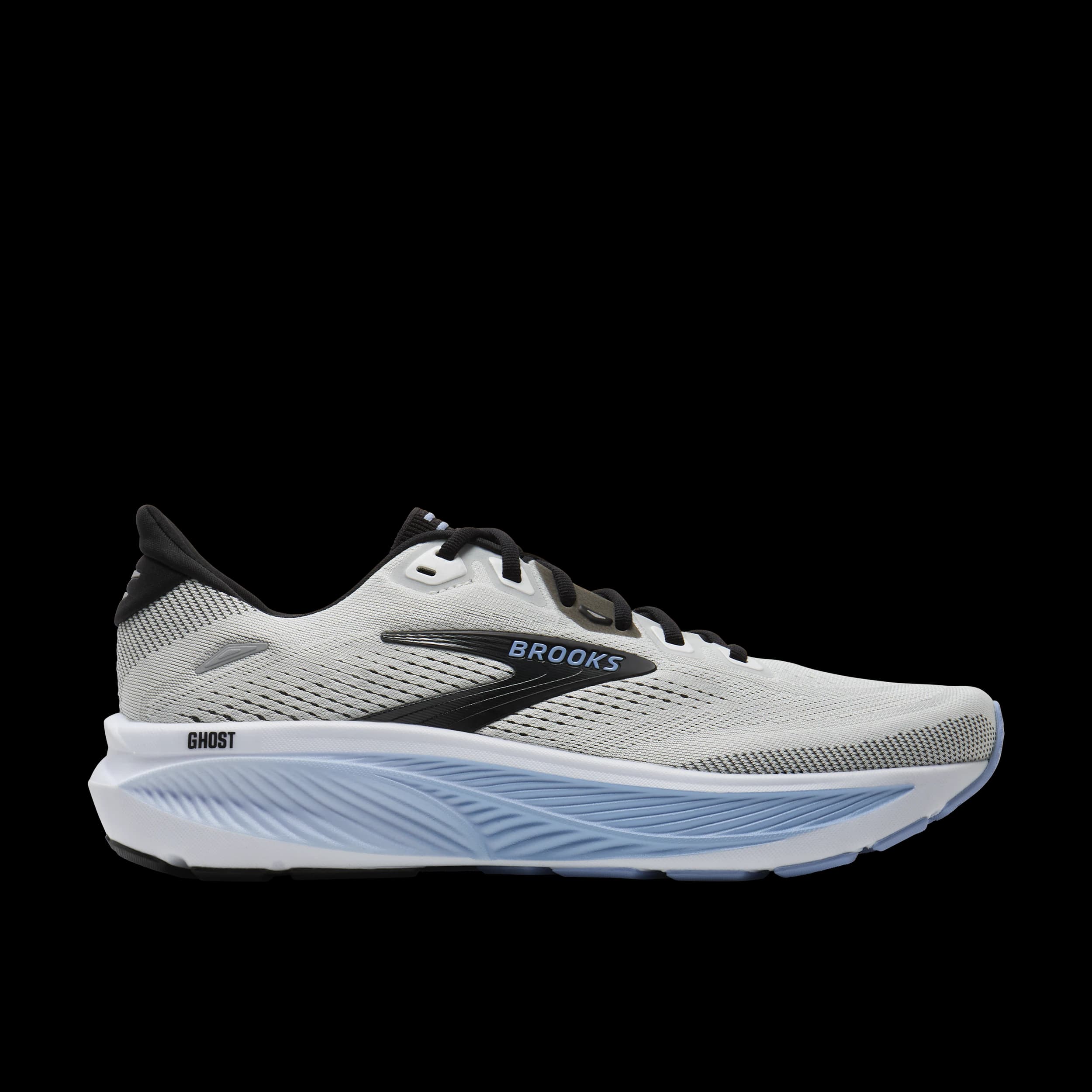
The Verdict.
Gavler Meta-Score
“The reliable-workhorse pick. Buy it if you want a comfortable, durable, stable neutral trainer for everyday miles and value dependability over excitement — RunRepeat calls it a no-fuss workhorse that stays true to two decades of the line. Do not buy it for bounce, low weight or a modern rockered ride: RunRepeat measured below-average rebound, and the Wave Rider 30 or the flagships above it give you more energy for the money.”
The Gavler Verdict
The Gavler Review.
Brooks Ghost 18 Review: The Workhorse That Refuses to Chase Trends
The Brooks Ghost 18 ranks eighth on our Best Running Shoes list with a 9.0 — the default neutral trainer for a reason, and RunRepeat frames the 18 as a deliberate exercise in not breaking what already works. At $150, buy it if you want a comfortable, durable, predictable shoe for everyday miles and value dependability over excitement. Skip it if you're chasing bounce, low weight, or a modern rockered ride — RunRepeat is clear that's not what this shoe is trying to be.
What it actually is
The Ghost has been the best-selling neutral trainer in America for close to two decades, and RunRepeat's framing of version 18 gets at exactly why: "The Brooks Ghost 18 stays true to what has made this series so popular for nearly two decades... keeping the shoe comfortable, durable, stable, and easy to use." Rather than chasing the supercritical-foam arms race happening elsewhere on this list, Brooks focused on preserving the qualities that made the Ghost a default recommendation for new runners and high-mileage veterans alike.
Underfoot is the DNA Loft v3 midsole, a nitrogen-infused EVA foam, on a roughly 36mm heel / 26mm forefoot stack with a 10mm drop. At 10.2 oz in a men's 9, it's heavy by modern standards — a direct trade-off for the shoe's protective, durable construction.
In use
Consistency is the whole product here. RunRepeat's summary captures the shoe's identity precisely: "The Ghost 18 remains a reliable, everyday-ready workhorse that handles runs, walks, and daily life with the same no-fuss character fans have come to expect with every update." That's a shoe built for a roomy, forgiving fit that suits new runners, treadmill sessions, and anyone logging daily miles without wanting to think hard about their footwear.
It doesn't try to be more than that, and RunRepeat's testing backs up where the honest limits are. The DNA Loft v3 foam is protective and hard-wearing, but it isn't built to give much back underfoot — which is a deliberate trade for stability and longevity rather than an oversight.
Strengths
- Genuine, two-decade-proven reliability. This isn't marketing language — RunRepeat's own framing credits the Ghost's popularity to consistently delivering comfort, durability and stability release after release.
- A roomy, forgiving fit. Comfortable for new runners, walkers, and high-mileage everyday use without the tight, performance-oriented fit of racier shoes on this list.
- Stable, predictable ride. No surprises underfoot — exactly what a workhorse trainer should offer, especially for runners newer to the sport.
- A safe default recommendation. For any runner asking "what shoe should I just buy without overthinking it," the Ghost 18 is a defensible, low-risk answer.
The trade-offs — who should skip it
- Below-average energy return, measured in the lab. RunRepeat found "Brooks still uses the same DNA Loft v3 foam, and we found in the lab that it delivers below-average rebound" — a specific, quantified weakness rather than a vague complaint.
- It's heavy relative to the field. At 10.2 oz, it's noticeably heavier than the newer supercritical-foam trainers elsewhere on this list.
- No rocker, no bounce, by design. RunRepeat notes plainly that it "lacks the bounce, low weight, and rockered sole of many newer daily trainers, but that was never its goal." If those qualities matter to you, this isn't the shoe.
How it compares
One rank down, the Mizuno Wave Rider 30 is the more modern alternative at a nearly identical $150 price point — a rebuilt supercritical-EVA midsole gives it noticeably more bounce and genuine range into faster paces, where the Ghost 18 stays purely a comfort-and-reliability play. If energy return matters to you as much as dependability, the Wave Rider 30 is worth trying on first.
For runners who want the Ghost's predictability but with more premium cushioning, the ASICS Gel-Kayano 33 one rank up adds dedicated stability guidance for overpronators — a more specialized shoe, but one built on the same "reliability first" philosophy.
At $150, the Ghost 18 also undercuts most of the plush-comfort flagships further up this list, which makes it a reasonable entry point for a runner who isn't ready to spend $165-plus on a max-cushion trainer and just wants something dependable to log miles in.
Who should actually buy this
If you're new to running, training for a first race on a treadmill, or simply someone who wants one shoe that handles daily miles without demanding much thought, the Ghost 18 remains one of the lowest-risk purchases in the category. It won't wow you with bounce, and RunRepeat's testing is consistent about that limitation across releases — but consistency itself is the product. Runners upgrading from a worn-out pair of Ghosts will find exactly what they expect, and that predictability is precisely why the line has stayed America's best-selling neutral trainer for this long.
The Gavler verdict
A 9.0, with an 88 expert consensus alongside a slightly higher 90 community rating — a real signal that loyal owners value the Ghost's dependability even where RunRepeat's lab flags its lack of bounce. This is the category's default neutral trainer, not a performance pick, and RunRepeat's testing is consistent on that point across the board. Buy it if comfort, durability and predictability matter more to you than excitement. If you want a livelier ride at the same price, the Wave Rider 30 is the shoe to try instead.
Common Questions
Yes, if reliability matters more to you than excitement. It ranks eighth on Gavler's Best Running Shoes list with a 9.0, and RunRepeat frames it as a no-fuss workhorse that preserves the comfortable, durable ride that's made it America's best-selling neutral trainer for nearly two decades. The trade-off: it's heavier than newer rivals and RunRepeat measured below-average energy return.
It's one of the safest choices on the market for exactly that reason. RunRepeat highlights the roomy, forgiving fit and stable, predictable ride as qualities that suit new runners, treadmill users, and anyone who wants a dependable everyday shoe without needing to think about it.
No, and RunRepeat is direct about it: the DNA Loft v3 midsole delivers below-average rebound, and the shoe lacks the bounce, low weight and rockered sole of many newer daily trainers. RunRepeat adds that this was never the shoe's goal — it's built for comfort and durability, not speed.
Buy the Ghost 18 if you want maximum reliability and a roomy, forgiving fit for daily miles and don't mind extra weight. Buy the Wave Rider 30 if you want a similarly priced trainer with more bounce and genuine range into faster paces — RunRepeat rates its modernized foam well above the Ghost's for energy return.
Where to Buy.
Prices checked regularly
90-day price history
Price History
Steady at $150 for the entire 90-day tracking window — no increases, no discounts, across 45 tracked days.
Tracked daily across retailers. Vote Want itabove and we’ll alert you the moment the price drops.
Some links are affiliate links — Gavler may earn a commission. This never affects rankings or scores. Learn more.
Precision Engineering
DNA Loft v3 Midsole
A nitrogen-infused EVA foam that is protective and durable; RunRepeat found it delivers below-average rebound, in line with the shoe's workhorse brief.
10.2 oz / 289 g (men's 9)
Heavy by modern standards — the cost of the Ghost's durable, no-fuss construction.
Roomy, Forgiving Fit
A comfortable, accommodating upper that suits new runners, walkers and high-mileage everyday use.
Technical Specifications
The Scoreboard
The 9.0 reflects a split that is real rather than noise: reviewers respect the Ghost 18 as a comfortable, durable, dependable workhorse (hence a slightly higher community score from loyal owners), but RunRepeat is clear that it lacks the bounce, low weight and rocker of newer trainers and measured below-average energy return. It earns its place as the category's default neutral trainer, not as a performance pick.
Cast Your Vote
Do you think Brooks Ghost 18 deserves the #8 spot in Best Running Shoes?
Global Critique
“The Brooks Ghost 18 stays true to what has made this series so popular for nearly two decades... keeping the shoe comfortable, durable, stable, and easy to use.”
“It lacks the bounce, low weight, and rockered sole of many newer daily trainers, but that was never its goal.”
“Brooks still uses the same DNA Loft v3 foam, and we found in the lab that it delivers below-average rebound.”
“The Ghost 18 remains a reliable, everyday-ready workhorse that handles runs, walks, and daily life with the same no-fuss character fans have come to expect with every update.”
More from Best Running Shoes.
See how other top picks compare in this category.
What Kind of Running Shoe Do Your Miles Actually Need?
A carbon plate is the wrong first question. Daily trainer vs max-cushion vs stability vs race-day super shoe is the job. Then shop Gavler's live ranking.
Superblast 3 vs Vomero 18 vs Novablast 6: The Best Daily Trainer of 2026 Costs $155, and It Isn't the Nike
Three shoes dominate every 2026 daily-trainer list: one's a recovery shoe in a trainer's badge, one costs $55 too much, one spec sheet won't survive a caliper.
The $500 Running Shoe Is Not the Fastest One. A $300 Shoe Is Lighter, and a $170 Shoe Is the Smart Buy.
Adidas broke the super-shoe price ceiling at $500. Every outlet that tested it says buy cheaper — and the lab data says the benefit was never about price.
The Best Running Shoes in 2026, Ranked by Runners Who Actually Race Them
Nike, Asics, Hoka, Saucony. Gavler's running community ranks the shoes worth lacing — from $140 daily trainers to $285 marathon weapons.