RGB Stripe Is the Best OLED Tech You Can Get - ASUS ROG OLED PG32UCWM
ShortCircuit
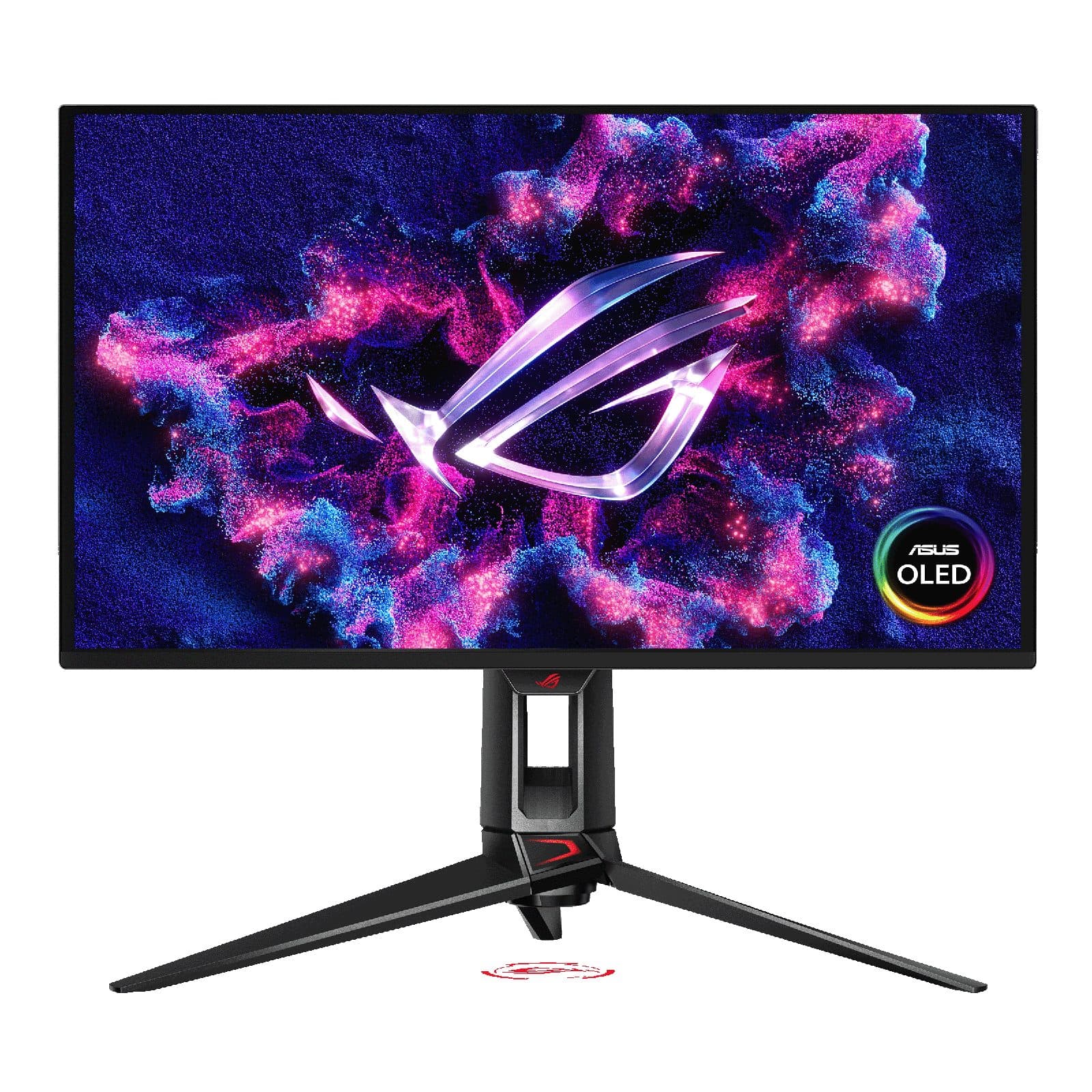
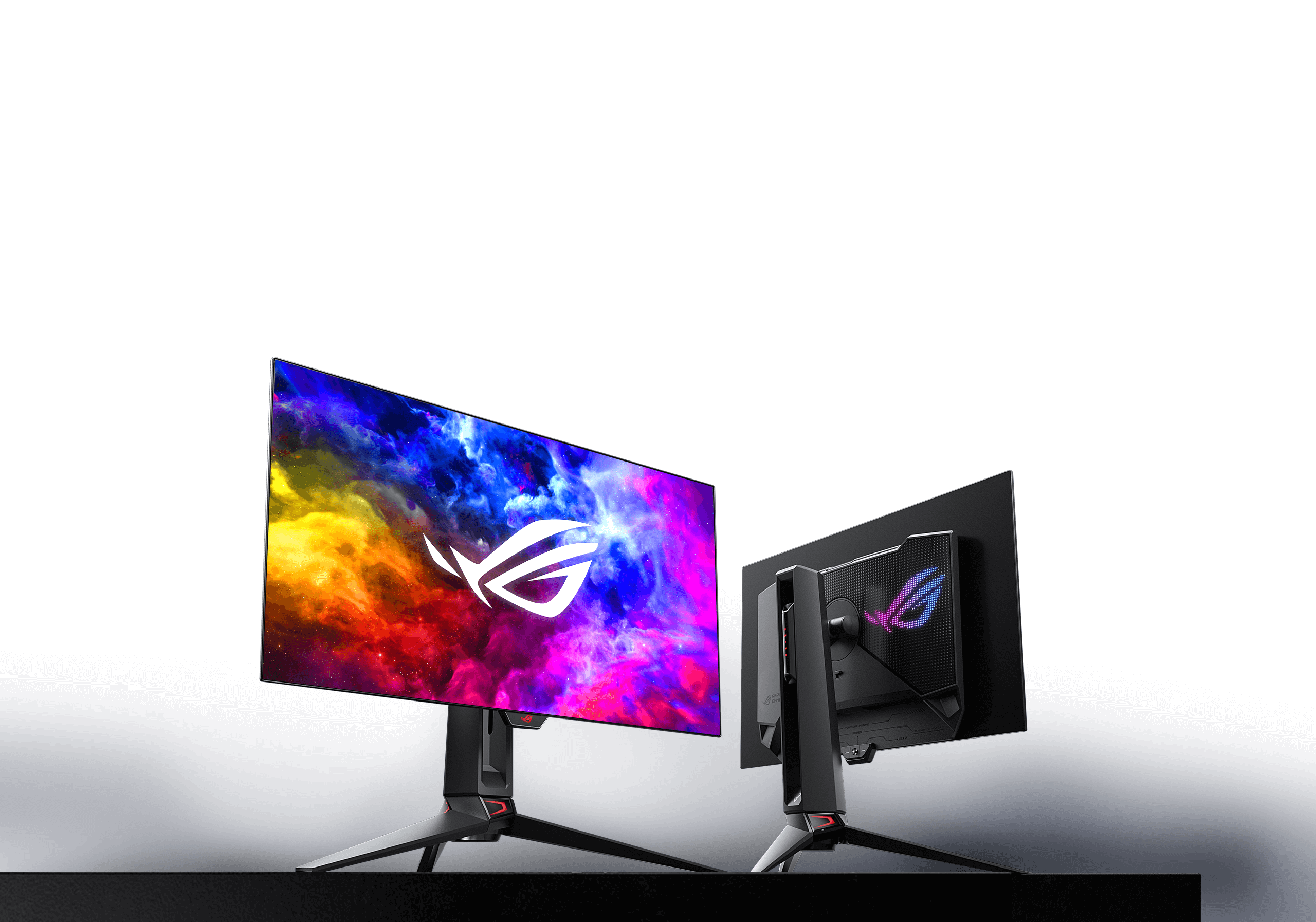
ASUS ROG Swift PG27AQDM — 27" 1440p @ 240Hz WOLED, 99% DCI-P3, 10-bit color, 0.03ms response. The value path into OLED gaming at 1440p.
Gavler Meta-Score
“The value path into OLED gaming. Half the price of 4K OLED, ~85% of the visual quality, and 1440p resolution that matches mainstream GPU capability. The right OLED-gaming starting point.”
The Gavler Verdict
ASUS ROG Swift PG27AQDM Review: The Value Path Into OLED Gaming
The ASUS ROG Swift PG27AQDM ranks sixth on our Best Gaming Monitors list with an 8.8 and a 90 expert consensus. It earns its place as the value entry point into OLED gaming — a 27-inch, 1440p, 240Hz WOLED panel that costs roughly half of what Gavler's top-ranked 4K OLED monitors run, while delivering most of their visual impact on the games most people actually play. Buy it if you want OLED contrast and motion clarity without a 4K-class GPU or a 4K-class monitor bill. The one real limitation is HDMI 2.0 rather than 2.1, which matters if current-generation consoles are part of your setup.
The panel is LG's W-OLED technology — white-light OLED with a color filter layer — at 27 inches, delivering 99% DCI-P3 color coverage, true 10-bit color depth, and a 0.03ms grey-to-grey response time. That's the same per-pixel self-emissive contrast that makes every OLED gaming monitor visually distinct from an LCD panel, just at a more attainable size and resolution than the 4K OLED tier above it on this list.
The 1440p resolution isn't a downgrade so much as a deliberate positioning choice. At 27 inches, pixel density stays sharp enough to feel current without demanding a 4K-class GPU to sustain high refresh rates — a meaningful practical difference, since hitting 200-plus frames per second in competitive titles is realistic on RTX 4070-class hardware, where a 4K panel at 240Hz typically wants an RTX 4080 or better to stay fed. For anyone splitting time between AAA single-player games and competitive multiplayer, that GPU-headroom advantage is a real, not just theoretical, benefit.
Tom's Hardware's review didn't hedge on the panel's core performance: "Yes it's expensive, but it's incredibly good. With a stunning image and next-level video performance, it's one of the very best gaming monitors I've ever reviewed." That's a strong claim from an outlet that reviews monitors constantly, and it's centered on exactly what OLED is supposed to deliver — per-pixel contrast and motion clarity that LCD panels, even good ones, can't match.
RTINGS' testing reached the same conclusion from a different angle, describing it simply as "incredible for PC gaming" — language that tracks with the panel's core strengths: near-instant pixel response, deep per-pixel blacks, and a 240Hz ceiling that keeps fast-moving content clear. Between the color coverage, the response time, and the refresh rate, this is a panel built around motion clarity and contrast first, with the 1440p resolution as the trade that keeps the GPU requirement — and the price — reasonable.
The closest comparison isn't ranked above or below it — it's the monitor sharing the exact same panel. The LG UltraGear 27GS95QE-B at rank seven uses the identical LG WOLED panel at the identical 799 dollar price, matching this monitor's 0.03ms response time, 240Hz ceiling, and roughly 99% DCI-P3 coverage. The real difference is calibration tone and chassis design: ASUS's out-of-box tuning runs slightly warmer, and the ROG chassis leans into gaming-focused RGB styling, while LG's UltraGear calibration reads slightly cooler with a more understated design. Choosing between them is genuinely a matter of preference rather than performance.
Against the 4K OLED monitors that occupy the top ranks of this same list, the trade is resolution and GPU demand for roughly half the price — a meaningful step down in pixel density, but not in the fundamental OLED experience of contrast, color, and motion clarity that makes this category worth buying into in the first place.
An 8.8, with a 90 expert consensus built on genuinely enthusiastic reviews from Tom's Hardware and RTINGS, both of whom rank this among the best gaming monitors they've tested at any price. The trade-offs are specific rather than vague: HDMI 2.0 rather than 2.1, and the subpixel text fringing that comes with any WOLED panel. Buy it if OLED contrast and motion clarity matter more to you than resolution, and if half the price of the 4K OLED tier is the difference between buying this year and waiting. It remains the clearest, most sensible entry point into OLED gaming on this list.
Yes, especially if a 4K OLED monitor is out of budget. At 799 dollars it sits at roughly half the price of the 4K OLED tier while delivering most of the visual quality on AAA single-player content, and Tom's Hardware called it 'one of the very best gaming monitors I've ever reviewed.' The main real-world caveat is HDMI 2.0 rather than 2.1, which limits full-bandwidth use with current-generation consoles.
Like all OLED monitors, some risk exists with static content over long periods, but ASUS backs this panel with a 3-year warranty that explicitly covers burn-in, paired with pixel-shift, screen-saver detection, and automated pixel-cleaning firmware. That combination of warranty coverage and mitigation firmware is mature enough that burn-in shouldn't be a primary deterrent for normal desktop and gaming use.
For most buyers, no — it's the smarter resolution choice, not a compromise. At 27 inches, 1440p is sharp enough to feel modern, and it means sustained high frame rates (200+ fps in competitive titles) are realistic on mid-tier GPUs like an RTX 4070, where hitting 4K at 240Hz requires an RTX 4080 or better. For competitive multiplayer, where frame consistency matters more than pixel count, 1440p OLED is arguably the better call, not just the cheaper one.
Both use the same underlying LG WOLED panel at the same 799 dollar price, so the choice comes down to calibration tone and chassis design rather than performance. ASUS's out-of-box calibration runs slightly warmer and the chassis leans into ROG's gaming-RGB aesthetic; LG's runs slightly cooler and follows the brand's more understated UltraGear design language. Pick based on preference, not spec sheet.
Prices checked regularly
90-day price history
Steady at $799 for the entire 90-day tracking window — no increases, no discounts, across 91 tracked days.
Tracked daily across retailers. Vote Want itabove and we’ll alert you the moment the price drops.
Some links are affiliate links — Gavler may earn a commission. This never affects rankings or scores. Learn more.
LG's W-OLED panel at 27 inches delivers per-pixel self-emissive contrast and 1440p sharpness without needing a 4K-class GPU to drive high frame rates.
Coverage of roughly 99% of the DCI-P3 gamut with true 10-bit depth produces accurate, saturated color suited to both HDR gaming and content creation.
A manufacturer warranty that explicitly covers OLED burn-in, backed by pixel-shift and panel-cleaning firmware, addresses the main long-term risk of OLED ownership.
Critics rate it among the best OLED gaming monitors at its price for image quality and motion clarity; the noted trade-offs are HDMI 2.0 bandwidth (limiting current-gen consoles) and OLED text fringing from the panel's subpixel layout.
Do you think ASUS ROG Swift PG27AQDM deserves the #7 spot in Best Gaming Monitors?
“Yes it's expensive, but it's incredibly good. With a stunning image and next-level video performance, it's one of the very best gaming monitors I've ever reviewed.”
“The ASUS PG27AQDM is incredible for PC gaming.”
Watch
Hand-picked from creators we trust — playable inline.
RGB Stripe Is the Best OLED Tech You Can Get - ASUS ROG OLED PG32UCWM
See how other top picks compare in this category.
A 540Hz hangtag is the wrong first question. Start with 1440p vs 4K, then IPS vs OLED vs size. Then shop Gavler's live ranking.
TCL just unveiled its 32X3B and 27X3B OLED monitors and is building a fab to crack the panel duopoly. Here's what it means for OLED monitor prices.
The Gigabyte MO27U2 is a 27-inch 4K 240Hz QD-OLED for $649 — a panel class that debuted above $1,300. A real price-floor moment, with trade-offs to match.
Two 4K 240Hz QD-OLED gaming monitors, same resolution, very different sizes — and a price gap that blew open in 2026. Here's which one to buy.
ASUS ROG, MSI, Alienware, Samsung, LG. Gavler ranks the best gaming monitors of 2026 — 4K OLED, 1440p OLED, ultrawide, and budget picks, by tier.