RGB Stripe Is the Best OLED Tech You Can Get - ASUS ROG OLED PG32UCWM
ShortCircuit
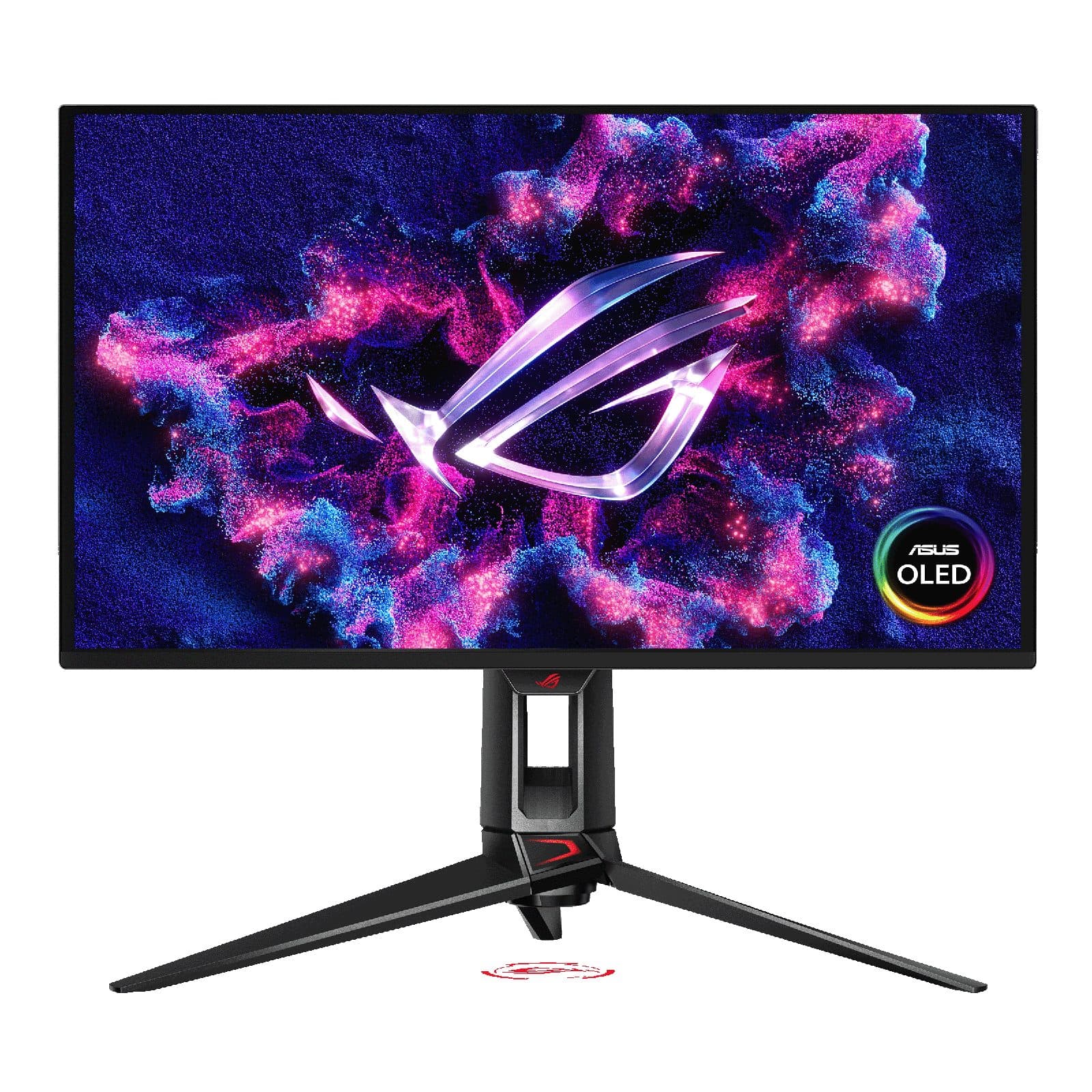
ASUS ROG Swift PG27UCDM — 27" 4K @ 240Hz 4th-gen QD-OLED, 0.03ms response, Dolby Vision, DisplayPort 2.1. Tom's Hardware's flagship 27" 4K OLED pick.
Gavler Meta-Score
“The flagship 27" gaming monitor for buyers who want maximum pixel density at OLED-tier response. Tom's Hardware's reference-class default; DisplayPort 2.1 future-proofs the cable path.”
The Gavler Verdict
ASUS ROG Swift PG27UCDM Review: The Sharpest 4K OLED You Can Buy
The ASUS ROG Swift PG27UCDM sits at number one on our Best Gaming Monitors list with a 9.4, and it earns that spot on a simple premise: nobody else packs 4K resolution into 27 inches with OLED-tier speed and gets it this right. This is a 26.5-inch, 4th-generation Samsung QD-OLED panel running 3840x2160 at 240Hz with 0.03ms response and Dolby Vision HDR — the sharpest, densest pixel grid on the list, paired with the fastest pixel response OLED currently offers. Buy it if maximum image sharpness at 27 inches is the goal and you have a GPU that can actually push 4K at 240Hz. If you'd rather trade some of that density for a bigger, cheaper screen, the MSI MPG 321URX and Alienware AW3225QF are the honest alternatives, and we'll get into exactly when each makes more sense.
The PG27UCDM is ASUS's flagship 27-inch gaming monitor, and Tom's Hardware — which gave it an Editor's Choice award — frames the pitch precisely: shoppers filtering for "4K," "OLED," and "240Hz" mostly turn up 32-inch panels, but a smaller group of 27-inch screens exists for buyers who want maximum pixel density instead of maximum size. That trade-off is the entire reason this monitor exists, and it's why a 27-inch 4K panel produces roughly 166 pixels per inch — visibly sharper text and finer in-game detail than any 32-inch 4K monitor can manage, a difference Tom's Hardware notes is "something you can see in a side-by-side comparison."
The spec sheet backs up the pitch. The panel does 3840x2160 at 240Hz with 0.03ms grey-to-grey response, DisplayHDR True Black 400 certification with Dolby Vision support and roughly 1,000-nit peak HDR brightness, 99% DCI-P3 coverage at 10-bit color, and connectivity that includes DisplayPort 2.1 (UHBR20), two HDMI 2.1 ports, and USB-C. A built-in custom heatsink manages panel heat, backed by a 3-year warranty that specifically covers OLED burn-in — the standard objection to buying OLED at all.
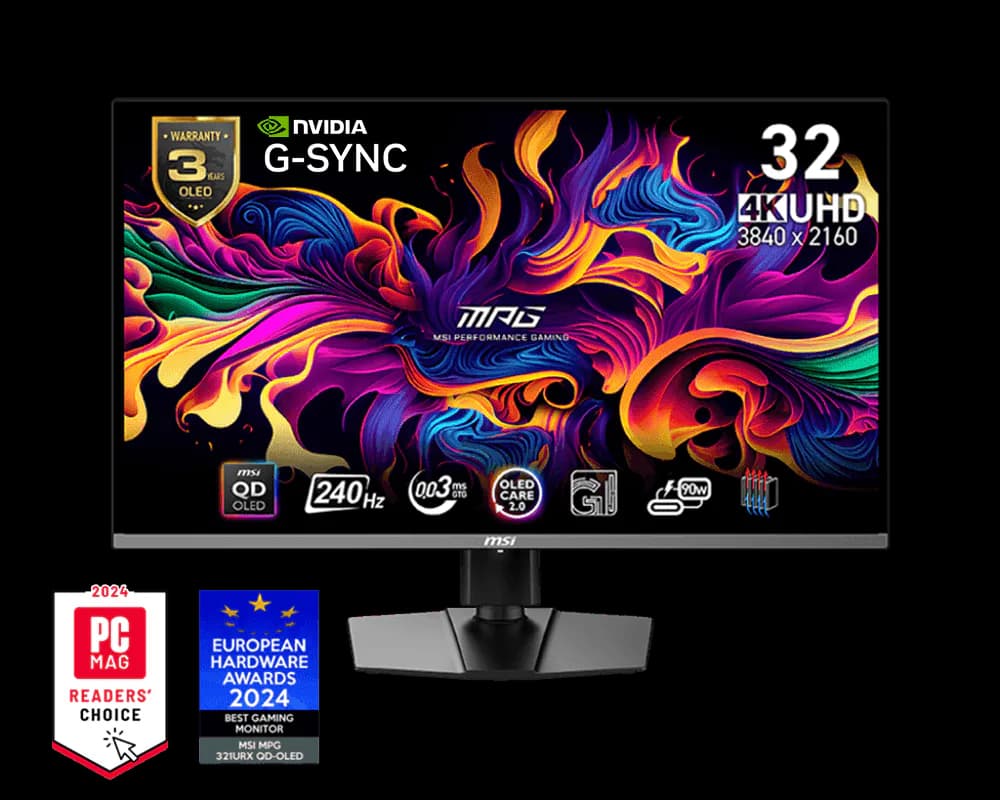
At $1,099, it's priced identically to the 32-inch Alienware AW3225QF and a full $100 more than the 32-inch MSI MPG 321URX. That's not an accident — ASUS isn't selling you more screen for the money, it's selling you a fundamentally different value proposition: density over scale.
The performance story here is less about any single number and more about how completely OLED removes the usual gaming-monitor compromises. RTINGS calls it plainly: "The ASUS ROG Swift OLED PG27UCDM is a premium gaming monitor. It's one of the first to come out with a 4k, 240Hz 27 inch QD-OLED panel." That combination — full 4K resolution, 240Hz refresh, and OLED's per-pixel self-emission — used to force a choice. This panel doesn't ask you to make one.
Tom's Hardware's testing backs that up point by point: video processing is, in its words, "OLED-excellent with perfect motion resolution at all frame rates above 150fps," with no hesitation or blur even when the test rig held frame rates above 220. Out-of-the-box color and grayscale accuracy earned a "Pros" callout in the same review — a detail that matters because it means you're not required to spend hours calibrating a $1,099 monitor before it looks right. Contrast, per Tom's Hardware's measurement methodology, is effectively "unmeasurable" — OLED's true blacks simply don't register against a light meter the way an LCD's do, which is a roundabout way of saying blacks are as close to perfect as this category gets.
DisplayPort 2.1 is the quieter but arguably more important story. It's the bandwidth headroom needed to drive 4K at 240Hz at full 10-bit color without leaning on compression — a future-proofing move that the MSI MPG 321URX, still on DisplayPort 1.4, doesn't offer. Today's GPUs can already saturate this panel over existing connections, but DP 2.1 is what keeps this monitor from becoming the bottleneck two GPU generations from now.
This is the best 27-inch 4K OLED gaming monitor on the market, not a universal winner, and the honest reasons to look elsewhere are specific:
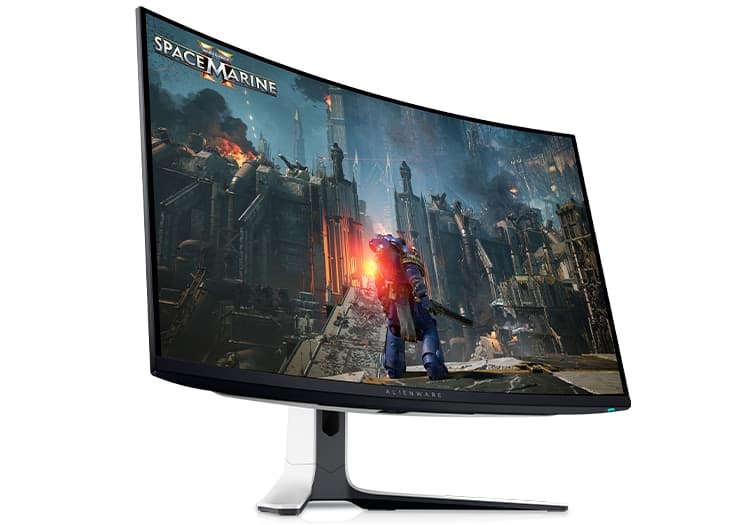
The two closest rivals on the list sit directly beneath it, and both make a real case for themselves. The MSI MPG 321URX is PC Gamer's 2026 top pick and the value anchor of the category: a 32-inch 4K QD-OLED at 240Hz for $999, with a built-in KVM switch and USB-C power delivery, but DisplayPort 1.4 instead of 2.1 and no Dolby Vision. PC Gamer's verdict was blunt: "Except this one's cheaper and every bit as good as the competition." The Alienware AW3225QF, at the same $1,099 price as the ASUS, is the pick for buyers who want 32-inch scale, a 1700R curve, and Dolby Vision all together — Tom's Hardware calls it "the absolute best gaming monitor on the market" overall, though its curve and comparatively modest ~250-nit SDR brightness are trade-offs of their own.
None of the three is strictly better than the others — they're solving for different priorities. The ASUS wins the "sharpest possible image, flat panel, no curve" question outright; the MSI wins on price; the Alienware wins on scale-plus-curve-plus-Dolby-Vision. If density and a future-proofed connection standard matter most to you, the PG27UCDM is the unambiguous pick.
A 9.4, reflecting a near-unanimous critical consensus (95 expert score against 92 from the community) that this is the reference-class 27-inch OLED gaming monitor of 2026. Tom's Hardware summed it up as well as anyone could: "The Asus ROG Swift PG27UCDM is a premium purchase to be sure but it truly embraces the mantra, 'you never regret buying the best.'" Buy it if you want the sharpest 4K image at OLED speed and don't need a bigger or curved screen to feel immersed — that combination, at this price, exists here and nowhere else on the list.
For buyers who want the sharpest 27-inch gaming display money can buy, yes. It ranks first on Gavler's Best Gaming Monitors list with a 9.4, built on a 4th-generation Samsung QD-OLED panel running 4K at 240Hz with 0.03ms response and Dolby Vision HDR. At 1,099 dollars it's a premium purchase, and the honest caveat is that you need a genuinely fast GPU to push 4K at 240Hz — but the panel itself, and the pixel density it delivers at 27 inches, is close to unmatched.
Buy the MSI if screen size and price matter more to you than pixel density — it's a 32-inch 4K QD-OLED at 999 dollars with a built-in KVM switch, though it runs DisplayPort 1.4 instead of 2.1 and skips Dolby Vision. Buy the ASUS if you want the sharper, denser image a 27-inch 4K panel produces (roughly 166 PPI versus the MSI's 140), plus Dolby Vision and DisplayPort 2.1's extra bandwidth headroom. Neither is wrong; they're solving for different desks.
Both are 1,099 dollars, both use 4th-generation QD-OLED, and both support Dolby Vision — the decision comes down to size and shape. The Alienware is 32 inches with a 1700R curve, built for buyers who want scale and immersion. The ASUS is 27 inches and flat, built for buyers who want maximum sharpness and prefer a monitor they can also use for desktop work without a curve distorting straight lines. Tom's Hardware calls the Alienware its overall best gaming monitor; it calls the ASUS the pick for anyone who wants 'the very best OLED technology has to offer' in a 27-inch footprint.
Not on day one, but it matters for the monitor's lifespan. DisplayPort 2.1's UHBR20 bandwidth is what lets a future GPU drive 4K at 240Hz at full 10-bit color without relying on compression. Today's cards can already max out this panel over existing connections, but DP 2.1 is the reason this monitor won't feel bandwidth-limited two or three GPU generations from now — while 32-inch rivals stuck on DisplayPort 1.4 will.
Not for the audience this monitor is built for. 4K at 27 inches produces around 166 pixels per inch, noticeably sharper than a 32-inch 4K panel's roughly 140 PPI — text, UI elements, and fine in-game detail all render more crisply at normal desk distances. If you specifically want the visual scale of a bigger screen, the 32-inch MSI or Alienware options on this list are the better fit; if you want the sharpest image at a given resolution, 27 inches is the better math.
Prices checked regularly
90-day price history
Steady at $1,099 for the entire 90-day tracking window — no increases, no discounts, across 91 tracked days.
Tracked daily across retailers. Vote Want itabove and we’ll alert you the moment the price drops.
Some links are affiliate links — Gavler may earn a commission. This never affects rankings or scores. Learn more.
A 26.5" 3840x2160 panel yields roughly 166 PPI — the highest pixel density of any OLED on this list — sharpening text and fine game detail.
The 240Hz refresh rate paired with a 0.03ms grey-to-grey response delivers near-instant pixel transitions and minimal motion blur in fast games.
A built-in custom heatsink dissipates panel heat to reduce burn-in risk, backed by a 3-year warranty that covers OLED burn-in.
Reviewers near-unanimously rate it among the best 27" gaming monitors of 2026 for its 4K QD-OLED sharpness and speed; the main caveats are the $1,099 premium and the high-end GPU needed to drive 4K at 240Hz.
Do you think ASUS ROG Swift PG27UCDM deserves the #1 spot in Best Gaming Monitors?
“The Asus ROG Swift PG27UCDM is a premium purchase to be sure but it truly embraces the mantra, 'you never regret buying the best.'”
“The ASUS ROG Swift OLED PG27UCDM is a premium gaming monitor. It's one of the first to come out with a 4k, 240Hz 27 inch QD-OLED panel.”
Watch
Hand-picked from creators we trust — playable inline.
RGB Stripe Is the Best OLED Tech You Can Get - ASUS ROG OLED PG32UCWM
See how other top picks compare in this category.
A 540Hz hangtag is the wrong first question. Start with 1440p vs 4K, then IPS vs OLED vs size. Then shop Gavler's live ranking.
TCL just unveiled its 32X3B and 27X3B OLED monitors and is building a fab to crack the panel duopoly. Here's what it means for OLED monitor prices.
The Gigabyte MO27U2 is a 27-inch 4K 240Hz QD-OLED for $649 — a panel class that debuted above $1,300. A real price-floor moment, with trade-offs to match.
Two 4K 240Hz QD-OLED gaming monitors, same resolution, very different sizes — and a price gap that blew open in 2026. Here's which one to buy.
ASUS ROG, MSI, Alienware, Samsung, LG. Gavler ranks the best gaming monitors of 2026 — 4K OLED, 1440p OLED, ultrawide, and budget picks, by tier.