The Best Smart Video Doorbells in 2026, Ranked by the People Who Watch Them Every Day
Nest, Ring, Eufy, Aqara, Logitech, Arlo, Wyze. The smart doorbells worth buying in 2026 — by ecosystem, resolution, package detection, and subscription reality.
Published June 2026 — Amazon Prime Day is T-12. Below: the smart video doorbells from Gavler's Best Smart Doorbells list worth buying right now, ranked by community vote and sorted by what the doorbell needs to do.
The smart doorbell category finally stratified cleanly in 2026. Google's October 2025 Nest Doorbell (Wired, 3rd Gen) reset the wired flagship benchmark with a 2K square sensor and the first meaningful AI rollout on the platform — Gemini for Home, generating natural-language event descriptions through Nest Aware. Ring countered with the Wired Doorbell Pro 3rd Gen and a real 4K Retinal sensor with 10x zoom that holds package-label legibility from across the porch. Eufy's E340 quietly became the no-subscription default for buyers who refuse Ring Protect or Nest Aware monthly fees, on the strength of a dual-camera design that pairs a 2K front camera with a dedicated 1080p down-facing sensor for porch packages. CNET named Arlo's Video Doorbell 2K 2nd Gen its overall favorite at the sub-$130 price tier. And the HomeKit story finally has two honest answers — Aqara's G4 for dual-ecosystem households, Logitech's Circle View for Apple-only homes.
What follows are the doorbells from Gavler's Best Smart Doorbells list worth buying for the 2026 summer, ranked by community vote and sorted by what the doorbell actually needs to do — work with your existing smart home, verify package deliveries, or stay off a subscription bill.
The Wired Default — Google Nest Doorbell (Wired, 3rd Gen) $179
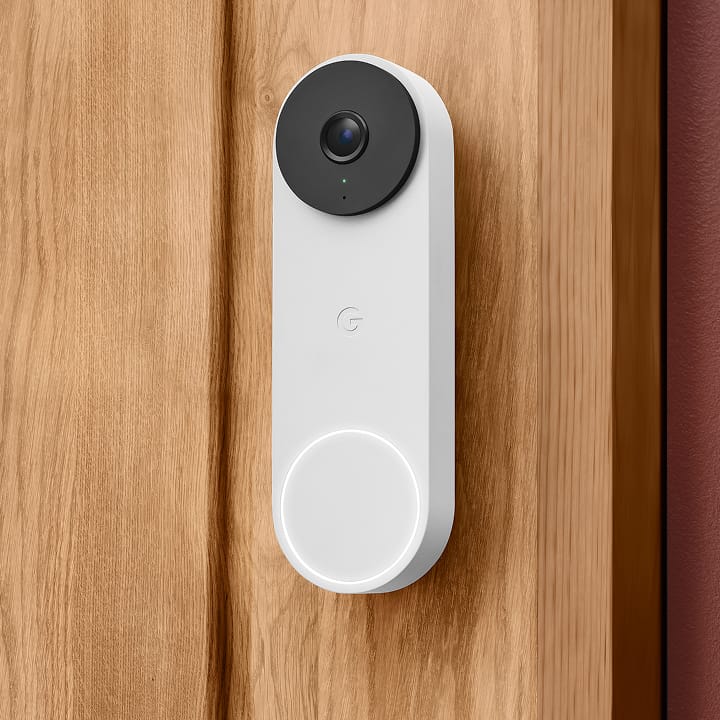
Google Nest Doorbell (Wired, 3rd Gen)
Google Nest Doorbell (Wired, 3rd Gen) — 2K square sensor (1:1, 166° FOV), upgraded night vision, Gemini for Home AI features rolling out early 2026. Wirecutter top pick 2026.
This is the doorbell to buy if you do not have a reason to buy something else. Wirecutter's new top pick. Tom's Guide's best overall. The October 2025 hardware refresh upgraded the sensor from 960p to a 2K 1:1 square sensor at 2048 by 2048 pixels with a 166-degree diagonal field of view, which means the same single camera captures both a visitor's face and a package on the porch without the vertical distortion that older 16:9 wide-FOV doorbells produce. Long-term testing flagged it as the most accurate motion-event detector on the market, with reviewers reporting it never missed an event across months of daily use.
The Nest Doorbell ranks first on Gavler with a 9.4 community score. The Gemini for Home AI rollout layers natural-language event search on top of Nest Aware — ask the app "did anyone deliver a package this morning" instead of scrolling timeline thumbnails. The catch is the same catch Nest has always had: most of the best features sit behind Nest Aware at $8 to $15 per month. For buyers committed to the Google ecosystem — Nest Hub, Google Home routines, Familiar Faces — that subscription is the price of admission to a system that meaningfully outperforms its competitors at the questions a doorbell is supposed to answer. The default pick.
The Ring Battery Flagship — Ring Battery Doorbell Pro $230
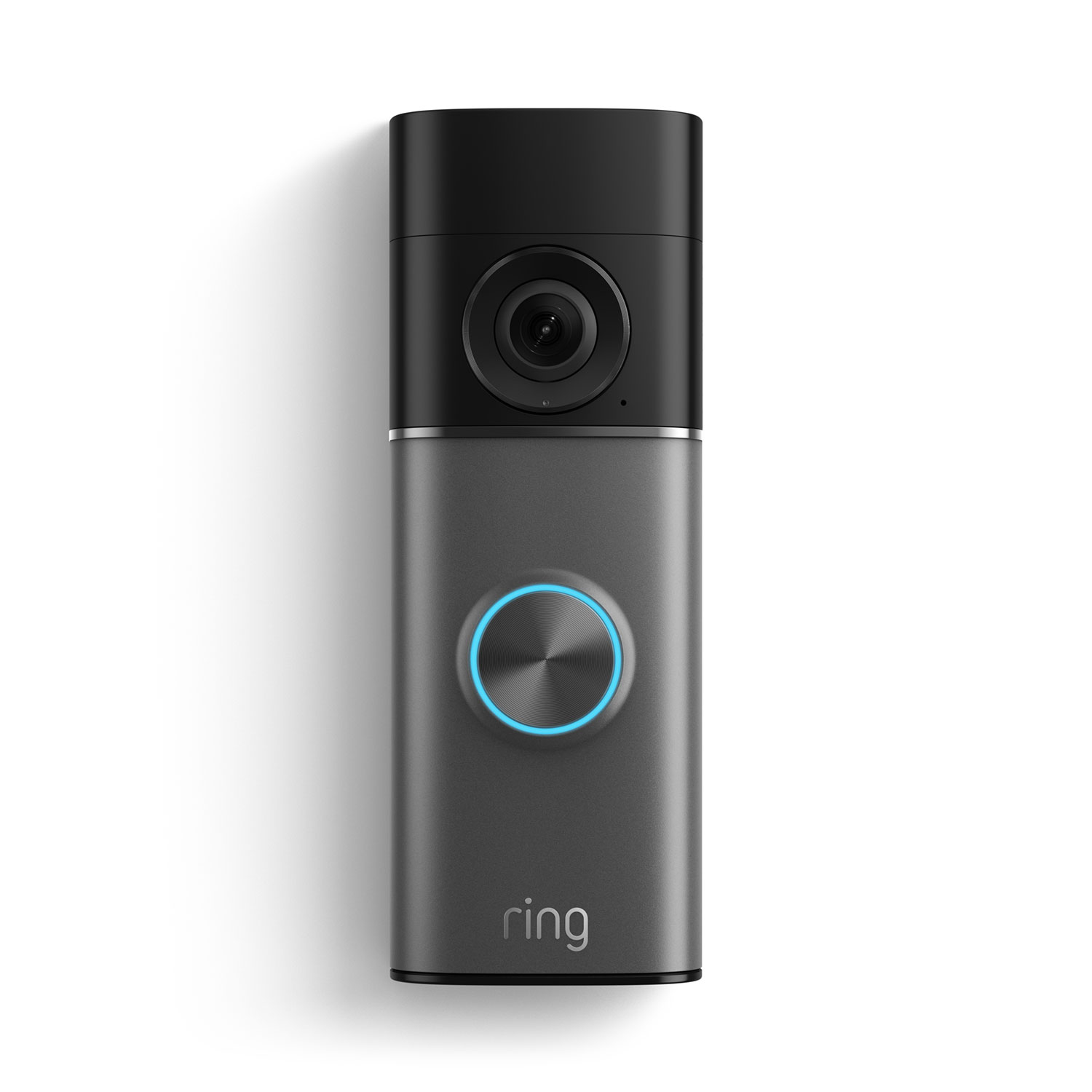
Ring Battery Doorbell Pro
Ring Battery Doorbell Pro — Retinal 2K resolution, radar-powered 3D Motion Detection with Bird's Eye View, Audio+ two-way conversations, quick-release Ultra battery.
If you want into the Ring ecosystem without doorbell wiring, this is the pick. The Battery Doorbell Pro is Ring's premium battery flagship: Retinal 2K resolution (Ring's marketing name for an enhanced 2K stream with a low-light-optimized sensor), radar-powered 3D Motion Detection that maps visitor position with actual depth instead of a 2D bounding box, and the Bird's Eye View overlay that traces visitor paths across a top-down site map of your porch. Audio+ delivers clearer two-way conversations than the older Ring audio stack, and the quick-release Ultra battery means swaps in under 60 seconds without removing the unit from its mount.
The Battery Doorbell Pro ranks second on Gavler with a 9.2 community score. The Bird's Eye View feature is the Ring-exclusive differentiator versus Eufy, Aqara, and Wyze — useful if you want to understand visitor approach patterns rather than just confirm a single event. It pairs naturally with the rest of the Ring lineup: Ring Alarm, Ring Spotlight Cams, and the Echo Hub for whole-house notifications. The honest trade-off is Ring Protect at $4.99 to $10 per month for video history, which Ring effectively requires for the doorbell to do more than live view. For buyers committed to Ring and without working doorbell wiring, the right pick.
The 4K Maximalist — Ring Wired Doorbell Pro (3rd Gen) $250
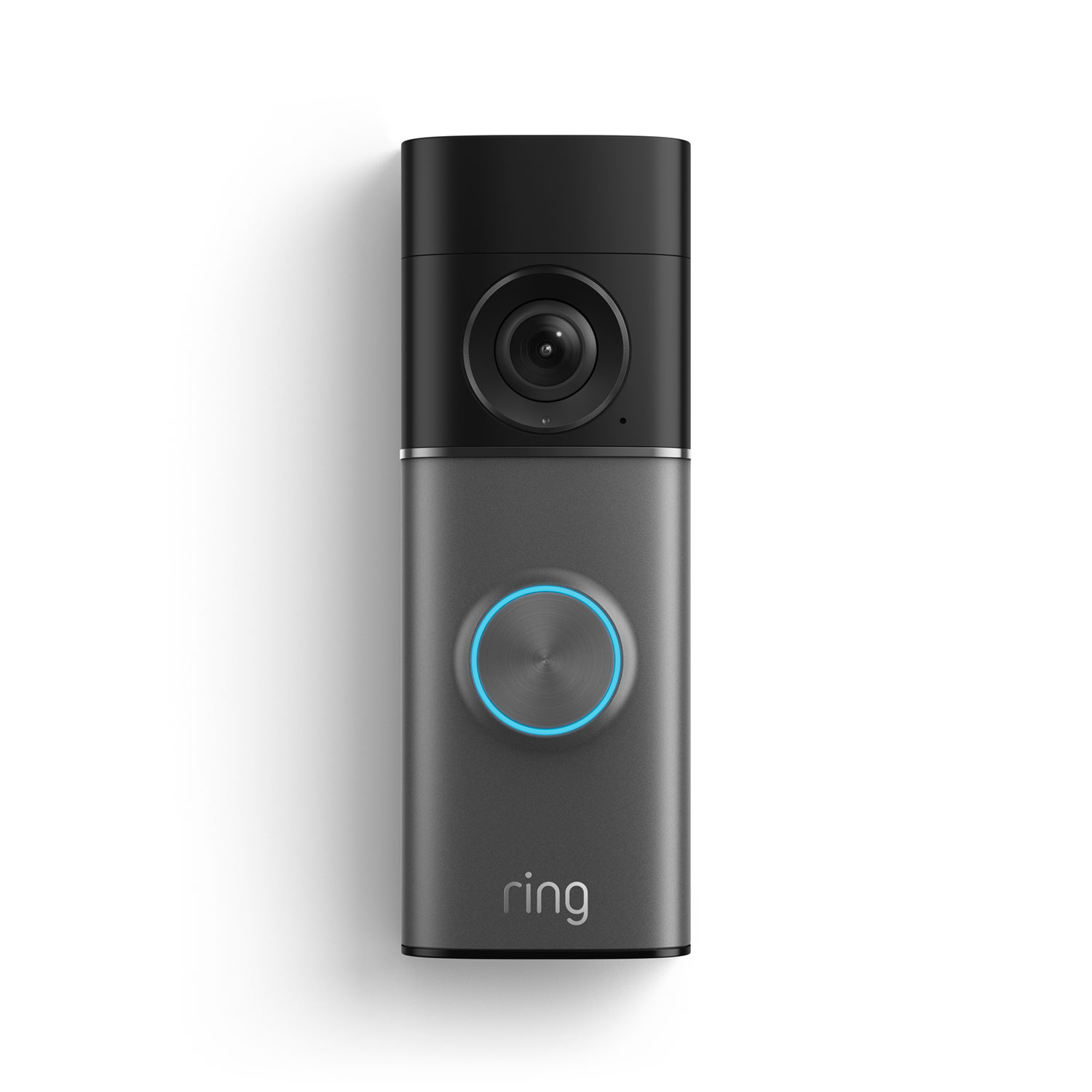
Ring Wired Doorbell Pro (3rd Gen)
Ring Wired Doorbell Pro (3rd Gen) — Retinal 4K resolution, 10× zoom that holds package-label detail, Low-Light Sight color in near-dark, 3D Motion Detection + Bird's Eye View. Wired install.
The highest-resolution doorbell on the mainstream market in 2026. Ring's Fall 2025 hardware refresh introduced Retinal 4K with a 10x zoom that preserves package-label legibility at distance — meaningfully more useful than the digital zoom every other doorbell at this tier ships with. Low-Light Sight renders usable color information in near-dark conditions where competitor doorbells either go monochrome or lose detail entirely. The same 3D Motion Detection and Bird's Eye View overlay from the Battery Pro carries forward. Currently street-priced around $199 on Amazon ahead of Prime Day, off the $249.99 MSRP.
The Wired Pro 3rd Gen ranks third with a 9.0 community score. Tom's Guide called the 4K jump a huge difference versus the 2nd Gen, and the in-the-field reviews back the claim — visitor faces at the property line are now identifiable rather than ambiguous. The positioning versus the Nest 3rd Gen is the resolution-versus-ecosystem question: Ring wins on resolution and zoom, Nest wins on Google Home integration and Familiar Faces accuracy. For buyers who care most about video evidence quality and are already in the Ring or Echo ecosystem, this is the right premium wired pick.
The Dual-Ecosystem HomeKit Pick — Aqara G4 $120
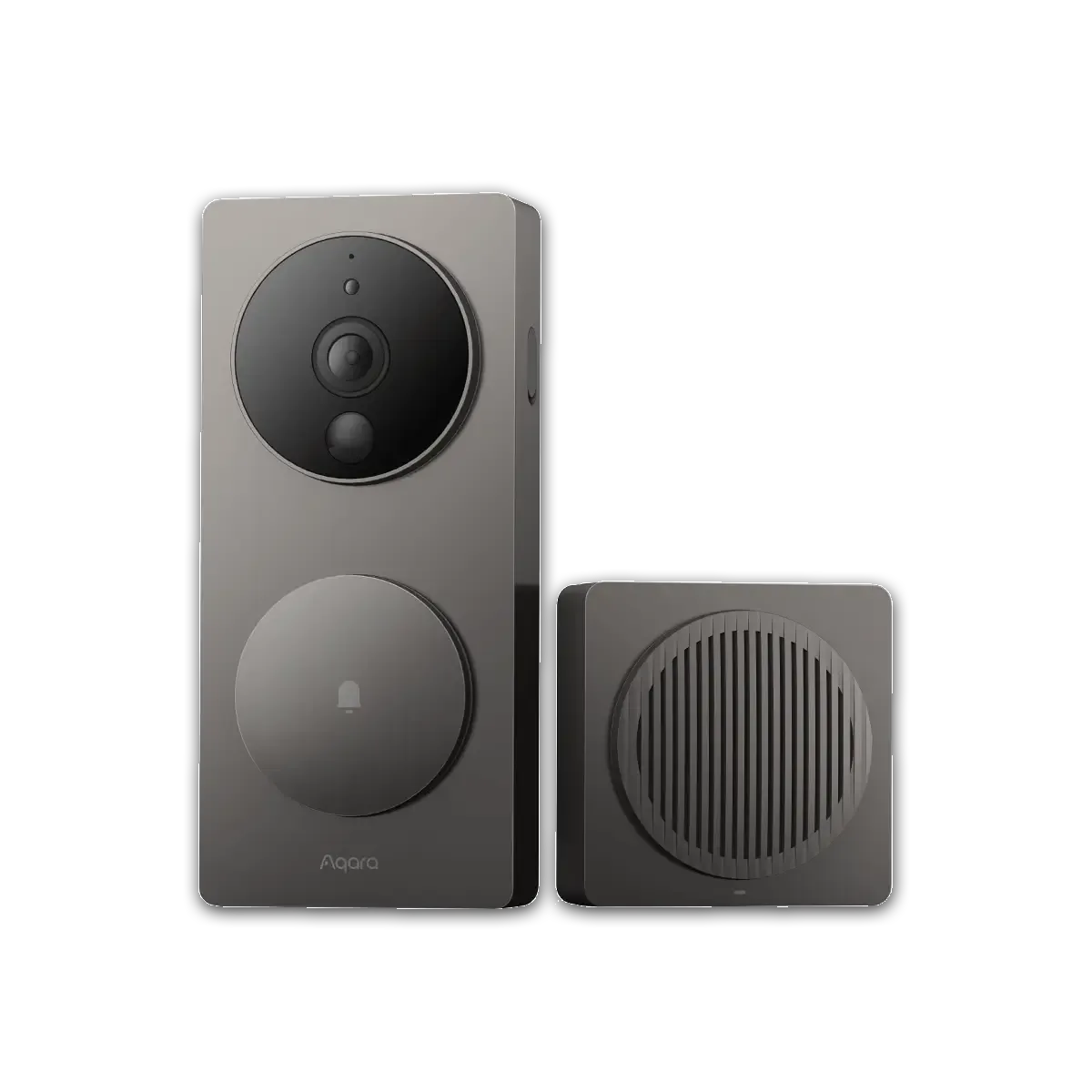
Aqara G4 Smart Video Doorbell
Aqara G4 Smart Video Doorbell — one of few battery-powered video doorbells with native HKSV; also works with Alexa, Google, and IFTTT. Local facial recognition, no required subscription.
The Aqara G4 is the HomeKit Secure Video reference battery doorbell. Most HomeKit-compatible doorbells are wired-only — the Logitech Circle View below is the obvious example — and the G4 is one of very few battery-powered doorbells that supports native HKSV with encrypted iCloud video storage through Apple's service. The unlock is that the same hardware also works natively with Alexa, Google Home, and IFTTT, so a household with an iPhone, an Echo speaker, and a Google Nest Hub can drive the same doorbell from any of the three.
The G4 ranks fourth on Gavler with an 8.8 community score. Local on-device face recognition supports up to 100 named faces with custom event labels — "Mom is at the door" notifications without paying for Nest Aware Familiar Faces. No required subscription: video stores locally on the included chime base via microSD up to 512GB, and HKSV plans (included with iCloud+) cover the cloud-encrypted storage path for HomeKit households. The build feels less premium than the Ring or Nest hardware, but for the price and the ecosystem flexibility, nothing else competes.
The No-Subscription Champion — Eufy Security Video Doorbell E340 $180
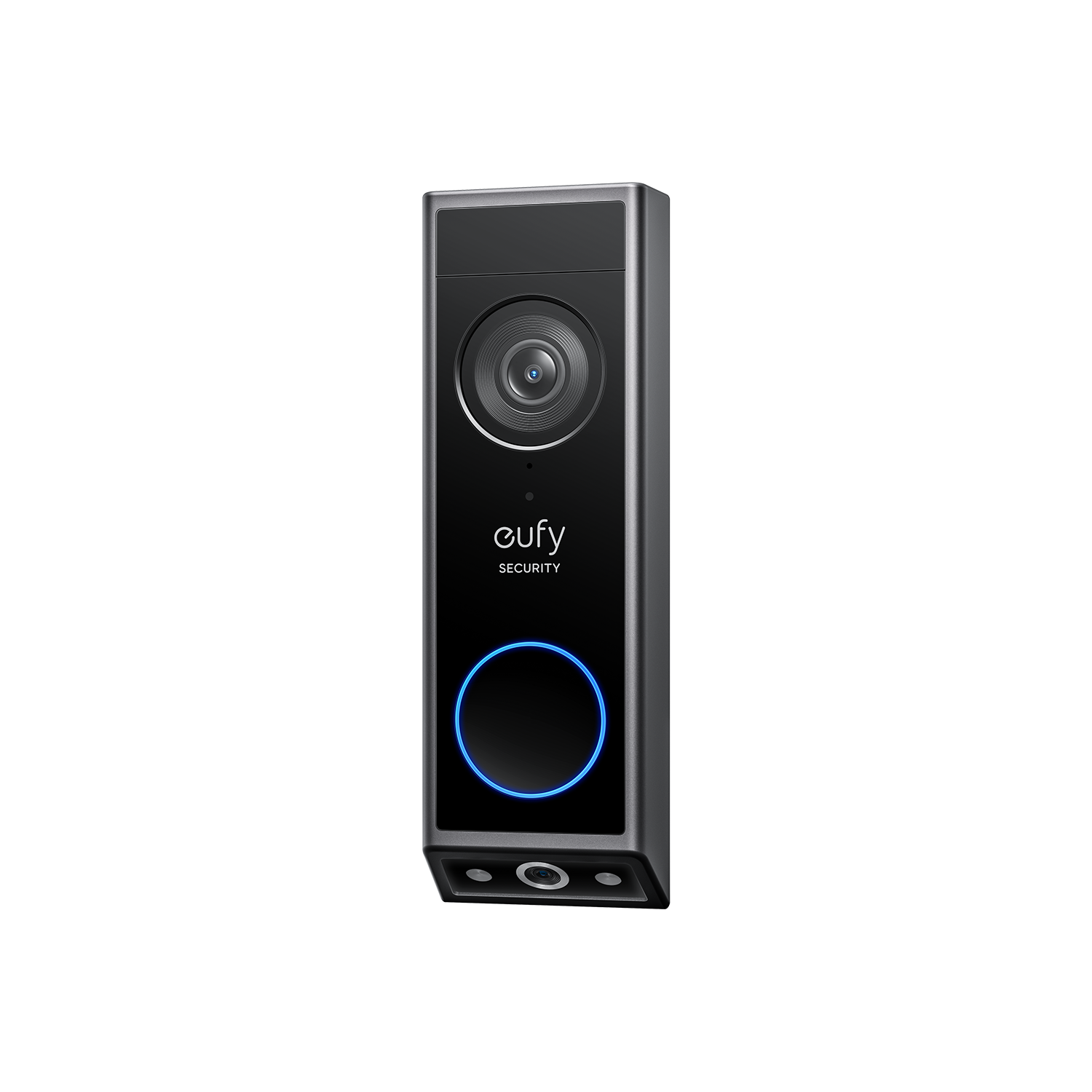
Eufy Security Video Doorbell E340
Eufy Security Video Doorbell E340 — dual-camera (4K front + 1080p down-facing for porch packages), local HomeBase storage, no required subscription. Best-in-class package detection.
The E340 is the right pick for buyers who refuse to pay monthly cloud fees. The headline feature is the dual-camera design: a 2K front-facing sensor handles visitor identification and porch monitoring at standing eye level, and a separate 1080p down-facing sensor watches the ground-level porch zone where packages actually land. Most competitors use a single high-mounted camera with a wide vertical FOV that distorts package framing; the E340's dedicated second sensor produces clean unwarped footage that meaningfully outperforms competitors at verifying deliveries.
The E340 ranks fifth with an 8.6 community score. Independent testing scored its package-detection success around 73 percent, with most misses on low-contrast packages that blended into the porch floor — best in class at the price. Local storage runs through the Eufy HomeBase 3 (16GB onboard, USB-expandable to 2TB) and all motion classification — people, packages, unknown faces — runs on the HomeBase device itself, with optional cloud backup as a paid add-on rather than the required subscription Ring and Nest impose. Works with Alexa and Google Home but not HomeKit. For package-verification primary use cases and subscription-averse buyers, the right pick.
The Apple-Purist Pick — Logitech Circle View Doorbell $200
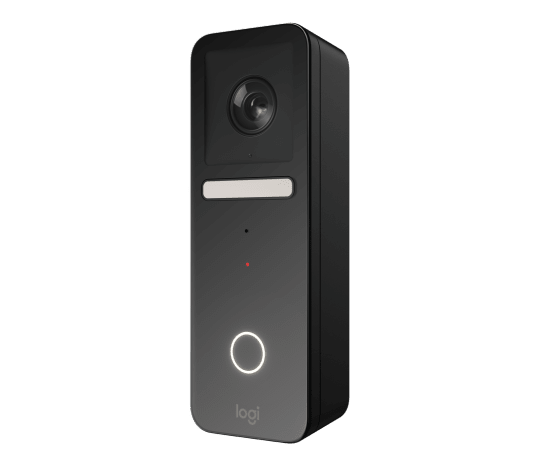
Logitech Circle View Doorbell
Logitech Circle View Doorbell — HomeKit-exclusive wired doorbell with native HKSV, face recognition, head-to-toe HD with 160° vertical view, color night vision.
The Logitech Circle View is the cleanest HomeKit-exclusive wired pick. Native HomeKit Secure Video means encrypted video storage through Apple's iCloud+ HKSV plan (one plan covers up to five cameras), face recognition runs through the on-device Apple Photos library with no third-party cloud dependency, and the entire device-management surface lives inside the Apple Home app — no separate vendor app to maintain.
The Circle View ranks sixth with an 8.4 community score. The positioning versus the dual-ecosystem Aqara G4 is the HomeKit-purity question: the Circle View is the purer HomeKit pick because there is no separate vendor app and no Alexa or Google compatibility cluttering the experience, while the G4 is the better dual-ecosystem pick when Apple, Alexa, and Google all coexist in the same house. Head-to-toe HD with a 160-degree vertical FOV captures the full porch frame from visitor face down to ground-level package, and color night vision delivers usable detail in low-light. For fully-Apple households where HomeKit is the only smart-home control surface, this is the right call.
The CNET Overall Favorite — Arlo Video Doorbell 2K (2nd Gen) $129
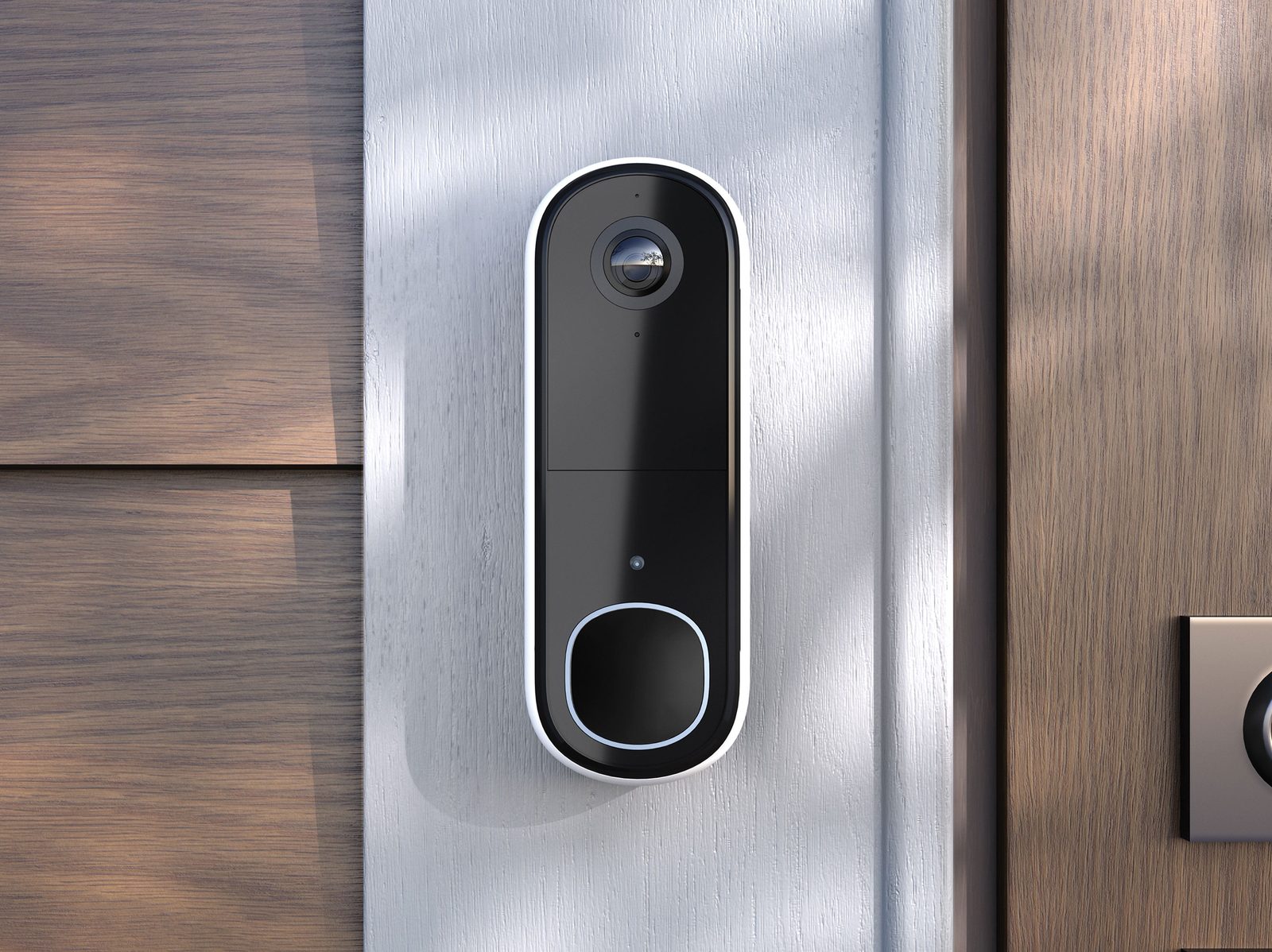
Arlo Video Doorbell 2K (2nd Gen)
Arlo Video Doorbell 2K (2nd Gen) — 1944×1944 square sensor, 180° diagonal FOV, IP65 weather sealing, built-in siren, battery-or-wired flexibility.
CNET's overall favorite for 2026 and PCMag's Best Overall at the sub-$130 tier. The headline spec is a 1944 by 1944 square sensor that captures head-to-toe visitor framing without the vertical distortion of standard 16:9 wide-FOV doorbell sensors, and a 180-degree diagonal field of view that is the widest at this price. IP65 weather sealing — dust-tight and protected against water jets from any direction — makes it the right pick for exposed or partially-sheltered porches where weather durability matters more than headline resolution.
The Arlo 2K ranks seventh with an 8.2 community score. The dual-mode install flexibility is the meaningful differentiator at this price: the included rechargeable battery delivers 4 to 6 months of typical use, and the doorbell can be wired to existing transformer power for continuous operation without replacing the hardware. Built-in siren — loud enough to deter visitors mid-event — is a rare feature at this price. The catch is Arlo Secure at $3 to $13 per month for video history beyond live view. For CNET-validated quality and dual-mode flexibility without committing to Ring or Nest, the right pick.
The Google Battery Pick — Google Nest Doorbell (Battery) $180
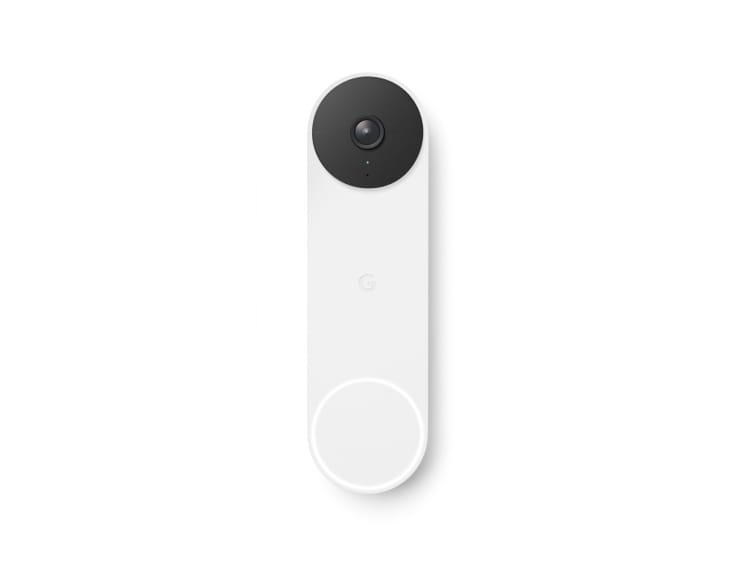
Google Nest Doorbell (Battery)
Google Nest Doorbell (Battery) — battery flexibility with Google's video quality and Familiar Faces with Nest Aware. The right Google pick when wiring isn't available.
Same Google ecosystem as the Wired 3rd Gen at the top of this list, in a battery-powered chassis that installs anywhere in 15 minutes without doorbell wiring. Familiar Faces with Nest Aware, on-device people/packages/vehicles/animals classification, Google Assistant integration through Nest Hub and Nest Audio, and the same rolling Gemini for Home feature stack carry forward. The Battery is the right Google pick when the front door does not have functional doorbell transformer wiring — apartments, rental units, certain newer construction.
The Battery Doorbell ranks eighth with an 8.0 community score. The trade-off versus the Wired 3rd Gen is recharge cadence — every 1 to 6 months depending on motion volume — and slightly slower motion-event wake time. The ecosystem advantage versus Ring's battery picks is the same as the wired model: Familiar Faces with Nest Aware is meaningfully better than Ring's generic motion classification. For buyers committed to Google and without working wiring, the right call.
The Ring Entry-Tier — Ring Battery Video Doorbell (2024) $99
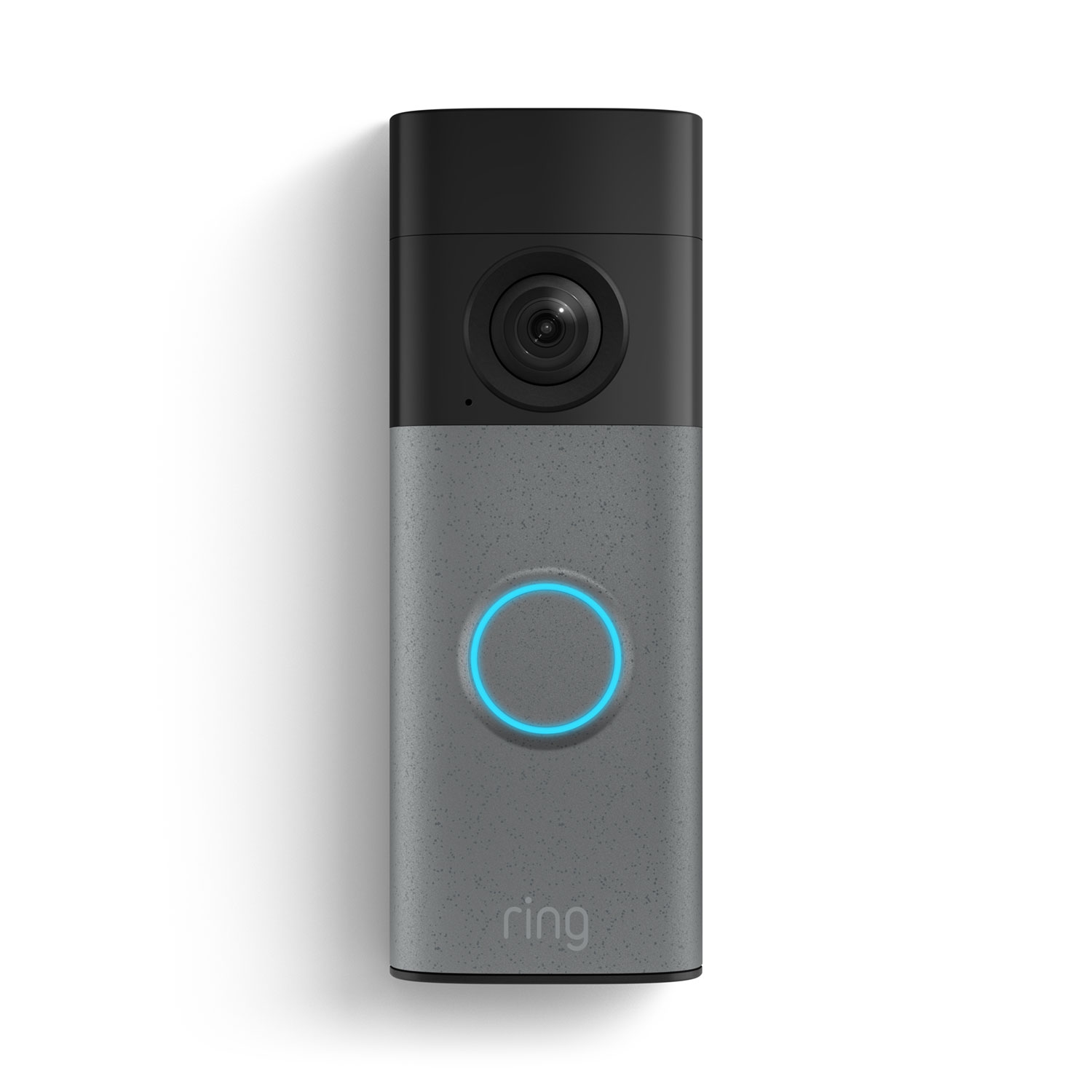
Ring Battery Video Doorbell (2024)
Ring Battery Video Doorbell (2024) — 1440p HD head-to-toe (1:1 square), color night vision, USB-C charging, full Ring app feature set. Sub-$100 entry to the Ring ecosystem.
Ring's 2024 entry-tier battery doorbell and the sub-$100 entry point to the Ring ecosystem. The full Ring app feature set carries forward — Live View, Two-Way Talk, Motion Alerts, Quick Replies, Ring Alarm integration — at half the price of the Battery Doorbell Pro at the top of this list. The trade-down versus the Pro is meaningful: 1440p HD instead of Retinal 2K, no radar-powered 3D Motion Detection, no Bird's Eye View overlay. What you do get is a 1:1 square aspect ratio that captures the full porch frame, color night vision, and USB-C charging — the cleanest charging interface across the Ring battery line.
The 2024 Battery ranks ninth with a 7.8 community score. The 150 by 150-degree square FOV is the widest at the sub-$100 tier. Requires Ring Protect at $4.99 to $10 per month for video history beyond live view. For buyers who want into the Ring ecosystem at the lowest viable entry price and do not need the premium radar features, this is the right pick — pairs naturally with new Echo and Echo Hub households moving into Ring.
The Value Workhorse — Wyze Video Doorbell Pro $99
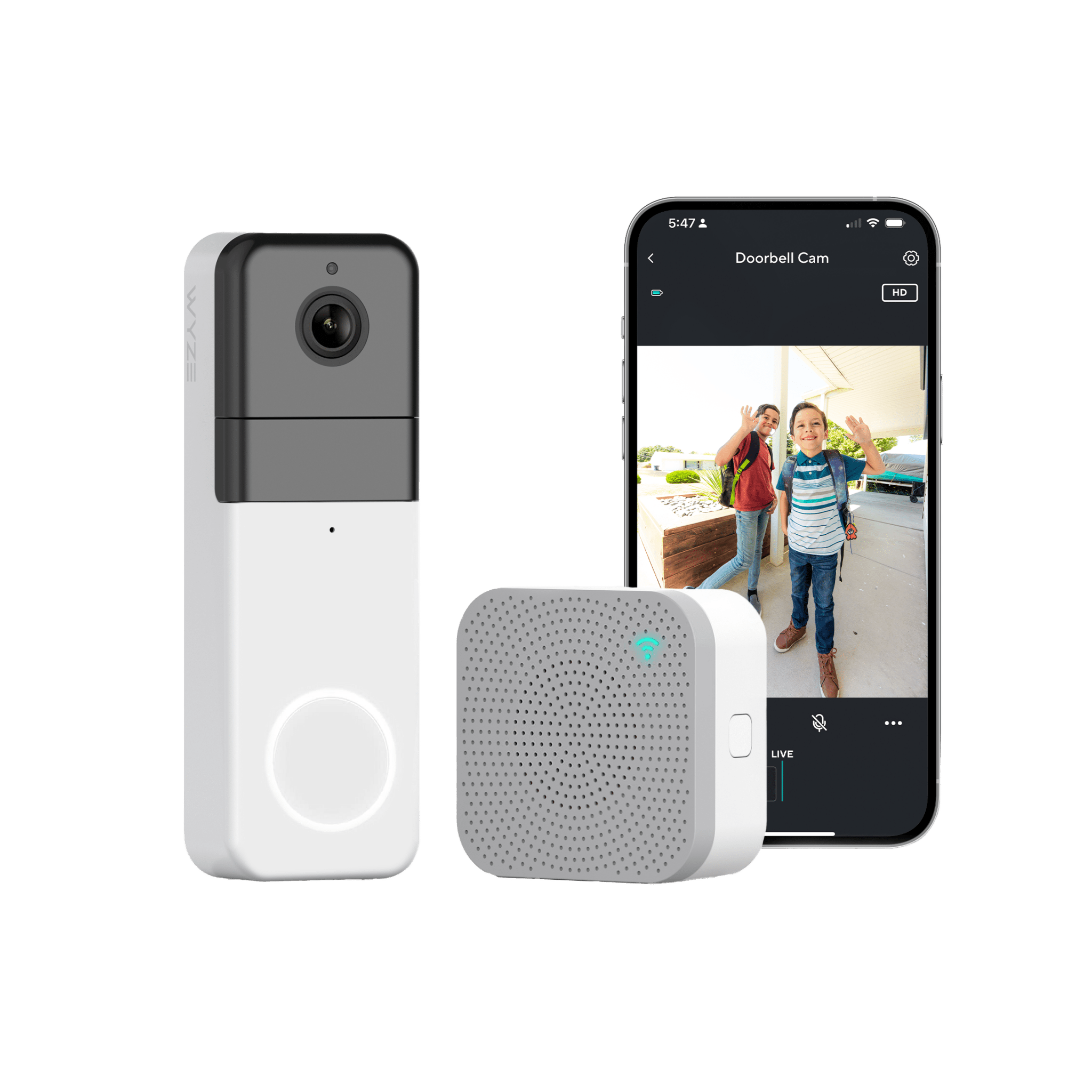
Wyze Video Doorbell Pro
Wyze Video Doorbell Pro — up-to-180-day battery, 150°×150° square FOV, optional wiring, includes Wyze Chime Pro. Under-$100 wireless that punches above its tier.
The Wyze Video Doorbell Pro is the value-tier wireless workhorse. The headline spec is up to 180 days of battery life — the longest on this list and roughly 2 to 3 times the typical battery-doorbell recharge cycle, which means installation and forget-about-it for six months at a time in low-motion environments. The 150 by 150-degree square FOV captures head-to-toe visitor framing plus ground-level package zone, optional wiring lets buyers add transformer power later for never-recharge operation, and the included Wyze Chime Pro — the in-home audio receiver — is a meaningful bundled add versus competitors who sell their chime separately for $30 to $50.
The Wyze ranks tenth with a 7.6 community score. Works natively with Alexa and Google Home but not HomeKit. Wyze Cam Plus at $2 to $3 per month is the cheapest cloud-storage subscription on this list — required for video history beyond live view. The trade-off versus the Ring Battery 2024 at the same price is the ecosystem-narrower-than-leaders question: Ring has the deeper smart-home story, Wyze has the longer battery and cheaper subscription. The right pick when battery longevity and the lowest subscription cost beat Ring's ecosystem advantage.
Which One Should You Buy?
If you have working doorbell wiring and want the best default, the Google Nest Doorbell (Wired, 3rd Gen) is the answer — Wirecutter and Tom's Guide both name it best overall. If maximum video resolution matters more than ecosystem polish, the Ring Wired Doorbell Pro (3rd Gen) is the 4K upgrade with the only 10x zoom in the category. Without existing wiring, the Ring Battery Doorbell Pro is the Ring premium pick, and the Google Nest Doorbell (Battery) is the Google ecosystem answer.
For Apple households, the choice splits clean: Aqara G4 for dual-ecosystem flexibility, Logitech Circle View for HomeKit-purity. For buyers who refuse monthly subscriptions, the Eufy E340 is the package-detection champion and the no-subscription default. For the sub-$130 CNET overall favorite with battery-or-wired flexibility, the Arlo Video Doorbell 2K (2nd Gen). And for the value tier, the Ring Battery Video Doorbell (2024) is the cheapest credible Ring entry, while the Wyze Video Doorbell Pro wins on 180-day battery and the cheapest cloud-storage subscription.
Cast your vote and see where the community ranks each doorbell on the full Best Smart Doorbells list — or browse the rest of the Home & Kitchen coverage for adjacent smart-home picks, including the Best Smart Thermostats and the Best Mesh WiFi Systems to keep the doorbell connected.
See all 10 products ranked by the community
Best Smart Doorbells
See Full Rankings →187 community votes cast
Common Questions
For most buyers, the Google Nest Doorbell (Wired, 3rd Gen) at $179 is the consensus pick. Wirecutter named it the new top pick after long-term testing showed it never missed an event, and the October 2025 refresh added a 2K square sensor with a 1:1 aspect ratio and 166-degree diagonal field of view that captures both a visitor's face and packages at the door without the vertical distortion older wide-FOV doorbells produce. Tom's Guide also ranks it best overall. The Gemini for Home AI rollout adds natural-language search across motion events through Nest Aware. The closest alternatives are the Arlo Video Doorbell 2K (2nd Gen) — CNET's overall favorite at $129 — for buyers who want dual-mode wired-or-battery flexibility, and the Eufy E340 at $180 for buyers who refuse monthly subscriptions.
Wired if you have functional doorbell transformer wiring, battery if you do not. The decision is almost entirely practical. Wired doorbells like the Nest 3rd Gen and Ring Wired Doorbell Pro 3rd Gen draw continuous 16-24V transformer power, which means no recharge cycles ever, instant motion-event wake, and reliably faster live-view streaming. Battery doorbells like the Ring Battery Doorbell Pro and Google Nest Doorbell Battery handle 1-6 months between charges depending on motion volume but install anywhere in 15 minutes without an electrician. Apartments, rentals, and homes without existing chime wiring need a battery doorbell. Homes with working doorbell wiring should choose wired — every wired pick on this list outperforms its battery sibling on wake-time and reliability.
Three picks on this list support Apple HomeKit Secure Video natively: the Aqara G4 at $120 (battery, also works with Alexa and Google), the Logitech Circle View at $200 (wired, HomeKit-exclusive), and a small number of older Aqara models. The Aqara G4 is the right pick for households that mix Apple devices with Alexa or Google, because the same hardware serves all three ecosystems. The Logitech Circle View is the right pick for fully-Apple households where Apple Home is the only smart-home control surface — the integration is cleaner because there is no separate vendor app to manage. Ring, Nest, Eufy, Arlo, and Wyze doorbells do not support native HomeKit; they require third-party bridges like Homebridge to integrate, which most HomeKit users will not want to maintain.
Eufy and Aqara are the two no-subscription answers. The Eufy E340 stores video locally on its HomeBase 3 — 16GB onboard with USB expansion up to 2TB — and all motion classification runs on the HomeBase device itself, no cloud account required. The Aqara G4 stores video locally on its included chime base via microSD (up to 512GB) and runs on-device face recognition with no recurring fees. Ring and Nest are the opposite: Ring Protect ($4.99-10/month) and Nest Aware ($8-15/month) are effectively required for video history and the advanced features both brands advertise — without them you get live view, basic motion alerts, and not much else. Wyze sits in between at $2-3/month for Cam Plus, the cheapest cloud option here. Logitech Circle View uses Apple's HKSV plan, included with iCloud+, which covers up to five cameras.
It depends on the doorbell. The Eufy E340 is the package-detection champion because of its dedicated 1080p down-facing camera angled directly at the porch zone where packages land. Single-camera doorbells use a wide vertical field of view that distorts package framing; the E340's second sensor produces clean unwarped footage of the package zone. Independent testing showed package detection success around 73 percent, with most misses on low-contrast deliveries that blended into the porch floor — best in class at this price. Nest's Familiar Faces and package classification through Nest Aware are also strong, but the single-sensor framing is less reliable than the E340's dual-camera approach. For buyers whose primary use case is verifying deliveries, the E340 is the right pick.
Yes. Amazon Prime Day 2026 runs June 23-26, and smart doorbells are one of the more consistently discounted categories on the event. The Ring Wired Doorbell Pro 3rd Gen has already been seen at $199 on Amazon versus the $249.99 MSRP. Ring, Nest, and Eufy all participate in Prime Day pricing every year, and the inventory window typically holds through the event. The other natural discount windows are Black Friday and the back-to-school period through August. The worst time to shop is the two weeks after a major hardware refresh — the new model commands MSRP and the outgoing model often sells out before broader discounts hit.
Rankings come from community votes by people who actually live with these doorbells. Each person gets one vote on the Best Smart Doorbells list, judging the question every buyer cares about: does this thing alert you to the right things, ignore the wrong things, and integrate with the rest of your smart home without becoming a daily annoyance? The roster spans from a $99 budget battery to a $250 4K wired flagship, judged on the same question rather than separated by price tier. No affiliate commissions or manufacturer sponsorships influence the order, and the expert and community scores sit next to each pick on the live list.
Products Mentioned
Jump to the full ranking and community verdict for each pick named above.
- Google Nest Doorbell (Wired, 3rd Gen)Home & Kitchen · Best Smart Doorbells
- Ring Battery Doorbell ProHome & Kitchen · Best Smart Doorbells
- Ring Wired Doorbell Pro (3rd Gen)Home & Kitchen · Best Smart Doorbells
- Eufy Security Video Doorbell E340Home & Kitchen · Best Smart Doorbells
- Logitech Circle View DoorbellHome & Kitchen · Best Smart Doorbells
- Arlo Video Doorbell 2K (2nd Gen)Home & Kitchen · Best Smart Doorbells
- Google Nest Doorbell (Battery)Home & Kitchen · Best Smart Doorbells
- Ring Battery Video Doorbell (2024)Home & Kitchen · Best Smart Doorbells
- Wyze Video Doorbell ProHome & Kitchen · Best Smart Doorbells