The Best Road Bikes in 2026, Ranked by the Riders Who Race Them and Climb Them and Suffer on Them Every Sunday
Specialized, Trek, Cervélo, Canyon, Pinarello, Cannondale. The road bikes worth racing, climbing, and gifting — ranked by riders, not press releases.
Published June 2026 — Father's Day is Sunday June 21, which makes this the right week to think about road bikes seriously. Below: the picks from Gavler's Best Road Bikes list ranked by riders who own them, and the ones to actually consider gifting (or being gifted).
The 2026 road-bike landscape has finally stopped pretending that there is still a divide between aero bikes and lightweight bikes. Specialized's Tarmac SL8 is the bike that closed the gap most credibly — a sub-700-gram frame that holds its own against the Madone in wind-tunnel sessions and against the R5 on Alpine climbs. Trek's Gen 8 Madone refined the IsoFlow comfort window and gained eight watts of aero efficiency. Cervélo's new R5 went the other direction: a 5.97-kg climbing specialist that won the 2025 Tour de France Femmes yellow jersey under Pauline Ferrand-Prévot. The result is a market where the top six road bikes are genuinely different from each other — and the right pick depends entirely on where you ride.
This brief lands in the lead-up to Father's Day weekend, which is Sunday June 21 — three days before Amazon's Prime Day window opens on June 23. The picks below are pulled from the live Best Road Bikes list, ranked by riders who own these bikes and live with them on real roads. Every pick links back to its position on the community ranking.
How the Rankings Work
One vote per person on the Best Road Bikes list. Pick the bike you would take to your Sunday group ride tomorrow morning — the one you trust on the descent that scares everyone else, the one that climbs the local KOM without making you hate the climb, the one that handles a 90-mile route without breaking your back. Switched bikes after a demo day exposed a flaw, after a long-term test confirmed you were on the wrong platform, or after a bike fit changed your mind? Move your vote. The result is a community-curated ranking grounded in lived experience, not press-release hype.
The Top Picks
Specialized Tarmac SL8 — The All-Arounder Benchmark
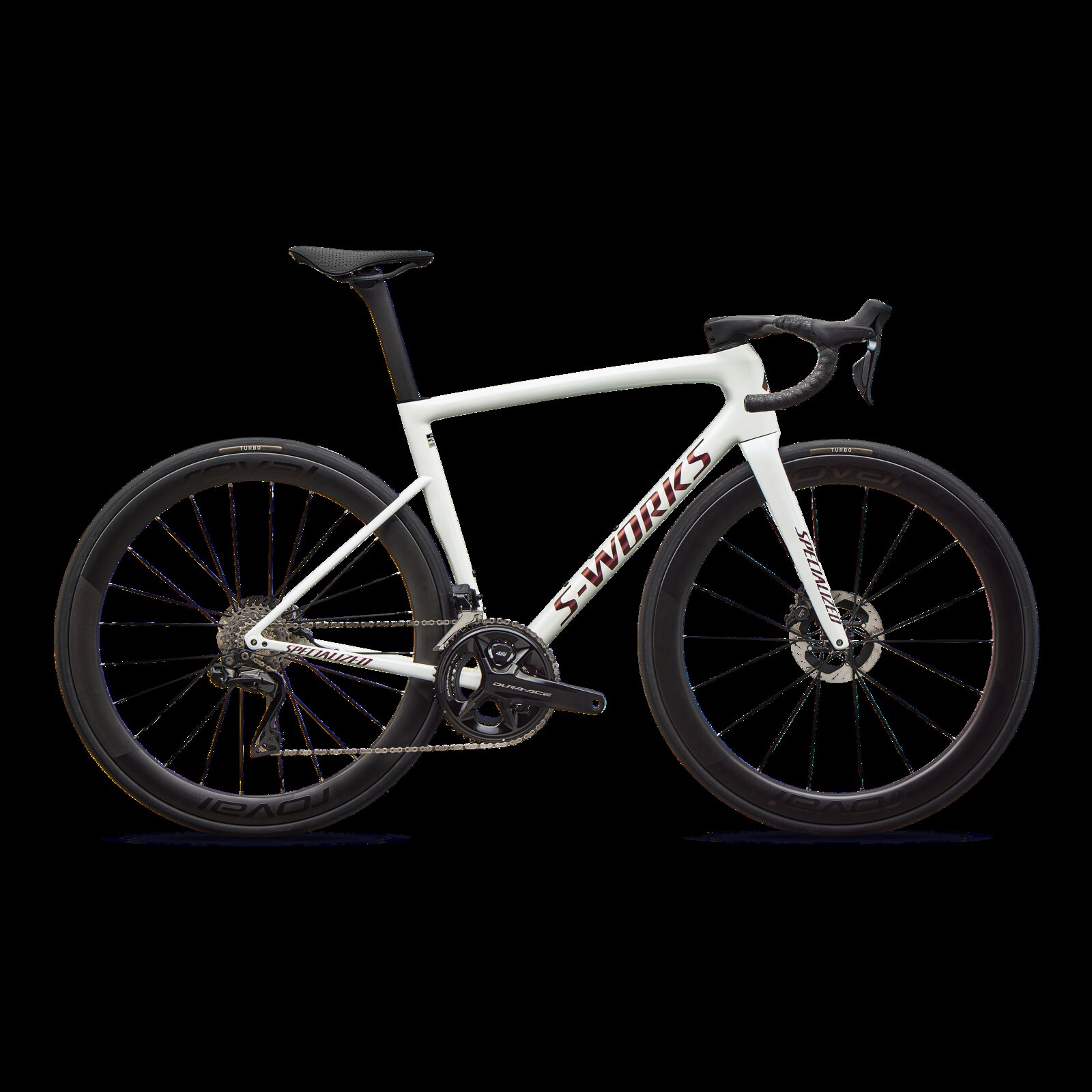
Specialized Tarmac SL8
The Tarmac SL8 merges the aero advantages of the Venge with the climbing prowess of the SL7 into a single platform. The S-Works frame weighs a claimed 685 grams in size 56 and the bike handles like a scalpel through descents and switchbacks alike.
Amazon affiliate · price subject to change
The Tarmac SL8 is the bike that finally erased the aero-versus-lightweight choice that defined the previous decade of road racing. The S-Works frame weighs a claimed 685 grams in size 56 thanks to Specialized's FACT 12r carbon and Rider-First Engineering, and the truncated airfoil tube shapes generate the aerodynamic efficiency previously reserved for dedicated aero frames. Cyclingnews logged more than 3,200 km on the SL8 across three months of testing and described it as climbing like a pure lightweight, sprinting like a dedicated aero bike, and descending with unshakeable confidence — the rare bike that does not give up anything to specialize in one thing.
For 2026 Specialized has kept the formula largely unchanged. The updates are subtle: new colorways, refined component spec on the higher trims, and integration of Apple Find My tracking through the 4iiii power meter on the Dura-Ace build. The Tarmac is the bike to buy if you ride mixed routes — flats, climbs, and descents in roughly equal measure — and you want one machine that gives up nothing across that range. The S-Works Dura-Ace Di2 at $12,500 is the top trim; the Tarmac SL8 Pro at $6,500 with SRAM Force AXS is the spec most riders actually buy. Top-ranked on Gavler with a 9.7 community score.
Trek Madone SLR 9 — The Refined Aero Race Weapon
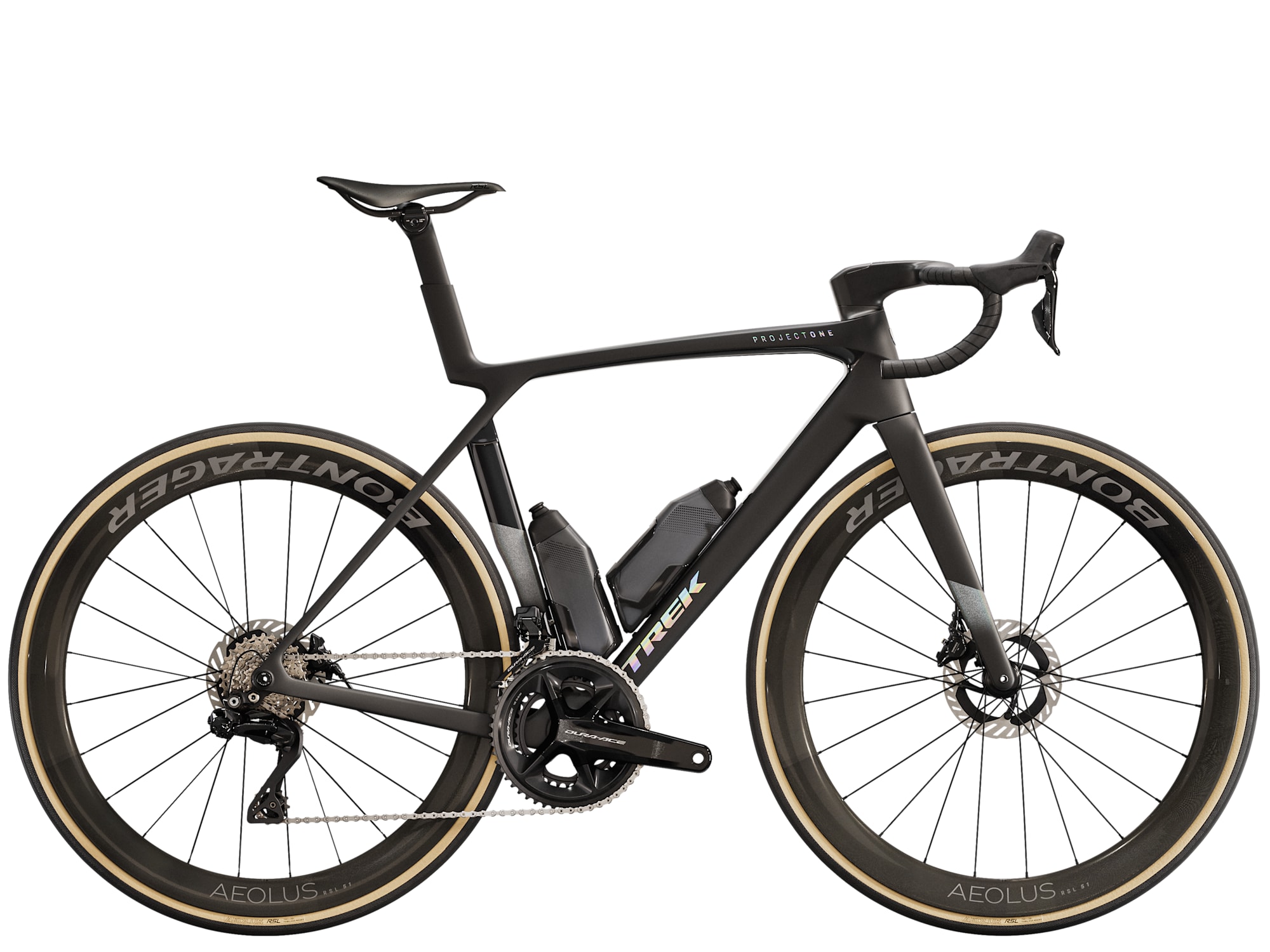
Trek Madone SLR 9
Trek's IsoFlow rear decoupler absorbs road chatter without sacrificing watt transfer, making the Gen 8 Madone the most comfortable aero race bike on the WorldTour. Full internal cable routing and a narrower integrated cockpit keep the frontal profile razor-clean.
Amazon affiliate · price subject to change
The 2026 Gen 8 Madone SLR 9 is Trek's most refined attempt yet at making an aero road bike comfortable enough to ride on a six-hour Sunday. The IsoFlow rear decoupler — the compliance window cut directly through the seat tube — has been redesigned with what Trek calls Adaptive Compliance, a system that adjusts flex characteristics based on input force, and the revised aerodynamic profile carries narrower tube sections and a new dropped seatstay junction. Trek claims eight watts of savings at 45 km/h over the Gen 7 Madone. Gran Fondo described the Gen 8 as the most comfortable aero race bike on the market, and Cyclist's review highlighted how the IsoFlow window preserves the Madone's characteristic comfort without softening its sharp aero feel.
The 2026 Madone also gains 32 mm tire clearance, up from 28 mm on the prior generation — a quietly significant change that puts the Madone in conversation with the lighter all-roaders for mixed-surface riding. A 7.05-kg race-ready complete weight at the SLR 9 trim is genuinely competitive with lightweight specialists at this price tier. The Madone is the bike to buy if you live in flat-to-rolling terrain, you do criteriums or flat road races, or you regularly find yourself doing solo breakaways and long pulls into the wind. Ranked second on Gavler with a 9.5 community score.
Cervélo R5 — The Pure Climber
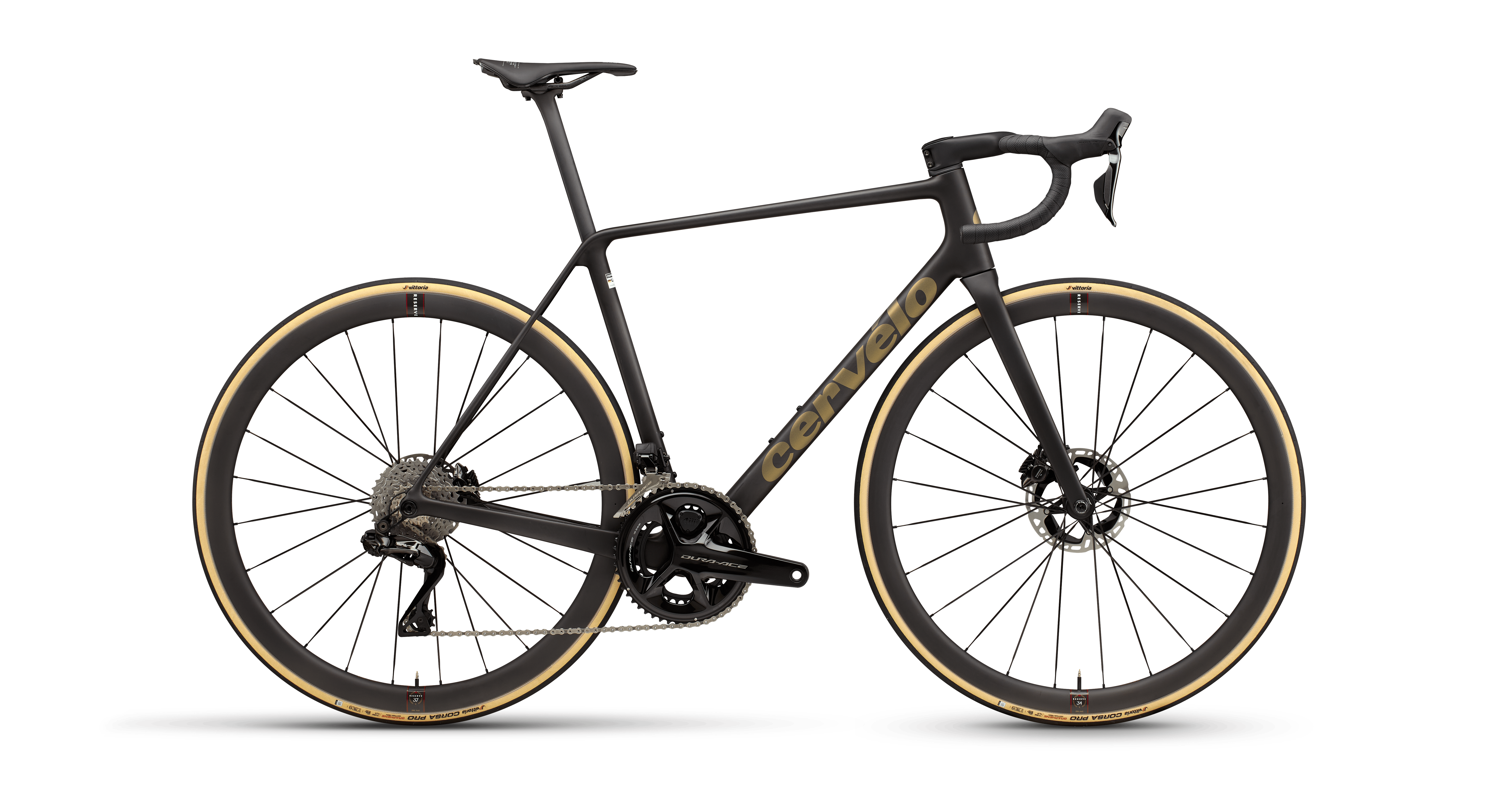
Cervelo R5
Cervélo's pure climbing frame — the 2026 R5 hits 5.97 kg complete and uses truncated airfoil tubes for measured aero gains without the weight penalty. Pauline Ferrand-Prévot rode it to a Tour de France Femmes yellow jersey on the Col de la Madeleine.
Amazon affiliate · price subject to change
The 2026 Cervélo R5 is the bike for the rider whose Sundays involve elevation. The redesign brief was simple and ruthless: come in under 6 kilograms complete and concede nothing on stiffness. Cervélo nailed both targets — the top-tier build hits 5.97 kg complete, the lightest R5 ever produced, and the frame's lateral stiffness numbers match or exceed the outgoing platform. The truncated airfoil tube shaping that Cervélo introduced on the R5 a decade ago carries forward, but the priority order is unambiguous: weight first, stiffness second, aero third.
Pauline Ferrand-Prévot rode the new R5 to a Tour de France Femmes yellow jersey in 2025, putting in a blistering attack on the Col de la Madeleine that gained more than two and a half minutes on her rivals. Gran Fondo's first-ride review described the bike as snappy and almost effortless on the steep pitches that punish heavier rivals, with quick stabs at the pedals producing immediate acceleration. The R5 is unapologetically a climber's bike — if your weekly route involves alpine passes, hill repeats, or a chase up your local KOM, this is the right tool. If you ride flat terrain into headwinds, you will be happier on a Madone or Aeroad. Third on Gavler with a 9.4 community score.
Canyon Aeroad CFR — The Direct-to-Consumer Aero Steal
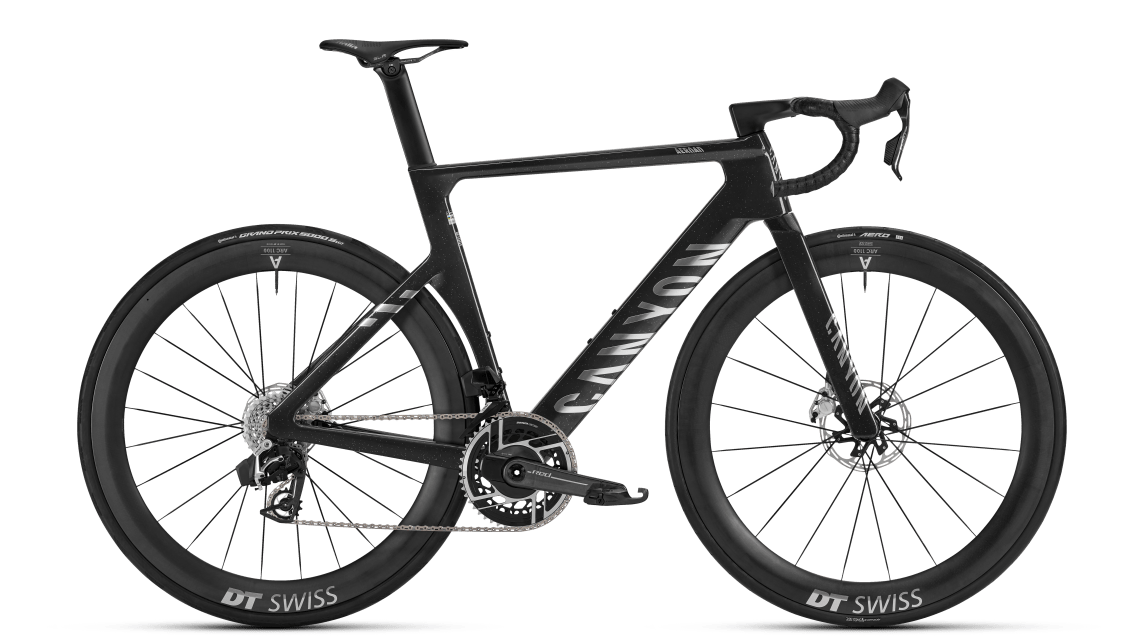
Canyon Aeroad CFR
Canyon's direct-to-consumer model delivers WorldTour-proven carbon at thousands less than dealer-brand rivals. The Aeroad CFR's 960-gram frame, ENVE SES wheels, and adjustable CP0018 cockpit make it the value pick of the aero category.
Amazon affiliate · price subject to change
The Canyon Aeroad CFR is the bike that proves direct-to-consumer pricing genuinely works at the WorldTour spec tier. Cycling Weekly called it "all the aero, none of the hassle." Mathieu van der Poel rides one. The CFR frame weighs a claimed 960 grams, the ENVE SES wheels are a meaningful upgrade over the dealer-brand stock spec, and the CP0018 integrated cockpit offers a 40-mm range of width adjustment plus full height changes without cutting the fork steerer — a feature that matters more than it sounds for riders who change positions seasonally. TOUR Magazine independently measured 204 watts of drag at 45 km/h, which puts the Aeroad in the same tier as the Madone and the Tarmac SL8 for pure aerodynamic efficiency.
The catch is the dealer model. You order online, the bike ships to your door in a box, and you assemble it yourself with the included tools. Canyon's customer service has improved over the past three years, but warranty claims and complex service still require shipping the bike back rather than walking into a local shop. The reward is straightforward: the same WorldTour-grade carbon and Dura-Ace components for roughly $4,000 less than comparable dealer-brand offerings. Fourth on Gavler with a 9.3 community score.
Pinarello Dogma F — The Heritage Race Bike
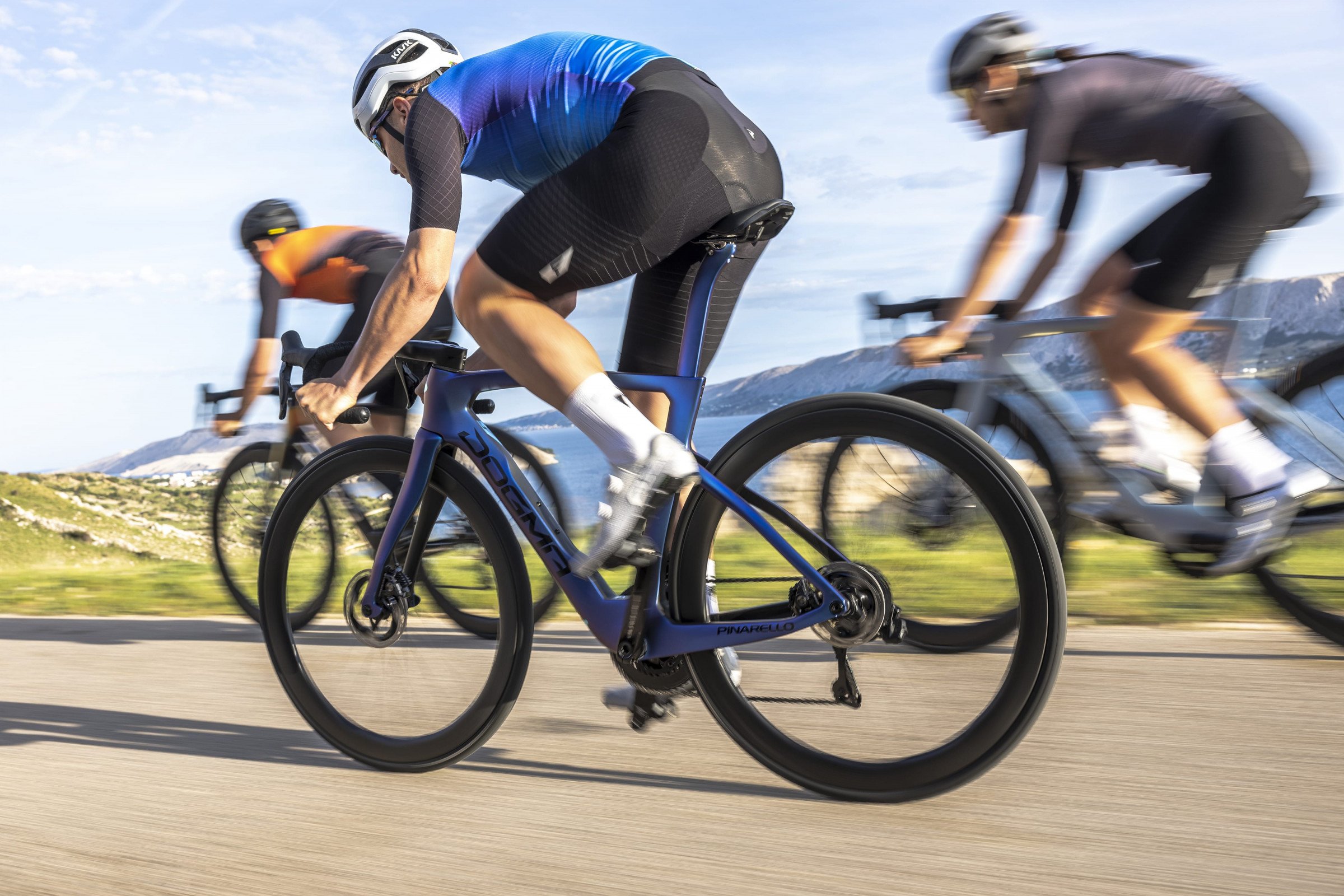
Pinarello Dogma F
The Dogma F's asymmetric frame design accounts for drivetrain forces other manufacturers compensate for indirectly. The 2026 update drops the frame to 790 g in size 53 — the lineage that has won 7 Tour de France overall victories since 2012.
Amazon affiliate · price subject to change
The Pinarello Dogma F is the bike Tour de France winners have ridden since 2012, and the 2026 update keeps that lineage intact. Pinarello applied a refined Torayca T1100 carbon layup across the entire frame for 2026, claiming a 38-gram weight reduction over the 2025 model while maintaining the stiffness figures, and the frame now hits 790 grams in size 53 with a 350-gram fork. The asymmetric frame design — the long-standing Dogma F signature — accounts for drivetrain forces that other manufacturers compensate for indirectly, producing the characteristic balanced feel that has won INEOS Grenadiers and prior teams seven Tour de France overall victories and more than forty Grand Tour stage wins.
Cyclonline's review described high-frequency vibration damping as superior to almost all direct competitors, with surgical corner-entry precision and high-speed stability that holds up across rough asphalt and crosswinds. The Dogma F is the bike you buy if you want the heritage and the prestige along with the performance — and you have the budget to admit it. At $14,000 in the Dura-Ace build, it is one of the most expensive road bikes on this list. The buyer pool for the Dogma F is narrow: serious enthusiasts who race or train at intensity, riders who want a bike that signals what it signals, and dads with grown-up incomes. Fifth on Gavler with a 9.1 community score.
Canyon Aeroad CFR vs Canyon Ultimate CFR — The Direct-to-Consumer Climber Alternative
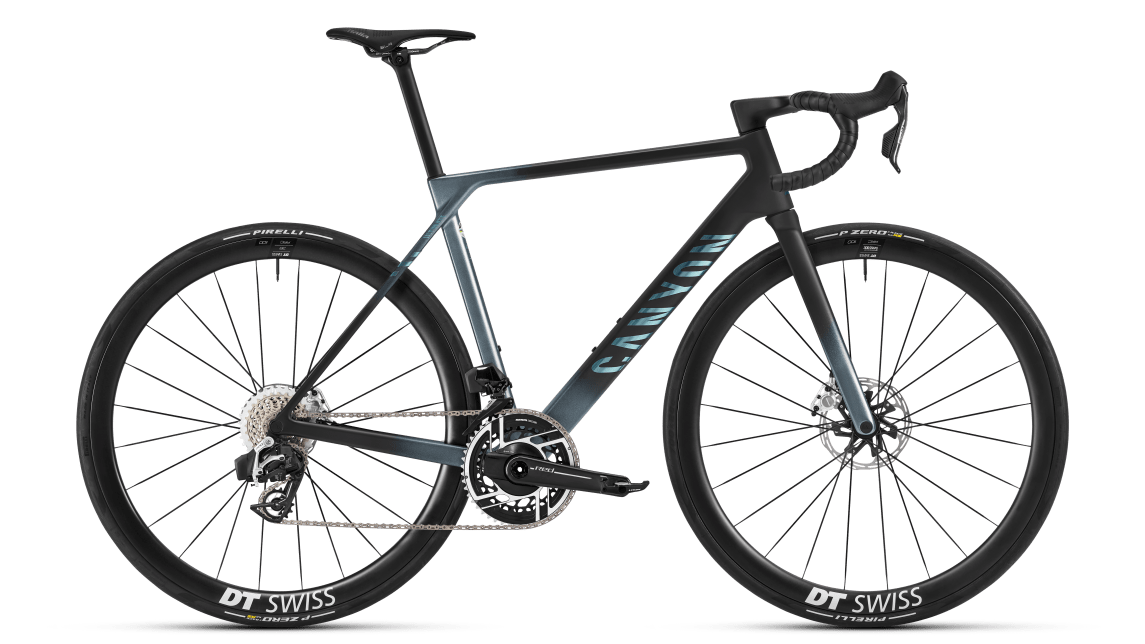
Canyon Ultimate CFR
The lightest road bike under $8,000. The 835g CFR carbon frame and ultra-high-modulus carbon fiber construction put the Ultimate CFR at the UCI weight limit of 6.8 kg in race-ready trim, undercutting comparable Tarmac SL8 and Cervélo R5 builds by thousands.
Amazon affiliate · price subject to change
The Canyon Ultimate CFR is the lightweight twin to the Aeroad CFR — Canyon's direct-to-consumer answer to the Cervélo R5 and the lightweight Tarmac trims. The Ultimate CFR frame comes in at under 750 grams, and the $7,999 SRAM Red AXS build is roughly $3,000 less than equivalent dealer-brand alternatives. For riders who want a dedicated climbing specialist at direct-to-consumer pricing, this is the strongest case in the category — and it sits in Gavler's top ten at a 8.5 community score. The trade-off is the same as every other Canyon: you assemble the bike from the box, and warranty claims involve shipping rather than a local shop visit.
The Father's Day Angle
Father's Day is Sunday June 21, which is too soon to commission a custom build and have it ready by the day. But the realistic Father's Day cycling gift is not the bike itself — it is the path to the bike. The pattern that actually works: pick the model from this list that matches the dad in question, print the live product page from Best Road Bikes, fold it inside the card with a meaningful deposit toward the spec, and let him be part of the conversation. Bikes are a fitting-required, color-pickable, drivetrain-debatable purchase. Trying to surprise someone with the final spec is the way to end up with the wrong saddle and the wrong stem.
For accessories that genuinely ship in time for June 21, three categories work well. A bike computer — the Wahoo ELEMNT ACE or a Garmin Edge 1050 — is a high-leverage gift that improves every ride and pairs with whatever bike he already owns. A new helmet from Gavler's Best Cycling Helmets list, ideally one that matches his existing kit colorway. And new shoes or a new kit (jersey-and-bibs combo from his favorite team or brand). For the broader Father's Day gift surface across categories, see Gavler's Best Tech Gifts for Dads brief — the cycling slot in that roundup is the GoPro HERO13 for the dad who actually documents his rides.
Buying Guide: The Three Decisions That Matter
Pick the frame archetype that matches your roads, not your aspirations. The Tarmac SL8 is the only bike on this list that genuinely does everything well. The Madone and Aeroad win on flat or rolling routes into headwinds; the R5 and Ultimate CFR win on climbs and in the mountains; the Dogma F wins on emotional resonance and Grand Tour pedigree. Be honest about where you ride. A bike optimized for terrain you do not see is a bike that frustrates you.
Pick the purchase model that matches your comfort with wrenching and dealer relationships. Specialized, Trek, Cervélo, Pinarello, and Cannondale sell through dealers. You get a test ride, a fit session, suspension and component setup, and a relationship with a shop that handles warranty and service. Canyon sells direct online — meaningfully lower pricing for comparable spec, but you assemble the bike yourself and you ship the bike back to Canyon for warranty. Riders who do their own brake bleeds, cable swaps, and drivetrain installs save real money on Canyon. Riders who want a local-shop relationship are better served by the dealer brands even at the higher sticker.
Spend the money where the riding gets better. The single largest performance gain in road cycling is not from the next frame tier up — it is from the wheels and tires. A $7,000 bike with $400 stock wheels is slower and harsher than the same bike with $1,800 aftermarket carbon wheels and 28-mm tubeless tires at the right pressure. Budget accordingly: spend on the frame to get the geometry and ride feel right, then upgrade the wheels and the contact-point components (saddle, bars, shoes, pedals) until the bike disappears underneath you.
For the full community ranking with current prices and live vote counts, head to Gavler's Best Road Bikes list. The Cycling category hub now anchors community-ranked picks across mountain bikes, gravel bikes, road bikes, cycling helmets, and bike computers — five lists in total. The companion Best Mountain Bikes and Best Gravel Bikes briefs round out the cluster.
See all 10 products ranked by the community
Best Road Bikes
See Full Rankings →272 community votes cast
Common Questions
The Specialized Tarmac SL8 tops Gavler's community ranking with a 9.7 score and is the road bike most reviewers consider the modern benchmark. The S-Works frame weighs a claimed 685 grams in size 56 thanks to Specialized's FACT 12r carbon and Rider-First Engineering, and the SL8 finally collapses the long-running aero-versus-lightweight divide by climbing like a pure lightweight and sprinting like a dedicated aero bike. Cyclingnews, BikeRadar, and Velo all logged multi-thousand-kilometer test windows on the SL8 across 2025-2026 and consistently described it as the most complete race bike on the market. At $12,500 for the S-Works Dura-Ace Di2 build, it is a Tour-de-France-grade machine sold to people who do not race the Tour de France — but the entire Tarmac SL8 family scales down through the Pro at around $6,500 and the Comp at the Rival AXS price tier. For riders who want one bike that does everything well, the Tarmac SL8 is still the answer.
The Trek Madone SLR 9 is the aero race bike most riders will be best served by, and the Canyon Aeroad CFR is the value alternative if you can buy direct. The 2026 Gen 8 Madone refines the IsoFlow rear decoupler — Trek's compliance window cut directly through the seat tube — into what Trek calls Adaptive Compliance, with revised tube sections that the brand claims save eight watts at 45 km/h over the Gen 7. Gran Fondo and Cyclist both flagged the new Madone as one of the fastest-feeling aero bikes available without the punishing ride that defines the category. The Canyon Aeroad CFR is the direct-to-consumer alternative — Mathieu van der Poel's race bike, with a 960-gram frame and ENVE SES wheels at $9,499. Cycling Weekly called it 'all the aero, none of the hassle.' Both are exceptional. Pick the Madone if you want a dealer relationship and the IsoFlow comfort. Pick the Aeroad if you want race-bike-money saved for race-entry fees.
Yes, if climbing is what you do. The 2026 R5 update was built around a single, ruthless brief: stay under 6 kilograms complete and lose nothing in stiffness. Cervélo hit the target — the top-tier build comes in at 5.97 kg, the lightest R5 ever, and Pauline Ferrand-Prévot rode it to a Tour de France Femmes yellow jersey on the Col de la Madeleine in 2025. Gran Fondo's first-ride review described the bike as 'snappy, almost effortless' on steep pitches of 12 to 15 percent, with quick stabs at the pedals producing immediate acceleration in a way that the heavier aero rivals cannot match. The trade-off is that the R5 does not pretend to be an aero bike. On flat solo rides into a headwind, the Madone or Aeroad will be measurably faster. If most of your riding has climbing in it — alpine passes, Sunday hill repeats, Strava KOM ambitions on a local climb — the R5 is the right tool. If you live in Kansas, it is not.
Father's Day is Sunday June 21 this year, which is too soon to buy and build a $9,000-plus race bike in time, but it is not too soon to gift the path to one. The Gavler approach: pick the bike on the list that matches the dad in question, print the product page from Gavler's [Best Road Bikes](/lists/best-road-bikes) list, fold it inside a card with a deposit toward the build, and let him be part of the spec-out conversation. The Canyon Aeroad CFR at $9,499 is the easiest aero choice. The Cervélo R5 at $11,000 is for the dad who climbs. The Tarmac SL8 at $6,500-$12,500 is the all-arounder that fits the broadest set of dads. For accessories that ship in time for the day itself — a Wahoo ELEMNT ACE bike computer, a Bell Z20 Aero MIPS helmet from Gavler's [Best Cycling Helmets](/lists/best-cycling-helmets) list, or new shoes — those are the realistic Father's Day inserts.
The Tarmac SL8 is the do-everything race bike. The Madone SLR 9 is the do-aero-best race bike. They serve different riders even though both compete in the same WorldTour races. The Tarmac is the one to buy if you climb as much as you sprint, if you do mixed routes with both flat and hilly sections, and if you want a single bike that gives up nothing in either direction. Cyclingnews described the SL8 as 'climbing like a pure lightweight, sprinting like a dedicated aero bike,' and that is the right characterization. The Madone is the one to buy if you live in flatter terrain, you do criteriums or flat road races, or you regularly find yourself in solo breakaways or long pulls into headwinds where pure aerodynamic efficiency wins. Both retail in the same general price band at the top trims; both ship in lower trims at the half-the-price mark. The choice between them is not about which is better. It is about where you ride.
More than you would in any other product category, less than the spec sheets suggest. Carbon trail-grade road bikes start credibly around $2,500-$3,500 — the bottom of the Tarmac, Madone, and Aeroad families lives there with Shimano 105 mechanical or SRAM Apex AXS wireless drivetrains. The sweet spot for most enthusiast riders is $4,000-$7,000, where the Shimano Ultegra Di2 and SRAM Force AXS builds live alongside premium aluminum-carbon hybrids. Above $9,000 is where you start paying for dura-ace, S-Works, CFR, and Hi-MOD top-tier frames with World-Tour-pedigree components, and the marginal performance gain over the $5,000-$7,000 tier is real but small. The wrong move is buying a $1,200 entry-level carbon bike that feels worse than a properly-specced $700 aluminum bike. Cycling is one of the rare hobbies where the next price tier up is almost always a meaningful upgrade until you cross the $7,000 mark — and then the curve flattens hard.
Rankings come from community votes by cyclists who actually own and ride these bikes. Each user gets one vote on the Best Road Bikes list — pick the bike you would take to your Sunday group ride tomorrow, not the one with the prettiest paint or the deepest aero claims on paper. Switched bikes after a long-term review revealed a flaw, after a demo day changed your mind, or after a fit adjustment made a competitor work better for your body? Move your vote. No affiliate commissions or manufacturer sponsorships influence the ranking. Vote totals and community scores appear next to each pick on the live list, and rankings update in real time as the community weighs in.
Products Mentioned
Jump to the full ranking and community verdict for each pick named above.
- Specialized Tarmac SL8Cycling · Best Road Bikes
- Trek Madone SLR 9Cycling · Best Road Bikes
- Canyon Aeroad CFRCycling · Best Road Bikes
- Pinarello Dogma FCycling · Best Road Bikes
- Canyon Ultimate CFRCycling · Best Road Bikes
- Wahoo ELEMNT ACECycling · Best Bike Computers
- Garmin Edge 1050Cycling · Best Bike Computers