The Best Pressure Washers in 2026, Ranked by People Who Actually Blast Grime
Greenworks, Simpson, Ryobi, EGO, DeWalt, Karcher. Gavler ranks the pressure washers worth buying in 2026 — electric, gas, and battery picks.
Published April 2026, refreshed June 2026 — Father's Day is T-7, Amazon Prime Day is T-9. Below: the pressure washers from Gavler's Best Pressure Washers list worth buying for the rest of summer, ranked by community vote and sorted by what they actually have to do.
Spring is over, the driveway is filthy, and the deck stain is peeling. Time to talk about pressure washers — but the conversation in 2026 looks different than it did even two years ago. The category has stratified cleanly. Brushless electrics finally cleared the 3,000 PSI mark without ceding ground on flow rate. Battery washers are no longer a novelty for car detailers — the EGO Power+ HPW3204 hits 3,200 PSI on a pair of 56V batteries. Gas remains the right answer for contractors and homeowners with serious concrete, but the slice of the buyer pool that genuinely needs gas keeps shrinking.
What's Changed in 2026
Three shifts to know about before you buy:
- Brushless electric crossed the gas-parity line on PSI. The Greenworks Pro GPW3001 (rank 1, 9.5) and the Ryobi RY143011 (rank 3, 9.2) both deliver 3,000 PSI at 2.0 GPM — the spec that defined mid-range Honda-engine gas washers four years ago, now from a plug-in that fits under a workbench and starts on a trigger pull. The induction motor in the Greenworks is the durability story; reviewers consistently report multi-season survival where universal-motor cheap electrics burn out inside 18 months.
- The Westinghouse ePX3000 was replaced by the ePX3100. Same anti-tipping four-wheel 360° steering chassis, same 20 oz onboard soap tank, same 25-ft hose — but the 13A axial-cam motor now hits 2,300 max PSI (1,900 rated) and 1.76 max GPM, a real upgrade over the 2,030 PSI of the outgoing ePX3000. The Westinghouse ePX3100 (rank 8, $199) is the new sub-$200 mainstream value pick. The ePX3000 product page is preserved at rank 99 for buyers who land via search.
- EGO's battery platform stopped being a compromise. The EGO Power+ HPW3204 at 3,200 PSI (rank 4, 9.0) is the first cordless machine on the list that earns its pressure number under load rather than as a peak-spec marketing claim. Runtime is still the limit — plan on burning through a 56V battery in about 25 minutes of trigger time — but for car detailing, deck work, and patio cleaning where the freedom of no extension cord actually matters, it earns its $549 ask.
The Community's Top Pick — Greenworks Pro GPW3001 ($450)
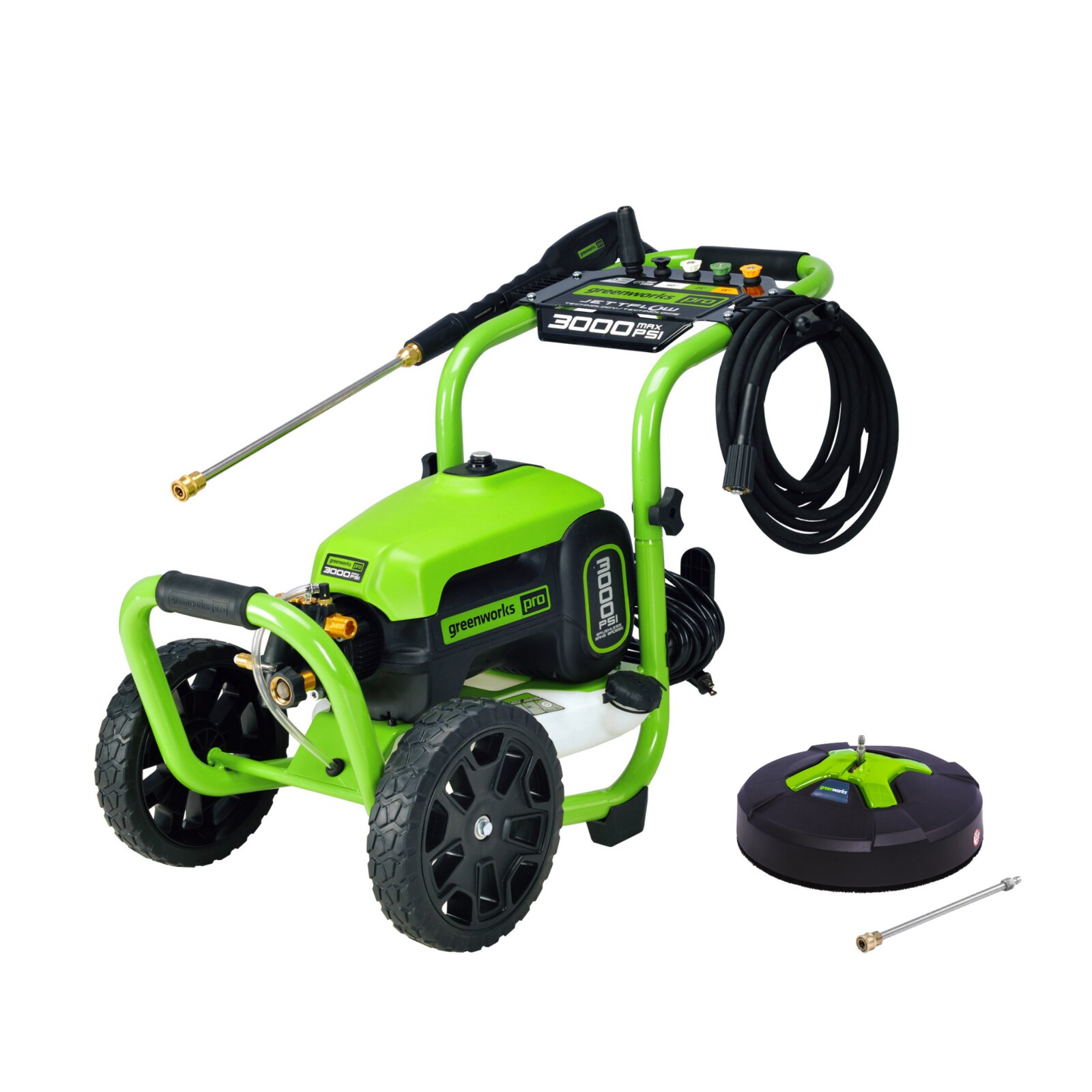
Greenworks Pro GPW3001
Gas-parity 3000 PSI from a brushless induction motor that outlasts cheap electrics — if your property fits inside a 35-ft cord radius.
Amazon affiliate · price subject to change
The Greenworks Pro GPW3001 sits at a 9.5 community score and the appeal is straightforward: 3,000 PSI at 2.0 GPM from a brushless induction motor — quiet, low-maintenance, and durable across multiple seasons. The induction motor matters more than the spec sheet implies. Universal-motor electrics (the cheap ones) overheat under sustained load and the brushes wear out inside a few hundred hours. Induction motors run cooler, last longer, and hold pressure under continuous trigger time the way a gas engine does. Voters consistently flag multi-year reliability as the reason the GPW3001 holds its rank — the kind of feedback that only emerges from owners who have lived with a tool past the honeymoon window.
The trade-off is the cord. At 35 feet, the included extension is fine for a typical driveway but tight for a long lot. Plan a contractor-grade outdoor extension cord into the budget if your property is wider than a city lot.
The Professional's Pick — Simpson ALH3425 ($874)
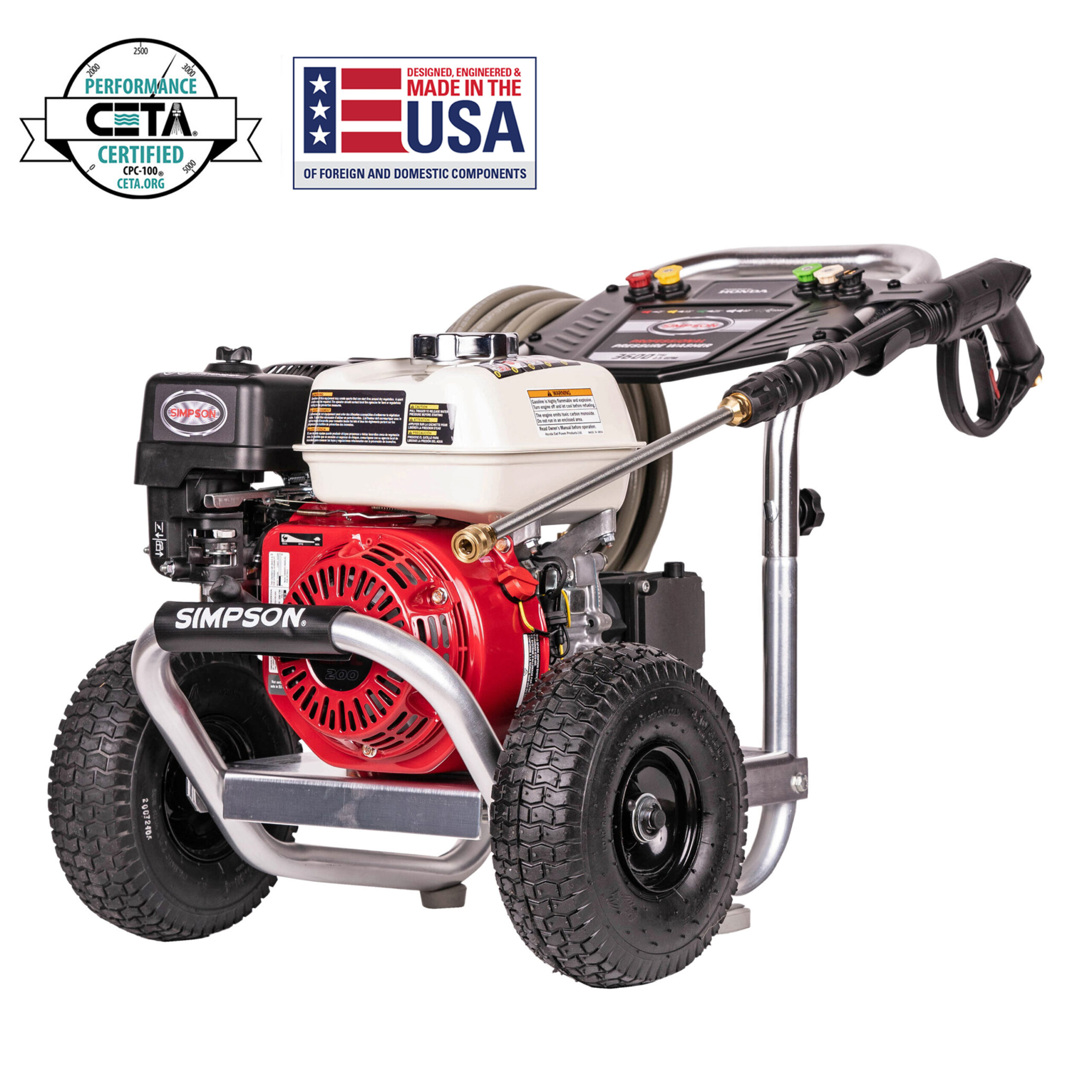
Simpson ALH3425
Contractor-grade 3600 PSI on a Honda GX200 and triplex pump — built for long sessions and big concrete pads, overkill for quick jobs.
Amazon affiliate · price subject to change
The Simpson ALH3425 at 9.4 is a reminder that gas pressure washers are not dead — they are just no longer the default. With a Honda GX200 engine and triplex pump, this is the machine for contractors and homeowners with large concrete pads. It will outwork any electric on the list across an eight-hour day of continuous cleaning. The Honda engine is the durability story here in the same way the induction motor is for the Greenworks — Honda small engines routinely last decades with basic maintenance, and the triplex pump is the same architecture that powers commercial pressure-washing trailers.
The honest question is whether you actually need it. Most homeowners pressure-wash for thirty to ninety minutes on a Saturday a few times a year, and the gap between the Greenworks at $450 and the Simpson at $874 is harder to justify the less continuous your usage looks. If you cannot remember the last time you pressure-washed for more than two hours straight, buy the Greenworks.
The Battery Pick — EGO Power+ HPW3204 ($549)
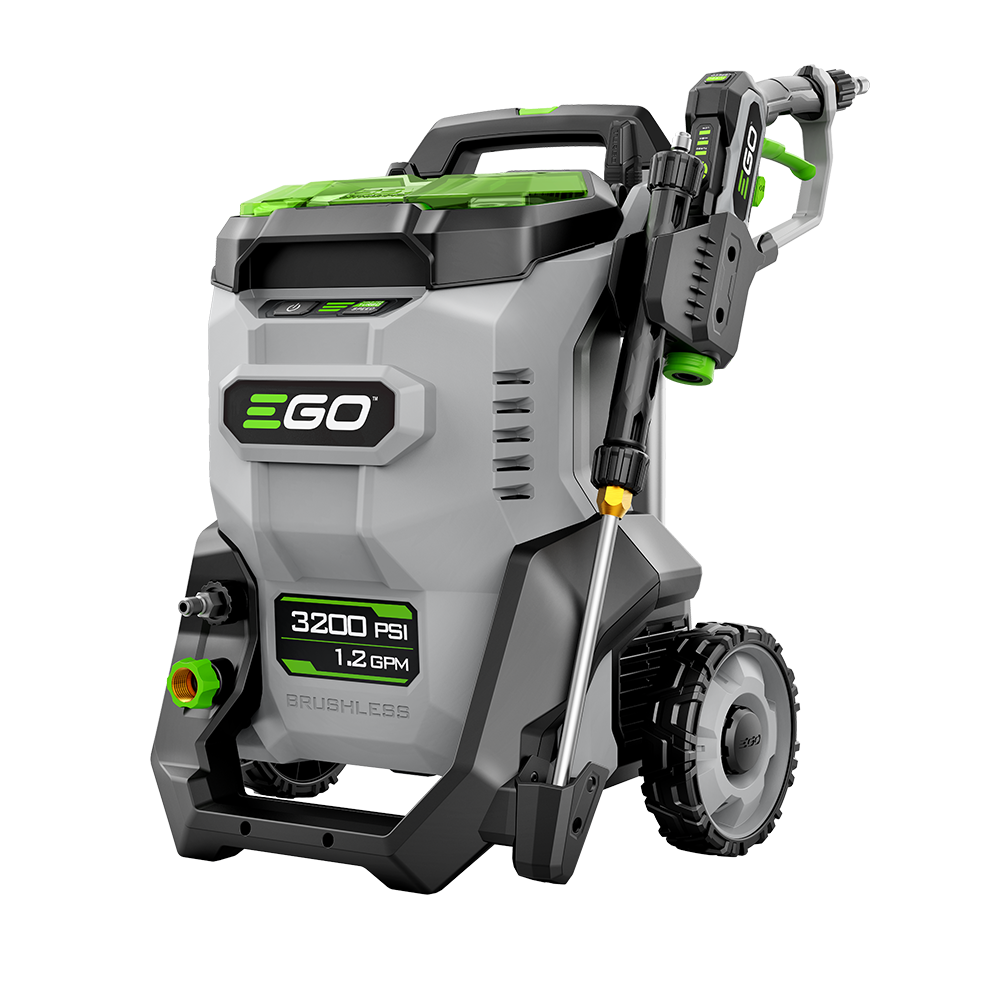
EGO Power+ HPW3204
The first cordless washer with usable muscle — 3200 peak PSI off two EGO 56V batteries, ideal if you're already on the platform.
Amazon affiliate · price subject to change
The EGO Power+ HPW3204 at 9.0 represents the most interesting trend in the category — battery-powered pressure washers that finally hit pressure numbers that are useful for more than detailing a car. Running on EGO's 56V platform with dual 5.0 Ah batteries, it delivers 3,200 PSI with no cord to trip over and no outlet to find. For homeowners already invested in EGO's outdoor power equipment platform (mowers, blowers, chainsaws), this is the obvious upgrade — battery interchangeability across the lineup means the pressure washer is the cheapest entry point you have ever paid for.
The trade-off is runtime. Plan on roughly 20-25 minutes of trigger time per pair of fully charged 5.0 Ah batteries, which is enough for a deck or a car but not enough for a full driveway. Two battery pairs solve the problem at the cost of more dollars.
The Mainstream Step-Up — Ryobi RY143011 ($429)
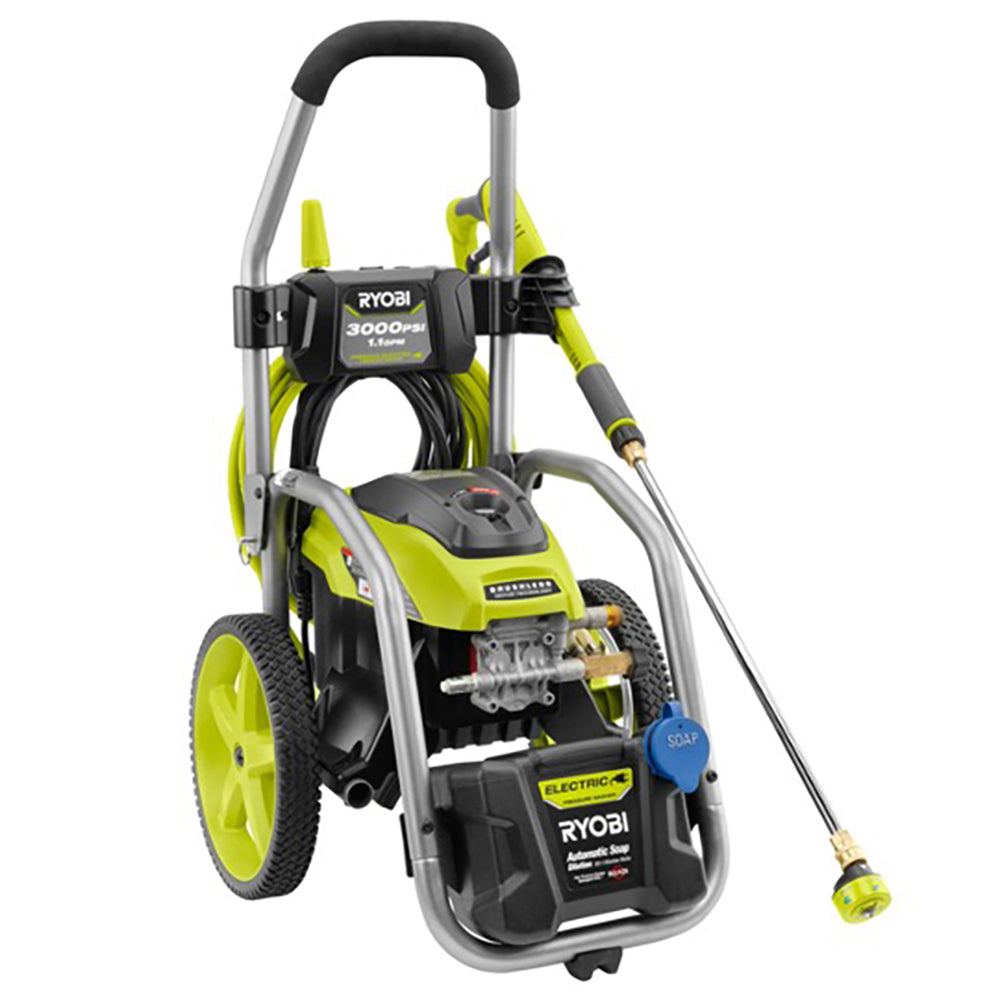
Ryobi RY143011
A brushless 3000 PSI electric with instant start and low upkeep — handles nearly every residential job without gas-engine hassle.
Amazon affiliate · price subject to change
The Ryobi RY143011 at 9.2 is the dark-horse pick. Brushless motor, 3,000 PSI, 2.0 GPM, instant-start — it matches the headline specs of the Greenworks at a slightly lower MSRP, and the Ryobi tool ecosystem appeal is real for buyers who already own the brand's outdoor power gear. Build quality lands a tier below the Greenworks (more plastic, less metal), but for the homeowner who runs a pressure washer four to six times a year, the gap is largely invisible. The 35-foot hose is the same as the Greenworks, the wand design is comparable, and the warranty (3-year residential) matches industry standard.
If you are choosing between this and the Greenworks, the deciding factor is brand lock-in. Already own Ryobi tools? Buy the Ryobi. Starting fresh? The Greenworks is the better long-term bet on durability.
The Quiet Pick — Karcher K5 Premium ($317)
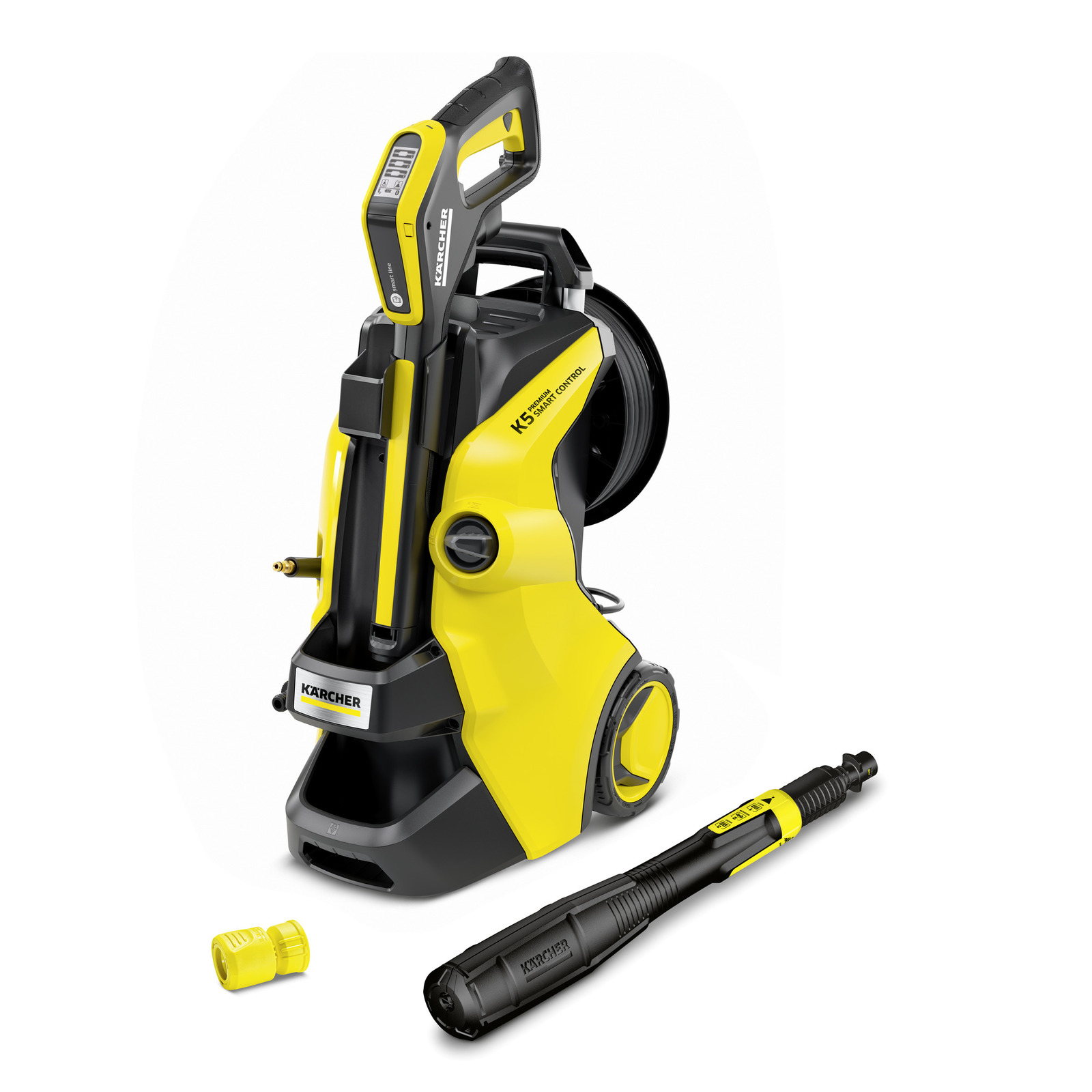
Karcher K5 Premium
A whisper-quiet 68dB induction motor at 2000 PSI — German-built for delicate surfaces and noise-conscious cleaning, not heavy grime.
Amazon affiliate · price subject to change
The Karcher K5 Premium at 8.6 is the pick for buyers who care more about noise than about hitting 3,000 PSI. The water-cooled induction motor runs near 68 dB — meaningfully quieter than the 75-82 dB range of the rest of the electric field — and the 2,000 PSI rating is the right number for cars, windows, patio furniture, and light siding work without risking surface damage. German engineering, multi-year warranty support, and a parts ecosystem that actually carries replacement components five years post-purchase are the Karcher value adds.
Skip this one if you need to clean a stained concrete driveway. The 2,000 PSI ceiling is the limit and it will not handle serious oil stains or paint stripping.
The Best Budget Pick — Sun Joe SPX3000 ($190)
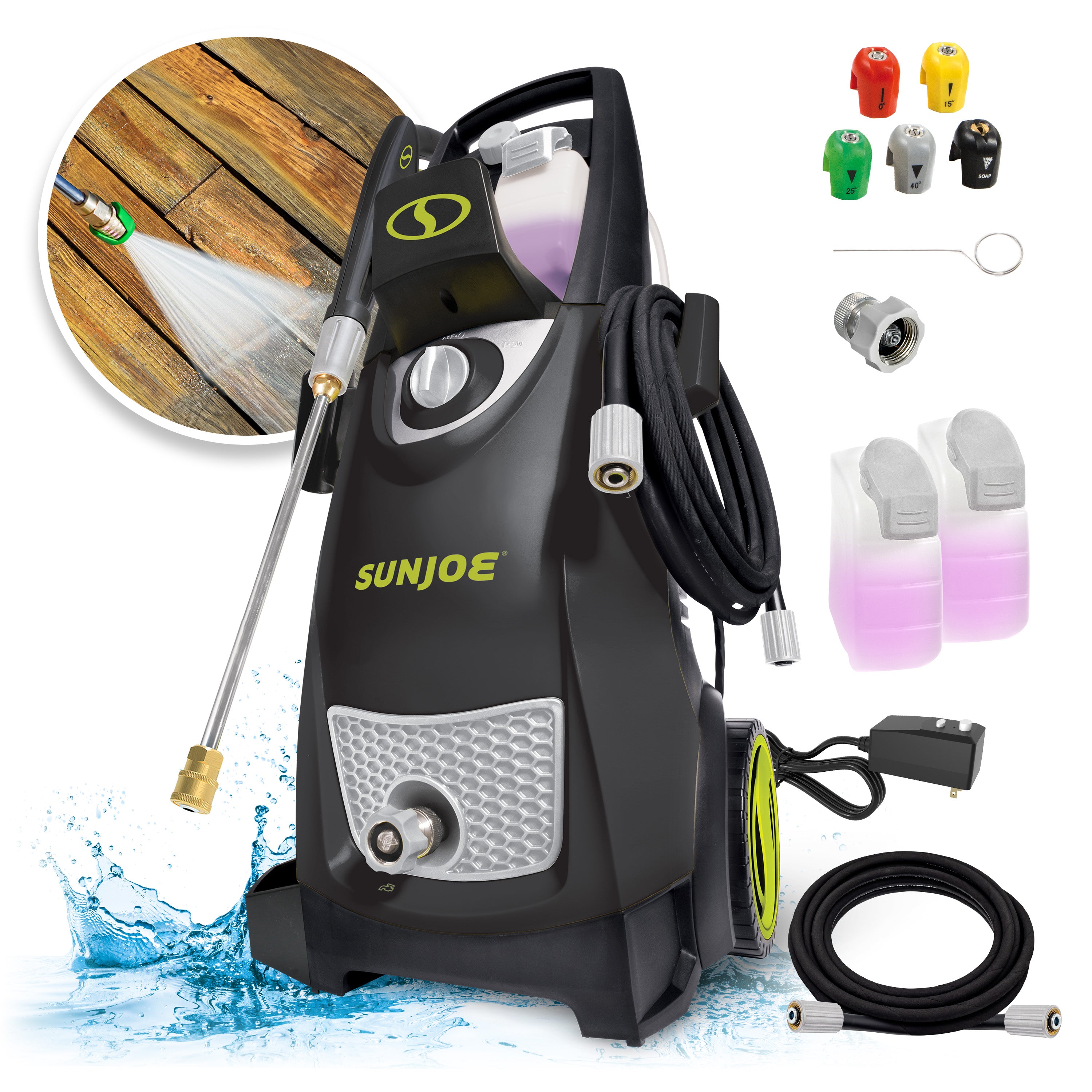
Sun Joe SPX3000
Amazon's $190 bestseller — a genuine 2030 PSI for everyday residential cleaning, with disposable build but real capability.
Amazon affiliate · price subject to change
The Sun Joe SPX3000 at 8.3 is Amazon's bestseller for a reason — it works, it costs less than dinner for four, and at 2,030 PSI and 1.75 GPM it handles the realistic homeowner pressure-washing job list. The honest framing is that this is a disposable tool. Build quality reflects the price, and reports of two-to-three-season lifespans are common in the reviews. But for buyers who pressure-wash twice a year and would rather replace a $190 tool every four seasons than commit $450 to a Greenworks, the math works.
The 2026 Replacement — Westinghouse ePX3100 ($199)
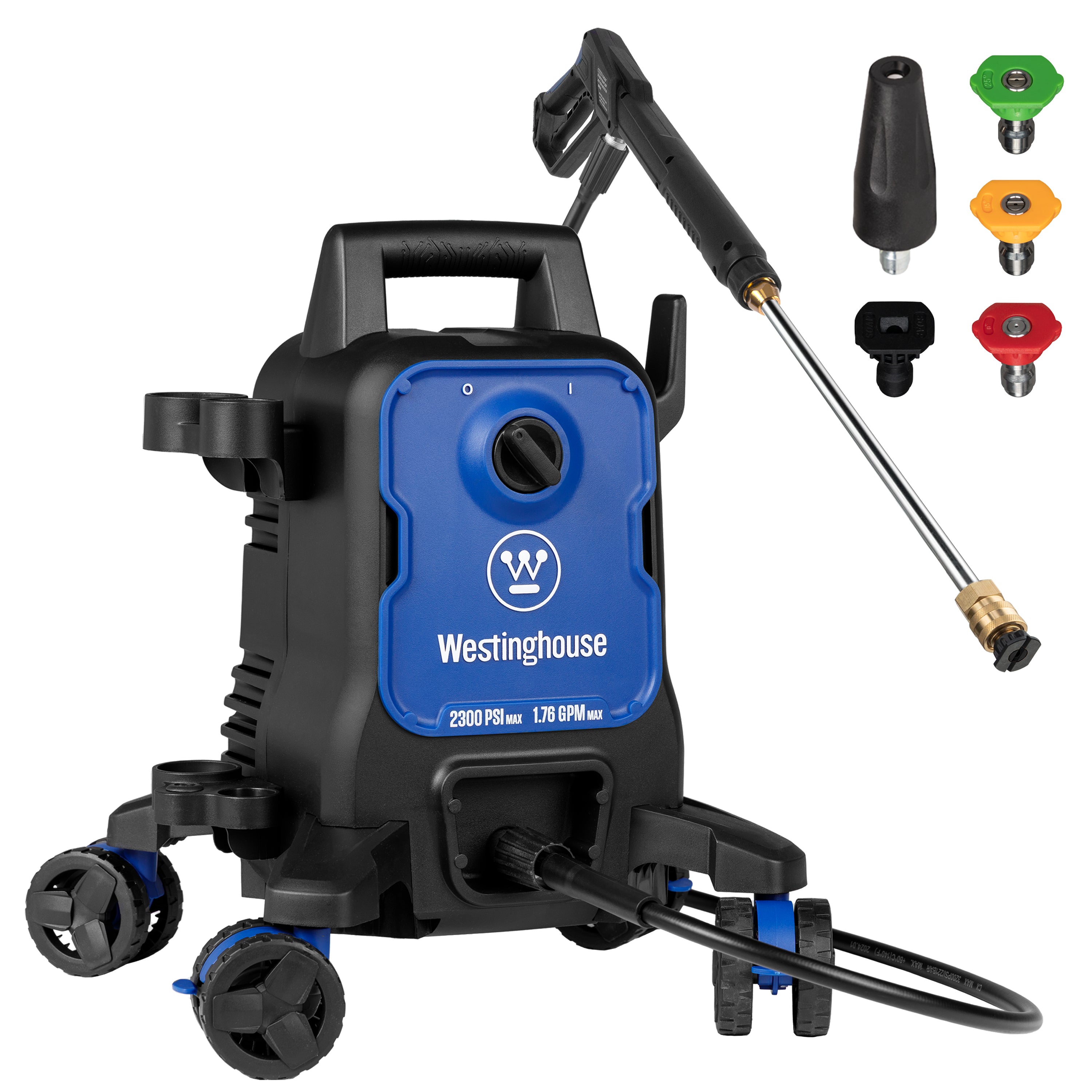
Westinghouse ePX3100
The direct successor to the popular ePX3000 — refreshed to 2300 PSI at 1.76 GPM in the same compact, lightweight form factor.
Amazon affiliate · price subject to change
The Westinghouse ePX3100 at 8.3 replaced the popular ePX3000 with a meaningful PSI bump (2,300 max, 1,900 rated, up from 2,030) in the same 19-pound anti-tipping chassis. The four-wheel 360° steering is genuinely useful — pressure washers spend more time being dragged around the yard than actually pressurized, and the Westinghouse moves the easiest of anything in this price bracket. The 20-ounce onboard soap tank with a dedicated nozzle tip eliminates the external siphon-hose fuss that plagues cheap electrics. Sub-$200, with a 3-year residential warranty, this is the rational mainstream value pick for buyers who want more than the Sun Joe without paying Greenworks money.
The Heavy-Duty Gas Alternative — DeWalt DXPW3400PR ($579)
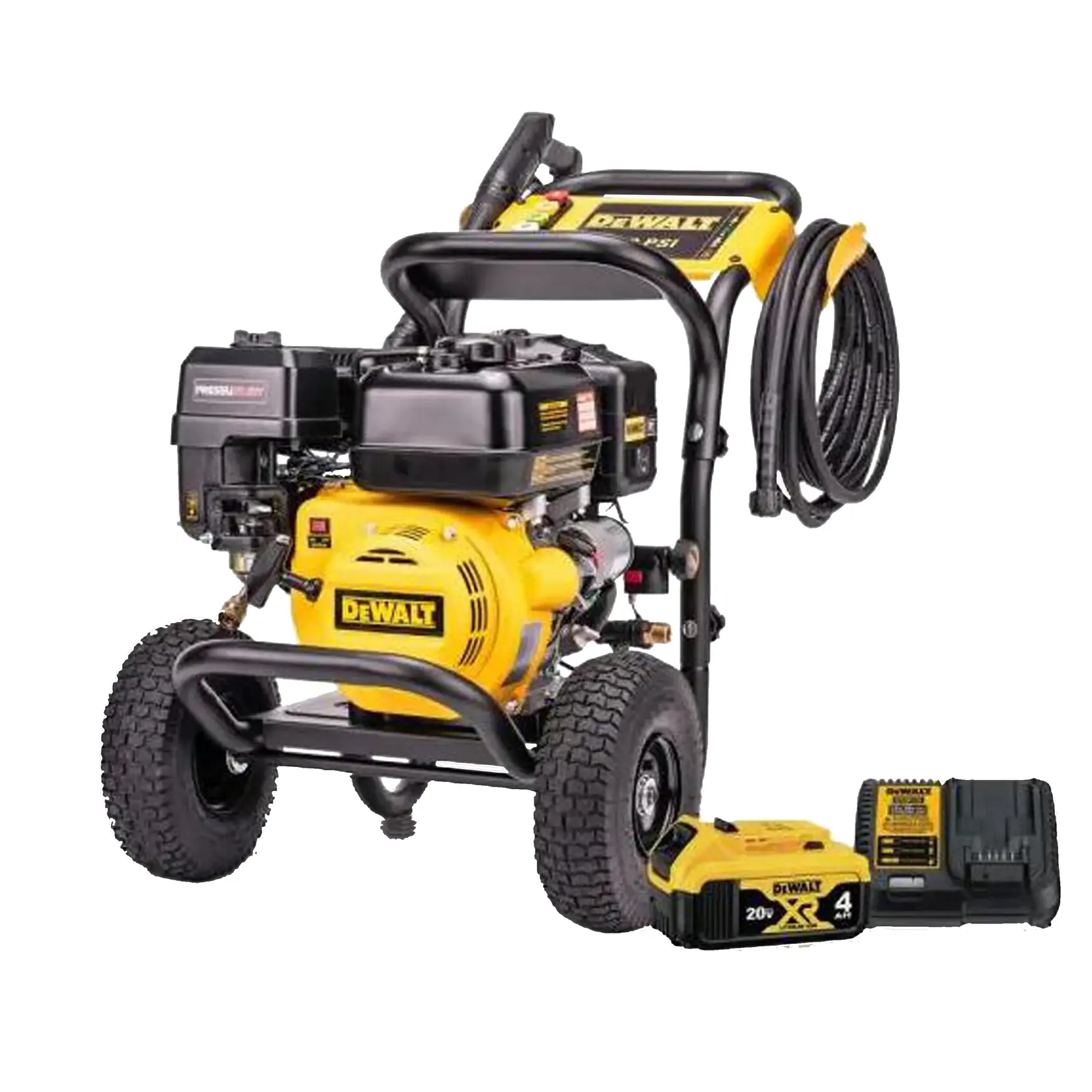
DeWalt DXPW3400PR
Gas pressure washer with DeWalt durability and PressuReady technology.
Amazon affiliate · price subject to change
The DeWalt DXPW3400PR at 8.9 is the gas alternative to the Simpson — 3,400 PSI at 2.4 GPM with DeWalt's PressuReady quick-start system. The build is rugged in the way DeWalt's professional line earns its reputation for, and the PressuReady feature genuinely shaves time off the cold-start dance that gas owners learn to hate. Priced between the Simpson ALH3425 and the Greenworks GPW3001, it splits a narrow buyer band — homeowners who want gas durability and DeWalt brand familiarity but do not need full commercial-grade output.
What to Actually Care About
PSI gets all the marketing attention, but GPM (gallons per minute) matters just as much. A 3,000 PSI washer at 1.1 GPM will clean slower than a 2,500 PSI washer at 2.0 GPM, because flow rate moves loosened grime off the surface. Multiply PSI by GPM to get cleaning units — that is the comparison number that actually predicts how long the driveway will take.
Two accessories that are worth buying with any pressure washer on this list:
- A surface cleaner attachment (15-18 inch) — cuts driveway cleaning time by more than half by spreading pressure across a wide rotating bar instead of a narrow spray cone.
- A turbo nozzle — concentrated rotating jet that strips paint, oxidation, and stuck-on grime that fixed nozzles cannot move.
Both are under $50 and they meaningfully change what a pressure washer can do.
Father's Day & Prime Day Buying Window — T-7 / T-9
Father's Day (Sunday, June 21) is T-7. Pressure washers are the durable, used-many-times-a-year gift that consistently lands well. The Greenworks Pro GPW3001 (rank 1) and the Westinghouse ePX3100 (rank 8) are the two picks with the broadest crossover appeal — both ship 2-day prime from Amazon and arrive with time to spare. For the dad with a real concrete driveway and a soft spot for gas engines, the Simpson ALH3425 is the upgrade pick.
Amazon Prime Day 2026 is T-9 (Tuesday, June 23 → Friday, June 26). Greenworks, Ryobi, Sun Joe, Westinghouse, and Karcher all participate. Expect 15-25 percent off MSRP across the electric field. EGO Power+ tools occasionally bundle with bonus batteries during Prime Day — the right time to buy if you are already on the platform. Simpson and DeWalt rarely discount during Prime Day; if you want a gas washer, watch Lowe's and Home Depot for Father's Day window pricing in the days ahead.
Which One Should You Buy
Architecture first — electric vs gas vs battery. The full decision tree is in our Pressure Washer Buying Guide. Then buy from the live Best Pressure Washers ranking.
- Most homeowners → Greenworks Pro GPW3001 (rank 1, $450). The induction-motor durability and 3,000 PSI cover the realistic job list for a decade.
- Serious gas user → Simpson ALH3425 (rank 2, $874). Honda engine plus triplex pump is the contractor-grade pick.
- Cordless freedom → EGO Power+ HPW3204 (rank 4, $549). The first battery washer that earns its pressure rating.
- Quiet operation → Karcher K5 Premium (rank 6, $317). Lower pressure, dramatically lower noise.
- Sub-$200 value → Westinghouse ePX3100 (rank 8, $199). 2,300 PSI in a 19-pound anti-tipping chassis.
- Cheapest serious option → Sun Joe SPX3000 (rank 7, $190). Disposable but functional.
- Already on Ryobi outdoor platform → Ryobi RY143011 (rank 3, $429). Matches Greenworks specs at a slight discount.
See the Full Rankings
The community has ranked all ten pressure washers from Greenworks's flagship through the budget tier. Find the right machine for your driveway on Gavler's Best Pressure Washers list. For broader outdoor cleaning, cross-shop the Best Power Drills brief for the related Father's Day tools tier and the Best Gas Grills brief for the rest of the backyard-season buying window.
See all 10 products ranked by the community
Best Pressure Washers
See Full Rankings →286 community votes cast
Common Questions
Gavler's community ranks the Greenworks Pro GPW3001 as the best overall pressure washer in 2026, with a 9.5 score. Its brushless induction motor delivers a legitimate 3,000 PSI at 2.0 GPM — electric convenience with the kind of power that used to require a gas engine. For homeowners who need maximum power for large concrete areas or daily commercial work, the Simpson ALH3425 with its Honda GX200 engine sits right behind at 9.4.
For 95% of homeowners, yes. The Greenworks Pro GPW3001 hits 3,000 PSI at 2.0 GPM and the Ryobi RY143011 matches it — both numbers that would have required a gas engine three years ago. The EGO Power+ HPW3204 delivers 3,200 PSI on battery alone. Driveways, decks, siding, patio furniture, and second-story cleaning are all comfortably inside the capability of a modern brushless electric. Only continuous commercial concrete cleaning, paint stripping, and farm equipment still favor gas.
For cars and patio furniture: 1,500-2,000 PSI is plenty. For decks, siding, and routine driveway work: 2,300-3,000 PSI. For heavy concrete staining, oil removal, or paint stripping: 3,000+ PSI. PSI alone is not the full picture — multiply PSI by GPM (gallons per minute) to get cleaning units. A 3,000 PSI machine at 2.0 GPM is meaningfully faster than a 3,000 PSI machine at 1.4 GPM, because flow rate moves the loosened grime off the surface.
Most homeowners should buy electric. The Greenworks Pro GPW3001 and Ryobi RY143011 deliver gas-tier pressure with no fumes, no fuel mixing, no winterization, no pull-start. Buy gas only if you regularly clean for more than two hours at a time or work outside reach of an outlet — the Simpson ALH3425 is the pick. Buy battery if cord management is genuinely a problem; the EGO HPW3204 is the only cordless machine that hits real pressure, but you will burn through batteries on big jobs.
The Sun Joe SPX3000 at $190 remains Amazon's bestseller and Gavler's value pick at an 8.3 score — 2,030 PSI is enough for cars, patio furniture, and light driveway work, and the price makes it effectively disposable if you only need it twice a year. For a meaningful step up, the Westinghouse ePX3100 at $199 (rank 8 on Gavler) delivers 2,300 max PSI in a 19-pound anti-tipping chassis with an onboard soap tank. Below the Sun Joe, build quality drops sharply.
For mainstream-brand electrics, yes. Amazon Prime Day 2026 runs June 23-26 — Greenworks, Ryobi, Sun Joe, Westinghouse, and Karcher all participate. Expect 15-25 percent off the Greenworks Pro GPW3001, Sun Joe SPX3000, Ryobi RY143011, and Westinghouse ePX3100. Gas pressure washers from Simpson and DeWalt rarely discount during Prime Day — those are Lowe's and Home Depot Father's Day window deals instead. EGO battery washers occasionally bundle with a 5.0 Ah battery during Prime Day, which is the right time to buy if you are already on the platform.
Rankings come from community votes by homeowners, contractors, and cleaning enthusiasts who own and use these machines. One person, one vote — the rank you see reflects current sentiment, not accumulated hype. No affiliate commissions or manufacturer sponsorships influence the order. The expert score and the community score sit next to each pick on the live list, so when expert testing and owner experience diverge, you see it.
Products Mentioned
Jump to the full ranking and community verdict for each pick named above.
- EGO Power+ HPW3204Home & Kitchen · Best Pressure Washers
- Greenworks Pro GPW3001Home & Kitchen · Best Pressure Washers
- Ryobi RY143011Home & Kitchen · Best Pressure Washers
- Westinghouse ePX3100Home & Kitchen · Best Pressure Washers
- Simpson ALH3425Home & Kitchen · Best Pressure Washers
- Karcher K5 PremiumHome & Kitchen · Best Pressure Washers
- Sun Joe SPX3000Home & Kitchen · Best Pressure Washers
- DeWalt DXPW3400PRHome & Kitchen · Best Pressure Washers