The Best Backpacking Sleeping Pads in 2026, Ranked by the Hikers Who Carry Them
Therm-a-Rest, Nemo, Sea to Summit, Exped. Gavler's thru-hikers rank the pads worth carrying in 2026 — by warmth, weight, comfort, and price.
Published June 2026 — peak trail season is here. Below: the backpacking sleeping pads from Gavler's Best Backpacking Sleeping Pads list worth carrying this summer, ranked by community vote and sorted by what the pad needs to do.
The 2026 backpacking sleeping pad market has settled into a clear hierarchy. Therm-a-Rest still owns the weight-to-warmth crown — the NeoAir XLite NXT is the OutdoorGearLab, CleverHiker, Switchback Travel, GearJunkie, and Treeline Review consensus pick across every 2026 roundup. Nemo took the comfort and quietness lane with the Tensor Insulated's Spaceframe baffles, the genuine air-pad-noise fix that the category needed. Sea to Summit doubled down on mattress-like sleep with the 4-inch Ether Light XT. Exped's Ultra line, now led on our list by the 6.5R Mummy, is finally getting the North American recognition it has had in Europe for years. And closed-cell foam survived the air-pad era because the Nemo Switchback and Therm-a-Rest Z Lite Sol cannot fail — a property no air pad will ever match.
What follows are the picks from Gavler's Best Backpacking Sleeping Pads list worth buying for the 2026 trail season, ranked by community vote and sorted by what the pad needs to do — minimize weight for a sub-12-pound base, prioritize comfort for side-sleepers, survive sub-zero nights, or deliver bombproof reliability under fifty dollars.
The Ultralight Benchmark — Therm-a-Rest NeoAir XLite NXT $215
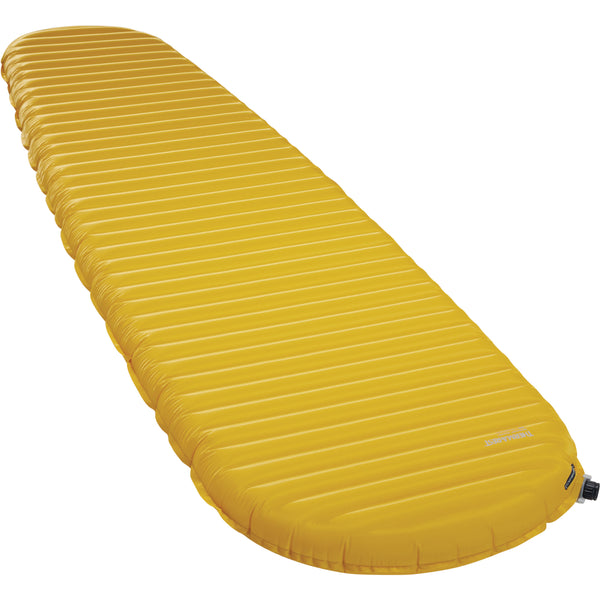
Therm-a-Rest NeoAir XLite NXT
12.5 oz with an R-value of 4.5 and Triangular Core Matrix baffles. The pad most ultralight backpackers actually carry.
Amazon affiliate · price subject to change
If weight is the priority and warmth still matters, this is the pad. The NeoAir XLite NXT is the sleeping pad every other pad is measured against — 12.5 oz, R-value 4.5, and Triangular Core Matrix baffles that trap thousands of small air chambers for warmth without weight. The NXT generation update addresses the two complaints about the original XLite: the face fabric redesign reduces the crinkly air-pad sound by roughly 83 percent (CleverHiker and Backpacker Magazine testers confirm the crinkle is no longer audible to tentmates), and the WingLock valve cuts inflation time roughly in half versus the previous version.
The XLite NXT ranks first on Gavler with a 9.7 community score. The trade-off is durability — the 30D top fabric is thinner than the 70D bottom on the XTherm NXT, which means a sharp rock or twig can puncture the pad in the field. A patch kit is included and most experienced UL backpackers carry it. For thru-hikers running sub-12-pound base weights who pick their pad-down sites carefully, the XLite NXT is the consensus answer. For backpackers who want more puncture margin or quieter sleep, see the Nemo Tensor below.
The Comfort-First UL Pad — Nemo Tensor Insulated $180
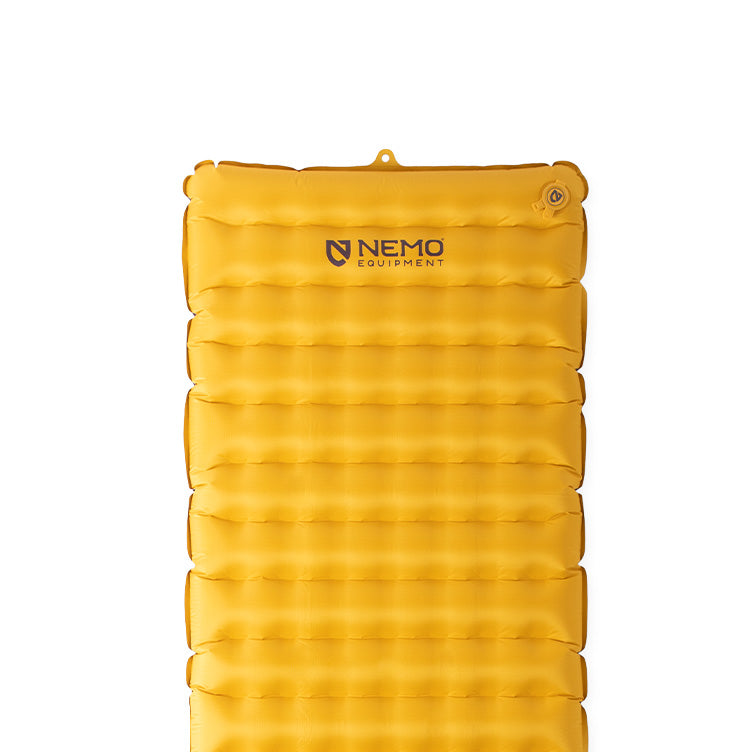
Nemo Tensor Insulated
Spaceframe baffles eliminate crinkly air-pad sounds while delivering 3.5 inches of thickness and R-value 4.2.
Amazon affiliate · price subject to change
The Tensor Insulated is the pad for backpackers who refuse to compromise on comfort. Nemo's Spaceframe baffle construction uses a suspended-film internal structure that eliminates the lateral air movement standard horizontal baffles allow — the result is the quietest air pad in production and a 3.5-inch thickness that the 2.5-inch XLite NXT cannot match. Side-sleepers who bottom out on thinner pads report the Tensor's extra inch eliminates the hip and shoulder pressure points that wake them at hour two.
The Tensor ranks second on Gavler with a 9.5 community score. R-value 4.2 is within 0.3 of the XLite NXT, weight is 2.5 oz heavier (15 oz versus 12.5 oz), and the price is $35 lower — a comfort-first hiker's trade-off that most are happy to make. CleverHiker called the Tensor All-Season "the favorite overall sleeping pad" in its 2026 roundup and the Garage Grown Gear comparison concluded most backpackers feel the weight penalty versus the XLite NXT is worth the comfort. For side-sleepers, light sleepers, and anyone who has woken up at 3 a.m. to a tentmate's air-pad crinkle, the Tensor is the upgrade.
The Mattress-Like Comfort Pick — Sea to Summit Ether Light XT Insulated $200
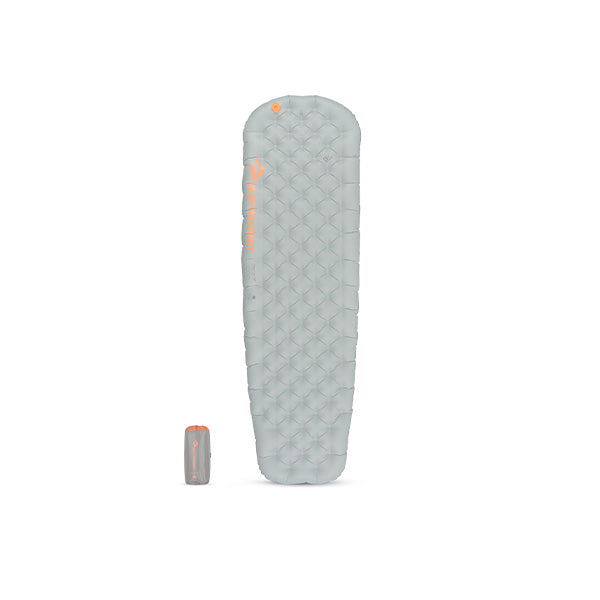
Sea to Summit Ether Light XT Insulated
Air Sprung Cells provide a mattress-like feel. The comfort-first pick for backpackers willing to carry extra ounces for better sleep.
Amazon affiliate · price subject to change
The Ether Light XT is the pad that sleeps like a home mattress. Sea to Summit's Air Sprung Cells are independent air chambers that respond to body weight like the pocket coils in a quality mattress — the 4-inch thickness is more cushioning than anything else on the list, and the construction prevents bottoming out for sleepers up to roughly 250 pounds, a threshold that the thinner XLite NXT and Tensor cannot match. The multi-function valve combines inflation, deflation, and micro-adjust in a single fitting, and the pillow-lock textured top surface stops sleeping bags and pillows from sliding off the pad mid-night.
The Ether Light XT ranks third on Gavler with a 9.3 community score. The trade-off is weight (18 oz — 5.5 oz heavier than the XLite NXT) and a lower R-value of 3.5 — adequate for three-season above-25°F use but not the right pad for shoulder-season cold. For heavyweight side-sleepers, weekend warriors who prioritize sleep quality over weight savings, and section hikers who want mattress-like comfort on trail, the Ether Light XT is the right answer. For thru-hikers carrying every ounce, the lighter picks above are the better trade-off.
The Four-Season Warmth Pick — Therm-a-Rest NeoAir XTherm NXT $250
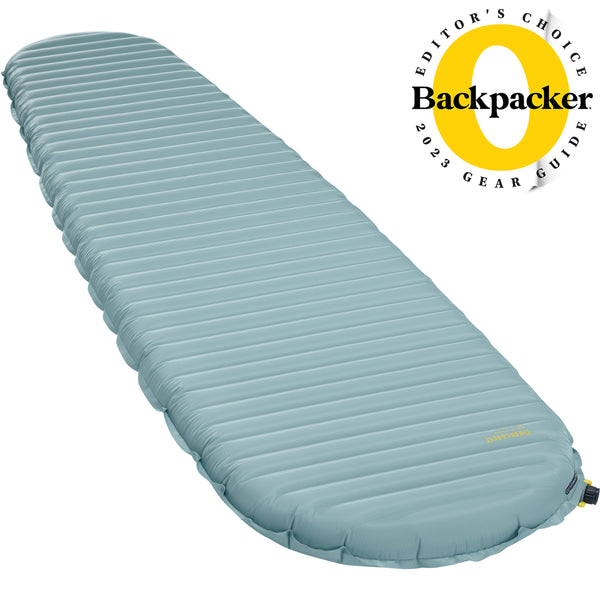
Therm-a-Rest NeoAir XTherm NXT
R-value 7.3 in a 15.5 oz package. ThermaCapture reflective barriers and Triangular Core Matrix baffles for four-season warmth.
Amazon affiliate · price subject to change
If the trip includes snow, sub-freezing nights, or high-altitude cold, this is the pad. The XTherm NXT delivers R-value 7.3 — the highest of any ultralight pad in production — at 15.5 oz, which is only 3 oz heavier than the three-season XLite NXT. The warmth comes from Therm-a-Rest's ThermaCapture technology, multiple layers of reflective film inside the Triangular Core Matrix baffles that trap radiant heat and redirect it back to the sleeper. Each reflective layer adds warmth without insulation weight, which is how the pad clears the four-season bar in an ultralight package.
The XTherm NXT ranks fourth on Gavler with a 9.2 community score. The 70D bottom fabric is notably more durable than the XLite NXT's 30D construction — a meaningful upgrade for winter camping where rough, frozen ground surfaces and crampon proximity demand more puncture resistance. The trade-off is price ($250 versus the XLite NXT's $215) and that R-value 7.3 is overkill for three-season-only use. For winter backpackers, mountaineers, and high-altitude trekkers, the warmth-to-weight ratio is unmatched in production. For everyone else, the XLite NXT does the job at less weight and less money.
The European UL Standout — Exped Ultra 6.5R Mummy $200

Exped Ultra 6.5R Mummy
R-value 6.9, 12.5 oz in Medium, 3.5 in thick. Exped's current all-season Ultra in its lightest mummy cut — the pad that replaces the retired Ultra 5R on this list.
Updated October 20, 2026: Exped discontinued the Ultra 5R that originally held this spot. The Ultra 6.5R Mummy replaced it on our list at the same rank and score.
The Exped Ultra 6.5R Mummy is the warmest pad in Exped's ultralight line that most backpackers will actually carry. Exped rates it at R-6.9 and a claimed 12.5 oz in size M, 3.5 inches thick, which on paper puts it within a few tenths of the XTherm NXT's R-7.3 for less weight. The price of that number is the mummy taper: less room for knees and elbows than a rectangular pad, so side-sleepers and sprawlers should look at the Tensor first.
It ranks fifth on Gavler with a 9.1 score. The Adventure Alan 2026 roundup names the three-way battle for best ultralight pad as the XLite, the Exped Ultra 6.5R and the Tensor All-Season, with the Exped winning on durability margin. For back-sleepers who want winter-grade warmth at three-season weight, it is the under-the-radar pick.
The Bombproof Reliability Pick — Nemo Switchback $50
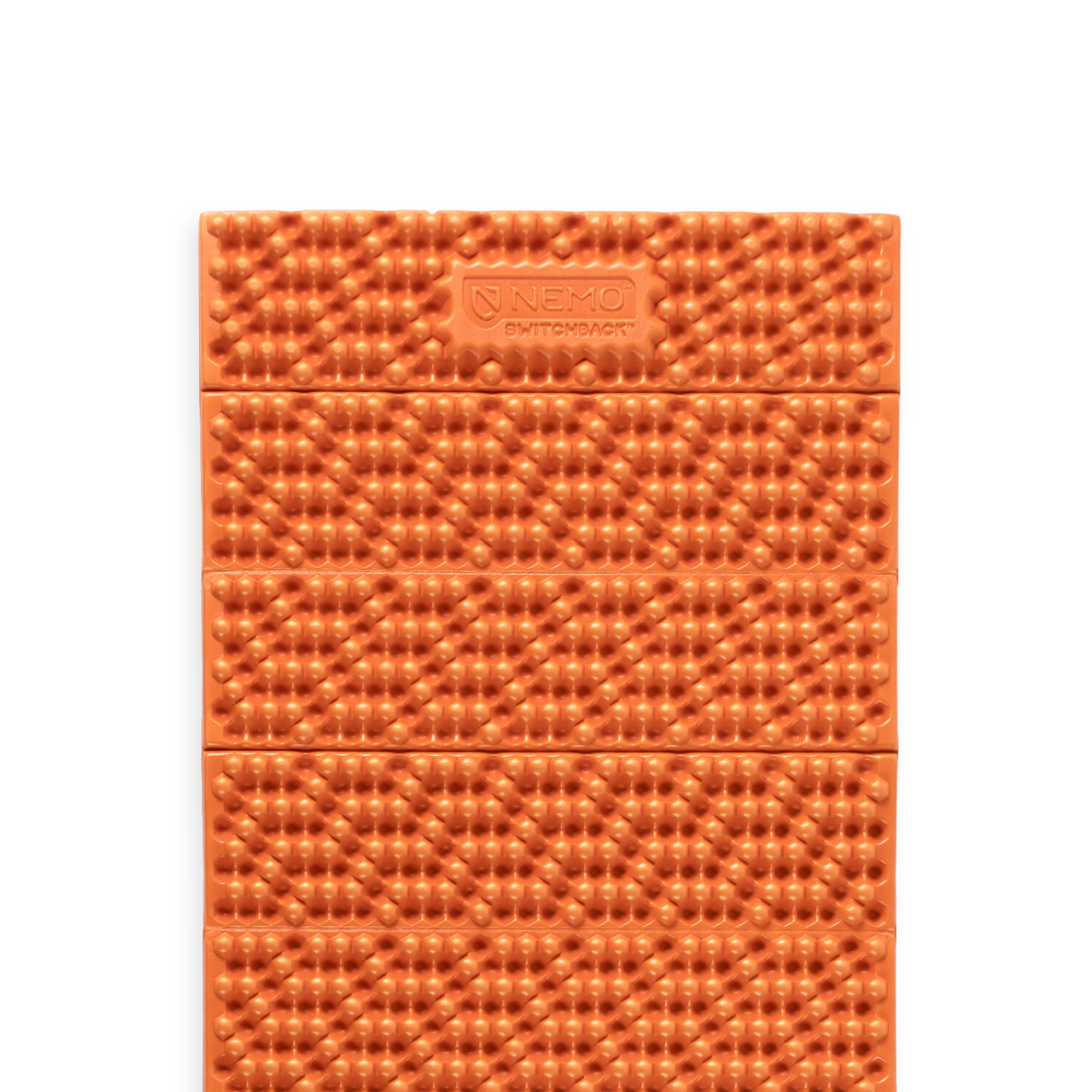
Nemo Switchback
Closed-cell foam pad with dual-density surface. 14.5 oz, no inflation needed, and impossible to puncture.
Amazon affiliate · price subject to change
The Switchback is the pad that cannot fail. Closed-cell foam does not puncture, does not deflate, does not need a patch kit, and does not care about sharp rocks or stray trekking-pole tips. At 14.5 oz with R-value 2.0, the Switchback weighs only 2 oz more than the XLite NXT and costs 165 dollars less — the most cost-efficient sleep system in the category for warm-weather above-freezing use. Nemo's dual-density foam construction (softer body side, firmer ground side) is a measurable comfort improvement over the uniform-density Therm-a-Rest Z Lite Sol below.
The Switchback ranks sixth on Gavler with a 9.0 community score. The accordion-fold design straps to the outside of a pack, doubles as camp seating, and stiffens frameless packs — the most versatile pad in the category. Thru-hikers commonly stack a torso-length Switchback under an XLite NXT for winter camping, producing a combined R-value of 6.5 at less total weight than carrying the dedicated XTherm NXT alone. For minimalist hikers, budget builds, and the bombproof backup every experienced backpacker carries, the Switchback is the answer.
The Budget Insulated Pick — Klymit Insulated Static V Peak $80
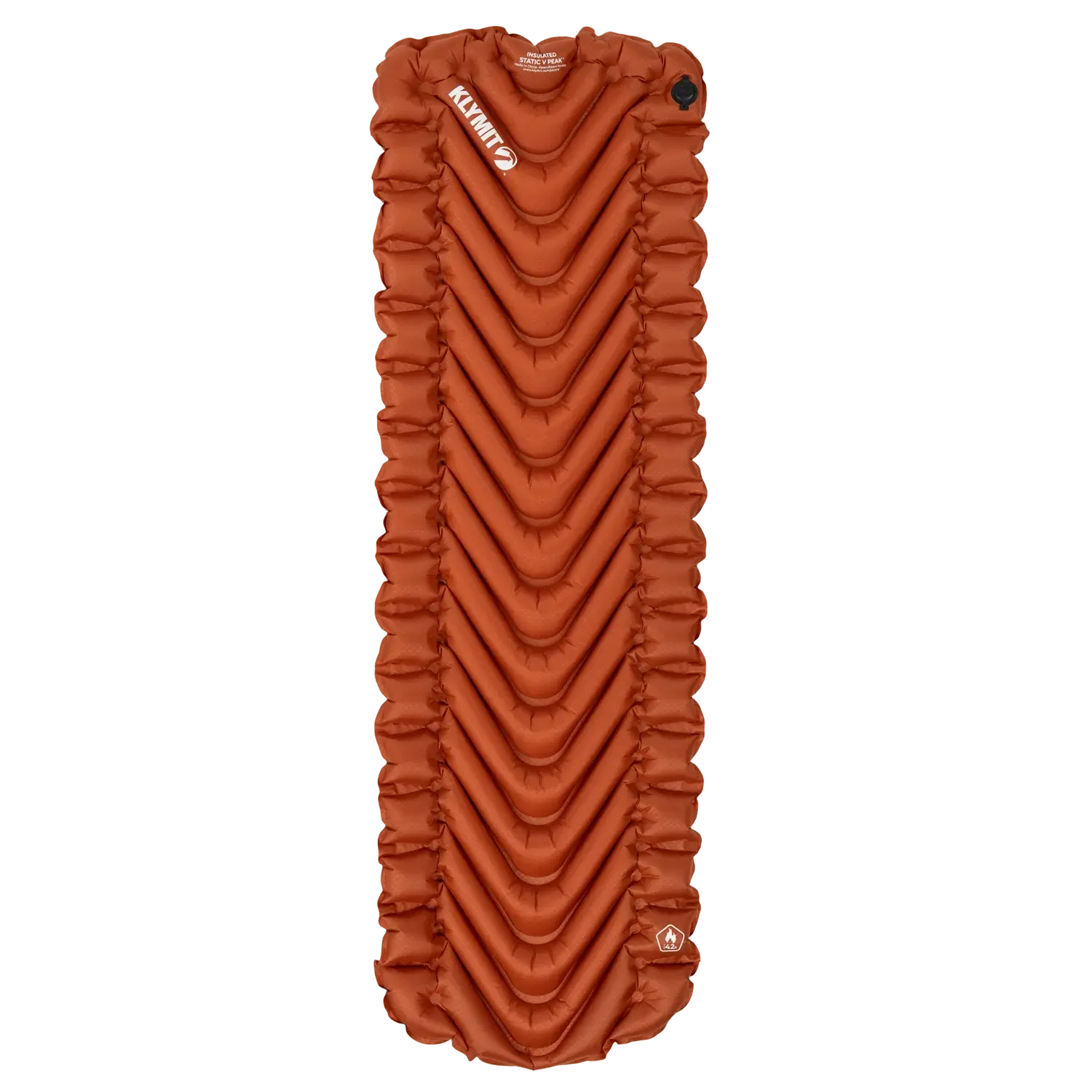
Klymit Insulated Static V Peak
V-shaped baffles limit air movement for better insulation at a budget price. Klymit's current Insulated Static V Peak is the line's direct successor — the most-purchased insulated air pad in the sub-$100 category.
Amazon affiliate · price subject to change
The Insulated Static V Peak is the air pad for backpackers who want insulated warmth without paying premium-pad prices. V-shaped baffles — Klymit's signature design — limit lateral air movement within the pad, preventing the convection currents that steal heat in standard horizontal-baffle pads, and the result is better insulation per dollar than any other pad in the sub-100-dollar tier. The polyester face fabrics are notably more durable than the ultralight nylons on premium pads, which means more puncture margin for rough campsites at the cost of a heavier pad and a larger packed size.
The Insulated Static V Peak ranks seventh on Gavler with an 8.8 community score. The trade-off versus premium picks is weight (heavier than the XLite NXT by roughly half a pound) and packed size (roughly twice the volume of the XLite NXT when rolled). For backpackers not counting ounces, weekend warriors prioritizing cost over weight, and first-time buyers testing whether they will stay in the sport, the Static V Peak is the rational entry point. The V-shaped baffle architecture also adds gentle side-to-side cradling that wide flat pads do not provide — a small side-sleeper bonus most reviewers do not mention.
The Original Foam Standard — Therm-a-Rest Z Lite Sol $45
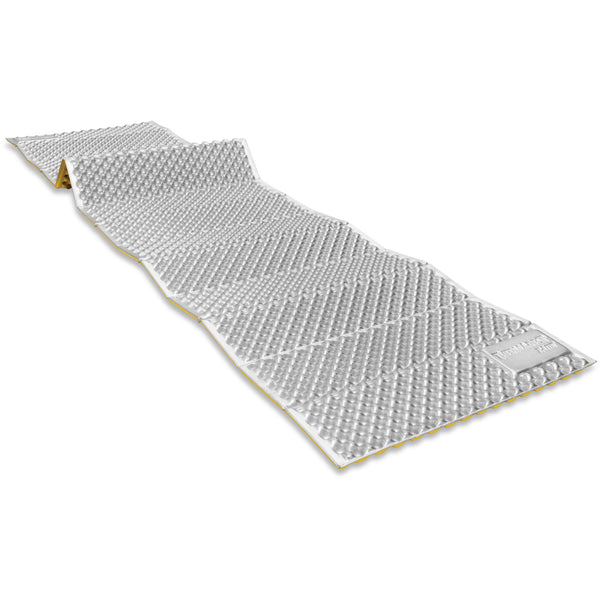
Therm-a-Rest Z Lite Sol
14 oz, accordion-fold, reflective coating for warmth. The budget UL pad that has been the default foam option for over a decade.
Amazon affiliate · price subject to change
The Z Lite Sol is the closed-cell foam pad that defined the category. For more than a decade, it has been the default foam-pad answer on every backpacking forum, gear list, and thru-hiker packing guide. At 14 oz and 45 dollars, the Z Lite Sol delivers R-value 2.0 with the Sol reflective coating — an aluminum layer on the body side that adds roughly 0.3 R-value over uncoated foam by reflecting radiant heat back to the sleeper. The accordion fold sits upright as camp seating, stacks compactly against a pack back panel, and trims to torso length for hikers who want a 3-to-4-ounce weight reduction.
The Z Lite Sol ranks tenth on Gavler with an 8.2 community score. The trade-off versus the Nemo Switchback is comfort — the uniform-density foam is less cushioning than the Switchback's dual-density construction. The Z Lite Sol is 0.5 oz lighter and 5 dollars cheaper, making it the marginally more weight-efficient choice. Both pads are correct picks for closed-cell foam shoppers; the Switchback sleeps slightly better, the Z Lite Sol weighs slightly less. The Z Lite Sol remains the bombproof backup that most experienced thru-hikers carry strapped to the outside of their pack, year after year, trail after trail.
What the 2026 Trail Season Demands
For the Pacific Crest Trail thru-hiker shopping for a one-pad setup that handles Mojave sand through Sierra night-lows, the Therm-a-Rest NeoAir XLite NXT or Nemo Tensor Insulated are the consensus picks — the XLite NXT for weight-first hikers, the Tensor for side-sleepers and tentmates of light sleepers. For winter and mountaineering, the Therm-a-Rest NeoAir XTherm NXT is the proven ultralight pad for sub-zero ground, and the Exped Ultra 6.5R Mummy is the lighter, tapered alternative for back-sleepers. For sleep quality at the cost of a few extra ounces, the Sea to Summit Ether Light XT Insulated remains the most comfortable backpacking pad in production. And for the budget buyer, the first-time backpacker, and the bombproof backup that every experienced thru-hiker carries, the Nemo Switchback and Therm-a-Rest Z Lite Sol close the sub-50-dollar tier with closed-cell foam that simply cannot fail.
Cross-references: architecture first in the sleeping-pad buying guide — ultralight air vs quiet mattress vs foam you cannot pop — then pair the pad with the Best Backpacking Sleeping Bags pick — architecture first in the sleeping-bag buying guide — the Best Backpacking Packs pick, and the Best Backpacking Tents pick from Gavler for the full sleep-system kit.
The vote is yours. See where these pads rank and add your own pick to the Best Backpacking Sleeping Pads list. One vote per person, no affiliate-driven rankings, no sponsorships — just what the people sleeping on them recommend.
See all 10 products ranked by the community
Best Backpacking Sleeping Pads
See Full Rankings →220 community votes cast
Common Questions
For most three-season backpackers, the Therm-a-Rest NeoAir XLite NXT at $215 is the consensus pick — OutdoorGearLab, CleverHiker, Switchback Travel, GearJunkie, and Treeline Review all rank it at or near the top of their 2026 lists for the same reason. 12.5 oz with an R-value of 4.5, Triangular Core Matrix baffles, and the NXT generation's WingLock valve and quieter face fabric fix the two main complaints about earlier XLite models. The closest alternative is the Nemo Tensor Insulated at $180 — 2.5 oz heavier, 3.5 inches thick instead of 2.5, and the quietest baffles in production thanks to Nemo's Spaceframe construction. For winter and high-altitude use, step up to the Therm-a-Rest NeoAir XTherm NXT at $250 (R-value 7.3 at 15.5 oz). For sub-50-dollar reliability that cannot pop, the Nemo Switchback or Therm-a-Rest Z Lite Sol are the closed-cell foam answer.
Air pad for comfort, foam for reliability. Insulated air pads like the NeoAir XLite NXT and Nemo Tensor deliver R-values of 4.2 to 4.5 and 2.5 to 3.5 inches of thickness — the difference between sleeping and surviving. The trade-off is puncture risk. A thorn, a sharp twig, or a misplaced trekking pole can deflate an air pad mid-night, and a patch kit only works in daylight. Closed-cell foam pads like the Nemo Switchback and Therm-a-Rest Z Lite Sol cannot fail. They weigh roughly the same as a premium air pad (14 to 14.5 oz), cost a fraction (under $50), and deliver R-value 2.0 — enough for warm-weather above-freezing trips. Most experienced thru-hikers carry an air pad as a primary and a torso-length cut of foam as a sit pad and emergency backup. For first-time backpackers and budget builds, foam is the lower-risk entry point.
Match the pad's R-value to the coldest expected ground temperature. For summer three-season use at 30°F and above, R-value 3.0 to 4.0 is sufficient — the Sea to Summit Ether Light XT (R-3.5) or Big Agnes Rapide SL Insulated (R-3.6) cover this range. For shoulder-season use down to 20°F, R-value 4.0 to 5.0 is the sweet spot — the NeoAir XLite NXT (R-4.5), Nemo Tensor (R-4.2), or REI Co-op Helix Insulated (R-4.9) are the consensus picks. For winter camping, snow, and sustained sub-freezing nights, R-value 6.0 or higher is non-negotiable — the Therm-a-Rest NeoAir XTherm NXT (R-7.3) and the mummy-cut Exped Ultra 6.5R (R-6.9) are the ultralight options that clear that bar. Pad insulation matters more than bag insulation for cold sleeping; a 0°F sleeping bag on a 2.0 R-value pad will still feel cold because the ground steals heat from the body faster than the bag retains it.
The noise problem is mostly solved as of 2026. The NeoAir XLite NXT — the pad most thru-hikers actually carry — went through a face-fabric redesign with the NXT generation that the manufacturer says delivers an 83 percent reduction in noise versus the original XLite, and testers at multiple outlets including CleverHiker confirm the crinkle is no longer audible to tentmates. The Nemo Tensor Insulated goes further with Spaceframe baffle construction that eliminates lateral air movement and is genuinely the quietest air pad in production. For light sleepers and noise-sensitive tentmates, the Tensor at $180 is the right call. For weight-first hikers, the XLite NXT is quiet enough.
Pick Therm-a-Rest for weight efficiency and category-leading construction. The NeoAir XLite NXT (R-4.5, 12.5 oz, $215) and XTherm NXT (R-7.3, 15.5 oz, $250) are the lightest credible pads in their respective warmth tiers, and the Triangular Core Matrix baffle system is the industry benchmark. Pick Nemo for comfort, quietness, and side-sleeper friendliness. The Tensor Insulated (R-4.2, 15 oz, $180) is 1 inch thicker than the XLite NXT and the quietest air pad in production thanks to Spaceframe baffles. Pick Sea to Summit if mattress-like sleep matters more than pack weight. The Ether Light XT Insulated (R-3.5, 18 oz, $200) is 4 inches thick with Air Sprung Cells that respond like pocket coils — the only pad on the list that prevents bottoming out for sleepers over 200 pounds. Three different priorities, three correct answers.
Yes, in two specific scenarios. As a primary pad for warm-weather and budget trips, the Nemo Switchback ($50) and Therm-a-Rest Z Lite Sol ($45) deliver R-value 2.0 at 14 to 14.5 oz with zero puncture risk — the most reliable sleep system under 50 dollars. As a booster layer under an air pad for winter camping, stacking a Switchback (R-2.0) under an XLite NXT (R-4.5) produces an effective R-value of 6.5 at a lower total weight than carrying the dedicated XTherm NXT alone. Thru-hikers also use the Z Lite Sol as a sit pad, a pack frame stiffener, and the bombproof backup that never deflates. The Nemo Switchback's dual-density foam is the comfort upgrade over the uniform-density Z Lite Sol; the Z Lite Sol is 0.5 oz lighter and 5 dollars cheaper. Both are correct picks.
The Therm-a-Rest Z Lite Sol at $45 for closed-cell foam, or the Klymit Insulated Static V Peak at $80 for an insulated air pad. The Z Lite Sol delivers R-value 2.0 at 14 oz with a Sol reflective coating that adds measurable warmth over uncoated foam — the default budget answer for over a decade. The Klymit Insulated Static V Peak delivers cold-weather insulated warmth at less than half the price of premium air pads, with V-shaped baffles that limit lateral air movement and a polyester face fabric that handles puncture risk better than ultralight nylons. For backpackers not yet sure they will stay in the sport, both pads pay back the purchase cost in a single season; the upgrade to a premium air pad is the reward for the second.
Products Mentioned
Jump to the full ranking and community verdict for each pick named above.
- Nemo SwitchbackBackpacking · Best Backpacking Sleeping Pads
- Therm-a-Rest Z Lite SolBackpacking · Best Backpacking Sleeping Pads
- Therm-a-Rest NeoAir XLite NXTBackpacking · Best Backpacking Sleeping Pads
- Nemo Tensor InsulatedBackpacking · Best Backpacking Sleeping Pads
- Sea to Summit Ether Light XT InsulatedBackpacking · Best Backpacking Sleeping Pads
- Therm-a-Rest NeoAir XTherm NXTBackpacking · Best Backpacking Sleeping Pads
- Exped Ultra 6.5R MummyBackpacking · Best Backpacking Sleeping Pads
- Klymit Insulated Static V PeakBackpacking · Best Backpacking Sleeping Pads