Brooks Hyperion Elite 4.
Brooks' DNA Flash nitrogen-infused foam returns energy efficiently at marathon pace without the instability of taller stacks. The Hyperion Elite 4 is purpose-built for the 2:30-3:30 marathon crowd who need reliability over flash.
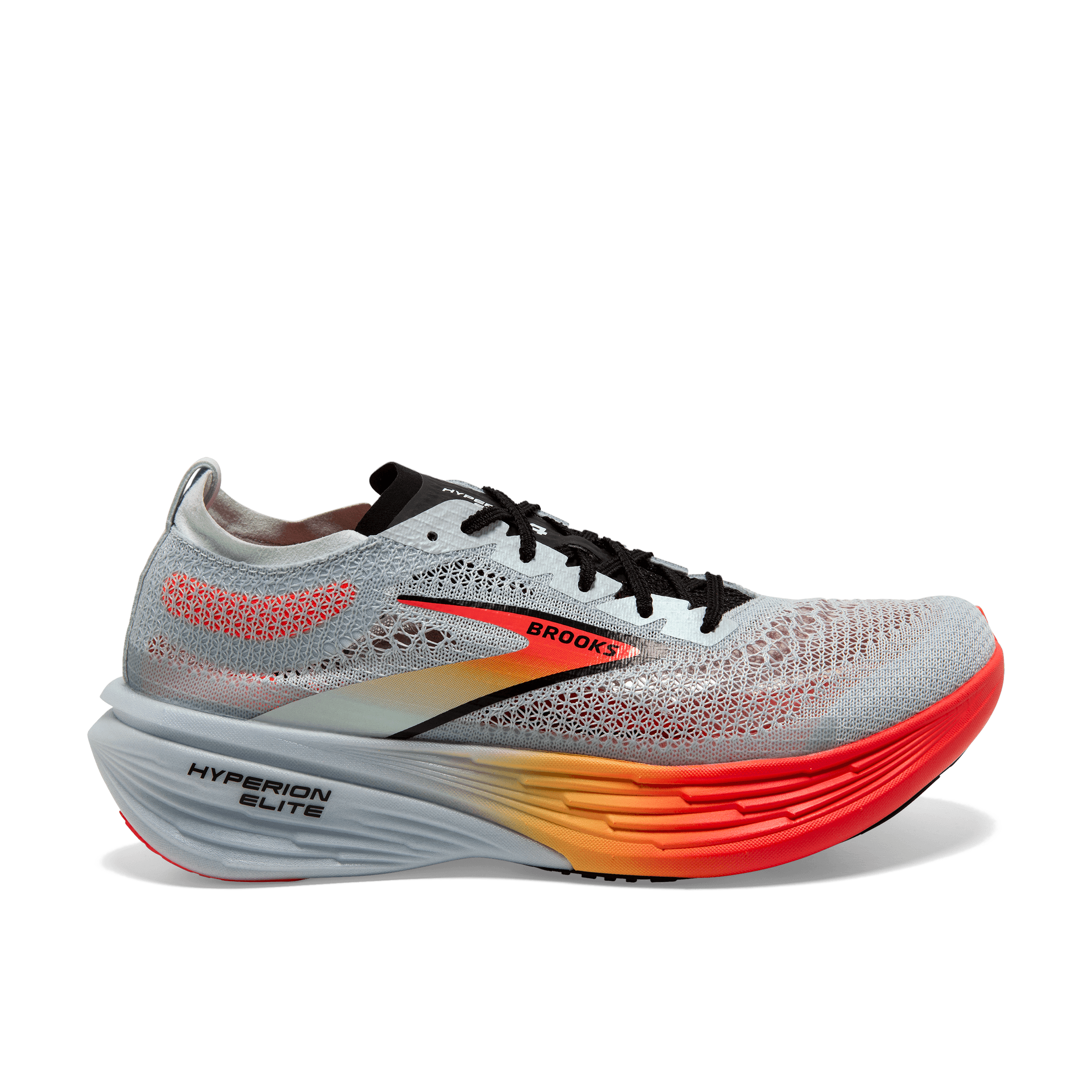
The Verdict.
Gavler Meta-Score
“The durable, stable outlier of the super-shoe class — and not the one to chase a PB in. Buy the Hyperion Elite 4 for its superb upper, planted ride, and best-in-class durability if you want a racer that lasts; skip it if you want bounce, because reviewers agree the firm DNA Flash v2 foam mutes the plate and gives up real pop to the Alphafly and SC Elite v4.”
The Gavler Verdict
The Gavler Review.
Brooks Hyperion Elite 4 Review: The Durable Outlier of the Super-Shoe Class
The Brooks Hyperion Elite 4 sits at number six on our Best Running Shoes list with a 9.0 — the most polarizing shoe in Gavler's top group, and the one where the right choice depends entirely on what you're optimizing for. Buy it for its superb upper, planted ride, and best-in-class durability if you want a racer that lasts beyond a single race cycle. Skip it if you're chasing bounce — reviewers agree the firm DNA Flash v2 foam mutes the plate and gives up real propulsion to the Alphafly and SC Elite v4.
What it actually is
The Hyperion Elite 4 is Brooks' most ambitious attempt yet to compete at the top of the super-shoe category, and it takes a genuinely different engineering path than almost everything else on this list. The midsole is nitrogen-infused DNA Flash v2 — a supercritical EVA, not the PEBA foam that dominates the rest of the field — stacked at a max-legal 40mm heel / 32mm forefoot. Underneath it sits the SpeedVault Race+ plate: a 3D-printed, size-specific carbon lattice co-developed with Arris that no other shoe in this category matches in construction method.
The upper is where Brooks draws near-universal praise. Reviewers single it out as a standout even among a field of race-day-optimized designs, and it's the part of the shoe least in dispute among testers who otherwise disagree sharply about the ride underneath it.
In use
That disagreement centers on foam character, and reviewers don't hedge about it. Believe in the Run's assessment is direct: "The DNA Flash v2 feels superb underfoot, but the shoe isn't bouncy or propulsive." That's an important distinction for a shoe in this price and performance tier — "feels good" and "feels fast" aren't the same claim, and Brooks' choice of a supercritical EVA over PEBA is the reason for the gap. EVA-based foams, even nitrogen-infused ones, tend to prioritize control and durability over the springy, elastic rebound PEBA delivers.
What that trade-off buys is where the Hyperion Elite 4 actually wins. Running Shoes Guru is unambiguous: "The one area where the Hyperion Elite 4 beats all the other super shoes is durability." That's a strong, comparative claim from a reviewer testing across the entire category, and it matters more than it might seem — a $250 race shoe that degrades after two or three marathons is a worse value than a slightly less propulsive one that survives a full season of racing.
Where it shines
- Class-leading durability. Running Shoes Guru's verdict that it "beats all the other super shoes" on this metric is the single clearest differentiator in the Hyperion Elite 4's favor — a genuine edge for runners who race more than once or twice a year in the same pair.
- A standout upper. Reviewers consistently call out the fit and construction of the upper as best-in-class, delivering secure lockdown without the hot spots that plague some race-day-optimized designs.
- A unique, size-specific plate. The 3D-printed SpeedVault Race+ lattice, co-developed with Arris, is a genuinely different approach to plate engineering than the full-length carbon sheets used everywhere else in the category — an interesting bet on precision tuning per shoe size rather than a one-size geometry.
The trade-offs — who should skip it
The Hyperion Elite 4's engineering choices are honest trade-offs, not hidden flaws, and reviewers are specific about where they land:
- It's the least bouncy shoe in the top group. Believe in the Run's finding that it's "not bouncy or propulsive" is the central critique of this shoe, and it's the reason it sits at the bottom of Gavler's top six despite strong marks elsewhere. If explosive toe-off is what you associate with a super shoe, this isn't the one.
- The dense midsole mutes the plate. The SpeedVault Race+ plate is a genuinely novel piece of engineering, but several testers note the firm DNA Flash v2 foam around it dampens the sensation of the plate working, leaving the ride feeling more controlled than electric.
- It's a specific bet, not a universal pick. At $250, it's priced in line with the Hoka Rocket X 2, but the two shoes solve different problems — the Rocket X 2 trades a little pop for stability, while the Hyperion Elite 4 trades pop for durability. Know which trade-off you actually want before buying.
How it compares
The clearest contrast on this list is the New Balance SC Elite v4 at number three — its 100% PEBA FuelCell midsole is, by nearly every tester's account, the springier, more propulsive ride of the two, and it's also built to be approachable for a runner trying a carbon racer for the first time. The trade Brooks is making against it is explicit: less bounce, more durability, and a upper reviewers rate even more highly.
Against the Nike Alphafly 3 at number one, the gap is starker. The Alphafly's continuous ZoomX midsole and dual Air Zoom pods deliver a category-leading energy return that the Hyperion Elite 4's firmer EVA-based foam simply doesn't chase — but the Alphafly also runs short and low-volume in the fit and is a specialist tool in a way the Hyperion Elite 4, with its praised, secure upper, is not.
The Gavler verdict
A 9.0 — the lowest score in Gavler's top group, and an honest reflection of genuine tester disagreement rather than a weak product. The gap between the 91 expert consensus and 88 community score comes down to a real split: testers love the upper and the class-leading durability but diverge sharply on whether the firm, low-pop ride is worth the trade. Buy the Hyperion Elite 4 if durability and fit quality matter more to you than outright bounce — it's the racer built to survive a full season rather than a single peak race. Look to the New Balance SC Elite v4 or Nike Alphafly 3 instead if propulsion is the deciding factor.
Common Questions
It depends on what you value most. It ranks sixth on Gavler's Best Running Shoes list with a 9.0 — the lowest score of the top group — because reviewers consistently rate its ride as firmer and less propulsive than rivals like the Nike Alphafly 3 or New Balance SC Elite v4. What it does better than anything else in the category is durability and upper fit, so it's worth it specifically for a marathoner who wants a super shoe that survives more than a handful of races.
No, and reviewers are direct about it. The DNA Flash v2 midsole is a nitrogen-infused supercritical EVA, not the PEBA foam most competitors use, and testers describe the ride as firm and controlled rather than bouncy. The trade-off buys real durability and stability, but if propulsion is your top priority, PEBA-based rivals will feel more explosive underfoot.
It's the only super shoe in this class built around a 3D-printed, size-specific carbon lattice — the SpeedVault Race+ plate, co-developed with Arris. No other shoe on Gavler's Best Running Shoes list matches that construction method, though reviewers note the dense midsole around it mutes some of the plate's sensation compared to rivals.
Buy the SC Elite v4 if bounce and propulsion are what you want from a super shoe — its 100% PEBA FuelCell midsole is springier by nearly every tester's account. Buy the Hyperion Elite 4 if you want a racer that will still perform well after several marathons; testers rate its outsole and foam longevity as the best in the category, a real edge for runners who don't want to retire a $250 shoe after two races.
Where to Buy.
Prices checked regularly
90-day price history
Price History
Steady at $250 for the entire 90-day tracking window — no increases, no discounts, across 91 tracked days.
Tracked daily across retailers. Vote Want itabove and we’ll alert you the moment the price drops.
Some links are affiliate links — Gavler may earn a commission. This never affects rankings or scores. Learn more.
Precision Engineering
DNA Flash v2 Midsole
Nitrogen-infused supercritical EVA (not PEBA) tuned for a firm, controlled ride rather than maximal bounce.
SpeedVault Race+ 3D-Printed Plate
A size-specific, open-lattice carbon plate co-developed with Arris — unique among super shoes.
Class-Leading Durability
Reviewers rate its outsole and foam longevity the best of any super shoe, outlasting PEBA rivals.
Technical Specifications
The Scoreboard
The 9.0 is the lowest of the top group, and the expert-versus-community gap reflects genuine disagreement: testers love the upper and durability but split sharply on the firm, low-pop ride. The score rewards build quality and reliability more than raw propulsion.
Cast Your Vote
Do you think Brooks Hyperion Elite 4 deserves the #21 spot in Best Running Shoes?
Global Critique
“The Hyperion Elite 4's upper is a masterclass on how to make a racing upper.”
“The DNA Flash v2 feels superb underfoot, but the shoe isn't bouncy or propulsive.”
“The one area where the Hyperion Elite 4 beats all the other super shoes is durability.”
More from Best Running Shoes.
See how other top picks compare in this category.
What Kind of Running Shoe Do Your Miles Actually Need?
A carbon plate is the wrong first question. Daily trainer vs max-cushion vs stability vs race-day super shoe is the job. Then shop Gavler's live ranking.
Superblast 3 vs Vomero 18 vs Novablast 6: The Best Daily Trainer of 2026 Costs $155, and It Isn't the Nike
Three shoes dominate every 2026 daily-trainer list: one's a recovery shoe in a trainer's badge, one costs $55 too much, one spec sheet won't survive a caliper.
The $500 Running Shoe Is Not the Fastest One. A $300 Shoe Is Lighter, and a $170 Shoe Is the Smart Buy.
Adidas broke the super-shoe price ceiling at $500. Every outlet that tested it says buy cheaper — and the lab data says the benefit was never about price.
The Best Running Shoes in 2026, Ranked by Runners Who Actually Race Them
Nike, Asics, Hoka, Saucony. Gavler's running community ranks the shoes worth lacing — from $140 daily trainers to $285 marathon weapons.