The Best Stand Mixers in 2026: Buy for What You Bake, Not the Badge
KitchenAid, Ankarsrum, Smeg, Breville, Bosch, and the budget picks. Gavler ranks the best stand mixers of 2026 — chosen by what you actually bake.
Updated June 29, 2026 — Amazon's June Prime Day just wrapped, but the July 4 sales are live through the holiday weekend, and kitchen appliances are one of the most reliable deal categories of the season. Below: the mixers from Gavler's Best Stand Mixers list worth buying, grouped by what you actually bake.
Here is the most useful thing to know about buying a stand mixer: the question is not "which brand is best," it's "what do you actually bake." A stand mixer is a single-purpose machine that lives on your counter for fifteen years, and the right one depends entirely on whether your weekly reality is a batch of chocolate-chip cookies or a five-kilogram sourdough. The classic mistake is buying up — paying for a bread-baker's torque you'll never use — or buying down, and grinding a budget motor to death on dough it was never built for.
So ignore the badge and start with the work. Cookies, cakes, and frosting? The default KitchenAid is genuinely all you need, and overspending buys you nothing. Weekly loaves of real bread? You need a bowl-lift or an entirely different architecture, and the pretty pastel one will let you down. Below, Gavler's list grouped the way you should actually shop it.
The Default — KitchenAid Artisan 5-Quart
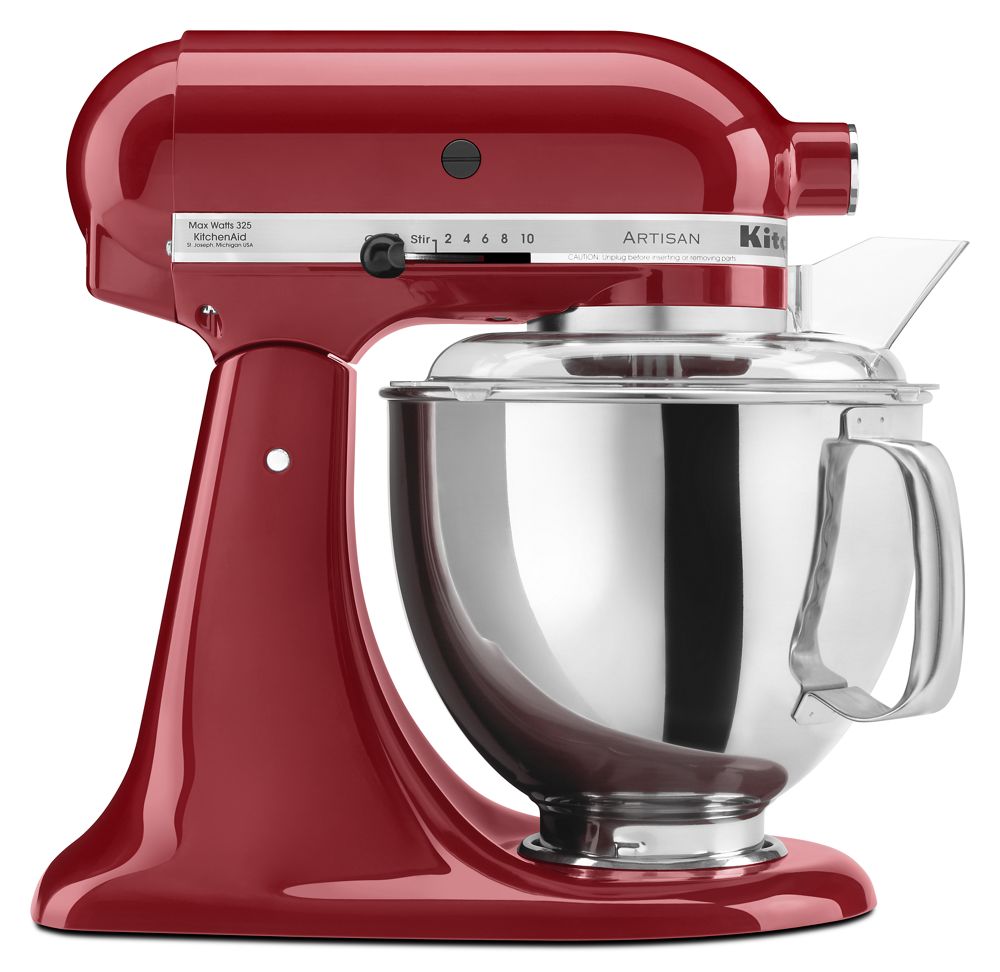
KitchenAid Artisan 5-Quart Tilt-Head (KSM150PS)
KitchenAid Artisan 5-Quart Tilt-Head (KSM150PS) — 10-speed planetary mixing, 325W motor, 5-quart bowl, thirteen-color palette. The most-gifted mixer on the market.
Amazon affiliate · price subject to change
The KitchenAid Artisan 5-Quart Tilt-Head tops Gavler's list at 9.4, and it earns the spot the same way it has for decades: it is the right answer for most kitchens. The 10-speed planetary motion is the original architecture every rival copies, the 5-quart bowl takes a double batch of cookies or two loaves, and the front attachment hub turns it into a pasta roller, meat grinder, or spiralizer as your cooking grows. Tom's Guide summed up the appeal plainly — beyond looking good on the counter, "you're guaranteed an appliance that gives consistent results and one that's built to last." Its real ceiling is repeated stiff-dough bread, where the 325W motor bogs down. For the 80 percent use case, that ceiling never matters.
One 2026 footnote worth knowing: in March, KitchenAid launched the redesigned Artisan Plus at around $600 — the first major tilt-head update since the 1950s, with precision speed control, an LED bowl light, and a soft-start anti-splatter feature. The refinements are real, but it costs about $150 more to do the same core job, and reviewers still steer most shoppers to the original Artisan that's on this list. Don't let the new model talk you out of the proven one.
Scaling Up — Bread and Big Batches
If you bake bread weekly or routinely double recipes, the tilt-head is the wrong tool and you want torque, capacity, and a bowl that won't walk.
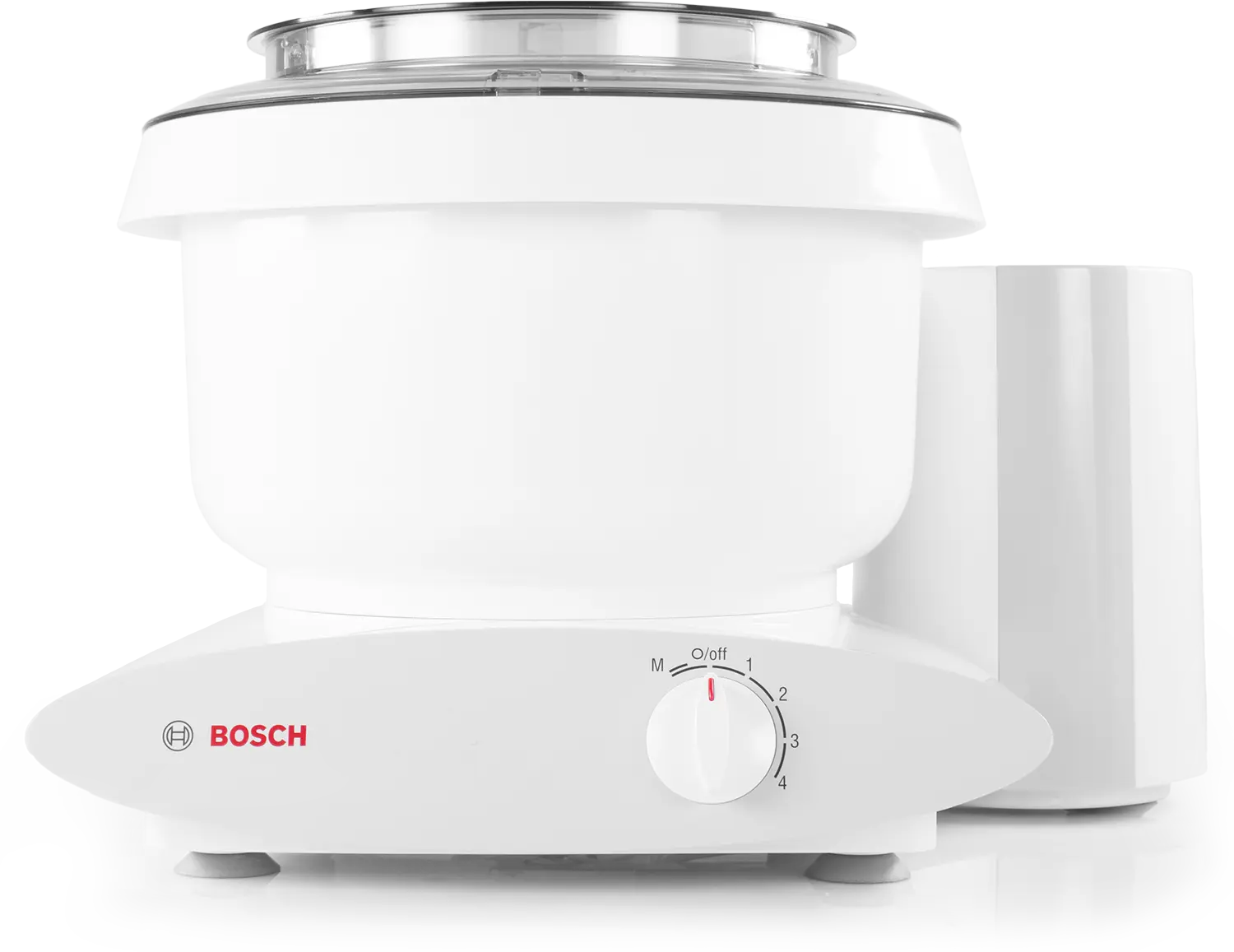
Bosch Universal Plus MUM6N10UC
Bosch Universal Plus MUM6N10UC — 500W (800W peak) motor sits under the bowl, kneads up to 14 lbs of dough without wobble. The big-batch bread workhorse.
Amazon affiliate · price subject to change
The Bosch Universal Plus at rank 8 (8.1) is the high-capacity workhorse disguised as a stand mixer. Its motor sits under the bowl, so it kneads up to 14 pounds of dough without the top-heavy wobble that plagues planetary mixers at scale — Foodal calls its 800W motor "one of the most powerful options available outside of a commercial kitchen," and praises the open-faced bowl you can add to without stopping. The honest knock from the same review: the bowl has no handle, and small batches don't always mix thoroughly. For big-batch bread at around $399, it's a lot of machine.
Staying in the KitchenAid family, the KitchenAid Pro 600 Bowl-Lift 6-Quart (rank 6, around $499) is the sensible step up from the Artisan that doesn't jump to flagship money, and the KitchenAid Pro Line 7-Quart Bowl-Lift (rank 2, around $599) brings a 1.3-HP motor and roughly double the batch ceiling. Both replace the tilt-head with a bowl-lift that stays rigid under heavy dough. You're paying for capacity and torque, not features — worth it only if you bake bread often.
The Bread Baker's Cult Pick — Ankarsrum
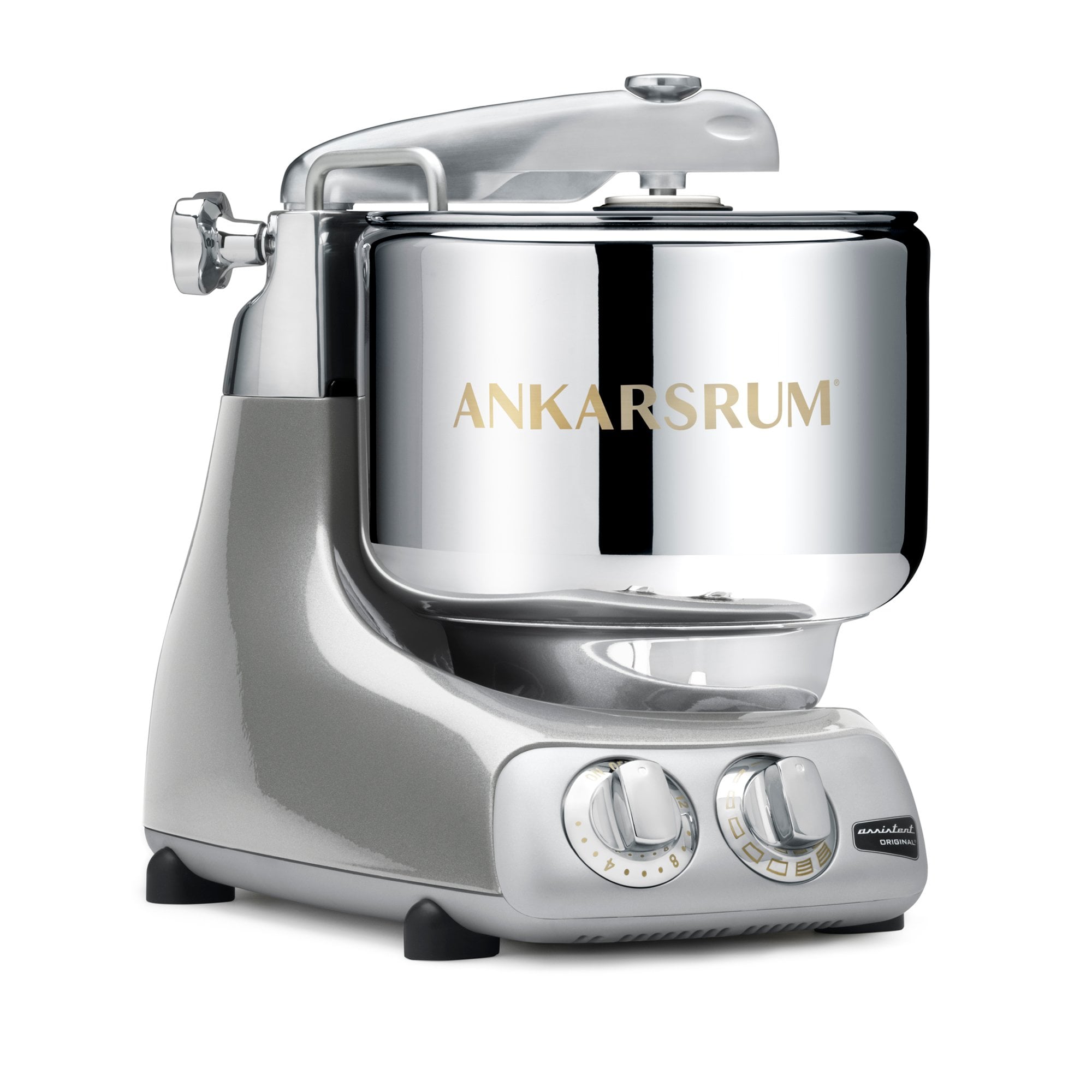
Ankarsrum Original AKM 6230
Ankarsrum Original AKM 6230 — motorized 7L bowl + roller scraper, kneads 5kg of dough without walking. The sourdough community's cult favorite.
Amazon affiliate · price subject to change
The Ankarsrum Original AKM 6230 at rank 3 (9.1) is the Swedish alternative every serious sourdough baker eventually considers. Instead of a planetary head orbiting a fixed bowl, it motorizes the bowl: the bowl spins on a turntable while a stationary roller and scraper work the dough, a geometry that folds rather than beats and stays rigidly stable under big, wet loads. TechGearLab notes its "unique roller arm allows more dough to be worked in a fashion similar to manual kneading," with a huge open-top bowl and the power for large quantities. The trade-offs are real and worth naming: at around $749 it's the most expensive mixer here, the learning curve is steep (you tune the roller and scraper to each dough), and reviewers flag flimsier plastic accessory parts. For high-hydration sourdough at scale, nothing else on the list does what it does. For cookies, it's overkill.
Design and Tech — Smeg and Breville
These two cost about the same as the Artisan and chase a different buyer: one wants the prettiest machine on the counter, the other wants the smartest.
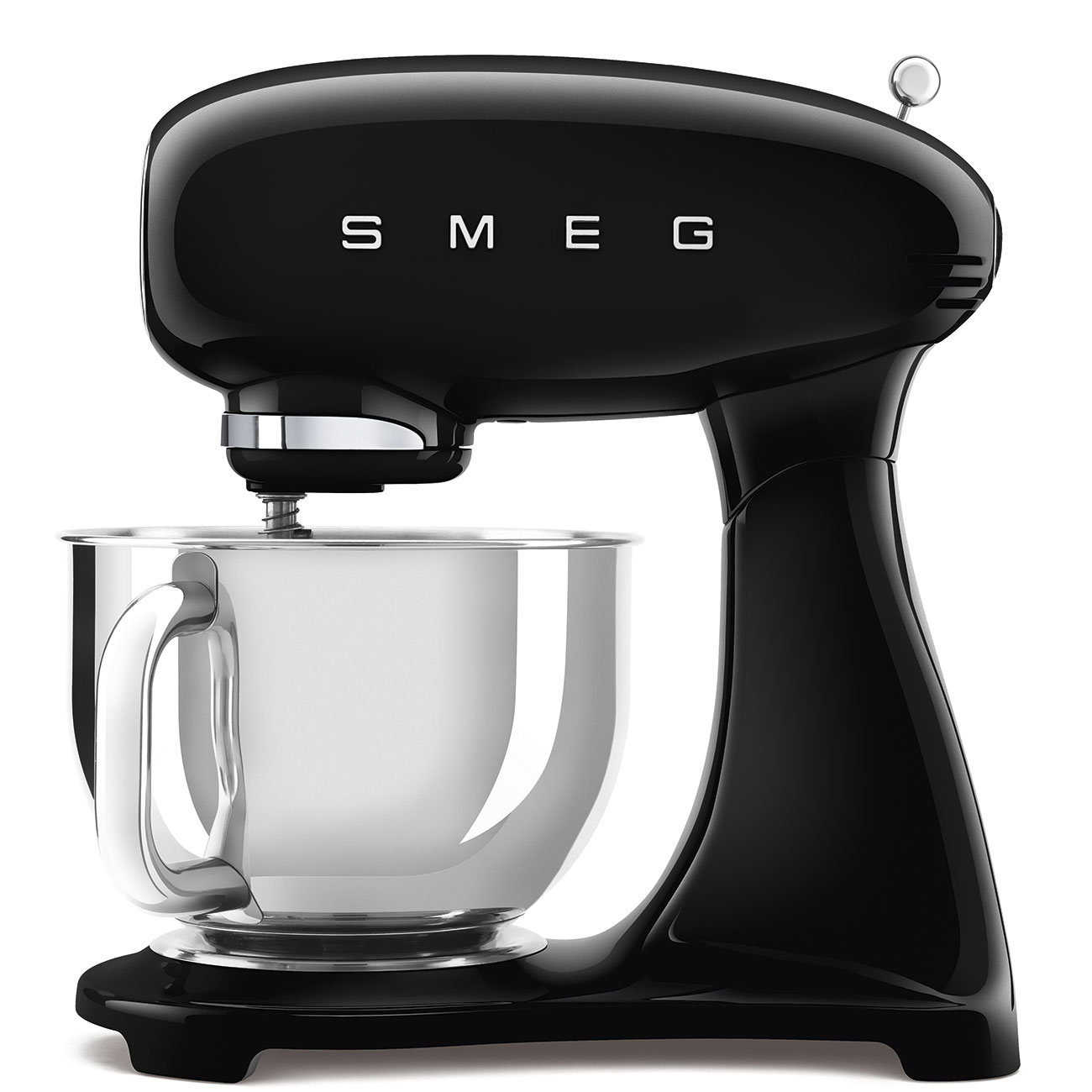
Smeg SMF03 Stand Mixer
Smeg SMF03 Stand Mixer — 600W motor, 10 speeds, 50s-retro die-cast body, pastel palette. The design pick that earns the premium tilt-head price.
Amazon affiliate · price subject to change
The Smeg SMF03 at rank 4 (8.9) is the design pick that still performs. The 50s-retro die-cast body and pastel palette are the whole point — Real Homes flatly grants "there's no denying that this stand mixer is a handsome appliance" — and the flex-edge beater earns praise too, with Tom's Guide finding it "particularly good at making pastry as it swept the inside walls of the bowl." Two honest caveats from those same reviews: it's a sizeable footprint that eats counter space in a small kitchen, and the wire whisk is slower than expected at whipping cream. Buy it when the look genuinely matters; skip it if you care more about the KitchenAid attachment ecosystem.
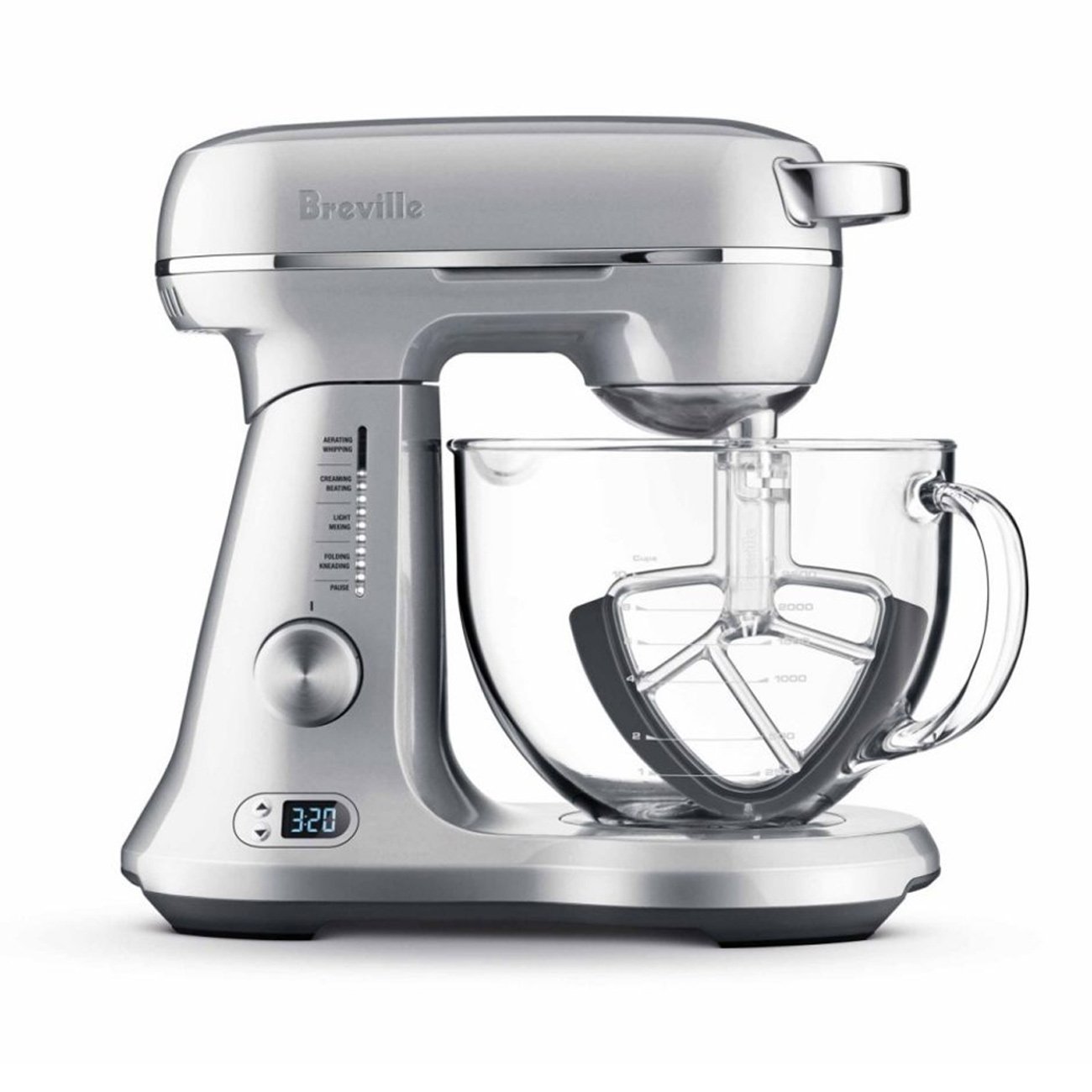
Breville Bakery Chef BEM825
Breville Bakery Chef BEM825 — double-sided scraper beater, LCD timer, dual glass + stainless bowls. The pick for bakers who want the smartest tool.
Amazon affiliate · price subject to change
The Breville Bakery Chef BEM825 at rank 5 (8.7) is the kitchen-tech answer — its headline is a double-sided self-scraping beater that clears the bowl as it mixes. PureWow confirms it "actually works — so well, I might add, that I didn't have to scrape down the bowl as I baked," and calls it "the most powerful mixer I've come across at this price point." Note the dissent worth weighing: TechGearLab's testing of the same beater architecture saw "stalling and jerking" and judged it "underpowered for its bowl size." It ships with dual glass and stainless bowls plus an LCD timer. The pick for bakers who want the cleverest tool, with eyes open about the power ceiling.
The Value Tier — Cuisinart and Hamilton Beach
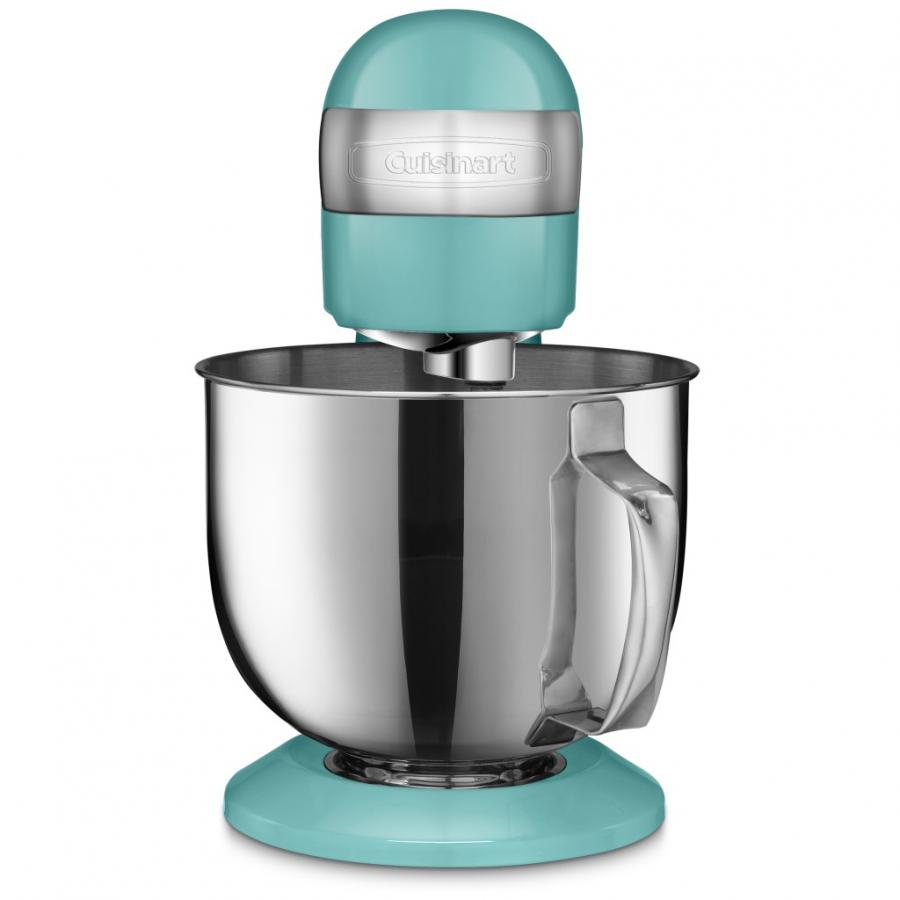
Cuisinart SM-50 Precision Master 5.5-Quart
Cuisinart SM-50 Precision Master 5.5-Quart — 500W motor, 12 speeds, 5.5Q bowl, three attachments in the box. Dollar-for-dollar the most mixer under $250.
Amazon affiliate · price subject to change
The Cuisinart SM-50 Precision Master 5.5-Quart at rank 7 (8.3) is the most mixer for the money. A 500W motor, a 5.5-quart bowl, 12 speeds, and three attachments included rather than sold separately — Tom's Guide named it an Editor's Choice and put it simply: "if your budget won't stretch to a KitchenAid, this mid-range stand mixer is the next best thing." It even matches the premium brands on color, with 13 finishes. The trade-off is mass: it's lighter than a KitchenAid and can shake on the counter with heavy dough at speed. For around $229, it's the value-pro default.
Below it, the Hamilton Beach Eclectrics All-Metal 12-Speed (rank 9, around $189) is the budget pick that doesn't feel like one — an all-metal gear train where rivals go plastic, plus a rare 3-year warranty that Foodal notes is unusual in a category where "most are only 1 year." Foodal is also honest that it's "too light for consistent bread making" and prone to counter-walking on bigger batches. For metal guts without the metal price, it's the honest answer in the value tier — just not a bread machine.
The First Mixer — Dash
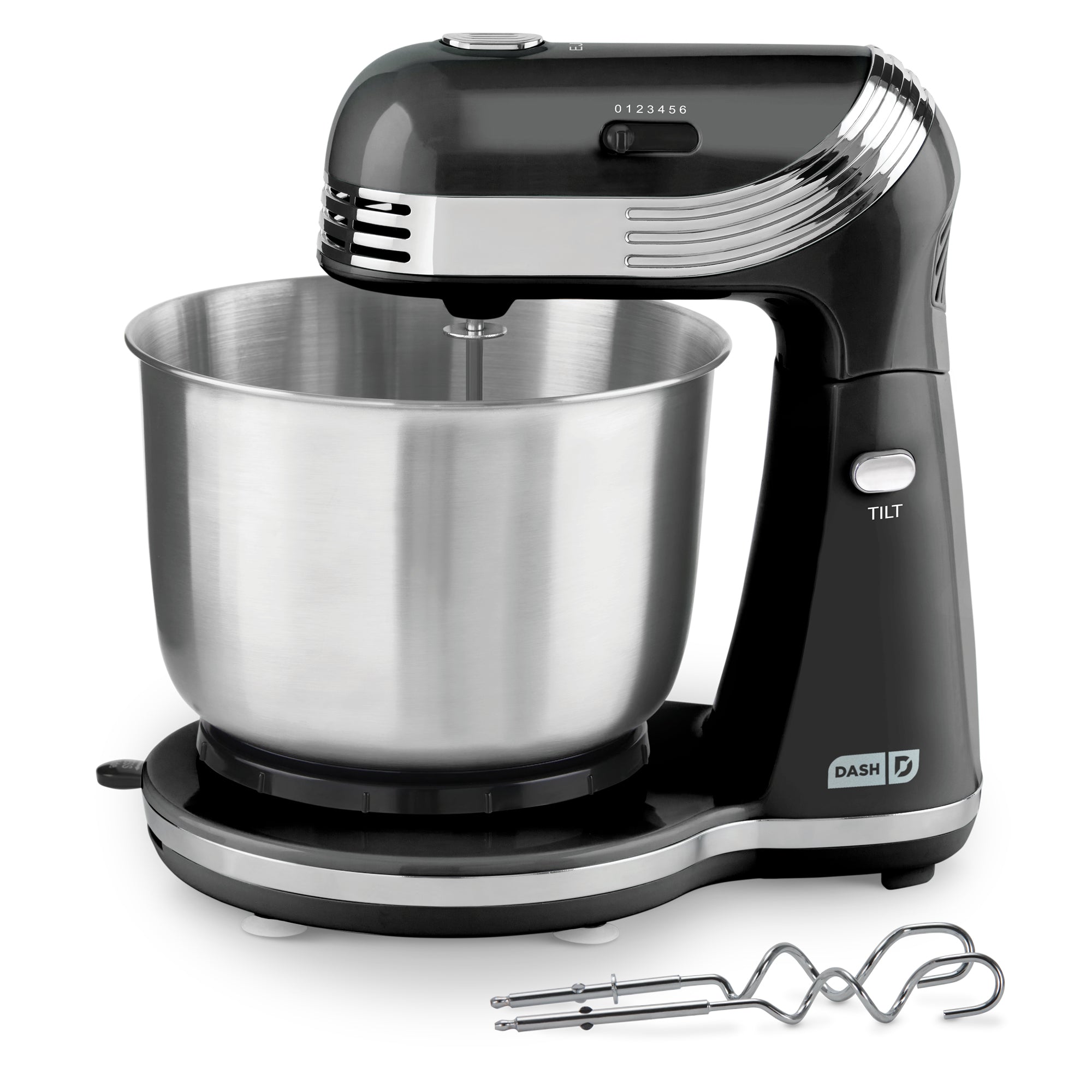
Dash Everyday Stand Mixer 3-Quart
Dash Everyday Stand Mixer 3-Quart — 6-speed, 3L compact bowl, pastel finishes, impulse-buy price. The dorm cabinet / apartment patio first mixer.
Amazon affiliate · price subject to change
The Dash Everyday 3-Quart at rank 10 (7.6) is the apartment mixer and the first-mixer impulse buy — a compact footprint and pastel finishes at around $70. Be clear-eyed about what that buys: it's fine for cookies, frosting, and the occasional cake, but it's lightweight plastic, and lab testing from publications like Consumer Reports has found it struggles with anything demanding. The Gadgeteer's hands-on was kinder on power but blunt about the build, noting it's "light enough that you might think that it's more of a toy than a real kitchen appliance." For a dorm or a tiny kitchen where the alternative is no mixer at all, it's exactly enough — and no more.
The Bottom Line
Match the machine to the work. Buy the KitchenAid Artisan if you bake a bit of everything and want the safe default; a bowl-lift KitchenAid or the Bosch Universal Plus if bread is a weekly habit; the Ankarsrum if you're a serious sourdough baker who'll learn its quirks; the Smeg if the look matters as much as the mixing; the Breville Bakery Chef if the self-scraping beater sells you; the Cuisinart SM-50 or Hamilton Beach Eclectrics if value leads; and the Dash only for the smallest kitchens and lightest jobs. With the July 4 appliance sales live, this is a strong week to buy across the board.
See the full community ranking, vote for your pick, and compare expert and community scores on our Best Stand Mixers list. Building out the rest of the kitchen? Cross-shop the Best Espresso Machines, Best Coffee Makers, and Best Coffee Grinders briefs, or browse the full lineup across the home & kitchen category.
See all 10 products ranked by the community
Best Stand Mixers
See Full Rankings →219 community votes cast
Common Questions
For most kitchens it's the KitchenAid Artisan 5-Quart Tilt-Head, which tops Gavler's list at 9.4 and has been the reviewer default — Wirecutter, Tom's Guide, America's Test Kitchen — for over a decade. Its 325W planetary motor and 5-quart bowl handle the 80 percent use case: cookies, cakes, frosting, lighter bread, the occasional pizza dough. But 'best' depends on what you bake. If you make stiff bread dough weekly, step up to a bowl-lift KitchenAid or the Bosch Universal Plus; for serious high-hydration sourdough, the Ankarsrum Original uses a different architecture entirely. The Artisan is the right answer for the majority — not for everyone.
Start with the Artisan 5-Quart Tilt-Head (rank 1, around $449) — it is the right KitchenAid for most homes, and the tilt-head design makes bowl access easy. Move up only when you hit its ceiling, which is repeated stiff-dough bread baking: the 325W motor bogs down and the head can walk across the counter under load. The next step is the Pro 600 Bowl-Lift 6-Quart (rank 6, around $499), and above that the Pro Line 7-Quart Bowl-Lift (rank 2, around $599) with its 1.3-HP motor and roughly double the batch ceiling. You pay for capacity and torque, not features — so skip the upgrade unless you actually bake bread weekly.
For serious bread, the planetary tilt-head is the wrong tool. The Ankarsrum Original AKM 6230 (rank 3, around $749) motorizes the bowl instead of the head — a stationary roller works the dough as the bowl spins, which is gentler on gluten and can knead high-hydration sourdough that would wrap around and stress a planetary hook. The Bosch Universal Plus (rank 8, around $399) is the high-capacity value alternative, with an 800W under-bowl motor that handles up to 14 pounds of dough. If you want to stay with KitchenAid, the bowl-lift Pro 600 and Pro Line resist counter-walking far better than the tilt-head Artisan. Bread bakers should buy for torque and bowl stability, not color.
They are built for different bakers. The KitchenAid Artisan is the easier, more versatile all-rounder: set a speed and walk away, plus a 15-plus attachment ecosystem (pasta roller, meat grinder, spiralizer) the Ankarsrum can't match. The Ankarsrum wins decisively on bread — its motorized-bowl, roller-and-scraper design develops gluten in big, wet doughs without straining, and reviewers note it can run far longer without overheating. The trade-offs are price (the Ankarsrum is the most expensive on the list) and a real learning curve, since you adjust the roller and scraper to match each dough. Bake bread often, choose Ankarsrum; bake a bit of everything, choose KitchenAid.
The Cuisinart SM-50 Precision Master 5.5-Quart (rank 7, around $229) is the most mixer for the money — a 500W motor, a 5.5-quart bowl, 12 speeds, and three attachments in the box, which Tom's Guide called the next best thing if your budget won't stretch to a KitchenAid. The catch is that it's lighter and can shake on the counter at higher speeds with heavy dough. Below it, the Hamilton Beach Eclectrics All-Metal (rank 9, around $189) gives you a metal gear train and a rare 3-year warranty in the sub-$200 tier. Skip the ultra-cheap Dash for anything beyond cookies and frosting — lab tests find it struggles with real mixing.
Not for most buyers yet. In March 2026 KitchenAid launched the Artisan Plus at around $600 — the first major tilt-head redesign since the 1950s, adding Precision Speed Control, an LED bowl light, Soft Start anti-splatter, and a double flex-edge beater. They're nice refinements, but it costs about $150 more than the original Artisan and does the same core job. Reviewers still point shoppers to the original Artisan 5-Quart (the one on Gavler's list) as the better value. If the new conveniences genuinely matter to you, the Plus is fine — but it isn't a reason to skip the proven $449 classic.
Yes — kitchen appliances are one of the steepest-discount categories of the July 4 weekend, which in 2026 is amplified by the holiday's 250th-anniversary sales. Amazon's June Prime Day just wrapped (it ended June 26, 2026), but the July 4 sales are live now through the holiday, and Target, Walmart, Best Buy, and Williams-Sonoma typically run their own. KitchenAid, Cuisinart, and the value brands discount most reliably; Ankarsrum and Smeg rarely move much. If a mixer on your shortlist is from a discount-friendly brand, this is a strong week to buy — and stand mixers double as a popular summer wedding-registry gift, so retailers lean into the category now.
Gavler's Best Stand Mixers list is ranked by community vote — one vote per person, with no affiliate commissions or manufacturer sponsorships steering the order. Buyers pick the mixer they'd recommend above all others, which is why the list rewards what spec sheets miss: whether the motor actually survives years of stiff dough, whether the build justifies the price, and whether the thing is a joy or a chore to use. The expert score and community score sit side by side on the live list, so you can see where professional testing and owner reality agree — and you can vote yourself and watch the ranking shift.
Products Mentioned
Jump to the full ranking and community verdict for each pick named above.