The Best Backpacking Sleeping Bags in 2026, Ranked by the Hikers Who Sleep in Them
Western Mountaineering, Enlightened Equipment, Zpacks, Nemo. Gavler's thru-hikers rank the bags and quilts worth carrying — by warmth, weight, and price.
Published June 2026 — peak trail season is here. Below: the backpacking sleeping bags from Gavler's Best Backpacking Sleeping Bags list worth carrying this summer, ranked by community vote and sorted by what the bag needs to do.
The 2026 backpacking sleeping bag market has stratified cleanly. Western Mountaineering still owns the premium-down-mummy crown — the UltraLite has been the OutdoorGearLab and Switchback Travel top pick for the better part of a decade, and the construction quality justifies the holdover. Enlightened Equipment has consolidated the cottage quilt category — the Enigma 20 is what every long-trail through-hiker eventually carries. Zpacks built the sub-pound option for the gram-counting tier. Nemo added the spoon-shaped comfort pick that side-sleepers genuinely love. And at the budget end, Kelty's Cosmic and Marmot's Trestles deliver an honest first-bag experience under 150 dollars. Every pick on Gavler's list now has a defined buyer.
What follows are the picks from Gavler's Best Backpacking Sleeping Bags list worth buying for the 2026 trail season, ranked by community vote and sorted by what the bag needs to do — survive a Sierra night-low under 25°F, save weight for a sub-12-pound base, accommodate a side-sleeping body, or come in under $150 and still get you through a first thru-hike.
The Cottage Benchmark — Western Mountaineering UltraLite $530
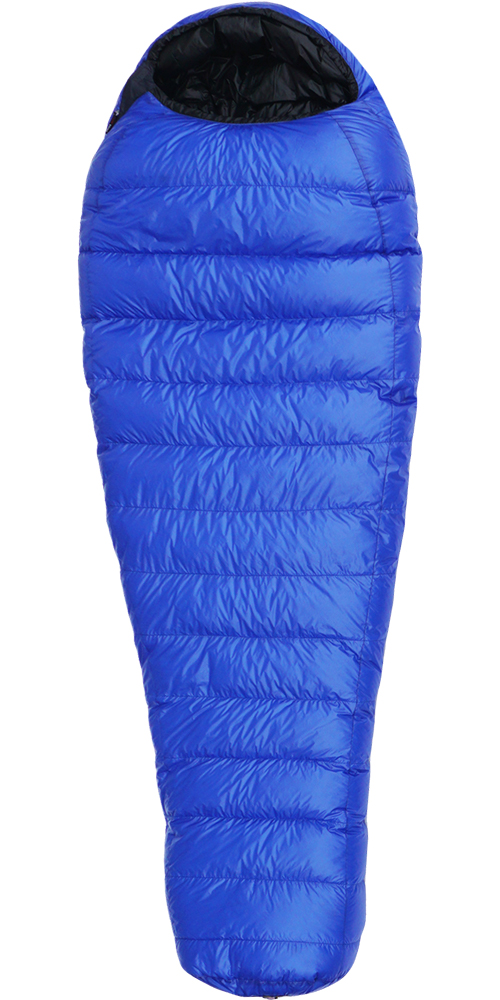
Western Mountaineering UltraLite
850+ fill goose down in a 1 lb 13 oz mummy bag rated to 20°F, hand-built in San Jose with continuous baffles that eliminate cold spots.
Amazon affiliate · price subject to change
If construction quality and warranty horizon matter more than the price, this is the bag. The UltraLite is hand-built in San Jose with 850+ fill goose down in a continuous-baffle design that eliminates the cold spots that plague differential-baffle construction — the down can be shaken side-to-side to adjust the top-to-bottom distribution depending on temperature. The 1-pound 13-ounce trail weight competes with cottage quilts at half the bag-feature trade-off, and the EXCEL DWR shell shrugs off tent-wall condensation and shoulder-season frost without compromising loft. OutdoorGearLab, Switchback Travel, and Section Hiker have all named the UltraLite a best-in-class three-season bag in their most recent editorial reviews.
The UltraLite ranks first on Gavler with a 9.7 community score. The trade-off is price ($530) and the format itself — a traditional mummy bag with a zipper and a hood is going to be 4 to 8 ounces heavier than the equivalent-rating quilt, which is the cost of full enclosure and the cold-weather comfort that comes with it. For a thru-hiker who wants the most refined version of the traditional mummy and the longest warranty horizon in the category, the UltraLite is the apex pick.
The Thru-Hiker Quilt — Enlightened Equipment Enigma 20 $310
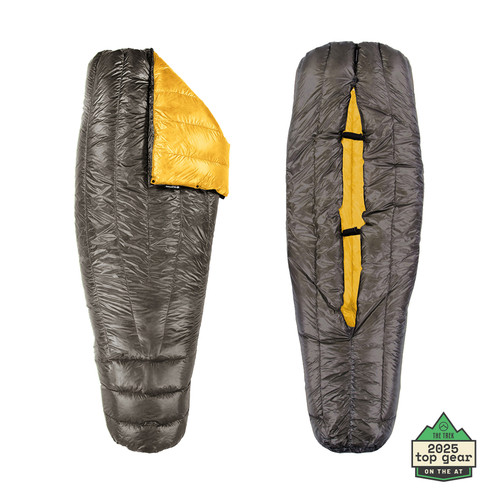
Enlightened Equipment Enigma 20
850-fill DownTek water-resistant down quilt with fully customizable dimensions, built to order in Winona, Minnesota.
Amazon affiliate · price subject to change
The Enigma is the bag the long-trail community actually carries. The 850-fill DownTek water-resistant down packs to the size of a Nalgene bottle, the fully customizable dimensions (width, length, temperature rating, shell color, fill type) let a hiker dial in the bag for their body and their kit, and the 20-ounce trail weight saves 9 ounces versus the Western Mountaineering UltraLite at a meaningfully lower price. CleverHiker's long-term test framed the Enigma as the quilt that proved cottage manufacturers had matched the heritage brands on construction quality at half the cost.
The Enigma ranks second on Gavler with a 9.5 community score. The trade-off is the quilt format — no hood (a separate down hood adds 2 to 3 ounces back), no zipper, no insulation under the body where the sleeping pad replaces it, and a learning curve for hikers who have only slept in mummies. For thru-hikers carrying a sub-15-pound base weight, the Enigma is the right answer; for back-sleepers and warm-weather carries, it is genuinely revelatory. For side-sleepers who roll out of the quilt every hour, see the Nemo Disco below.
The Sub-Pound Quilt — Zpacks 20F Classic $395
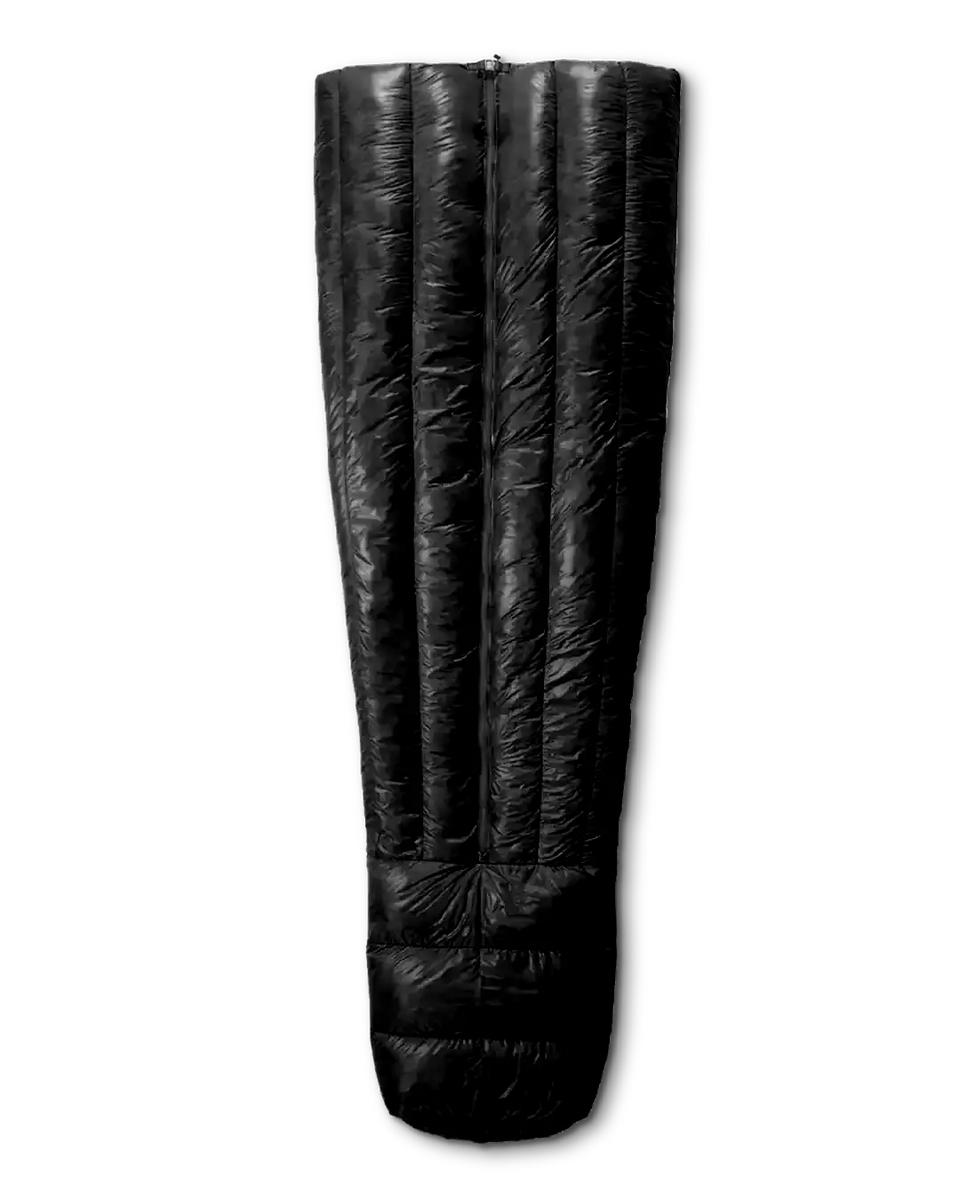
Zpacks 20F Classic
900-fill down in a 15 oz quilt from the makers of the Duplex Pro tent. Ultra-minimal construction for gram-conscious thru-hikers.
Amazon affiliate · price subject to change
The Zpacks Classic is what the gram-counting tier carries. 900-fill goose down in a 15-ounce package is the lightest credible 20°F quilt in production — roughly half the weight of the Western Mountaineering UltraLite at the same temperature rating, and 5 ounces lighter than the Enlightened Equipment Enigma. The Pertex Quantum shell is the lightest shell fabric that still meets a credible durability bar, and the Zpacks construction quality matches Enlightened Equipment in every dimension that matters.
The Classic ranks fifth on Gavler with a 9.1 community score. The trade-off is the same quilt-format learning curve as the Enigma plus a higher price ($395 versus $310) for the marginal weight savings — the Classic is the right call for the second cottage quilt purchase, not the first. For a sub-12-pound base weight on a long-trail thru-hike where every ounce compounds, the Classic is the upgrade.
The Side-Sleeper Comfort Pick — Nemo Disco Endless Promise 15 $290
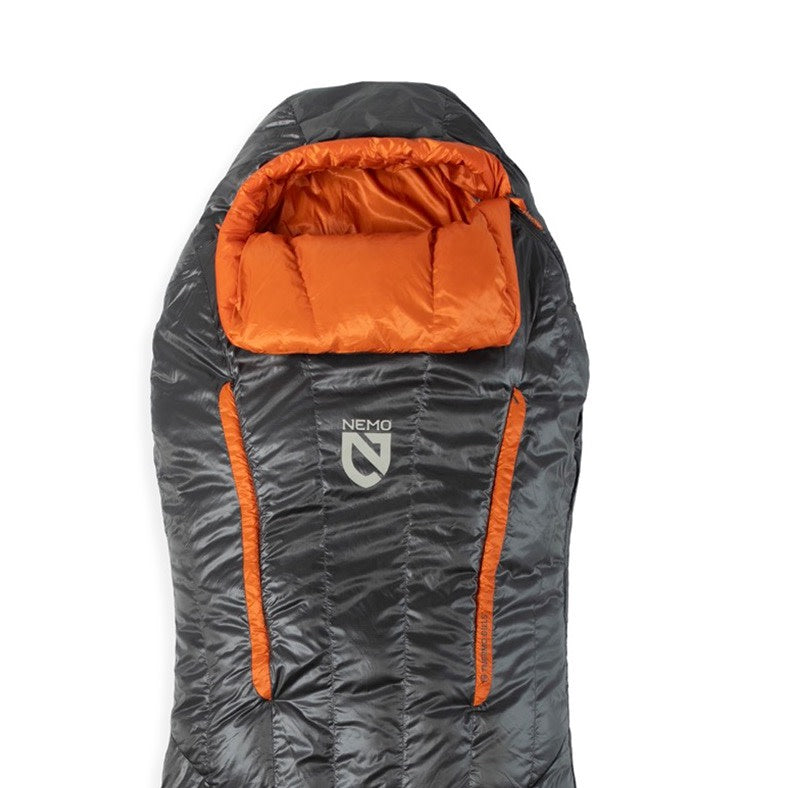
Nemo Disco Endless Promise 15
Spoon-shaped bag with Thermo Gills for temperature regulation and a waterproof footbox. 15°F rated with 650-fill DownTek.
Amazon affiliate · price subject to change
The Disco is the only mainstream cold-weather bag designed around a side-sleeping body. The spoon-shaped cut adds width at the hips and knees where mummy bags constrain side-sleepers, the Thermo Gills are a temperature-regulation venting system that meaningfully extends the comfort range for sleepers who run hot, and the 15°F rating handles spring and fall shoulder weather most thru-hikers carry through. The waterproof footbox handles tent-wall condensation that would soak a non-DWR foot panel through.
The Disco ranks third on Gavler with a 9.3 community score. The trade-off is weight (2 pounds 13 ounces — roughly 1 pound heavier than a mummy at the same temperature rating) and packed volume. For weekend warriors, side-sleepers who have given up on the mummy format entirely, and section hikers who prioritize comfort over weight savings, the Disco is the genuine upgrade. For thru-hikers carrying every ounce for 2,000 miles, the lighter cottage picks above are the better trade-off.
The Mainstream Cold-Weather Pick — REI Co-op Magma 15 $379

REI Co-op Magma 15
850-fill water-resistant down in a mummy cut with differential baffles, backed by the REI return policy and nationwide support.
Amazon affiliate · price subject to change
The Magma 15 is the bag that proved mainstream retail had matched the cottage brands on premium construction. 850-fill water-resistant goose down in a differential-baffle mummy cut at 1 pound 14 ounces — roughly the same weight as the Western Mountaineering UltraLite at a meaningfully lower price, with the REI return policy as the warranty. The 15°F rating handles cold-weather shoulder season the way a 20°F bag does not, and the REI Member dividend (now a 10 percent annual rebate) recovers a meaningful chunk of the purchase price.
The Magma 15 ranks fourth on Gavler with a 9.2 community score. The trade-off versus the Western Mountaineering UltraLite is the construction precision — differential baffles versus continuous baffles, which means the down does not migrate as freely between top and bottom panels and the bag does not adjust as easily to temperature swings. For most thru-hikers, the difference is not detectable in the field; for cold-spot-prone sleepers, the UltraLite is the upgrade. The Magma is the right answer for a sub-400-dollar premium-down bag carried through an REI store.
The Budget Synthetic — Big Agnes Anthracite 20 $280
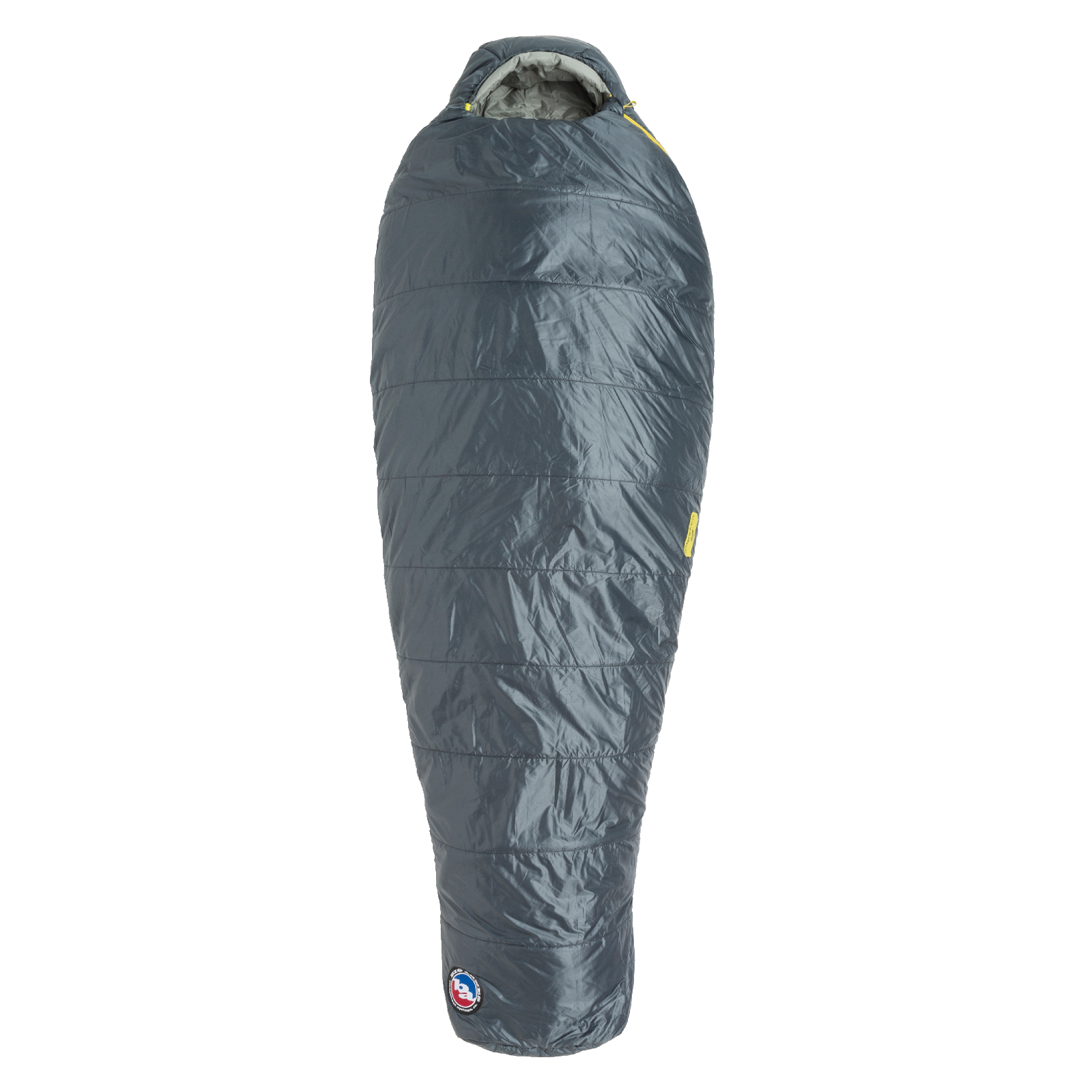
Big Agnes Anthracite 20
FireLine Pro Eco recycled synthetic insulation in a traditional mummy rated to 20°F (ISO comfort ~32°F). The budget cold-weather pick for wet country, where synthetic beats down.
Amazon affiliate · price subject to change
The Anthracite is the synthetic pick for sustained-wet conditions and budget-conscious cold-weather carries. FireLine MAX synthetic insulation in a roomy rectangular-mummy hybrid shape — wider at the shoulders and the knees than a mummy, more enclosed than a rectangular — that handles a side-sleeping body without the spoon-shaped premium of the Nemo Disco. The synthetic insulation retains loft when damp, which is the trade-off that matters for Pacific Northwest rain, canoe trips with persistent condensation, and snowmelt-soaked mountaineering setups.
The Anthracite ranks seventh on Gavler with an 8.8 community score. The trade-off is weight (3 pounds 4 ounces — roughly 1 pound 5 ounces heavier than the down picks above at the same temperature rating) and packed volume — synthetic insulation does not pack as small as 850-fill down. For sustained-wet conditions where down loses its loft advantage, for sub-300-dollar cold-weather budgets, and for backpackers who do not want to baby a down bag, the Anthracite is the right call.
The First-Bag Budget Pick — Kelty Cosmic 20 $130
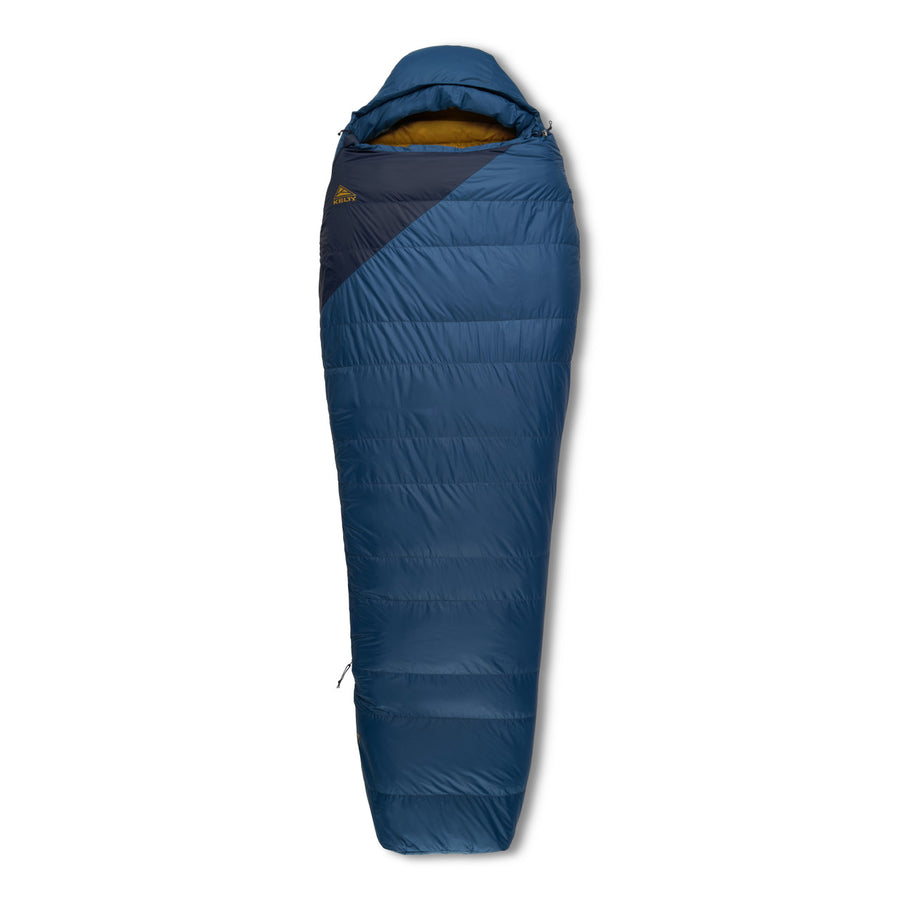
Kelty Cosmic 20
550-fill DriDown in a $130 mummy bag rated to 20°F. The entry-level down sleeping bag with the best track record for introducing new backpackers to down insulation.
Amazon affiliate · price subject to change
The Cosmic 20 is the bag that has introduced more first-time backpackers to down sleeping bags than any other product on this list. 550-fill DriDown in a mummy cut at 2 pounds 14 ounces, rated to 20°F, for under $150 — the down is treated with a hydrophobic finish that retains 60 percent more loft when wet than untreated down, and the DriDown fill is the entry-level differentiator that makes the Cosmic feel like a premium bag at a budget price.
The Cosmic ranks ninth on Gavler with an 8.4 community score. The trade-off versus the premium picks above is fill power (550 versus the 850+ of Western Mountaineering or Enlightened Equipment) — the Cosmic packs larger, weighs more, and loses loft faster over years of use. For a sub-150-dollar budget, a first thru-hike, or a backpacker not yet sure they will stay in the sport, the Cosmic is the answer. It pays back the purchase cost inside one trail season; the upgrade to a premium bag is the reward for the second.
What the 2026 Trail Season Demands
For the Pacific Crest Trail thru-hiker shopping for a one-bag setup that covers Mojave heat through Sierra night-lows, the Western Mountaineering UltraLite or Enlightened Equipment Enigma 20 are the consensus picks — the UltraLite for cold-spot-prone sleepers, the Enigma for gram-counting thru-hikers comfortable with the quilt format. For the Appalachian Trail thru-hiker carrying through spring and fall shoulder weather, the Nemo Disco Endless Promise 15 or REI Co-op Magma 15 are the right calls — both rated 5°F colder than the PCT picks, both better suited to the wetter conditions and warmer overnight lows of the eastern corridor. For the section hiker who carries one bag for years and a budget under $150, the Kelty Cosmic 20 is the entry point. Cross-references: pair the bag with the Best Backpacking Packs pick, the Best Backpacking Sleeping Pads pick, and the Best Backpacking Tents pick from Gavler for the full sleep-system kit.
Architecture first — a hooded mummy vs a quilt vs a wet-weather synthetic — is the sleeping-bag buying guide. This page is the ranking story.
The vote is yours. See where these bags rank and add your own pick to the Best Backpacking Sleeping Bags list. One vote per person, no affiliate-driven rankings, no sponsorships — just what the people sleeping in them recommend.
See all 10 products ranked by the community
Best Backpacking Sleeping Bags
See Full Rankings →264 community votes cast
Common Questions
For most three-season thru-hikers, the Western Mountaineering UltraLite at $530 is the consensus answer — OutdoorGearLab, Section Hiker, Backpacking Light, and Switchback Travel have all ranked it best-in-class for over a decade for the same reason. The continuous-baffle 850+ fill goose down eliminates the cold spots that plague differential-baffle bags, the 1-pound 13-ounce trail weight competes with cottage quilts at half the bag-feature trade-off, and the bag is hand-built in San Jose with a warranty that survives the trail mileage. For thru-hikers comfortable with quilts, the Enlightened Equipment Enigma 20 at $310 is the cottage answer — 850-fill DownTek water-resistant down, fully customizable dimensions, and the quilt format that the long-trail community has standardized on. For first-time backpackers and budget builds, the Kelty Cosmic 20 at $130 is the right entry point.
Down for almost every trip. Goose down with an 800+ fill power is roughly twice as warm per ounce as synthetic insulation, packs to a third of the volume, and lasts for decades with proper care — the Western Mountaineering UltraLite, Enlightened Equipment Enigma 20, and Zpacks 20F Classic are all down for this reason. The trade-off is performance when wet — traditional down clumps and loses loft when soaked, though modern water-resistant treatments like DownTek and Nikwax Hydrophobic Down have largely closed the gap for normal three-season moisture. Synthetic insulation wins for sustained-wet conditions — extended Pacific Northwest rain, canoe trips, mountaineering with internal condensation, or a budget build where the cost difference matters more than the weight. The Big Agnes Anthracite 20 and Marmot Trestles 15 are the right synthetic picks for those use cases.
Mummy bag for cold-weather carries below 20°F, side-sleepers who toss in their sleep, or thru-hikers who want a hood to seal in heat. The Western Mountaineering UltraLite, REI Co-op Magma 15, and Nemo Disco Endless Promise 15 are mummies for this reason — the Disco adds a spoon-shaped foot box that comfort-first side-sleepers genuinely love. Quilt for sub-15-pound base weights, sub-30°F temperatures, and back-sleepers who do not need full enclosure. The Enlightened Equipment Enigma 20 and Zpacks 20F Classic are the cottage quilt standard — no hood, no zipper, no insulation underneath the body where the sleeping pad replaces it, and 4 to 8 ounces saved versus an equivalent mummy. Rectangular for car camping. Backpackers who try rectangular bags on the trail return them within one season.
Buy a bag rated 10 to 15°F colder than the coldest expected nighttime low. Temperature ratings are typically published as comfort ratings for cold sleepers and limit ratings for average sleepers — the published 20°F bag is comfortable to about 30°F for most sleepers and 25°F for warm sleepers. For Pacific Crest Trail through-hiking in May through September, a 20°F bag (the Western Mountaineering UltraLite or Enlightened Equipment Enigma 20) is the right call — comfortable through Sierra night-lows, ventilable through Mojave desert heat. For Appalachian Trail thru-hiking in March through October, a 15°F bag is the more comfortable choice for spring and fall shoulder weather — the REI Co-op Magma 15 and Nemo Disco Endless Promise 15 cover the year. Add a 30°F summer bag or quilt only if the use case is summer-only and the cold-weather bag is too warm to enjoy. Most thru-hikers carry one bag, period.
Pick Western Mountaineering for the highest construction quality and the longest warranty horizon. The UltraLite has been the OutdoorGearLab top pick for the better part of a decade — the continuous-baffle construction, 850+ fill goose down, and hand-built San Jose assembly are the bag-construction benchmark every other premium bag is measured against. Pick Feathered Friends if a higher fill power matters more than the price difference — the Hummingbird UL 20 uses 950-fill down at a higher cost, with a marginal weight savings most thru-hikers do not need. Pick Enlightened Equipment if the quilt format and the customizable dimensions matter more than the mummy-bag heat retention — the Enigma 20 is the long-trail standard and the most-recommended quilt on every thru-hiker forum. The fourth option, Zpacks 20F Classic, sits between Enlightened Equipment and the heritage brands on weight (15 oz) and on price ($395). Different bags for different priorities.
Yes, if comfort matters more than weight savings. The Disco's spoon shape is the only mainstream cold-weather bag designed around a side-sleeping body — the wider hip and knee panels let a side-sleeper actually sleep on their side without the mummy-bag constriction that wakes most side-sleepers every 90 minutes. The Thermo Gills are a temperature-regulation venting system that meaningfully extends the comfort range, especially for sleepers who run hot. The trade-off is weight (2 pounds 13 ounces for the regular — about 1 pound heavier than a mummy at the same temperature rating) and packed volume. For weekend warriors and section hikers, the comfort upgrade is worth the weight penalty. For thru-hikers carrying every ounce for 2,000 miles, the lighter mummies and quilts above are the better trade-off.
The Kelty Cosmic 20 at $130. 550-fill DriDown in a mummy cut rated to 20°F — the bag that has introduced more first-time backpackers to down sleeping bags than any other product on this list. The trade-off versus the premium picks is fill power (550 versus the 850+ of Western Mountaineering or Enlightened Equipment) — the Cosmic packs larger, weighs more (2 pounds 14 ounces), and loses loft faster over years of use. For a sub-150-dollar budget, a first thru-hike, or a backpacker not yet sure they will stay in the sport, the Cosmic is the right answer. For a synthetic alternative at a similar price, the Marmot Trestles 15 at $110 is the rain-and-condensation pick. Both bags pay back the cost in one season; the upgrade to a premium down bag is the reward for the second.
Products Mentioned
Jump to the full ranking and community verdict for each pick named above.
- Western Mountaineering UltraLiteBackpacking · Best Backpacking Sleeping Bags
- Enlightened Equipment Enigma 20Backpacking · Best Backpacking Sleeping Bags
- Zpacks 20F ClassicBackpacking · Best Backpacking Sleeping Bags
- Nemo Disco Endless Promise 15Backpacking · Best Backpacking Sleeping Bags
- REI Co-op Magma 15Backpacking · Best Backpacking Sleeping Bags
- Big Agnes Anthracite 20Backpacking · Best Backpacking Sleeping Bags
- Kelty Cosmic 20Backpacking · Best Backpacking Sleeping Bags