Molekule Air Pro Review: Is This $1,000 Air Purifier Worth It?
We Tried It
FDA-cleared Class II medical device with proprietary PECO technology that neutralizes airborne pathogens.
Gavler Meta-Score
“The Air Pro's sensors and smoke performance are the real deal, and independent lab testing refutes the 'worst purifier ever' takes — but it's brutally expensive to buy and run, one of the loudest units tested, and its undimmable UV glow makes it a bad fit for a bedroom. Buy it for a chemically sensitive household or a smoke-prone home where the medical-grade clearance matters; for everyone else, a Levoit or Winix delivers comparable cleaning for a fraction of the cost.”
The Gavler Verdict
Molekule Air Pro Review: PECO Sensors Meet a Real Price Problem
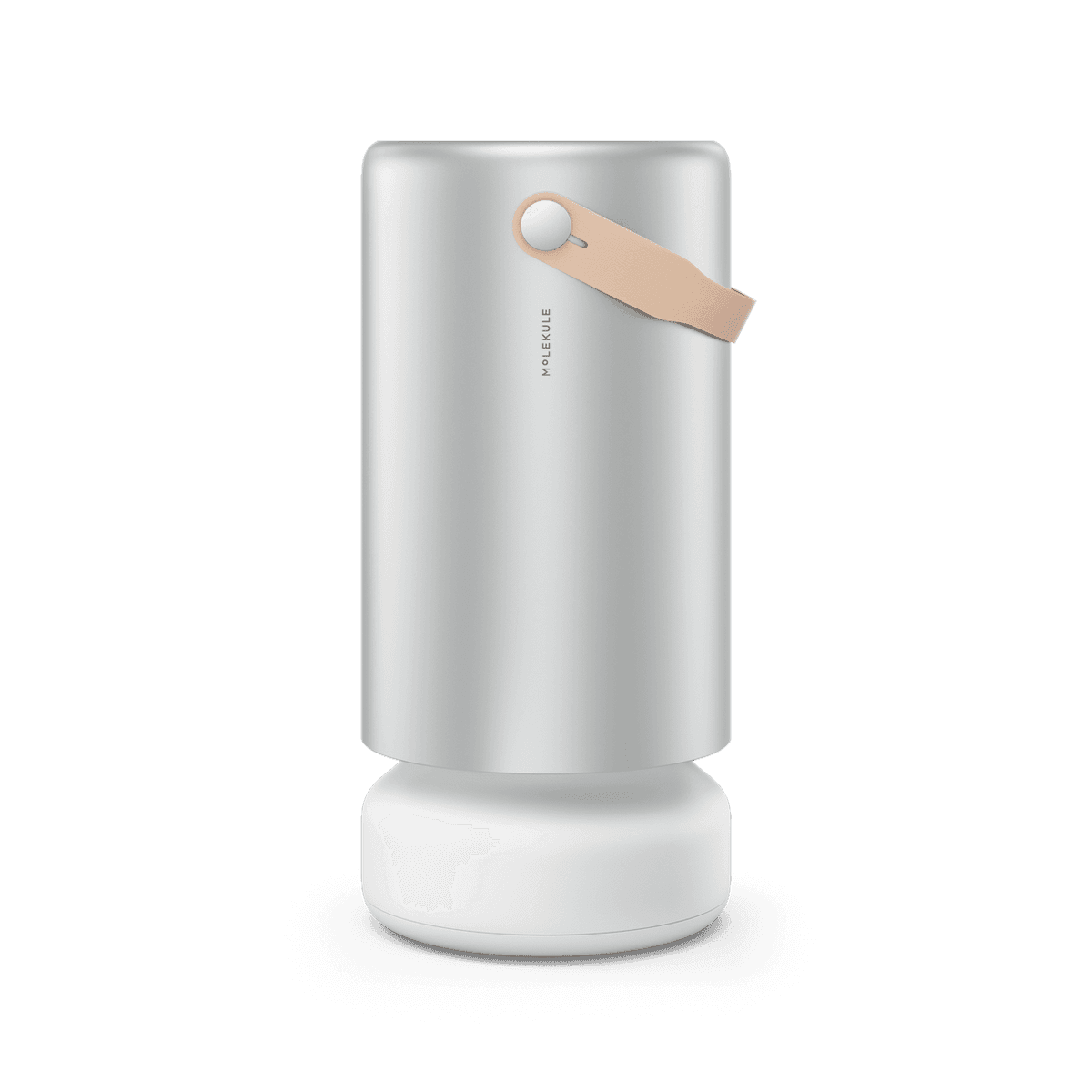
The Molekule Air Pro is the most sensor-obsessed air purifier in this category, and it's also the one with the most baggage. Its PECO-HEPA filtration combines a HEPA layer with a UV-activated photoelectrochemical oxidation stage, and it reads PM1, PM2.5, PM10, VOCs, CO2, and humidity in real time — a genuinely useful dashboard for anyone who wants to actually see what's happening in their air, not just trust a marketing claim. Molekule's own marketing history is a legitimate reason for skepticism (the New York Times reported the company was forced to retract several claims), so this review leans on what independent labs actually measured. The verdict: the smoke-filtration performance is real and above average, but the price, noise, and undimmable UV glow make it a hard sell outside a specific buyer profile.
Most purifiers on this list are mechanical — pull air through a HEPA filter, done. The Air Pro adds an active chemistry step: PECO (photoelectrochemical oxidation), which uses UV light to break down pollutants at a molecular level rather than just trapping them. It's FDA-cleared as a Class II medical device at fan speeds three and up, and it pairs that with the most detailed sensor suite in the category, all visible on a top touchscreen and companion app. Reviewed watched the auto mode detect and respond to cooking VOCs and even a pet pheromone diffuser without any manual input — the kind of responsiveness that a purely mechanical purifier can't match.
The independent numbers are solid, not miraculous, and that's an important distinction from the marketing. Reviewed found smoke removal 47% better than average in its test set, while VOC filtration measured only 26% above average — a real but more modest edge. Live Science measured 99.6% of 0.3-micron smoke particles cleared in 15 minutes, though with more middling results in already-clean, ambient-air conditions. Notably, Reviewed's own data pushed back directly on "worst ever" verdicts published elsewhere: those tests applied HEPA-standard testing methodology to a device built around a fundamentally different PECO mechanism, which skews the comparison. It covers up to 1,000 sq ft across six fan speeds and two auto modes — genuinely large-room capacity.
The sensor suite is the Air Pro's real differentiator, and it's not a gimmick — full PM1/PM2.5/PM10/VOC/CO2/humidity monitoring with an auto mode that actually reacts to what it measures is not something any purifier in this Gavler cluster matches. For a data-driven household, or anyone managing a chemically sensitive environment where knowing exactly what's in the air matters, that visibility has real value. The FDA Class II clearance also isn't nothing — it signals a level of regulatory scrutiny most consumer purifiers never go through.
The costs here are severe and worth stating plainly. At an MSRP near $1,000 plus roughly $175 in proprietary filters twice a year, running cost is among the highest in the entire category — Reviewed's own comparison: "for mass market consumers, Molekule's Air Pro air purifier simply does not make sense." The proprietary UV filter system also locks out cheaper third-party filters entirely. On high, Reviewed measured 65-66 dB, calling it "the loudest we've encountered in any air purifier we've ever tested," and the interior UV ring glows outward with no dimming option, making it a genuinely poor bedroom fit. Buyers chasing value should look at the Winix 5510 instead, which delivers comparable practical cleaning for a fraction of the cost and running expense.
This is a purifier for someone who has already tried a mechanical HEPA unit and wanted more visibility into what's actually happening in their air — a household managing multiple chemical sensitivities, a parent tracking VOC spikes around a new nursery, or a wildfire-region homeowner who wants an auto mode that reacts to real spikes rather than running on a fixed schedule. It's also, frankly, for a committed Molekule believer who's followed the company's testing controversy and wants to make an informed call based on Reviewed's and Live Science's independent numbers rather than the brand's own claims. It is emphatically not for someone furnishing a first apartment or a nursery on a budget.
On Gavler's Best Air Purifiers list, the Air Pro ranks 5 — the sensor-and-chemistry specialist positioned between the mid-range Winix 5510 below and the certified-filtration IQAir HealthPro Plus above. If the sensor dashboard is what draws you in but the price is the sticking point, the IQAir HealthPro Plus delivers comparably serious filtration credentials, just without the smart sensors, for meaningfully less running cost.
The Molekule Air Pro earns an 8.6 — the highest score in this cluster — because its independently verified filtration performance and unmatched sensor suite are genuinely differentiated, and the "worst purifier ever" narrative doesn't hold up against Reviewed's own lab data. But the price is real, the noise is real, and the undimmable glow makes it a poor bedroom choice. Buy it for a chemically sensitive household, a wildfire-prone region, or a data-obsessed buyer who wants to see their air quality in real time. See where it ranks on our Best Air Purifiers list, and cross-shop the Winix 5510 if the price tag is the deciding factor.
No — independent testing pushes back on that. Reviewed's own lab data found smoke removal 47% better than average, and Live Science measured 99.6% of 0.3-micron smoke particles cleared in 15 minutes. The 'worst ever' verdicts from other outlets applied HEPA-standard testing methodology to a PECO device, which Reviewed's data specifically disputes.
It's among the most expensive purifiers to own in the category — an MSRP near $1,000 plus roughly $175 in proprietary filters twice a year. Reviewed noted you could buy six Winix 5500-2 units for the first year's total outlay.
Not really. Reviewed measured 65-66 dB on high, the loudest either outlet tested, and the interior UV ring glows outward with no way to dim it — a poor fit for anywhere you're trying to sleep.
Prices checked regularly
90-day price history
Steady at $749 for the entire 90-day tracking window — no increases, no discounts, across 91 tracked days.
Tracked daily across retailers. Vote Want itabove and we’ll alert you the moment the price drops.
Some links are affiliate links — Gavler may earn a commission. This never affects rankings or scores. Learn more.
Reads PM1, PM2.5, PM10, VOCs, CO2, and humidity on a top touchscreen and app — auto mode ramps up on cooking or chemical spikes.
HEPA capture plus a UV-activated PECO stage; FDA-cleared Class II medical device at fan speed 3 and up. Proprietary — no third-party filters.
Reviewed measured 65 dB on high (the loudest they'd tested) and the interior UV ring glows outward with no dimming — a poor bedroom fit.
Independent lab testing (Reviewed) rates filtration solidly above average and refutes rivals' 'worst ever' verdicts, but the highest-in-class price and running cost, plus loud operation, drag down its value — hence the divided expert view.
Do you think Molekule Air Pro deserves the #5 spot in Best Air Purifiers?
“an impressively powerful and thoughtfully designed piece of kit — but it is also noisy, pricey and requires some of the most expensive filter replacements we have ever seen.”
“In our smoke filtration tests, the Molekule had a reasonable smoke removal rate, 47% better than average. The Air Pro's VOC filtration is not as strong, performing only 26% higher than the average.”
“this is the loudest we've encountered in any air purifier we've ever tested.”
“for mass market consumers, Molekule's Air Pro air purifier simply does not make sense.”
Watch
Hand-picked from creators we trust — playable inline.
Molekule Air Pro Review: Is This $1,000 Air Purifier Worth It?
Molekule Air Pro Review - Destroy Allergens, Pet Dander, and Chemicals
Molekule Air Pro Review: Best Purifier for Home Air Quality?
Molekule Air Pro Review & Comparison to the Original
⚛ Molekule Air Pro Review — Laser Particle Sensor Tests
Molekule: The Worst Air Purifier We've Ever Tested
See how other top picks compare in this category.
Smoke is blanketing the western US again. An air purifier helps more than you'd think — but only if you buy for Smoke CADR and true HEPA, and ignore the ionizer hype.
Dyson logos and 99.99% stickers are the wrong first question. Bedroom-quiet vs living-room CADR vs open-plan is the room job. Then shop Gavler's live ranking.
Dyson, Blueair, Coway, Levoit, IQAir. Gavler's community ranks the air purifiers worth buying for allergies, wildfire smoke, and everyday indoor air.