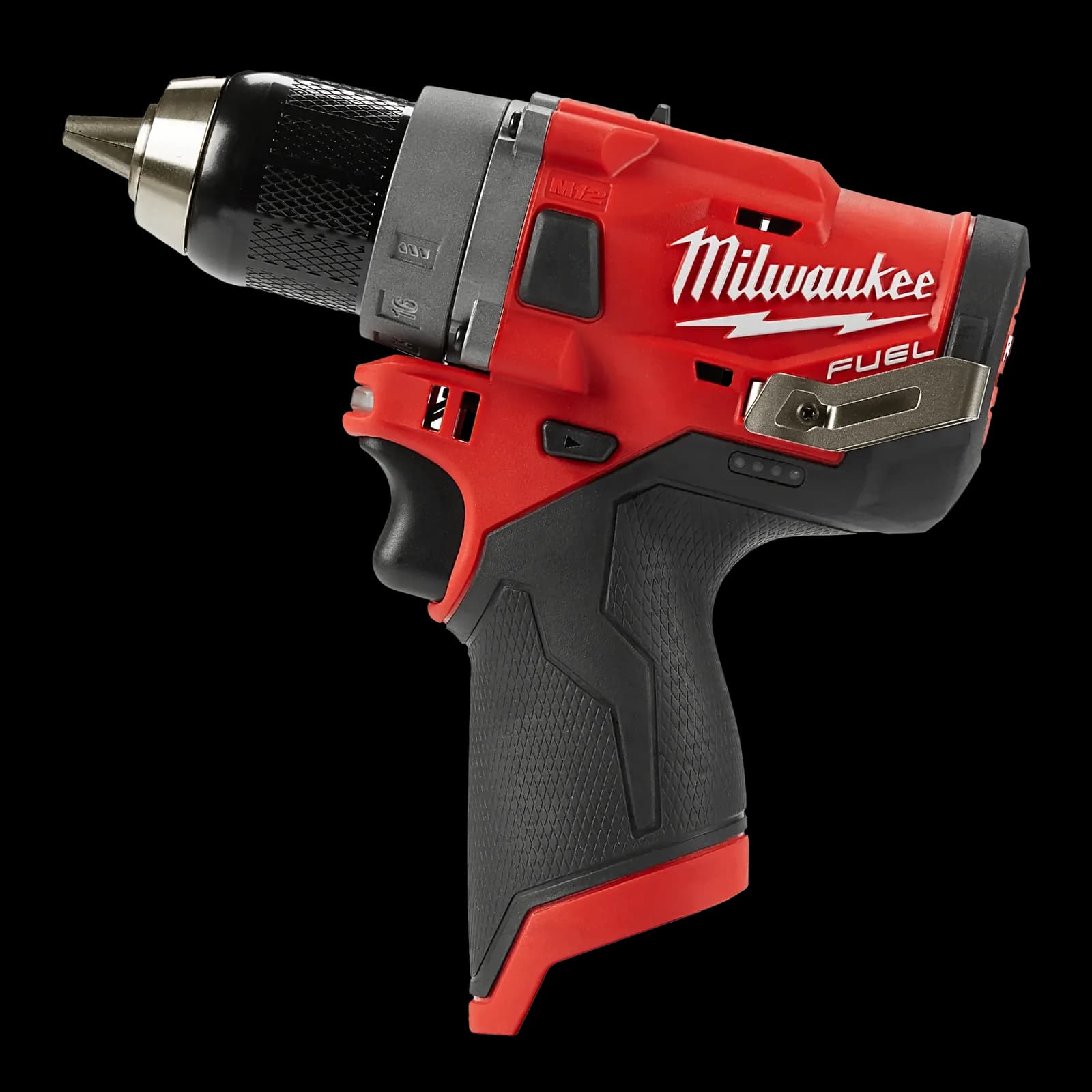
Milwaukee M12 FUEL 2503-20.
Lightest professional-grade drill at only 2.3 lbs. Ideal for electricians and plumbers needing one-handed operation in tight spaces.
The Verdict.
Gavler Meta-Score
“The right tool when the job is reaching into a joist bay or a cabinet carcass, and the wrong one for anything else — TechGearLab stalled it on a 5-inch lag bolt and got only four drill-and-drive cycles from a 2.0Ah pack. Milwaukee's claim is 'lightest in its class' among 12V drills, not lightest professional drill overall. Buy it as a second drill for access work, never as your only one.”
The Gavler Verdict
The Gavler Review.
Milwaukee M12 FUEL 2503-20 Review: The Tank of the 12-Volt Class
The Milwaukee M12 FUEL 2503-20 ranks number 7 on Gavler's Best Power Drills list with an 8.9. It's the drill you buy for a specific reason — reaching into a joist bay, a cabinet carcass, or an electrical panel where a full-size 18V drill simply won't fit — and a poor choice for almost anything else. TechGearLab's independent bench test summed it up cleanly: "unless you need a small drill for tight spots, we think the M18 Fuel is the wiser purchase for various jobs."
What it is
The 2503-20 is Milwaukee's 12V hammerless drill/driver, built around a compact 6.6-inch body and a manufacturer-stated 2.3 lbs bare weight. Milwaukee rates it at 350 in-lbs of peak torque, running 0-450 and 0-1,700 RPM through a 1/2-inch all-metal keyless chuck — an unusual spec at this size and price tier, and one TechGearLab's sibling outlet Tools In Action called "shocking" to find on a drill this small.
Milwaukee's own marketing claim is "lightest weight in its class," meaning 12V half-inch drills specifically — not the lightest professional drill on the market outright, and the company's own 3403-20 successor is lighter still. The 2503-20 was discontinued by Milwaukee in October 2022 and replaced by that 3403-20, though it remains available through retail channels and is still a legitimate buy at its current price.
In use
TechGearLab's bench testing — the same lab that benchmarks drills against a shared torque and drilling protocol — is the most useful independent data point here, and it splits the tool cleanly into what it's good at and what it isn't. Drilling through steel plate with twist bits was genuinely impressive for a 12V tool: "It only took a couple of seconds to make it through the 16 gauge plate with a ¼" drill and about six seconds with the ½" drill." A 5-inch hole saw through a solid-core door "again drilled to the full depth without too much protesting," taking roughly three times as long as the category's best drills but never stalling outright.
Driving is where the voltage ceiling shows. Standard wood screws were no problem — TechGearLab treated it like a top-tier drill for that task, noting it didn't need the periodic overheating breaks that plagued other 12V drills in their pool. But asked to drive a 5-inch, 1/2-inch lag bolt to full depth, "it stalled out a handful of times" before eventually finishing. That's the honest ceiling of a 350 in-lb tool: fine for cabinetry and electrical rough-in, underpowered for structural fastening.
Strengths
The all-metal chuck is a genuine standout at this size — most 12V compacts ship with plastic-bodied chucks, and Tools In Action singled this one out by name as unusually rugged. The 6.6-inch length and light weight make it the drill you reach for when a full-size tool physically can't get where you need it: cabinet interiors, overhead electrical boxes, joist bays. Recharge speed is also a real advantage — TechGearLab clocked roughly 40 minutes for a full 2.0 Ah charge, one of the fastest in their comparison pool, which partially offsets the runtime weakness below.
The trade-offs — who should skip it
Runtime is the tool's clearest weakness, and it's independently documented, not marketing spin. TechGearLab ran a 2.0 Ah pack through repetitive drilling and driving tasks and got just 4 full cycles, against 10 for the category leaders — a gap wide enough to notice on any real job, not just a stress test. Ergonomics split opinion too: Popular Woodworking praised the rugged, tank-like build but noted the trade-off directly — "the tool is built like a tank, but unfortunately weighs as much as one... you suddenly become acutely aware of how tired your wrist is, as the weight is biased towards the front."
If your work is mostly wood screws and general assembly rather than confined-space access, the M12 platform's 350 in-lb ceiling and short runtime make it a worse buy than stepping up to Milwaukee's own M18 line, or sideways to a compact 18V drill from a competing brand.
How it compares
Within Milwaukee's own lineup, the Milwaukee M18 FUEL 2904-20 — ranked number 2 on this list at 9.7 — makes the M12's limitations obvious by contrast. It delivers 1,400 in-lbs of torque (four times the M12's rating), adds a 32,000 BPM hammer-drill mode for masonry work the M12 can't touch at all, and does it at just 3.3 lbs bare — barely a pound heavier than the compact tool. The M12 only wins on raw physical size, which is precisely the point: buy the 2903/2904 as your primary drill, and consider the 2503-20 as a second tool specifically for access work the M18 body can't reach.
For buyers evaluating the top of this list, the DeWalt DCD801B 20V MAX XR ranks number 1 at 9.8 and represents the other end of the trade-off: 550 in-lbs of torque, a two-speed transmission, and a 6.85-inch head — bigger than the M12 but still compact, with none of the 12V runtime penalty. Pro Tool Reviews and Reviewed both rank it among the best all-around cordless drills available, and it's the more practical single-drill purchase for anyone not specifically solving an access problem.
The Gavler verdict
The M12 FUEL 2503-20 is a well-built, honestly limited tool, and TechGearLab's independent bench data backs up exactly where those limits sit: real drilling capability that "held its own against much larger and higher voltage drills," undercut by a documented 4-cycle battery life and a torque ceiling that stalls on serious fastening work. Buy it as a second drill for electricians, plumbers, and cabinet installers who genuinely need the smaller body. Don't buy it as your only drill — Milwaukee's own M18 FUEL siblings, and DeWalt's XR line at the top of this list, will serve a general-purpose buyer better for close to the same money.
Common Questions
Only if confined-space access is the actual job. TechGearLab's independent bench test found it 'held its own against much larger and higher voltage drills' but concluded 'unless you need a small drill for tight spots, we think the M18 Fuel is the wiser purchase for various jobs.'
The weak point of the tool. TechGearLab measured only 4 full drill-and-drive cycles on a 2.0 Ah pack, versus 10 cycles for the best drills in their test pool — though it redeemed itself with a roughly 40-minute full recharge, one of the fastest in their comparison.
Not comfortably. It stalled repeatedly driving a 5-inch, 1/2-inch lag bolt in TechGearLab's testing before eventually finishing the job, and it's rated at 350 in-lbs versus 1,400 in-lbs for Milwaukee's own M18 FUEL siblings — a 4x torque gap that shows up the moment the work gets heavy.
Where to Buy.
Prices checked regularly
90-day price history
Price History
Steady at $85.00 for the entire 90-day tracking window — no increases, no discounts, across 91 tracked days.
Tracked daily across retailers. Vote Want itabove and we’ll alert you the moment the price drops.
Some links are affiliate links — Gavler may earn a commission. This never affects rankings or scores. Learn more.
Precision Engineering
6.6 Inches, 2.3 lbs (Milwaukee-Stated)
Milwaukee's claim is 'lightest weight in its class' among 12V half-inch drills — not the lightest professional drill outright. Their 3403-20 successor is lighter.
1/2-Inch All-Metal Keyless Chuck
Unusual at this size and price. Tools In Action called it 'shocking' to see an all-metal chuck and credited it for the tool's rugged feel.
350 in-lbs Peak Torque
Enough for cabinetry, electrical and HVAC work; TechGearLab found the ceiling when it stalled repeatedly driving a 5-inch, 1/2-inch lag bolt.
Technical Specifications
The Scoreboard
The 8.9 rewards genuine class-leading access and build quality while discounting for the 12V power and runtime ceiling that TechGearLab documented. Two disclosures: the 2.3 lb weight is Milwaukee's own bare-tool figure with no independent scale measurement behind it, and this model was discontinued in October 2022 and superseded by the M12 FUEL 3403-20, though it remains available through retail channels.
Cast Your Vote
Do you think Milwaukee M12 FUEL 2503-20 deserves the #7 spot in Best Power Drills?
Global Critique
“It held its own against much larger and higher voltage drills in our drilling and driving tests, all while being exceptionally convenient and easy to use.”
“The M12's battery life is a bit disappointing. We used a 2-amp-hour pack to run the tool through a series of repetitive drilling and driving tasks, and the M12 was only able to make it through 4 full cycles, much less than the 10 cycles that some of our favorite drills were able to handle.”
“Unless you need a small drill for tight spots, we think the M18 Fuel is the wiser purchase for various jobs.”
“This is both a positive and a negative; the tool is built like a tank, but also unfortunately weighs as much as one. This pleasant experience continues until you suddenly become acutely aware of how tired your wrist is, as the weight is biased towards the front.”
More from Best Power Drills.
See how other top picks compare in this category.
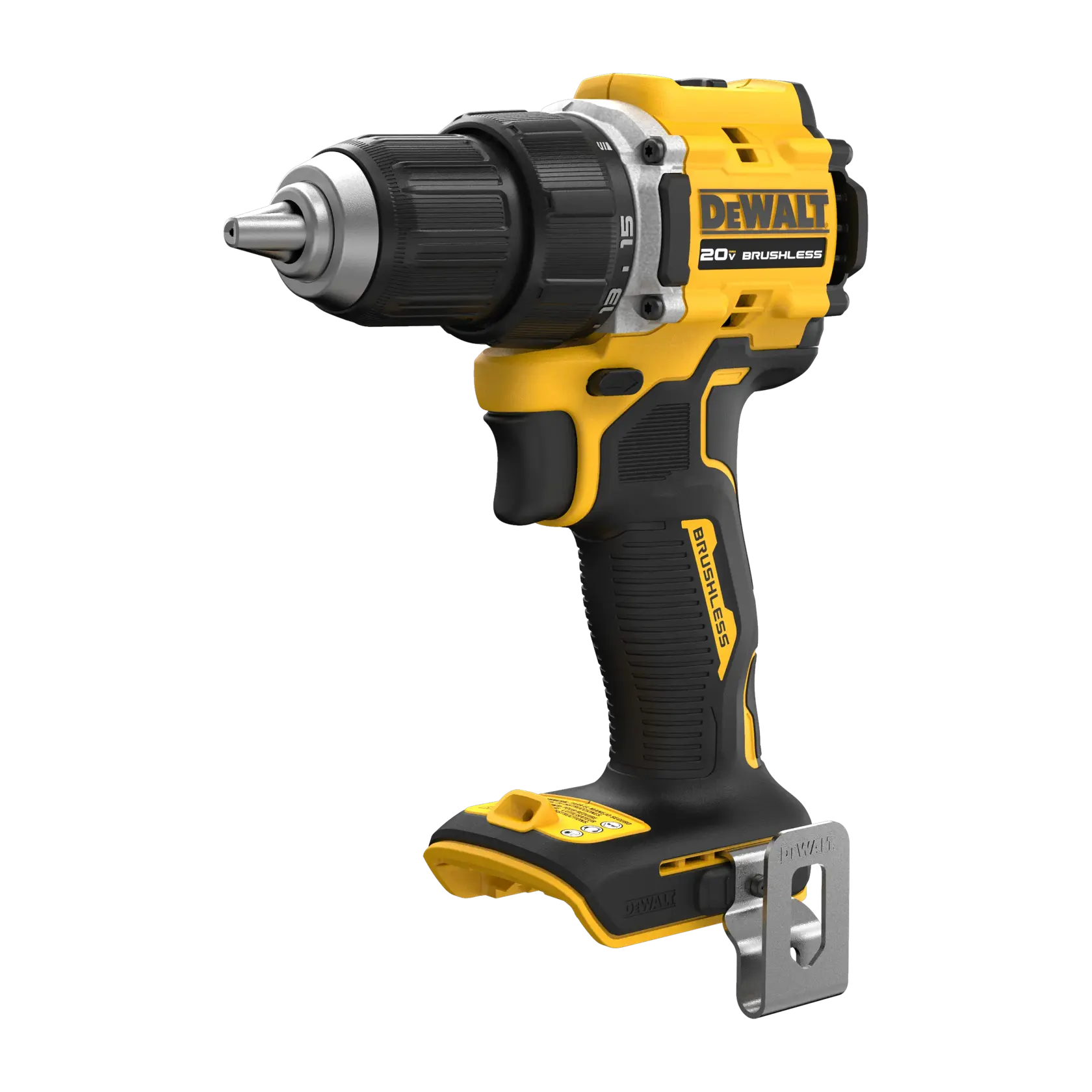
Compact, Hammer, or Jobsite — What Drill Do You Need?
A torque hangtag and a 20V sticker are the wrong first question. Compact cordless vs hammer vs brushless jobsite vs budget is the tool. Shop Gavler's live ranking.
The Best Tech Gifts for Dads in 2026, by What He'll Actually Use
Six Father's Day tech gifts pulled from Gavler's community-ranked lists. Six categories, six price points, zero gadgets that end up in a drawer.
The Best Power Drills in 2026, Ranked by People Who Actually Build Things
DeWalt, Milwaukee, Makita, Bosch, Ryobi. Gavler ranks the cordless drills worth owning in 2026 — for pros, DIYers, and tight-budget builds.