Makita XPH14Z 18V LXT.
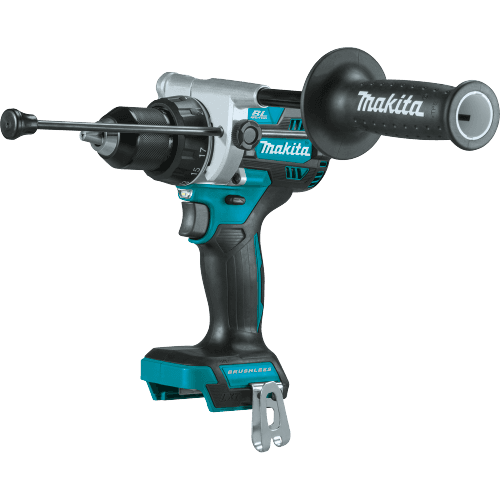
Dual-speed transmission with 1,250 in-lbs torque delivers versatility for diverse tasks. Compact 7-inch length and refined ergonomics reduce fatigue.
The Verdict.
Gavler Meta-Score
“The smoothest-drilling 18V hammer drill in its class, and the most comfortable to run all day — but smoothness is what you are buying, not top-end speed. Pro Tool Reviews found it had to drop into low gear with a large self-feed bit where the Milwaukee stayed in high, so heavy rough-in framers should look elsewhere. For everyone already on LXT doing mixed work, it is the right Makita.”
The Gavler Verdict
The Gavler Review.
Makita XPH14Z 18V LXT Review: The Smoothest Hammer Drill in Its Class, Not the Fastest
The Makita XPH14Z 18V LXT ranks third on our Best Power Drills list with a 9.6 and a 96 expert consensus — the hammer-capable half of Makita's current 18V flagship pair, and the drill testers reach for when smoothness matters as much as raw output. Buy it if you're already on Makita's LXT battery platform and you want a refined, compact, well-balanced tool for mixed daily work. Skip it if your job is dominated by large self-feed bits in framing lumber — a direct head-to-head test found it a step behind the class leader there.
What it actually is
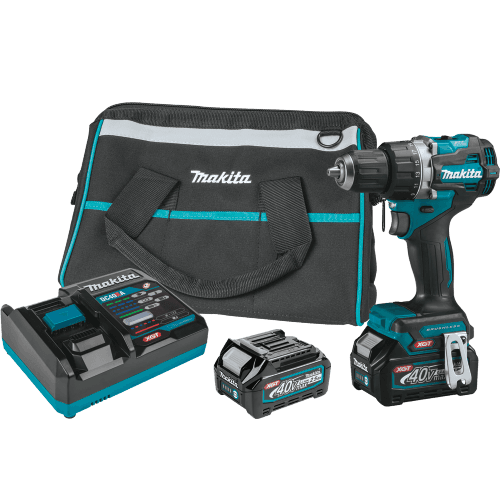
The headline number is 1,250 in-lbs of max torque from a 7-inch body — Makita states this is 14 percent shorter than the XPH07 it replaces. It runs a two-speed transmission at 0-550 and 0-2,100 RPM, with a hammer mode rated to 0-8,250 and 0-31,500 BPM, so it covers masonry work as comfortably as wood and steel framing. The chuck is a 1/2-inch all-metal self-ratcheting design, and the tool carries Makita's XPT dust and water resistance rating for job-site durability.
This is squarely a professional-tier drill on Makita's most current battery platform, positioned against the equivalent flagship hammer drills from DeWalt and Milwaukee rather than against entry-level homeowner tools.
In use
The clearest data point on this drill comes from Pro Tool Reviews' three-way rough-in challenge, which put the XPH14Z head-to-head against DeWalt and Milwaukee's current flagships driving large bits through real lumber. Their verdict: "I really enjoyed the compact size compared to the XPH07, and it drills more smoothly compared to DeWalt and Milwaukee." Smoothness, not raw speed, is what testers consistently single out about this tool — it's the drill that feels the most controlled and the least fatiguing to run through a full day of mixed work.
That smoothness came with a real cost in the same test. With a 2-9/16-inch self-feed bit in hardwood, the Makita had to drop into low gear to maintain control, where Milwaukee's M18 FUEL was the only drill in the test that stayed in high gear throughout. Pro Tool Reviews recorded it directly: "Makita had to drop into low gear, and while it was smooth, that hurt its time. It had the fastest time of 5.27 seconds and an average of 5.51." Read carefully, that's a drill that's fast in isolation but loses a direct comparative test to a rival that never had to compromise gear selection — an honest, specific trade-off rather than a vague knock.
Tool Box Buzz's independent testing on framing lumber paints the more favorable side of the same coin: "the high-torque hammer drill, set on speed-2 was able to rip into 2x4's like a hot knife through butter." For the kind of mixed daily work most tradespeople and serious DIYers actually do — a blend of framing, fastening, and the occasional masonry hole — that combination of torque and control is exactly what testers are describing.
Strengths
- 1,250 in-lbs in a genuinely compact body. A 7-inch length that Makita states is 14 percent shorter than its own predecessor, without giving up flagship-level torque output.
- The smoothest ride in its comparative class. Pro Tool Reviews' own words — smoother than both DeWalt and Milwaukee in the same test — describe a drill that's easier to control precisely, which matters for finish work as much as rough-in.
- A genuine two-mode tool. 31,500 BPM hammer capacity and a 5/8-inch masonry rating mean this isn't a wood-and-drywall-only drill bolted onto a hammer function as an afterthought.
- XPT dust and water resistance. A real job-site durability feature, not just a marketing line, on Makita's current-generation 18V LXT platform.
The trade-offs — who should skip it
- It loses the direct speed comparison with large bits. The Pro Tool Reviews rough-in challenge is unambiguous: Milwaukee's M18 FUEL stayed in high gear where the Makita had to shift down. Framers whose day is built around big self-feed bits will find the Milwaukee the faster tool.
- No dedicated standalone review exists yet. Pro Tool Reviews announced a full review of this exact model that never materialized, so this write-up — like the product's own data — leans on comparative testing and buying-guide placement rather than one dedicated bench test. The comparative data is substantial, but it's worth knowing this isn't a single deep-dive verdict.
- It's not the lightest or smallest in its tier. Pro Tool Reviews' own buying guide noted it isn't meaningfully smaller or lighter than Makita's 40V equivalent, and the kit price runs a little higher than comparable models.
- Committing means committing to the LXT platform. This only makes sense as an addition to — or the start of — Makita's 18V LXT battery ecosystem; cross-shopping batteries between brands isn't realistic once you're invested.
How it compares
The two drills ranked ahead of it on Gavler's Best Power Drills list are also the two it was measured directly against. The DeWalt DCD801B 20V MAX XR holds the top spot, and the Milwaukee M18 FUEL 2904-20 at rank two is the drill that beat the Makita specifically on large self-feed bit speed in Pro Tool Reviews' rough-in challenge — the one place this comparison has hard data behind it. If your work regularly involves those large bits in framing lumber, Milwaukee's the safer pick. If your day is a mix of drilling, driving, and occasional masonry work where a smooth, controlled, compact tool matters more than winning a speed test, testers consistently preferred the way the Makita runs.
The Gavler verdict
A 9.6, with a 96 expert consensus built on strong regard for the torque figure, the compact 7-inch body, and a ride testers repeatedly call the smoothest in the category. It's genuinely worth knowing that no outlet has published a dedicated standalone review of this exact model — the score leans on comparative rough-in testing and buying-guide placement rather than a single bench test, and Pro Tool Reviews' promised full review never appeared. For anyone already on Makita's 18V LXT platform doing mixed daily work, it remains the right Makita to buy; for framers living in large self-feed bits, the Milwaukee FUEL earned its win fair and square.
Common Questions
Yes, if you're already invested in Makita's 18V LXT battery platform and you value a smooth, comfortable drill for mixed daily work. It carries a 9.6 score with a 96 expert consensus on Gavler's Best Power Drills list, built around 1,250 in-lbs of torque in a body Makita says is 14 percent shorter than the drill it replaces. It's a step behind the class leaders in a head-to-head speed test, so heavy framing crews should look at the Milwaukee M18 FUEL instead.
Pro Tool Reviews ran both drills through a three-way rough-in challenge with a 2-9/16-inch self-feed bit, and Milwaukee was the only one of the group that stayed in high gear throughout — the Makita had to drop into low gear, which cost it time despite being the smoothest of the three. If your work is dominated by large self-feed bits in framing lumber, Milwaukee is the faster tool. For mixed daily use, testers preferred the Makita's feel.
Not with a dedicated standalone bench test as of this review — Pro Tool Reviews previously announced a full review that never published, and this review leans on their comparative rough-in testing, buying-guide placement, and additional user and outlet commentary rather than one dedicated deep-dive. That's worth knowing going in, even though the comparative data available is substantial and consistent.
Yes — it carries a hammer mode rated to 0 to 8,250 and 0 to 31,500 BPM with a 5/8-inch masonry capacity, alongside standard drilling up to 3 inches in wood and 1/2 inch in steel. Tool Box Buzz described it ripping through 2x4 framing lumber on speed-2 like 'a hot knife through butter,' so it's well equipped for masonry and framing alike, not just one or the other.
Where to Buy.
Prices checked regularly
90-day price history
Price History
Steady at $289 for the entire 90-day tracking window — no increases, no discounts, across 91 tracked days.
Tracked daily across retailers. Vote Want itabove and we’ll alert you the moment the price drops.
Some links are affiliate links — Gavler may earn a commission. This never affects rankings or scores. Learn more.
Precision Engineering
1,250 in-lbs Max Torque
Makita's top 18V LXT drill output, driven through an all-metal 1/2-inch self-ratcheting keyless chuck rated to 3 inches in wood and 1/2 inch in steel.
Hammer Mode at 31,500 BPM
Two-speed transmission runs 0-550 and 0-2,100 RPM, with a masonry hammer mode at 0-8,250 and 0-31,500 BPM and a 5/8-inch masonry rating.
7-Inch Body, 14% Shorter
Makita states the housing is 14 percent shorter than the XPH07 it replaces; Pro Tool Reviews' tester singled out the size cut as a real improvement.
Technical Specifications
The Scoreboard
The 9.6 reflects strong expert regard for the torque figure, the compact 7-inch body, and a ride testers repeatedly call the smoothest in the category. It is worth knowing that no outlet has published a dedicated full hands-on review of this exact model — Pro Tool Reviews announced it and promised a full review that never appeared, so the score leans on their comparative rough-in testing and buying-guide placement rather than a standalone bench test.
Cast Your Vote
Do you think Makita XPH14Z 18V LXT deserves the #3 spot in Best Power Drills?
Global Critique
“The high-torque hammer drill, set on speed-2 was able to rip into 2×4's like a hot knife through butter!”
“I really enjoyed the compact size compared to the XPH07, and it drills more smoothly compared to DeWalt and Milwaukee.”
“Makita had to drop into low gear, and while it was smooth, that hurt its time. It had the fastest time of 5.27 seconds and an average of 5.51.”
“Not any smaller or lighter than the 40V model. Kit price is a little more expensive than comparable models.”
More from Best Power Drills.
See how other top picks compare in this category.
Compact, Hammer, or Jobsite — What Drill Do You Need?
A torque hangtag and a 20V sticker are the wrong first question. Compact cordless vs hammer vs brushless jobsite vs budget is the tool. Shop Gavler's live ranking.
The Best Tech Gifts for Dads in 2026, by What He'll Actually Use
Six Father's Day tech gifts pulled from Gavler's community-ranked lists. Six categories, six price points, zero gadgets that end up in a drawer.
The Best Power Drills in 2026, Ranked by People Who Actually Build Things
DeWalt, Milwaukee, Makita, Bosch, Ryobi. Gavler ranks the cordless drills worth owning in 2026 — for pros, DIYers, and tight-budget builds.