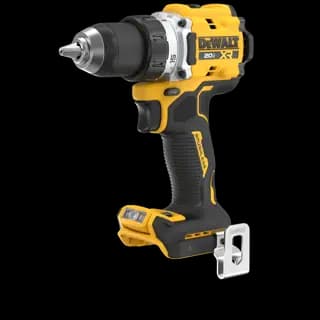
DeWalt DCD801B 20V MAX XR.
Sweet spot for serious DIYers with 550 lb-in torque that handles 90% of typical applications. Brushless efficiency and rock-solid reliability.
The Verdict.
Gavler Meta-Score
“The 90/10 drill — 90 percent of buyers will never use the last 10 percent of its 550 in-lbs of torque, but the headroom is what lets it survive the one stuck lag bolt that breaks lesser drills. Buy this unless you are regularly drilling masonry (then upgrade to the Milwaukee M18 FUEL) or you need a sub-4-pound trim drill (then look at the Milwaukee M12 FUEL).”
The Gavler Verdict
The Gavler Review.
DeWalt DCD801B Review: The 90/10 Drill That Earns Its Spot
The DeWalt DCD801B 20V MAX XR sits at number one on our Best Power Drills list with a 9.8, and it gets there without being the most powerful drill you can buy. It is the 90/10 drill: 90 percent of buyers will never touch the last 10 percent of its 550 in-lbs of torque — but that headroom is exactly what lets it survive the one stuck lag bolt that breaks lesser drills. Buy it unless you are regularly drilling masonry (upgrade to the Milwaukee M18 FUEL) or you need a sub-4-pound trim drill (look at the Milwaukee M12 FUEL). For everyone else, this is the default.
What it actually is
The DCD801B is the bare-tool version — no battery, no charger — of the drill that defines the cordless mainstream. That framing matters before anything else, because it explains the price. At around $219 it looks expensive next to a boxed budget drill, but that number assumes you are already on the DeWalt 20V MAX platform and have batteries on the shelf. The kit version, with a battery and charger, lands closer to $349. Know which one you are buying.
Inside is a brushless XR motor pushing 550 in-lbs of torque, a two-speed transmission (0-550 / 0-2,000 RPM), a three-mode LED with a 20-minute delay shutoff, and a 1/2-inch ratcheting metal chuck that holds bits without slipping under heavy lateral load. The head is a compact 6.85 inches long, and the whole thing weighs about 4.2 pounds with a 2.0 Ah battery.
In use
The specs only matter in how they translate to work, and this is where the drill earns its ranking. The two-speed transmission covers both ends of a normal work envelope — low gear for high-torque fastening, high gear for fast drilling — and 550 in-lbs is enough to drive 3-inch deck screws into pressure-treated lumber without stalling, which is the honest stress test for a general-purpose drill.
The physical numbers are the quiet reason people keep reaching for it. A 6.85-inch head and a sub-4.5-pound weight are the realistic dividing line between a drill you actually pick up for overhead work and one that stays in the box halfway through a ceiling job. Torque you can't comfortably hold overhead is torque you don't use.
The expert consensus is unusually tight. Pro Tool Reviews calls it "one of the best all-around cordless drills available in 2026 — the right amount of torque for the majority of professional use cases without the bulk of heavier-torque alternatives." Reviewed placed it "among the top performers in our cordless drill testing, with powerful performance and speed that kept up with other top performers." Both point at the same thing: not peak specs, but the best balance of power, size, and weight in the category.
Where it shines
- Torque with headroom, not overkill. 550 in-lbs clears real fastening work and keeps enough in reserve for the occasional job that would stall a budget drill — without the weight penalty of a hammer drill you'd rarely need.
- The platform is the real product. The DeWalt 20V MAX ecosystem spans over 300 compatible tools — impact drivers, circular and reciprocating saws, mowers, work lights, job-site radios — all sharing one battery. Every pack you ever buy works across that lineup, and that long-term math matters far more than a 50 in-lbs spec gap on day one. As SlashGear put it, "DeWalt 20V MAX wins value in the three-way DeWalt-vs-Milwaukee-vs-Makita decision tree."
- Chuck and controls that hold up. The ratcheting metal chuck grips under lateral load, and the delay-shutoff LED is the kind of small, correct detail that separates a tool you tolerate from one you trust.
The trade-offs — who should skip it
This is a wonderful general-purpose drill, not a specialist, and the honest reasons to buy something else are specific:
- You drill masonry regularly. The DCD801B has no hammer mode. The small expert-vs-community score gap on this drill is almost entirely pros who prefer the Milwaukee M18 FUEL for brick and concrete. If masonry is routine for you, buy the tool built for it.
- You need the lightest possible trim drill. At 4.2 pounds it is manageable, not featherweight. For all-day one-handed work in tight spaces, a 12-volt sub-compact like the Milwaukee M12 FUEL is the smarter pick.
- You are not on the DeWalt platform. Then price the kit, not the bare tool, and re-run the comparison at $349.
How it compares
The category has settled into a three-way race, and the DCD801B's case is a value case, not a dominance case. Milwaukee's M18 FUEL is the pick if hammering matters; Makita's platform earns loyalty among pros already invested in it. DeWalt's edge is the balance point — enough torque, a genuinely compact body, and the broadest battery ecosystem of the three — which is why it wins the "one drill for most people" question even when it doesn't win any single spec outright.
The Gavler verdict
A 9.8, and the number is about fit, not fireworks. The DCD801B does not top every chart, and it doesn't need to — it does the work most people actually have, at a weight they'll actually hold, on a battery platform that pays off for years. Buy the bare tool if you are already in the DeWalt 20V MAX world; buy the kit if you are starting fresh. The only buyers who should look elsewhere are the masonry regulars and the trim-drill minimalists — and both of those exits lead to a Milwaukee, which tells you how narrow the objections are.
Common Questions
For most DIYers and a lot of pros, yes. It ranks first on Gavler's Best Power Drills list with a 9.8, and the reasoning is the 90/10 split: its 550 in-lbs of torque is more than 90 percent of buyers will use 90 percent of the time, but the headroom is what carries it through the occasional stuck lag bolt that stalls weaker drills. The one caveat is the price tag — the DCD801B is the bare tool, so it is only the value pick if you already own DeWalt 20V MAX batteries.
The DCD801B is the bare tool — no battery and no charger — which is why it lists around 219 dollars. If you are new to the DeWalt 20V MAX platform you need the kit with a battery and charger, which lands closer to 349 dollars. Buy the bare tool only when you already have compatible batteries on the shelf; otherwise the kit is the honest total cost.
Buy the DeWalt unless you regularly drill masonry. Reviewers consistently give Milwaukee's M18 FUEL the edge for its hammering mode on brick and concrete, and that preference is exactly what shows up as the small expert-vs-community gap on this drill. For wood, metal, and general fastening — the work most people actually do — the DCD801B wins on value and platform breadth.
For the vast majority of drilling and driving, comfortably. 550 in-lbs drives 3-inch deck screws into pressure-treated lumber without stalling, which is the realistic stress test for a general-purpose drill. If your work is routinely heavier than that — repeated large-diameter holes in masonry or steel — that is the narrow case where a higher-torque, hammer-capable drill earns its extra bulk.
Where to Buy.
Prices checked regularly
90-day price history
Price History
Steady at $219 for the entire 90-day tracking window — no increases, no discounts, across 91 tracked days.
Tracked daily across retailers. Vote Want itabove and we’ll alert you the moment the price drops.
Some links are affiliate links — Gavler may earn a commission. This never affects rankings or scores. Learn more.
Precision Engineering
550 in-lbs Torque (Brushless XR)
Brushless XR motor delivers 550 in-lbs of MWO torque — handles 3-inch deck screws into pressure-treated lumber without stalling.
Two-Speed Transmission (0-550 / 0-2,000 RPM)
Low gear for high-torque fastening, high gear for fast drilling — covers both ends of the typical work envelope.
6.85" Head Length, 4.2 lbs
Compact enough for overhead work, light enough for extended sessions without arm fatigue.
Technical Specifications
The Scoreboard
Pro Tool Reviews and Reviewed both routinely rank the DCD801B among the top cordless drills available; the small expert-vs-community gap reflects pros who prefer the Milwaukee's hammering mode for masonry work.
Cast Your Vote
Do you think DeWalt DCD801B 20V MAX XR deserves the #1 spot in Best Power Drills?
Global Critique
“The DCD801B is widely rated as one of the best all-around cordless drills available in 2026 — the right amount of torque for the majority of professional use cases without the bulk of heavier-torque alternatives.”
“Among the top performers in our cordless drill testing, with powerful performance and speed that kept up with other top performers.”
“DeWalt 20V MAX wins value in the three-way DeWalt-vs-Milwaukee-vs-Makita decision tree.”
More from Best Power Drills.
See how other top picks compare in this category.
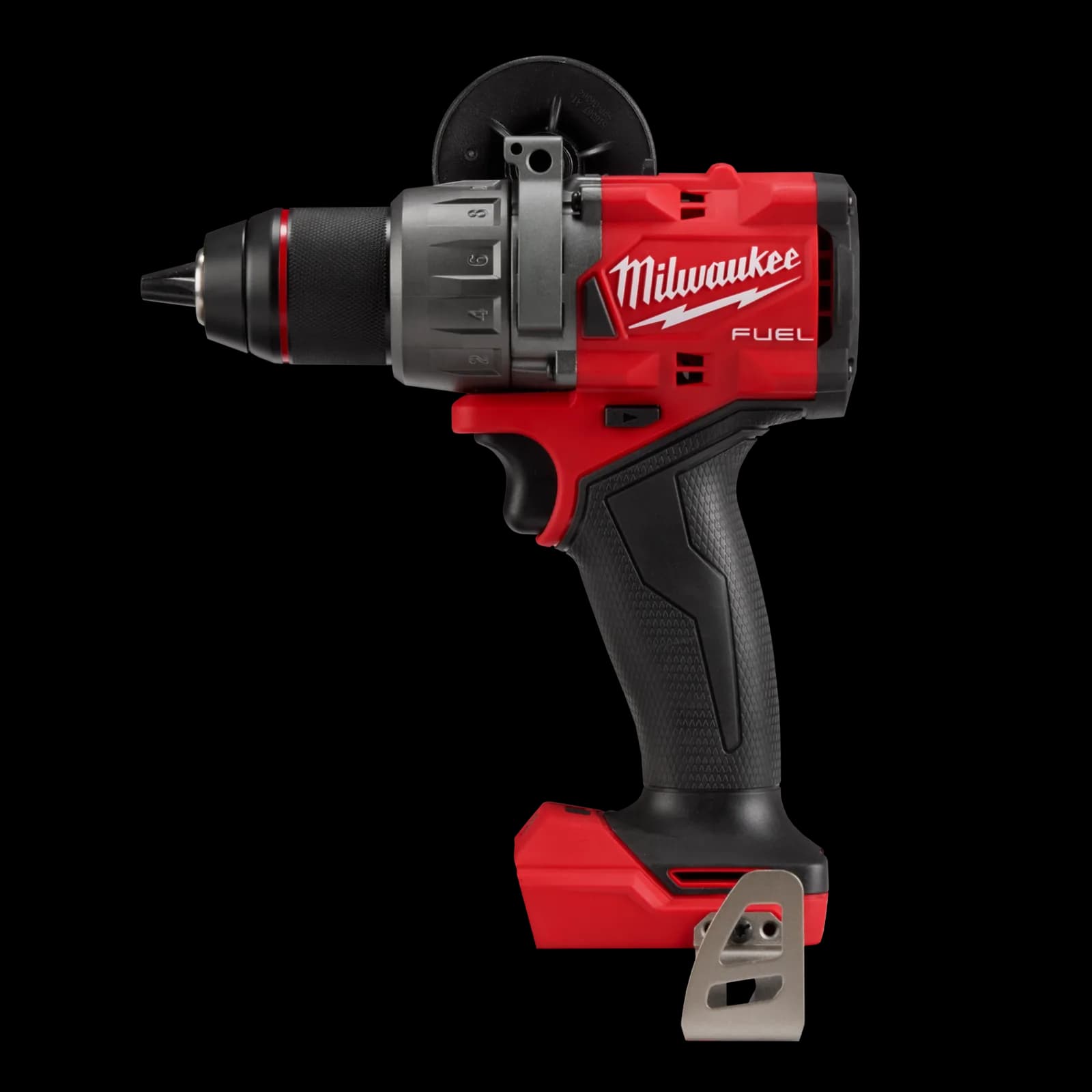
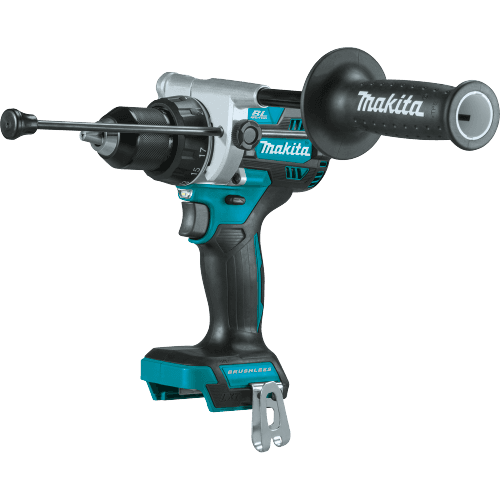
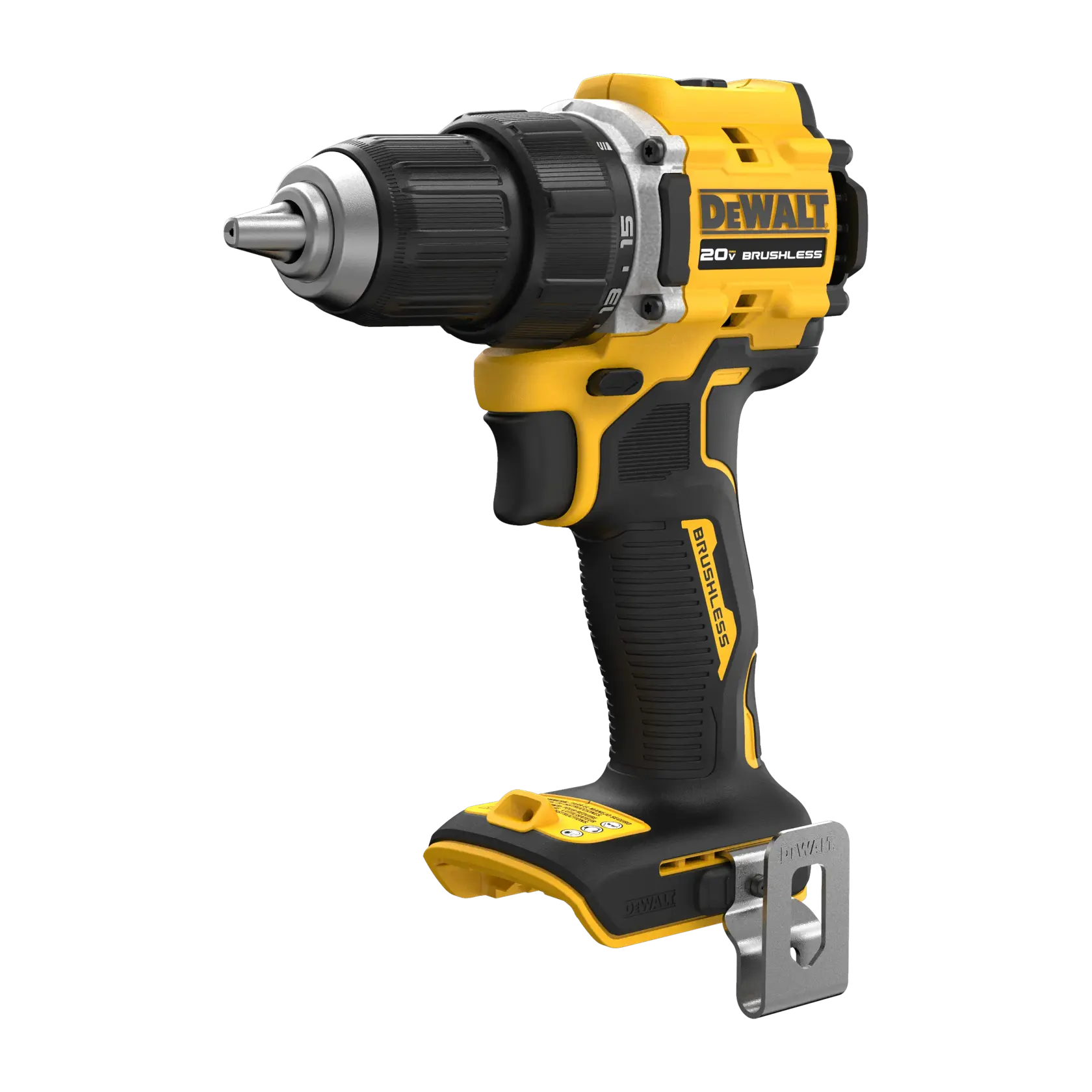
Compact, Hammer, or Jobsite — What Drill Do You Need?
A torque hangtag and a 20V sticker are the wrong first question. Compact cordless vs hammer vs brushless jobsite vs budget is the tool. Shop Gavler's live ranking.
The Best Tech Gifts for Dads in 2026, by What He'll Actually Use
Six Father's Day tech gifts pulled from Gavler's community-ranked lists. Six categories, six price points, zero gadgets that end up in a drawer.
The Best Power Drills in 2026, Ranked by People Who Actually Build Things
DeWalt, Milwaukee, Makita, Bosch, Ryobi. Gavler ranks the cordless drills worth owning in 2026 — for pros, DIYers, and tight-budget builds.