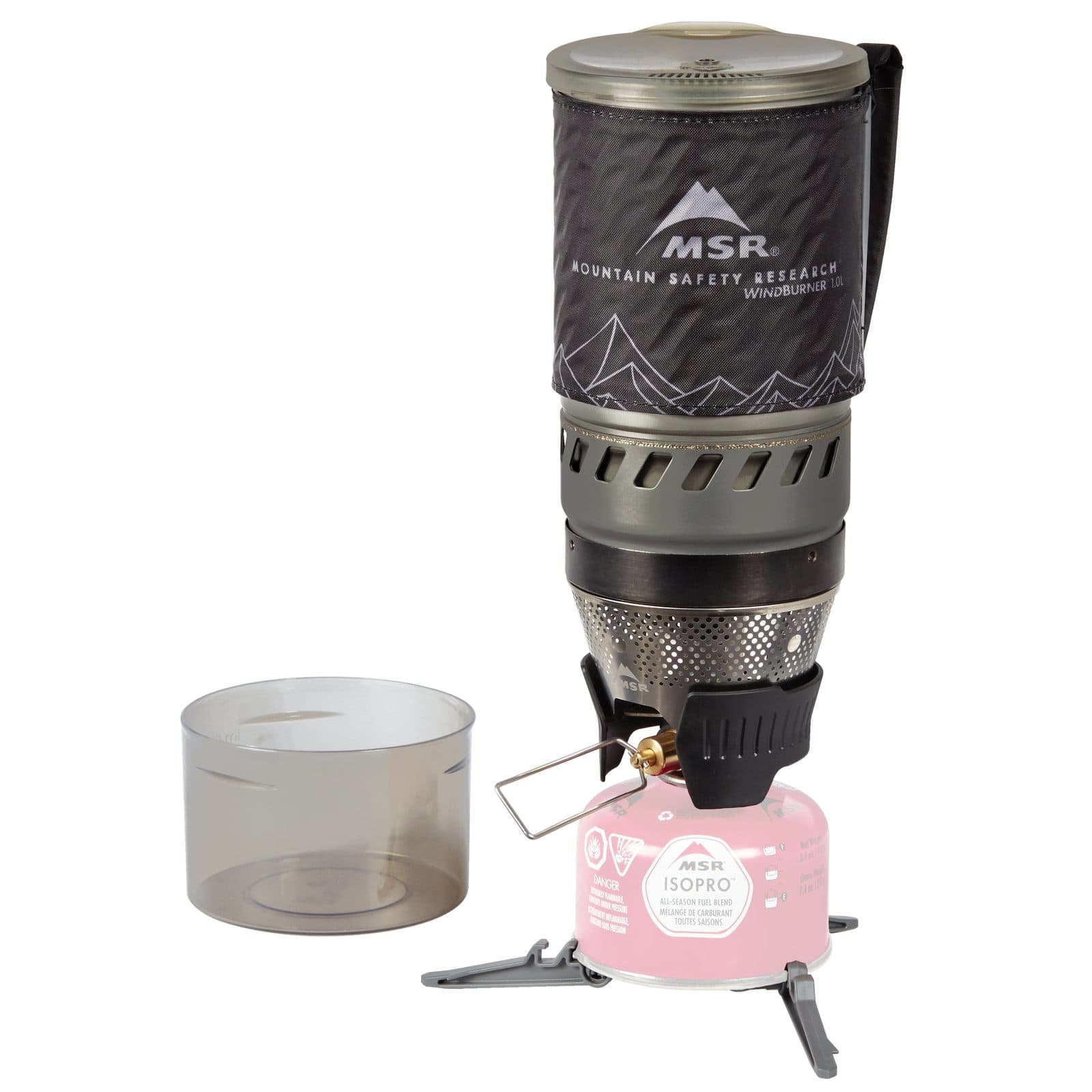
MSR WindBurner Personal.
A pressure-regulated radiant burner sealed inside the pot, so it keeps cooking in exposed wind and above 8,000 feet where open canister stoves give up — the windproof solo system for alpine trips.
The Verdict.
Gavler Meta-Score
“Sarah Lin's take: the dependable choice when wind and altitude defeat ordinary canister stoves. OutdoorGearLab ranked it first for efficiency and among the most wind-resistant stoves they have tested. Its radiant burner simmers better than the Reactor's, so it is the more versatile of MSR's enclosed systems — just carry a lighter, because there is no igniter.”
The Gavler Verdict
The Gavler Review.
MSR WindBurner Personal Review: The Windproof Solo Stove That Can Also Cook
The MSR WindBurner Personal ranks number 5 on Gavler's Best Camping Stoves list with a 9.0, built for one specific job: keep cooking when wind and altitude defeat ordinary canister stoves. It borrows the enclosed radiant-burner design from MSR's own Reactor, sealing the flame inside the pot's own heat exchanger so gusts can't reach it — and unlike the boil-only Reactor, it adds a valve with genuine, if modest, simmer range. CleverHiker's direct assessment: "The MSR WindBurner is among the best-performing integrated canister stove systems on the market. We love its excellent performance in windy weather, its speedy boil time, and great fuel efficiency."
What it is
The WindBurner Personal's enclosed radiant burner sits sealed inside a 1.0-liter integrated pot, the same fundamental approach as the Reactor but tuned for more cooking versatility rather than pure boil speed. A pressure-regulated valve holds output steady as the canister cools, and — the key difference from the Reactor — that same valve allows fine adjustment from a full boil down toward a genuine simmer, at the cost of a slightly slower top-end boil. It boils half a liter in a little over two minutes and runs roughly 95 minutes on an 8-ounce canister. There's no built-in igniter, so a lighter or firesteel is required.
In use
CleverHiker's Brett Kretzer tested it specifically in harsh conditions and came away convinced of its core promise: "We tested it in some of the harshest Rocky Mountain conditions, and it performed reliably every single time." A separate CleverHiker head-to-head against the Jetboil MiniMo — a natural rival at this price point — found the WindBurner genuinely superior in bad weather: "The WindBurner is an absolute beast in nasty weather and we found it works better in fierce winds than the MiniMo." That's a meaningful, tested claim, not marketing copy, and it's the strongest reason to pick this stove over its more popular Jetboil competitor.
On the missing igniter, SectionHiker's Philip Werner pushes back on the idea that it's a real flaw: "The absence of an igniter is no great loss since they have a tendency to break or fail quickly. Your best bet is to use a fire steel to create sparks to light the MSR WindBurner, because it can be used to light the stove in windy conditions, at any temperature, or elevation." That's a fair reframe — a firesteel is arguably more reliable than a piezo igniter in the exact conditions this stove is designed for.
The honest weak points cluster around the hardware details rather than the core burner. CleverHiker calls the handle "flimsier than we would prefer" — hard plastic and a nylon strap rather than a sturdy metal design — and notes across two separate reviews that the lid "tends to leak" when pouring and can be stubborn to remove right after boiling. SectionHiker adds a stability complaint: without the included canister stand, the system can feel "top-heavy and unstable" on uneven ground. None of these are dealbreakers, but they're the kind of small daily-use frictions that don't show up in a spec sheet.
Strengths
Wind and cold performance is the real, tested differentiator — not just against open-flame stoves but specifically against its closest Jetboil rival, per CleverHiker's own head-to-head testing. The simmer range, while not dramatic, is a genuine improvement over the boil-only Reactor, giving it more everyday versatility for actual cooking rather than just rehydrating. And the pressure-regulated valve doing its job as advertised — steady output as the canister cools — is exactly the kind of unglamorous engineering that matters most when you're relying on it at altitude in the cold.
The trade-offs — who should skip it
If you don't regularly camp somewhere windy or at high altitude, you're paying for wind resistance you may never need — CleverHiker's own MiniMo-vs-WindBurner comparison found the MiniMo wins on price, weight, boil time, simmer control, pot and lid design, handle quality, and ignition, losing only on wind performance and stove-to-pot attachment security. That's a lot of categories to give up for a wind advantage you might rarely use. The handle and lid issues are real, tested annoyances rather than isolated complaints, and simmering still requires a careful hand — SectionHiker notes the burner can sputter if pushed too low, echoing the same boil-focused DNA it inherited from the Reactor.
How it compares
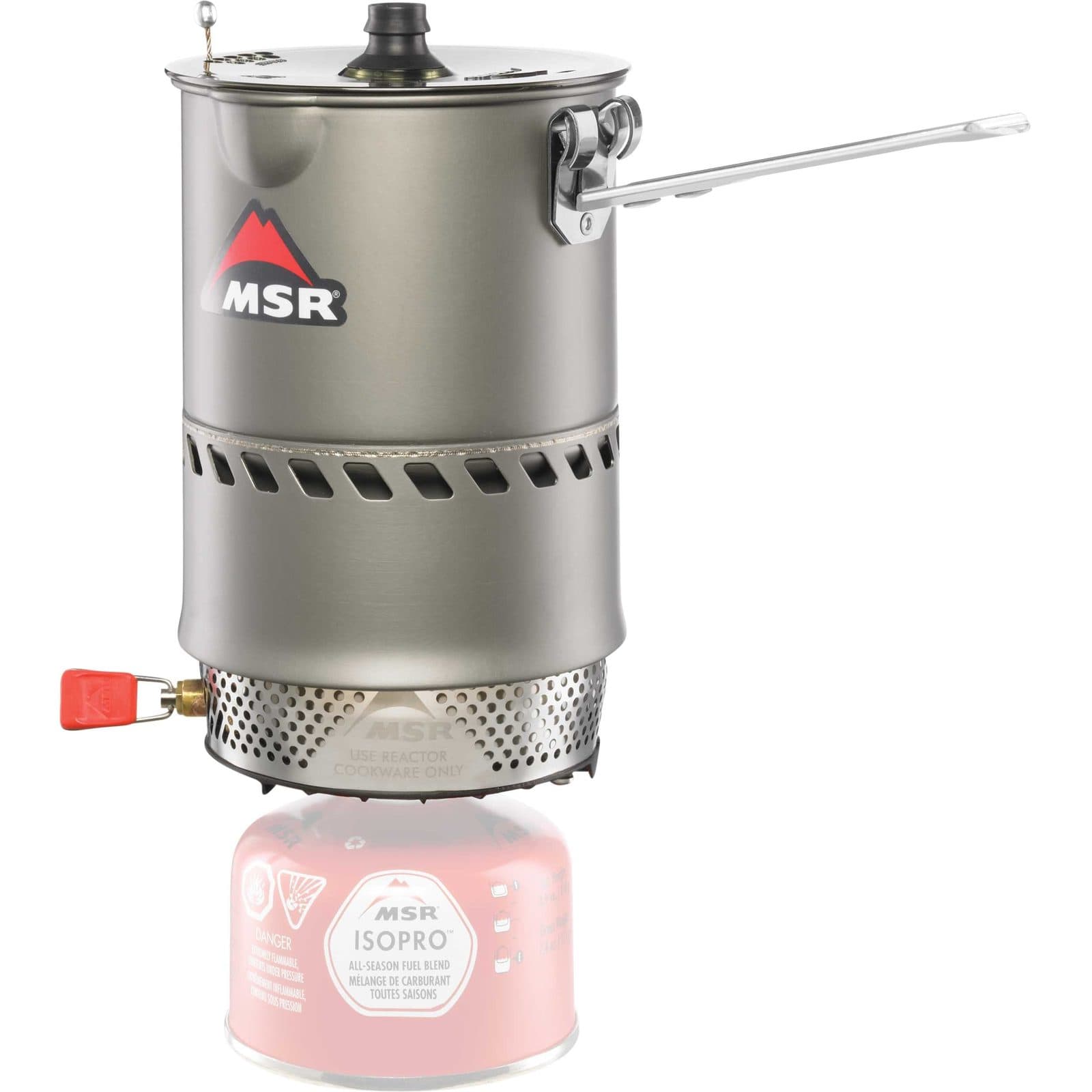
Against its closest sibling, the MSR Reactor Stove System elsewhere on this list, SectionHiker's own comparison table draws the clearest line: "the WindBurner is the more versatile and affordable option," while the Reactor wins specifically if you need the stronger 9,000-BTU burner or a larger 2.5-liter pot capacity versus the WindBurner's 7,000 BTU and 1.0-liter pot. Against the Jetboil MiniMo — the most natural competitor at this price and use case — CleverHiker's verdict favors the MiniMo overall for most campers, reserving the WindBurner specifically for people who prioritize wind and cold reliability above everything else.
The Gavler verdict
A 9.0 for a stove built around one honest, well-tested strength: it keeps working in wind and cold that stalls other systems, and unlike its sibling the Reactor, it can actually simmer a real meal while doing it. The handle and lid are legitimate annoyances, and if you rarely camp in genuinely bad weather, the lighter, cheaper Jetboil MiniMo is very likely the better buy. But for exposed ridgelines and shoulder-season alpine trips where a stove that quits is a real problem, the WindBurner Personal is the dependable choice.
Common Questions
Yes, if you regularly camp somewhere windy or at altitude and want a stove that keeps working when open-flame burners give up. It ranks number 5 on Gavler's Best Camping Stoves list with a 9.0. CleverHiker rates it 'among the best-performing integrated canister stove systems on the market,' specifically for its windy-weather reliability. If wind and altitude aren't regular problems for you, a lighter, cheaper stove like the Jetboil MiniMo will serve you just as well.
Both share the same enclosed radiant-burner design, but they're tuned differently. SectionHiker's comparison puts it plainly: the WindBurner is 'the more versatile and affordable option,' with real simmer range the boil-only Reactor lacks — but the Reactor wins if you need a stronger burner (9,000 BTU vs. the WindBurner's 7,000) or a larger-capacity pot. Choose the WindBurner if you actually want to cook; choose the Reactor if speed and raw boil power are all that matters.
No, and reviewers are split on whether that matters. CleverHiker lists it as a genuine con, while SectionHiker argues 'the absence of an igniter is no great loss since they have a tendency to break or fail quickly,' recommending a firesteel instead, which works reliably in wind and cold where a piezo igniter might not.
The handle and lid. CleverHiker describes the handle as 'flimsier than we would prefer' — hard plastic and a nylon strap rather than sturdy metal — and notes the lid tends to leak when pouring and can be hard to remove after boiling. SectionHiker separately found the system top-heavy and unstable on uneven ground if you skip the included canister stand.
Where to Buy.
Prices checked regularly
90-day price history
Price History
Steady at $170 for the entire 90-day tracking window — no increases, no discounts, across 91 tracked days.
Tracked daily across retailers. Vote Want itabove and we’ll alert you the moment the price drops.
Some links are affiliate links — Gavler may earn a commission. This never affects rankings or scores. Learn more.
Precision Engineering
Enclosed Radiant Burner
The burner is sealed inside the pot, so wind can't reach the flame — OutdoorGearLab ranked it first for efficiency and among the most wind-resistant stoves tested.
Pressure-Regulated Valve
A regulator holds output steady as the canister cools, and the valve dials from a full boil toward a gentle simmer — more cooking range than the boil-only Reactor.
~2.25-Min Boil, 95-Min Burn
Boils half a liter in about 2.25 minutes and runs roughly 95 minutes on an 8-oz canister; the 1.0L pot integrates with the burner into one kit.
Technical Specifications
The Scoreboard
OutdoorGearLab ranked it first for efficiency and one of the most wind-resistant backpacking stoves tested; Blister and Bikepacking.com praise the radiant burner's real simmer ability. Knocks: 15.3-oz weight, no igniter, and simmering still takes a careful hand.
Cast Your Vote
Do you think MSR WindBurner Personal deserves the #5 spot in Best Camping Stoves?
Global Critique
“The WindBurner came in first for efficiency and is one of the most wind-resistant backpacking stoves on the market.”
“The valve control knob allows minute changes from a full boil to a gentle simmer — some of the best simmer control of the stoves tested.”
“Positively radiant: the enclosed burner shrugs off wind that flattens conventional canister stoves.”
More from Best Camping Stoves.
See how other top picks compare in this category.
Pick a Camping Stove for the Way You Cook Outside
BTU hangtags are the wrong first question. Match canister backpacking, tabletop propane, or wood-burning to how you cook outside.
The Best Camping Stoves in 2026, Ranked by People Who Actually Cook Outdoors
Jetboil, MSR, Camp Chef, Coleman. Gavler's campers rank the stoves worth carrying — for backpackers, basecamps, and car-camp kitchens.