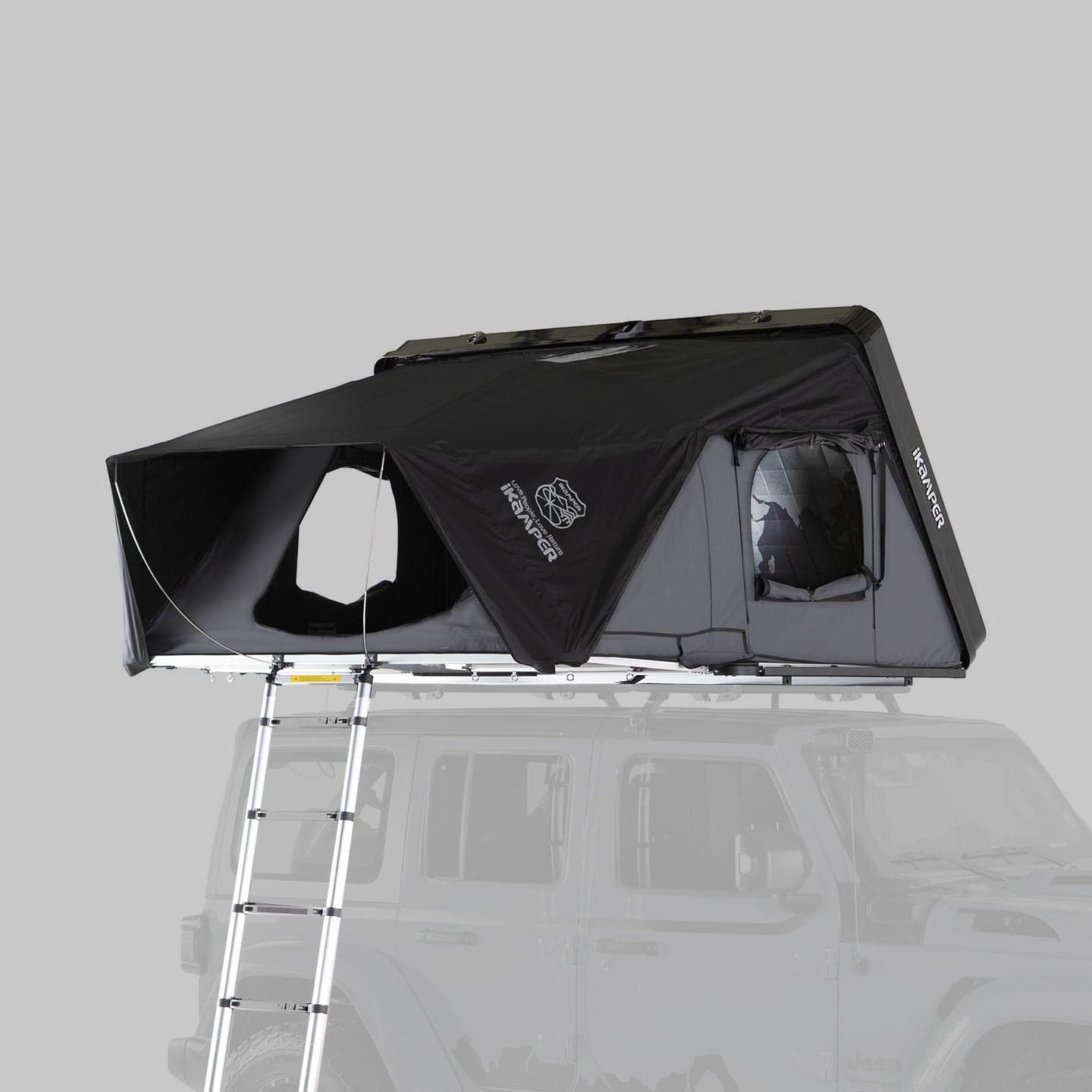
iKamper Skycamp 3.0.
Sleeps four with a 60-second pop-up, integrated mattress, and the build quality that defined the modern overland tent category.
The Verdict.
Gavler Meta-Score
“The benchmark every other premium RTT is measured against. $4,395 is real money, but the engineering — fold-open geometry, honeycomb panels, real foam mattress — actually justifies the premium for buyers running 50+ camping nights a year.”
The Gavler Verdict
The Gavler Review.
iKamper Skycamp 3.0 Review: The Rooftop Tent That Set the Benchmark
The iKamper Skycamp 3.0 sits at number one on our Best Rooftop Tents list with a 9.5, and it earns that spot the hard way — not by being the cheapest or the lightest, but by being the tent every other premium hard-shell RTT gets measured against. At $4,395, it's among the most expensive rooftop tents in production, and the case for it is specific: a fold-open design that genuinely sleeps four adults from a compact closed footprint, honeycomb panel construction that shrugs off mountain-pass wind, and a real 70 mm memory foam mattress instead of a rebranded yoga mat. Buy it if you camp often enough — Switchback Travel's own benchmark is 30-plus nights a year — that the engineering pays for itself. If you're two people or an occasional weekend camper, the Roofnest Condor Overland 2 Air a rung below on the same list gets you most of the experience for $800 less.
What it actually is
Before the Skycamp, the hard-shell RTT market was mostly wedge-profile 2-person tents — good aerodynamics, cramped interiors. iKamper's engineering bet was a fold-open design that doubles the floor area on deployment, which is why the Skycamp 3.0 can credibly sleep four full adults while traveling in a closed footprint of just 220 × 142 × 33 cm. That's the single biggest differentiator in the category: most hard-shells top out at two adults comfortably; the Skycamp is a genuine family tent that still closes down to a hard-shell profile on the highway.
The headline feature is the 60-second pop-up, and it's real — this is a hard-shell tent, not a soft-shell that takes several minutes to unfold and stake out. The less-flashy engineering is arguably more important: rigid aluminum honeycomb panels that hold their shape against wind at altitude, aluminum support bars rated to 700 lbs of static load, and a 70 mm memory foam mattress that's a genuine foam pad, not the thin closed-cell foam that ships with budget tents.
In use
The setup speed is the feature people buy the Skycamp for, but the mattress and panel rigidity are what determine whether you actually enjoy sleeping in it — and that's where reviewers consistently land. GearJunkie's assessment is blunt about the tent's category position: "The hard-shell rooftop tent every other manufacturer is benchmarked against." That's not a compliment about any single spec — it's a statement about how the rest of the market gets evaluated relative to this one.
Switchback Travel's take gets at the honest value calculus directly: "Worth the premium if you camp more than 30 nights a year." That's the right way to think about a $4,395 purchase — not "is this a good tent" (it clearly is) but "does my actual usage justify this specific price gap over the $2,795 Roofnest Condor 2 or the $2,300 Thule Approach 2 M." For frequent overlanders, the math works. For occasional weekend campers, it's a harder sell.
The honeycomb panel construction is the quiet engineering win. A tent that flaps and rattles at 2,000 feet on an exposed ridge is a bad night's sleep regardless of how fast it set up; the rigid panels are what keep the Skycamp quiet and stable in conditions that would stress a soft-shell tent's canvas walls.
Where it shines
- Genuine 4-adult capacity from a hard-shell. Most hard-shell RTTs are 2-person tents with a wedge profile. The Skycamp's fold-open geometry is the rare hard-shell that scales to a real family footprint without sacrificing the 60-second deploy.
- A real mattress, not a foam pad. The 70 mm memory foam is noticeably closer to a home mattress than the thin foam that ships with entry-level and even some mid-tier tents — this is the detail that determines whether you sleep well on night three of a trip, not just night one.
- Built for weather, not just weekends. A 700 lb static load rating and honeycomb panel rigidity mean this tent is engineered for storm-grade conditions, not just fair-weather car camping.
The trade-offs — who should skip it
This is the benchmark hard-shell tent in the category, not the right tent for every overlander, and the honest reasons to look elsewhere are specific:
- You're two people, not four. Paying the 4-person fold-open premium when you'll never use the extra floor space is the single most common reason to step down to the Condor Overland 2 Air or the Condor 2.
- You care about highway fuel economy. The Skycamp's boxier closed profile carries a real mpg penalty — typically 3-5 mpg on the highway — versus a wedge-profile hard-shell like the Thule Basin. If your rig does a lot of highway towing miles between trips, that's a recurring cost, not a one-time one.
- You can't plan around the lead time. iKamper's 4-8 week lead time following the spring Overland Expo rush is worth building into your purchase timeline; this isn't a tent you buy the week before a trip.
- 165 lbs is genuinely heavy. Installation requires two people and a real afternoon, not a solo DIY job on a Saturday morning.
How it compares
On its own list, the closest comparison is the Roofnest Condor Overland 2 Air, ranked second with a 9.2. It's the hybrid answer to the Skycamp's hard-shell-only approach — an aluminum top for aerodynamics with soft-shell side panels for cross-ventilation, at $3,595 for a 2-person interior, with Roofnest's domestic US warranty support as a genuine advantage over iKamper's longer parts pipeline. It's the better buy for two adults who don't need the fold-open footprint.
The more specialized alternative is the AluCab Gen 3-R Expedition, at nearly the same price point ($3,895) but a completely different use case: fully insulated walls, an integrated heater vent, and a solar-ready roof built for genuine winter and expedition travel. As the product data itself frames it, the Skycamp is the better summer family tent; the AluCab is the better tent for Iceland in February. They're not really competing for the same buyer.
The Gavler verdict
A 9.5, and the score reflects a tent that doesn't just compete in its category — it defined the terms other manufacturers compete on. The iKamper Skycamp 3.0 is the rare rooftop tent where the marketing claim (60-second setup, sleeps four) and the lived reality actually match, backed by genuine engineering in the panels, mattress, and load rating that a spec sheet alone doesn't capture. Buy it if you're a frequent, multi-person overlanding household that can absorb the price and the fuel-economy trade-off. If you're two people or an occasional camper, the Roofnest Condor Overland 2 Air delivers the bulk of the experience for meaningfully less money — but for the buyer this tent is built for, it remains the default recommendation in the category.
Common Questions
For overlanders who camp more than 30 nights a year, yes — Switchback Travel's own framing of the value proposition. It ranks first on Gavler's Best Rooftop Tents list with a 9.5, and the price buys real engineering: fold-open geometry that doubles floor area for a genuine 4-adult sleeping capacity, rigid honeycomb panels rated to handle mountain-pass wind, and a 70 mm memory foam mattress rather than the thin foam pad that ships with budget tents. For occasional weekend campers, the Roofnest Condor 2 or Thule Approach 2 M deliver most of the experience for roughly half the price.
Buy the Skycamp if you need to sleep four adults — its fold-open design is the only one in this comparison that genuinely doubles floor area from a compact closed footprint. Buy the Condor Overland 2 Air if you're two adults and want a lower price (3,595 dollars vs. 4,395), better fuel economy from its aerodynamic aluminum profile, and Roofnest's domestic US-based warranty support, which is faster than iKamper's overseas-backed parts pipeline for many buyers.
About 60 seconds for the pop-up deployment itself, which is the headline feature and genuinely accurate — this is a hard-shell RTT, not a fold-out canvas tent that takes several minutes. The less-discussed number is initial installation: at 165 pounds shipping weight, mounting the Skycamp 3.0 onto your rack requires two people, and first-time installers should budget significantly more than 60 seconds for that one-time setup.
Yes, noticeably. Its closed profile is boxier than a wedge-shaped hard-shell like the Thule Basin, and typical estimates put the highway fuel economy penalty at 3 to 5 mpg versus driving without a rooftop tent. That's a real, ongoing cost worth weighing against the 60-second deploy and 4-adult capacity you're buying with that drag.
Where to Buy.
Prices checked regularly
90-day price history
Price History
Steady at $4,395 for the entire 90-day tracking window — no increases, no discounts, across 91 tracked days.
Tracked daily across retailers. Vote Want itabove and we’ll alert you the moment the price drops.
Some links are affiliate links — Gavler may earn a commission. This never affects rankings or scores. Learn more.
Precision Engineering
Fold-Open Geometry
Doubles floor area when deployed — sleeps 4 in a 2-person closed footprint.
Honeycomb Panels
Rigid aluminum honeycomb construction handles 2,000+ ft mountain wind without flap.
70 mm Memory Foam Mattress
Real foam mattress — not the rebranded yoga mat that ships with budget RTTs.
Technical Specifications
The Scoreboard
Most-recommended hard-shell across overland editorial. Community ratings drag slightly because of the price and the 4-8 week lead times.
Cast Your Vote
Do you think iKamper Skycamp 3.0 deserves the #1 spot in Best Rooftop Tents?
Global Critique
“The hard-shell rooftop tent every other manufacturer is benchmarked against.”
“Worth the premium if you camp more than 30 nights a year.”
More from Best Rooftop Tents.
See how other top picks compare in this category.