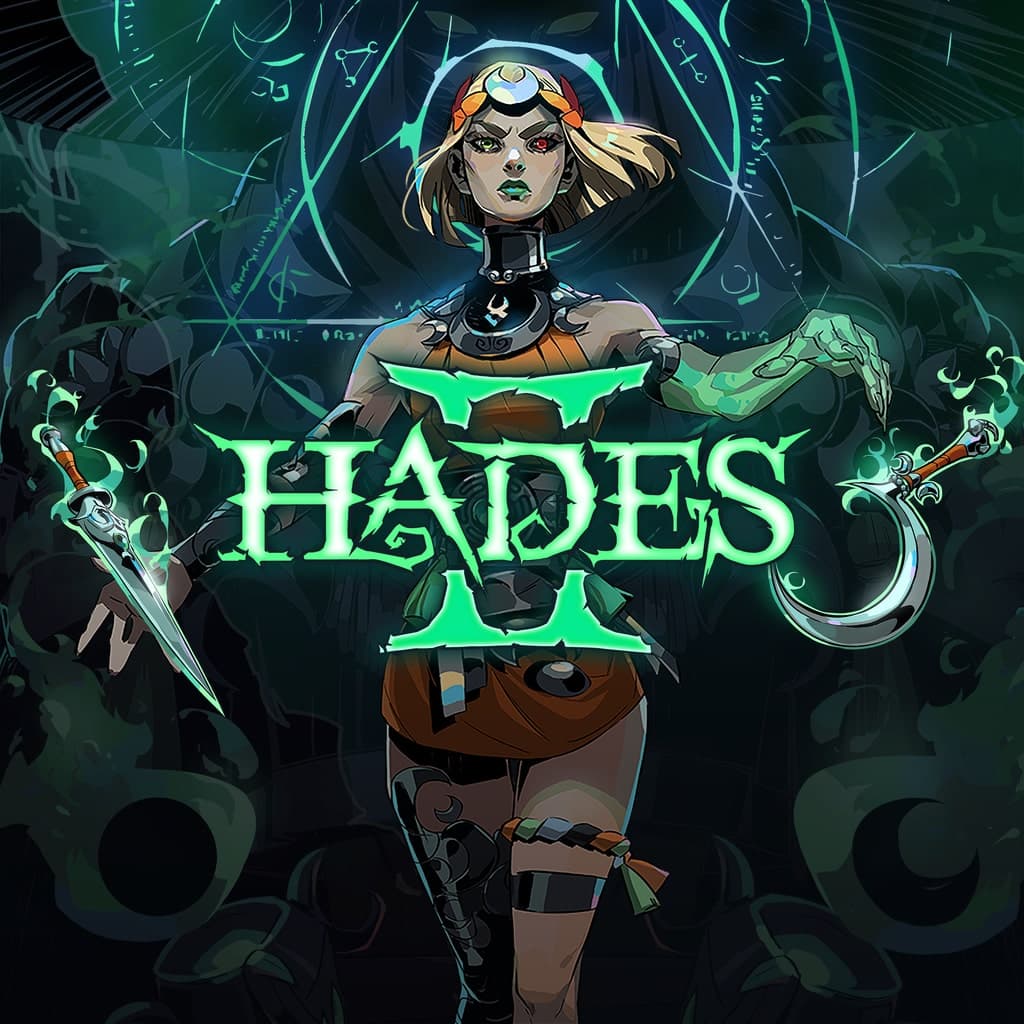
Hades II.
A bigger, deeper sequel to the genre-defining roguelike, starring the witch Melinoë.
The Verdict.
Gavler Meta-Score
“More Hades, and better Hades. If the first game ate your year, clear your calendar again.”
The Gavler Verdict
The Gavler Review.
Hades II Review: A Rare Sequel That Beats the Original
Hades II ranks fifth on Gavler's Best Games of 2025 list with a 9.2 — one of the highest marks anywhere on the ranking — and it earns that placement by doing the thing sequels almost never manage: genuinely improving on a beloved original. IGN gave it a perfect 10/10, calling it "a bold evolution of the original that flawlessly executes new ideas to deliver the best roguelike of this generation." TechRadar was nearly as effusive, noting that "rarely does a sequel so perfectly develop upon its predecessor's excellence as Hades 2 does while still retaining everything that made the original so great." The one real knock, per TechRadar's own pros-and-cons breakdown, is a stretch of "slightly too much grind" in the midgame. For anyone who loved the first Hades — or anyone who's never played a roguelike and wants the best possible entry point — this is close to an unqualified recommendation.
What it is
Hades II is Supergiant Games' sequel to 2020's Hades, one of the most acclaimed roguelikes ever made. You play Melinoë, Princess of the Underworld and sister to the original game's Zagreus, wielding witchcraft to battle the Titan Chronos, who has captured her family. Structurally it's the same "die, get stronger, try again" loop that made the first game addictive, but Supergiant rebuilt significant chunks of the formula rather than simply reskinning it. Per Gavler's verified data, it carries a Metacritic score of 94 and a 92 expert consensus — figures that put it in rarefied territory even among the year's best releases.
The single biggest structural change is that runs no longer follow one linear path. From the hub at the Crossroads, you can head down toward Tartarus and Chronos, or up toward the Surface and a war brewing on Olympus — two distinct campaign directions instead of one. TechRadar's review called this out specifically as removing "the frustrating feeling of repeatedly falling at the same hurdle," since a bad run in one direction doesn't mean you're stuck grinding the exact same early gauntlet every single time.
In use
Combat swaps Zagreus's raw mobility for Melinoë's Omega system — charged "Magick" spells layered on top of standard weapon attacks, plus a new area-of-effect cast move that functions as both crowd control and a damage trap. TechRadar's reviewer described it as "the most significant change to combat at a base level," and noted it rewards smart positioning over pure reflexes, since Melinoë has less raw dash mobility than her brother did. GameSpot's take on the sequel echoed the same verdict from a different angle, praising it as "an ambitious expansion that balances its captivating narrative with an exceptional combat loop."
The build systems get deeper too. Boons from Olympian gods return, now paired with a customizable Arcana card grid that lets you shape a run's identity beyond just stacking damage numbers — TechRadar found there's "rarely" a need to reroll for something useful, a sign the drop pool is well-tuned. Between runs, the Crossroads hub has grown into something closer to a life-sim hangout: salt baths, gardening, fishing, and relationship-building with a returning and expanded cast, all of which react to what you did and who you brought with you on your last run.
The honest criticism, and it's a fair one, is that some regions lean too hard on repetition to pad length. TechRadar singled out Tartarus's Fields of Mourning for "repetitive waves of enemies to cash in on multiple rewards per encounter, but you often only really want one of them" — a design choice that feels like busywork compared to the sharper level design found elsewhere, like the City of Ephyra's more thoughtful reward-selection puzzles. It's a genre-inherent problem more than a Hades II-specific one, but it's noticeable across a 50-hour playthrough.
Strengths
- Two distinct run directions instead of one linear gauntlet. Splitting the map between Tartarus and the Surface means a bad run doesn't force you through the exact same opening stretch every time — a real structural fix, not just more content.
- Melinoë's Omega spell system adds genuine build depth. Magick-charged attacks layered on weapon combat and Arcana cards give runs more build variety than the original's boon system alone.
- A hub that rewards downtime as much as combat. Gardening, cooking, relationships, and a returning cast make the Crossroads feel like a destination, not just a shop between runs.
- Best-in-class presentation. Darren Korb's score and Jen Zee's character art remain the genre's gold standard — TechRadar called the world-building "vast" and "beautiful" without qualification.
The trade-offs — who should skip it
Hades II is about as close to a flawless sequel as this genre gets, but it's not without friction:
- The midgame drags in specific spots. Repetitive enemy-wave encounters, especially in Tartarus, can feel like padding rather than challenge.
- It's still a roguelike, with all that implies. If repetition and incremental progress across dozens of runs isn't your thing on principle, a deeper Omega system won't change your mind.
- The ending divides players. Some fans and critics have flagged the "true" ending's pacing as rushed relative to the buildup — a minor but real complaint worth knowing going in.
How it compares
On the broader Best Games of 2025 list, Hades II sits ahead of Ghost of Yōtei at number eight — a useful contrast, since Yōtei mostly refines its predecessor's formula while Hades II restructures its own in meaningful ways. It also shares the list with Split Fiction, Hazelight's co-op adventure, for players who want something built around a partner rather than solo runs. If it's specifically roguelike shooters you're after rather than roguelike action-RPGs, Gavler's Best PS5 Games of 2026 list has Saros, Housemarque's Returnal follow-up, as the genre's newest headline entry.
The Gavler verdict
A 9.2, and deservedly so. Hades II takes one of the most beloved roguelikes ever made and finds real, structural ways to improve on it rather than simply repackaging what worked. The dual-path run structure alone would be a meaningful upgrade; paired with a deeper combat system, a richer hub, and Supergiant's usual best-in-class presentation, this is as close to an essential purchase as 2025 produced. The midgame grind keeps it from a perfect score, but it's a minor asterisk on what is otherwise the roguelike genre's new high-water mark.
Common Questions
Yes — it ranks fifth on Gavler's Best Games of 2025 list with a 9.2, one of the highest scores on the whole ranking. IGN gave it a perfect 10/10, and TechRadar called it a game where 'rarely does a sequel so perfectly develop upon its predecessor's excellence.' At $29.99, it's also one of the best-value big releases of the year.
No, but it helps. Hades II is a direct narrative follow-up starring Melinoë, sister of the original's protagonist Zagreus, and its returning cast and mythology land harder if you already know the family drama. New players can absolutely start here — the game explains itself — but veterans will catch far more of the emotional weight.
The midgame grind. TechRadar's review flagged 'slightly too much grind in mid-game' as its one real knock, and GameSpot-style critiques of the roguelike genre broadly note that some biomes — particularly Tartarus's Fields of Mourning — lean on repetitive enemy waves rather than varied encounter design.
Windows, macOS, Nintendo Switch, Switch 2, PS5, and Xbox Series X/S, per Gavler's verified spec data. It launched into 1.0 on September 25, 2025 after an early access period, and Metacritic has it at a 94.
Where to Buy.
Prices checked regularly
90-day price history
Price History
Steady at $29.99 for the entire 90-day tracking window — no increases, no discounts, across 91 tracked days.
Tracked daily across retailers. Vote Want itabove and we’ll alert you the moment the price drops.
Some links are affiliate links — Gavler may earn a commission. This never affects rankings or scores. Learn more.
Precision Engineering
Witchcraft-Driven Combat
New protagonist Melinoe wields a magick-based Omega system, channeling spells and weapon attacks against the Titan Chronos across the underworld.
Dual Run Directions
Two separate biomes branch from the Crossroads hub, sending players downward toward Chronos or upward toward the surface and Olympus.
Boon And Arcana Builds
Olympian boons combine with a customizable Arcana card grid, letting players shape powerful, varied builds across each roguelike run.
Technical Specifications
The Scoreboard
~92 critic aggregate, with player scores to match — a sequel that improves on a beloved original.
Cast Your Vote
Do you think Hades II deserves the #5 spot in Best Games of 2025?
Global Critique
“Supergiant Games' sequel is a bold evolution of the original that flawlessly executes new ideas to deliver the best roguelike of this generation.”
“Hades II is an ambitious expansion that balances its captivating narrative with an exceptional combat loop, making it one of the best roguelites you'll ever play.”
More from Best Games of 2025.
See how other top picks compare in this category.