Greenworks Pro GPW3001.
Gas-parity 3000 PSI from a brushless induction motor that outlasts cheap electrics — if your property fits inside a 35-ft cord radius.
The Verdict.
Gavler Meta-Score
“The brushless induction motor is the differentiator — it survives multi-season homeowner use where the universal-motor electrics under $200 burn out inside 18 months. Buy this if your property fits inside a 35-foot cord radius; if it doesn't, the $874 Simpson ALH3425 gas unit avoids the extension-cord voltage-drop problem entirely.”
The Gavler Verdict
The Gavler Review.
Greenworks Pro GPW3001 Review: The Electric That Closed the Gas Gap
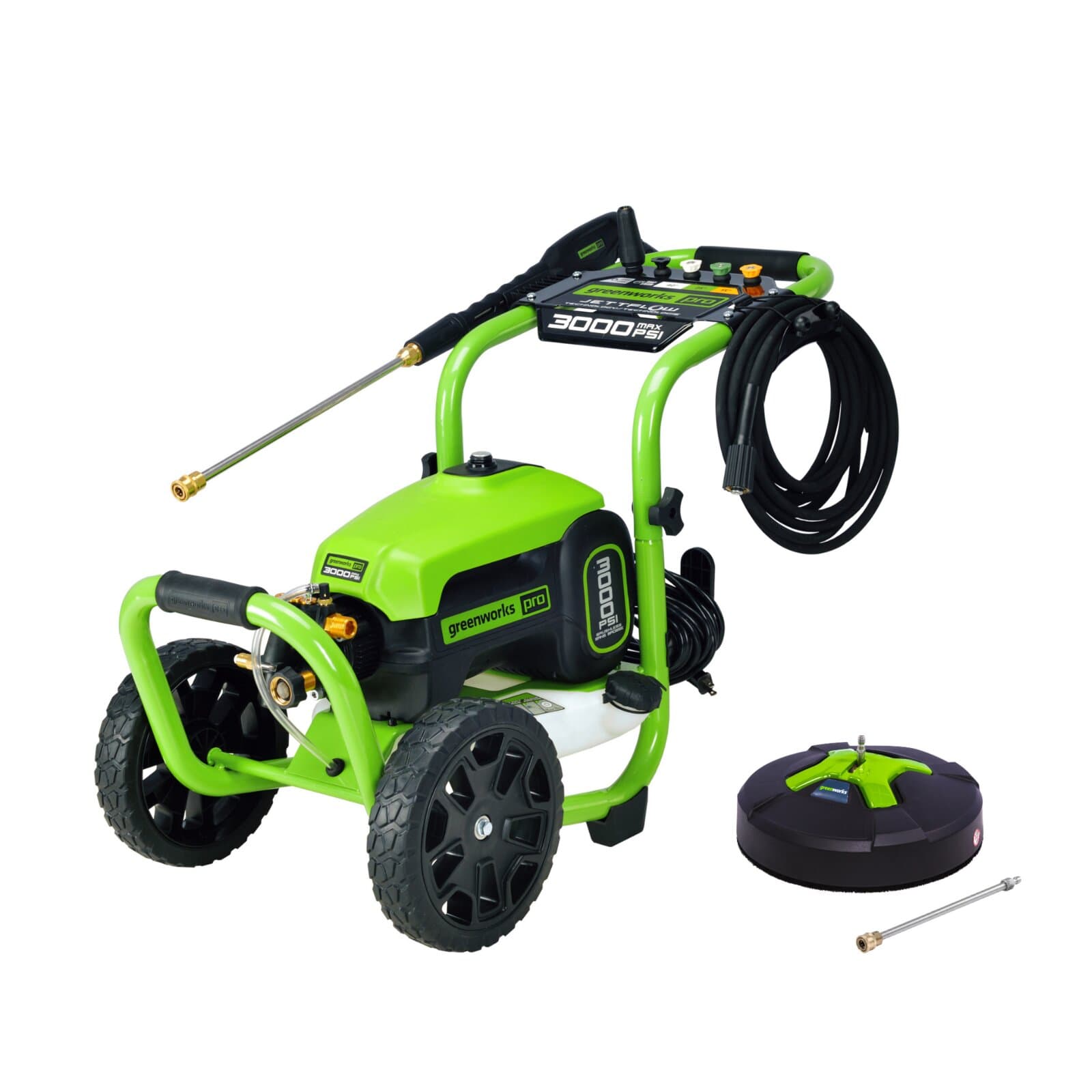
The Greenworks Pro GPW3001 sits at number one on our Best Pressure Washers list with a 9.5, and it earns that spot on a single spec homeowners have been waiting years for an electric machine to hit: 3,000 max PSI at 2.0 GPM — 6,000 "cleaning units," the PSI-times-GPM figure that defined mid-range Honda-engine gas washers four years ago. It gets there through a brushless induction motor instead of a gas engine or a cheap universal motor, which is the real story here — power that finally matches gas, delivered by a motor built to survive the abuse pressure-washing dishes out. Buy it if your property fits inside a 35-foot cord radius from an outlet; if it doesn't, budget for a proper extension cord or step up to the gas-powered Simpson ALH3425. For nearly everyone with a normal-sized lot, this is the default pick.
What it actually is
Pressure washer shopping has historically forced a trade: gas machines hit real cleaning numbers but come with fuel, oil changes, pull-cord starting, and noise that annoys the whole block; electrics were quiet and simple but capped out well below gas-level pressure, usually powered by universal motors that wear out fast. The GPW3001 is Greenworks' answer to that trade-off — a corded electric that hits a genuinely gas-competitive PSI-by-GPM number without giving up any of the convenience that made electrics appealing in the first place.
The motor is the differentiator. Induction motors run cooler than the universal motors found in sub-$200 electric washers, and they last dramatically longer under continuous trigger time — which is exactly the kind of sustained load that kills cheap pressure washer motors. Around that motor, Greenworks built a genuinely convenient machine: trigger-pull start with no pull cord and no choke, a 35-foot reinforced hose, four quick-connect nozzles (0°, 15°, 25°, 40°) for switching between concentrated blast and wide rinse, and a 1-gallon onboard soap tank so you're not hand-mixing detergent in a bucket. At $450, it costs more than the bargain electrics, and the case for that premium is almost entirely the motor underneath it.
In use
The numbers translate into real testing results, and this is where the GPW3001's ranking holds up. Pro Tool Reviews called it "among the top brushless electric pressure washers on the market when measured on the PSI-by-GPM cleaning units that actually matter for homeowner work" — a direct nod to the fact that 6,000 cleaning units is not a marketing number, it's the metric that determines whether a machine actually strips grime off concrete or just rinses the surface. Consumer Reports found it a "strong performer in our electric pressure washer testing for residential driveway, deck, and siding cleaning," which covers the actual job list most homeowners buy a pressure washer for.
The noise profile matters more in practice than it looks on a spec sheet. At roughly 75 dB, the GPW3001 is noticeably quieter than a 90-plus dB gas unit — the difference between a machine you can run on a Saturday morning without an irritated text from a neighbor, and one that announces itself down the street. It is louder than the Karcher K5 Premium, generally considered the quiet-pick alternative if noise is your single dealbreaker, though we don't have full independent specs on that unit to make a direct numeric comparison here.
Reviewed put the clearest point on why the motor is worth paying for: "The induction motor is the part of this machine that justifies the price — universal-motor electrics under $200 do not last the way this one does." That's the crux of the review. This isn't a pressure washer that wins on a single cleaning session; it's one built to still be running normally three summers in, after the universal-motor competition has already burned out.
Where it shines
- Gas-parity pressure without gas hassle. 3,000 PSI at 2.0 GPM matches the cleaning-units math of mid-tier gas washers from a few years ago, with none of the fuel mixing, oil changes, or emissions.
- A motor built for the job's actual failure mode. Brushless induction runs cooler and survives sustained trigger time — the stress that kills universal motors — which is the real durability differentiator over cheap electrics.
- Zero-friction startup and cleanup. Trigger-pull start, four quick-connect nozzles, and an onboard 1-gallon soap tank mean you're cleaning within a minute of unspooling the hose, not troubleshooting a choke or hand-mixing detergent.
- A 3-year limited warranty that backs up the durability claim rather than just asserting it.
The trade-offs — who should skip it
This is the best all-around electric pressure washer we've reviewed, not a universal answer, and the honest reasons to look elsewhere are specific:
- Your property is wider than about 50 feet from an outlet. The 35-foot cord is the GPW3001's one real limitation. You can extend reach with a 50-foot 12-gauge contractor extension cord, but daisy-chaining cheap, light-gauge extensions causes voltage drop that measurably reduces the brushless motor's output — defeating the point of buying the better motor in the first place. Budget for the right cord, or reconsider.
- You run a pressure washer for hours, not minutes. If you're regularly cleaning a large commercial-scale concrete pad or running the trigger for two-plus hours at a stretch, the gas-powered Simpson ALH3425 and its Honda GX200 engine and triplex pump are built for exactly that continuous-duty case in a way no electric, including this one, is designed to match.
- Noise is your single dealbreaker. At 75 dB this is quiet for the category, but not the quietest electric available — the Karcher K5 Premium reportedly runs quieter still, for buyers where every decibel counts.
How it compares
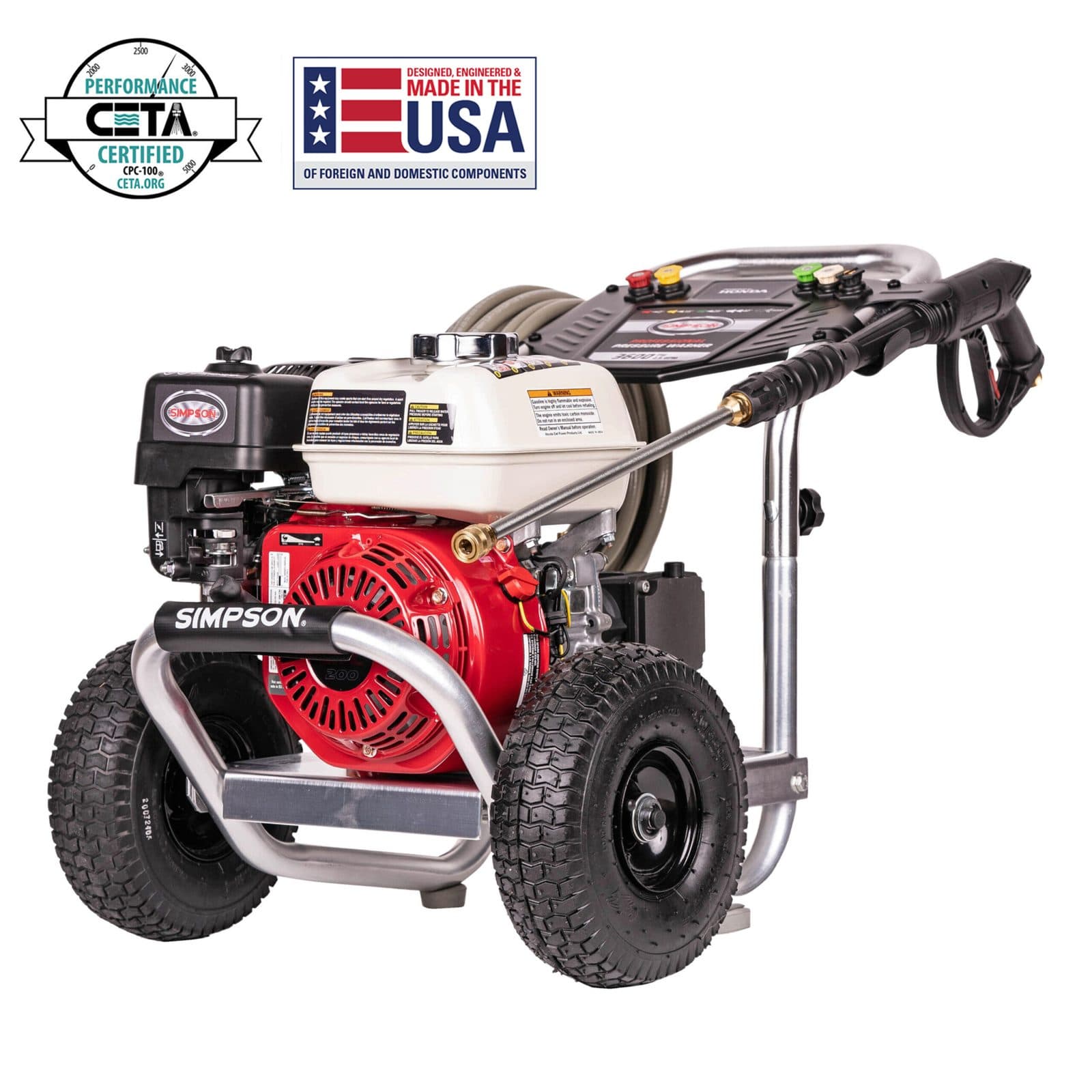
On its own list, the closest rivals sit directly behind it. The Simpson ALH3425 at number two is the gas cross-shop: 3,600 PSI at 2.5 GPM through a Honda GX200 commercial engine and an AAA triplex pump, for $874. It's the contractor-grade choice — Pro Tool Reviews calls it "a commercial-grade machine that earns its price for buyers who actually run pressure washers for hours at a time rather than minutes" — but that durability is overkill for someone who pressure-washes twice a season, and it comes with fuel, oil changes, and roughly 95 dB of noise.
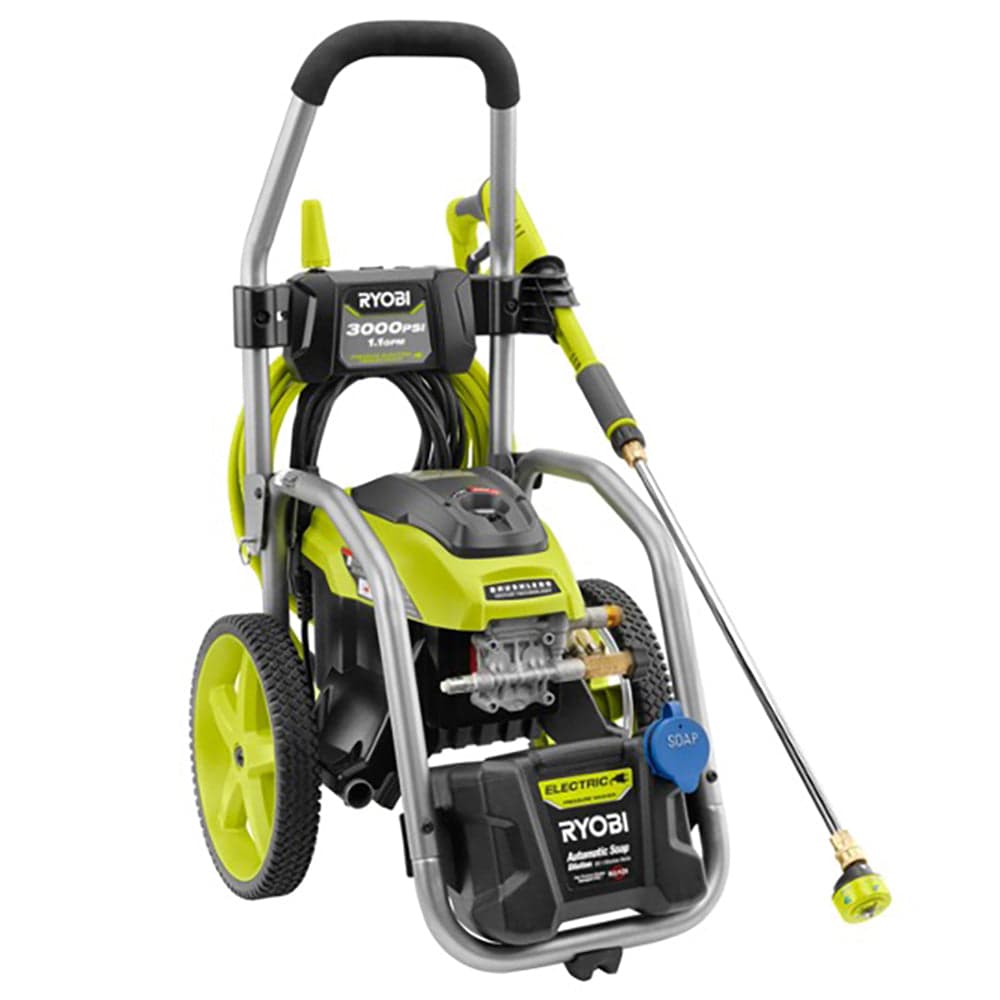
The Ryobi RY143011 at number three is the closer electric-to-electric comparison: also brushless, also 3,000 PSI, and $21 cheaper at $429. It's a legitimate value pick for instant-start convenience, but it doesn't carry the same depth of independent testing behind it that the Greenworks does — Pro Tool Reviews, Consumer Reports, and Reviewed have all put the GPW3001 through dedicated residential testing, which is exactly the kind of verification that should tip a close call.
The Gavler verdict
A 9.5, with an expert consensus of 95 and a community rating of 93 — the small gap being buyers who hit the cord-radius limit on larger lots and wish they'd budgeted for a longer cord up front. The Greenworks Pro GPW3001 is the pressure washer that finally makes "electric" and "gas-competitive" the same sentence, backed by a brushless induction motor that solves the actual durability problem instead of just quoting a bigger PSI number. Buy it if your property fits inside a 35-foot cord radius — for that buyer, this is the rational default. If it doesn't, either add a proper 12-gauge extension cord to the budget or step up to the Simpson ALH3425 and its Honda engine, which sidesteps the voltage-drop problem entirely.
Common Questions
For most homeowners, yes. It ranks first on Gavler's Best Pressure Washers list with a 9.5, and the reasoning is straightforward: 3,000 PSI at 2.0 GPM through a brushless induction motor is a spec sheet that matched mid-range gas washers a few years ago, without the fuel, oil changes, or 90-plus dB noise. The one real caveat is the 35-foot cord, which caps how far you can roam without adding a proper extension cord.
Only if your property is wide. Inside a roughly 50-foot radius from an outlet, the stock cord is fine and this is the rational default. Beyond that, you need a 50-foot 12-gauge contractor extension cord specifically — daisy-chaining lighter-gauge extension cords causes voltage drop that measurably reduces the brushless motor's output. Budget for the right cord rather than whatever is in the garage.
Buy the Greenworks unless you run a pressure washer for hours at a stretch on real concrete. The Simpson ALH3425 is a gas unit with a Honda GX200 commercial engine and a triplex pump built for contractor-grade continuous duty, and it costs 874 dollars against the Greenworks' 450. For the homeowner doing a driveway and a deck a few times a season, that price and maintenance gap buys durability you will never use.
The Ryobi is the cheaper brushless alternative at 429 dollars and also hits 3,000 PSI with instant start, so it is a legitimate value pick. The Greenworks wins on depth of independent testing — Pro Tool Reviews, Consumer Reports, and Reviewed have all put it through residential cleaning tests, while the Ryobi's track record is thinner. If you want the best-verified machine, pay the small premium for the Greenworks.
Longevity. Universal motors are what power most sub-200-dollar electric pressure washers, and they run hot and wear out fast under continuous trigger time — the exact stress pressure-washing puts on a motor. A sealed brushless induction motor runs cooler and survives multi-season homeowner use where cheap universal-motor units burn out inside a year or two. It is the single biggest reason the GPW3001 costs more than the bargain-bin electrics.
Quieter than gas, louder than the quietest electrics. It runs at roughly 75 dB, which is meaningfully below the 90-plus dB of a gas engine — closer to a window air conditioner than a lawnmower. It is not the quietest option on the market; the Karcher K5 Premium is generally considered the quiet-pick alternative if noise is your single dealbreaker. But 75 dB is a fair trade for the pressure and durability on offer here.
Where to Buy.
Prices checked regularly
90-day price history
Price History
Steady at $450 for the entire 90-day tracking window — no increases, no discounts, across 91 tracked days.
Tracked daily across retailers. Vote Want itabove and we’ll alert you the moment the price drops.
Some links are affiliate links — Gavler may earn a commission. This never affects rankings or scores. Learn more.
Precision Engineering
Brushless Induction Motor
Sealed brushless induction motor runs cooler than universal-motor electrics and survives continuous trigger time where cheap pumps overheat.
3,000 PSI / 2.0 GPM
Hits 6,000 cleaning units (PSI × GPM), the spec that defined mid-range Honda-engine gas washers four years ago.
~75 dB Operation
Roughly 15 dB quieter than typical gas pressure washers — closer to a window AC than a lawnmower.
Technical Specifications
The Scoreboard
Expert consensus from Pro Tool Reviews and Consumer Reports places the GPW3001 in the top tier of corded electric pressure washers; community score is slightly lower (93) reflecting the cord-radius limitation owners cite once they hit it on larger lots.
Cast Your Vote
Do you think Greenworks Pro GPW3001 deserves the #1 spot in Best Pressure Washers?
Global Critique
“Among the top brushless electric pressure washers on the market when measured on the PSI-by-GPM cleaning units that actually matter for homeowner work.”
“Strong performer in our electric pressure washer testing for residential driveway, deck, and siding cleaning.”
“The induction motor is the part of this machine that justifies the price — universal-motor electrics under $200 do not last the way this one does.”
More from Best Pressure Washers.
See how other top picks compare in this category.
Electric, Gas, or Battery Pressure Washer?
PSI hangtags are the wrong first question. Electric vs gas vs battery is the power path. Then shop Gavler's live ranking.
The Best Pressure Washers in 2026, Ranked by People Who Actually Blast Grime
Greenworks, Simpson, Ryobi, EGO, DeWalt, Karcher. Gavler ranks the pressure washers worth buying in 2026 — electric, gas, and battery picks.