Epson LS12000 – 8 Month Review
Kevis Films & Home Theater
Epson's flagship with 2,700 lumens and native 4K processing. The best picture quality available.
Gavler Meta-Score
“Still the projector to beat for dedicated home theaters. The 3LCD laser combination delivers colors and contrast that single-chip DLP projectors simply cannot match, and the HDR10+ support future-proofs it. Overkill for a casual setup — essential for anyone building a proper cinema room.”
The Gavler Verdict
Epson Pro Cinema LS12000 Review: The Reference Projector for a Real Home Theater
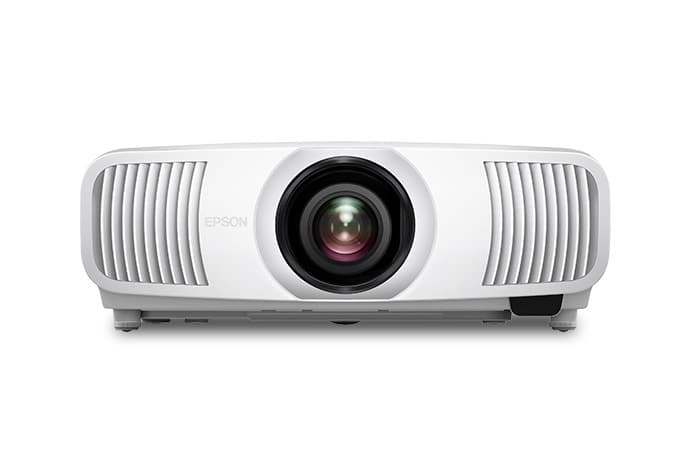
The Epson Pro Cinema LS12000 sits at number one on our Best Projectors list with a 9.8, and it earns that spot the hard way: not with a flashy spec sheet, but with the kind of engineering discipline that only shows up once you're actually watching a movie in a dark room. Buy it if you're building a dedicated, light-controlled home theater and want the closest thing to reference picture quality a consumer projector can deliver. Skip it if you need something portable, casual, or living-room-flexible — at nearly $5,000 and over 25 pounds, this is a projector you build a room around, not one you set up for movie night and put away.
The LS12000 is Epson's flagship 3LCD laser projector, and the "3LCD" part is the whole story. Instead of a single DLP chip and a spinning color wheel, it uses three separate LCD panels — one each for red, green, and blue — recombined through a prism. That architecture is why Epson can claim 2,700 lumens of equal white and color brightness, a distinction that sounds like marketing but isn't: DLP projectors typically post a much higher white-brightness number and a noticeably dimmer color-brightness number, because the color wheel steals light. Equal brightness means HDR content with saturated colors doesn't dim relative to white content — a real, visible difference in demanding scenes.
Dual-axis, four-phase pixel shifting takes native 1080p panels and produces full 4K resolution (3840x2160) on screen, processed through Epson's ZX Picture Processor for real-time HDR tone mapping across HDR10, HDR10+, and HLG. Two HDMI 2.1 inputs support 4K/120fps with sub-20ms input lag, and the laser light source is rated for 20,000 hours — roughly a decade of regular use before you'd need to think about it again.
Picture quality is where the LS12000 justifies its position at the top of the list, and independent reviewers back this up without much hedging. Projector Central called it "incredible, especially when you consider the price," noting that "the 3LCD model with a laser light engine delivers stunning picture quality." HomeTheaterReview put it plainly: the LS12000 "sits at the top of best 4K projectors guides as the best overall option — and for good reason." Projector Reviews named it a Top Choice Award winner, citing "the combination of laser light source, 4K PRO-UHD capability, and reasonable pricing" as the deciding factors.
What that consensus is describing in practice is a projector that handles the hardest cases well: dark, shadow-heavy scenes stay detailed instead of crushing to gray; bright HDR highlights — fire, explosions, sunlit exteriors — don't wash out the color around them; and motion stays clean at both 24fps film cadence and 120fps gaming refresh. The 2,500,000:1 dynamic contrast ratio is a marketing number to take with a grain of salt like any dynamic contrast figure, but the native contrast underneath it is genuinely strong for a projector at this brightness level.
Installation flexibility matters more than spec sheets usually credit. Motorized lens shift, zoom, and focus mean the LS12000 can be placed off-center or ceiling-mounted without the keystone correction that degrades image sharpness on cheaper projectors — a real consideration if your room doesn't have a perfectly centered mounting point.
This is a reference-grade home theater tool, not a flexible everyday projector, and the honest reasons to look elsewhere are specific:
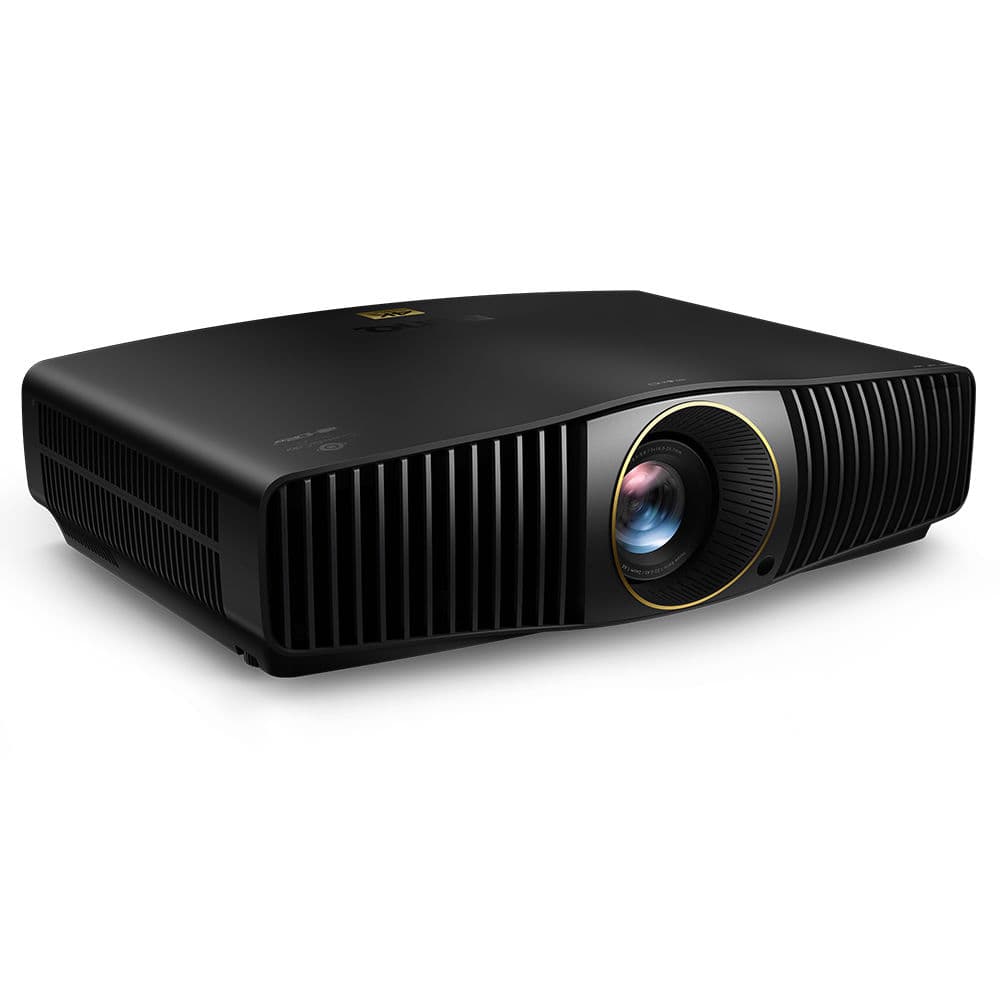
On its own list, the LS12000's closest rival sits directly beneath it: the BenQ W5800 at number two, a single-chip DLP projector that trades the LS12000's equal-brightness advantage for factory-calibrated color accuracy tight enough to skip professional calibration entirely. The choice between them is really a choice between two different definitions of "best" — overall brightness, contrast, and artifact-free performance (Epson) versus reference-tier color fidelity out of the box (BenQ). The Epson Home Cinema LS11000, one tier down in Epson's own lineup, is the value alternative for buyers who want the same 3LCD laser foundation without the LS12000's premium.
A 9.8, reflecting a projector that does the fundamentals better than nearly anything else on the market rather than chasing a single headline spec. The LS12000's 3LCD laser architecture eliminates rainbow artifact entirely, its equal-brightness design keeps HDR color honest, and its HDMI 2.1 inputs make it as capable a gaming display as it is a cinema one. Buy it if you're building a real home theater and want the reference standard; step down to the LS11000 if budget matters more than the last increment of brightness; step sideways to the BenQ W5800 only if color-matching precision is your singular priority. For most people assembling a dedicated theater room in 2026, the LS12000 is still the projector to beat.
If you are building a dedicated, light-controlled home theater, yes. It ranks first on Gavler's Best Projectors list with a 9.8, and the reason is the 3LCD laser architecture — it delivers equal white and color brightness (2,700 lumens of both), which single-chip DLP projectors structurally cannot match. The trade-off is size and price: at nearly 5,000 dollars and over 25 pounds, this is not a casual living-room projector. It is for buyers who want reference-grade picture quality and are willing to build a room around it.
Buy the Epson if you want the best all-around picture — brighter highlights, zero rainbow artifact, and 4K/120fps HDMI 2.1 gaming support. Buy the BenQ W5800 if color accuracy against a mastering reference is the single most important factor to you; its factory-calibrated Delta E under 2 across DCI-P3 and Rec.709 is the tightest color tolerance in the category. Both are excellent; the Epson is the more versatile reference projector, the BenQ is the color purist's tool.
Marginally, and mostly in specular highlights. The LS11000 shares the same 3LCD laser architecture and ZX Picture Processor at 200 fewer lumens and a lower dynamic contrast ratio, for about 1,000 dollars less. For most home theaters, the LS11000 gets you roughly 90 percent of the LS12000's performance. The LS12000 earns its premium in the brightest HDR highlights and in the small amount of extra contrast headroom serious calibrators can extract from it.
No. Rainbow artifact — the brief flash of separated red-green-blue color fringing some viewers see around bright objects — is a single-chip DLP phenomenon caused by a spinning color wheel. The LS12000 uses three separate LCD panels (3LCD), one per color channel, so there is no color wheel and no rainbow artifact possible, at any brightness or content type.
Prices checked regularly
90-day price history
Steady at $4,999 for the entire 90-day tracking window — no increases, no discounts, across 91 tracked days.
Tracked daily across retailers. Vote Want itabove and we’ll alert you the moment the price drops.
Some links are affiliate links — Gavler may earn a commission. This never affects rankings or scores. Learn more.
Equal white and color brightness eliminates the dimming that plagues single-chip DLP projectors in color-heavy scenes.
Dual-axis, four-phase pixel shifting produces full 3840x2160 resolution from native 1080p 3LCD panels with zero rainbow artifacts.
Two 48Gbps HDMI 2.1 inputs deliver 4K HDR at 120fps with sub-20ms input lag for current-gen consoles.
Experts universally praise picture quality and 3LCD color accuracy. Community notes the price premium over DLP alternatives and large chassis size.
Do you think Epson Pro Cinema LS12000 deserves the #1 spot in Best Projectors?
“Its performance is incredible, especially when you consider the price. The 3LCD model with a laser light engine delivers stunning picture quality.”
“The LS12000 sits at the top of best 4K projectors guides as the best overall option — and for good reason.”
“A Top Choice Award winner. The combination of laser light source, 4K PRO-UHD capability, and reasonable pricing makes it the obvious recommendation.”
Watch
Hand-picked from creators we trust — playable inline.
Epson LS12000 – 8 Month Review
Epson LS12000 Review and Opinion
#1 Best Selling 4K Projector in USA - Epson LS12000 on HUGE 140" 2.40 Stewart Screen w/ Kaleidescape
Epson Home Cinema LS11000 / LS12000 Review
BRAND NEW for 2022 | Epson LS12000 4K HDR 120Hz HDMI 2.1 Home Cinema Projector Review!
I Hate It When He's Right... - Epson LS12000 Demo
See how other top picks compare in this category.
Lumen hangtags are the wrong first question. Long-throw theater vs ultra-short-throw TV replacement vs portable comes first. Then shop Gavler's live ranking.
Prime Big Deal Days runs October 6-7, 2026. The Epson, BenQ, LG, Hisense, and XGIMI projectors worth watching, and which discounts are most likely to land.
Epson, BenQ, LG, Hisense, Optoma. Gavler's home theater community ranks the projectors worth buying — long-throw laser, ultra-short-throw, and gaming.