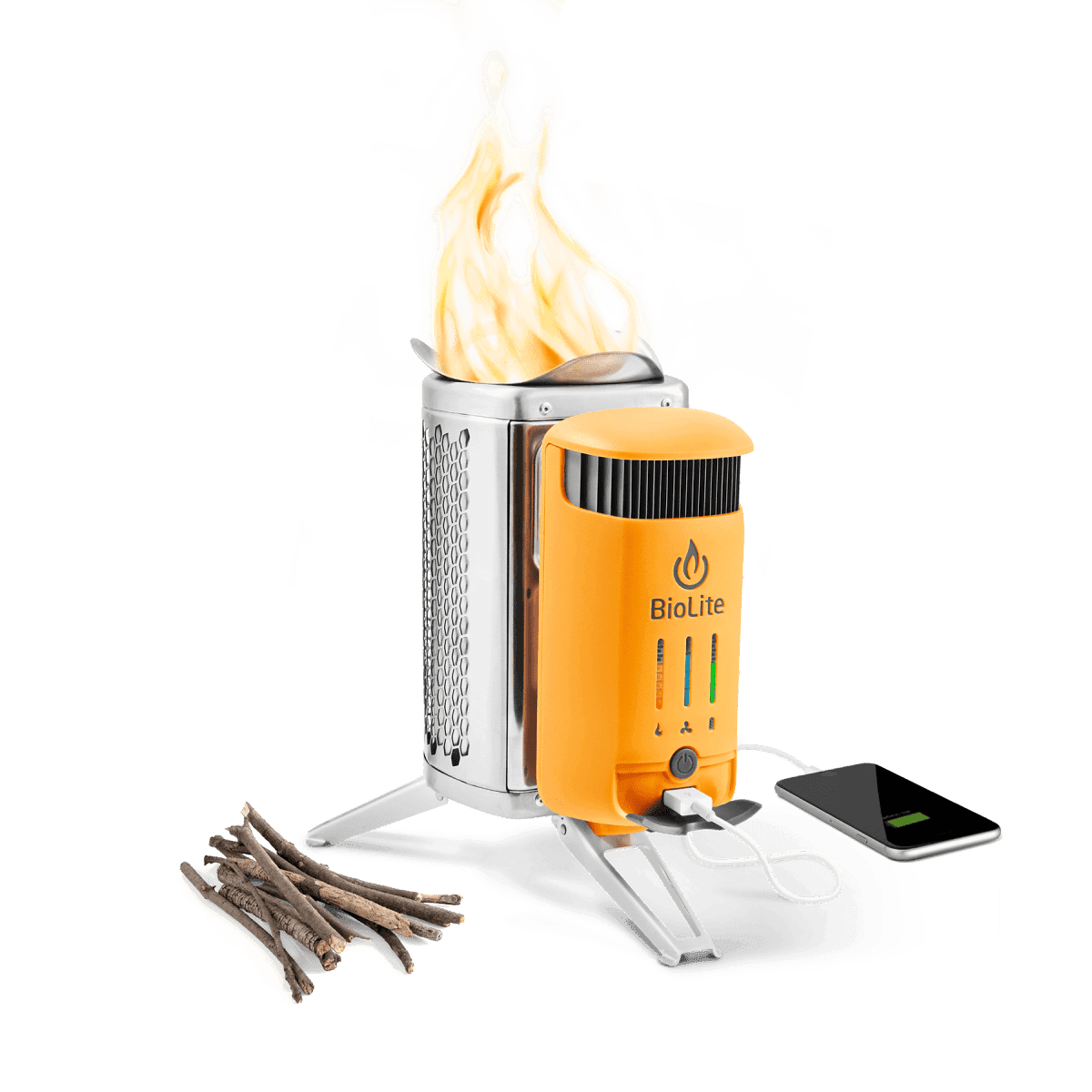
BioLite CampStove 2+.
Burns twigs instead of canisters and converts the fire's heat into a 5W USB charge — the off-grid pick when you'd rather not haul fuel or a power bank.
The Verdict.
Gavler Meta-Score
“Jake Morrison's take: worth it only if going fuel-free is the whole point — it burns twigs and converts the heat into a 3W USB charge, so there's no canister to haul or run out of. Smoky, slow, and fiddly next to a canister stove, and the charging is a trickle, but for long off-grid trips the no-fuel trick is genuinely useful.”
The Gavler Verdict
The Gavler Review.
BioLite CampStove 2+ Review: No Fuel to Carry, No Fast Boil Either
The BioLite CampStove 2+ ranks number 6 on Gavler's Best Camping Stoves list with an 8.4, and it earns that score on a genuinely different premise than every canister stove above it: it doesn't burn fuel you pack in, it burns twigs you find on the ground, and it converts the leftover heat into a 3W USB charge for your phone or headlamp. Gavler's Jake Morrison, Senior Curator of Outdoor Gear, summed up the trade honestly: it's "worth it only if going fuel-free is the whole point — it burns twigs and converts the heat into a 3W USB charge, so there's no canister to haul or run out of," but he's equally clear that it's "smoky, slow, and fiddly next to a canister stove." That tension — genuine self-sufficiency versus real day-to-day friction — runs through every review of this stove, ours included.
What it is
The CampStove 2+ is a small, twig-fed metal firebox with a battery pack clipped to the side. Instead of screwing onto a propane or butane canister, you build a small wood fire inside the combustion chamber, and an internal fan — powered by a thermoelectric generator that turns the fire's own heat into electricity — force-feeds it air to keep the burn cleaner and hotter than an open campfire. That same generator charges a 3,200 mAh internal battery, which in turn powers a 3W USB port for phones, headlamps, or other small electronics. T3's Ruth Hamilton, who tested the stove with BioLite's KettlePot and grill accessories, confirmed the core numbers match what BioLite advertises: a 3,200 mAh battery (up from 2,600 mAh on the original CampStove 2), a 3W USB output, and a packed weight of about 2.06 lb for the stove itself. The pitch is simple — never run out of fuel, and never run out of phone battery either, as long as you're willing to keep feeding the fire.
In use
This is where the reviews split, and where a fair review has to sit with the discomfort rather than paper over it. On the favorable end, Cool of the Wild found that "the fan-fed burn stays impressively clean, and cooking and charging off nothing but scavenged twigs is genuinely liberating on long off-grid trips" — the exact use case BioLite designed the stove around. T3's Hamilton was similarly positive after hands-on testing, calling the stove "reliable and relatively straightforward to use" and noting she "was impressed with how efficient the burner is; you don't need much natural fuel at all to get cooking."
But the boil-time claim doesn't hold up under independent testing, and multiple outlets landed on nearly the same number by coincidence rather than copying each other. World Water Reserve measured a liter of water taking about 10.5 minutes versus BioLite's claimed 4.5, because "the pot partly snuffed the flame and we had to add fuel mid-boil." Better Trail's testers, working independently in Southern California, hit the same wall: it took them about 20 minutes just to get the fire established, and once lit, "we timed the boil for 1 liter of water at 10.5 minutes, more than twice BioLite's claimed 4.5 minutes," because "the pot partially snuffed out the flame, and we had to stop and add more fuel midway through." Two separate testing teams, same failure mode, same real-world number — that's a meaningful pattern, not a one-off bad batch of wood.
Temperature control is the other recurring complaint. Better Trail rated it 1 out of 5 for temperature control specifically, writing that "because it burns wood, there's no real way to dial in or maintain a consistent flame like you can with a gas stove," and that "simmering or cooking anything that requires finesse is next to impossible." Andrew Skurka, testing from a backpacker's perspective, was the most skeptical voice in this review, calling it "neat but mostly impractical — for the vast majority of trips a canister stove is lighter, faster, and less fussy than feeding a fire."
Strengths
The fan-assisted burn genuinely works as advertised for cutting down smoke compared to an open fire — that's the one point nearly every reviewer agrees on, from Cool of the Wild's "impressively clean" burn to T3's fuel-efficiency praise. The charging feature, while modest, is a real perk that no canister stove on this list offers: cook dinner and top off a headlamp or phone at the same time, using fuel you never had to pack in or pack out. And the core appeal — never running dry on fuel during a long off-grid stretch — is a real, structural advantage over anything that depends on a finite canister. For trips where resupply isn't an option, that's not a gimmick, it's a genuine planning advantage.
The trade-offs — who should skip it
Speed is the biggest one. If you're hungry and want water boiling in under 5 minutes, this is the wrong stove — real-world testing from World Water Reserve and Better Trail both point to boils running closer to 10 minutes, roughly double the claim, and that's before accounting for the 15 to 20 minutes it can take just to get a reliable fire established. Temperature control is the second real limitation: Better Trail's testing found simmering and delicate cooking "next to impossible" on wood heat, so if you cook anything beyond boiling water or charring over high heat, expect trial and error. And the charging is genuinely a trickle — it only flows while a hot fire is burning, so don't buy this stove expecting it to double as a fast USB charger; it's a bonus for topping off a device during a cook, not a primary power bank. Campers who prioritize speed, simmer control, or minimal fuss over self-sufficiency should look elsewhere on this list.
How it compares
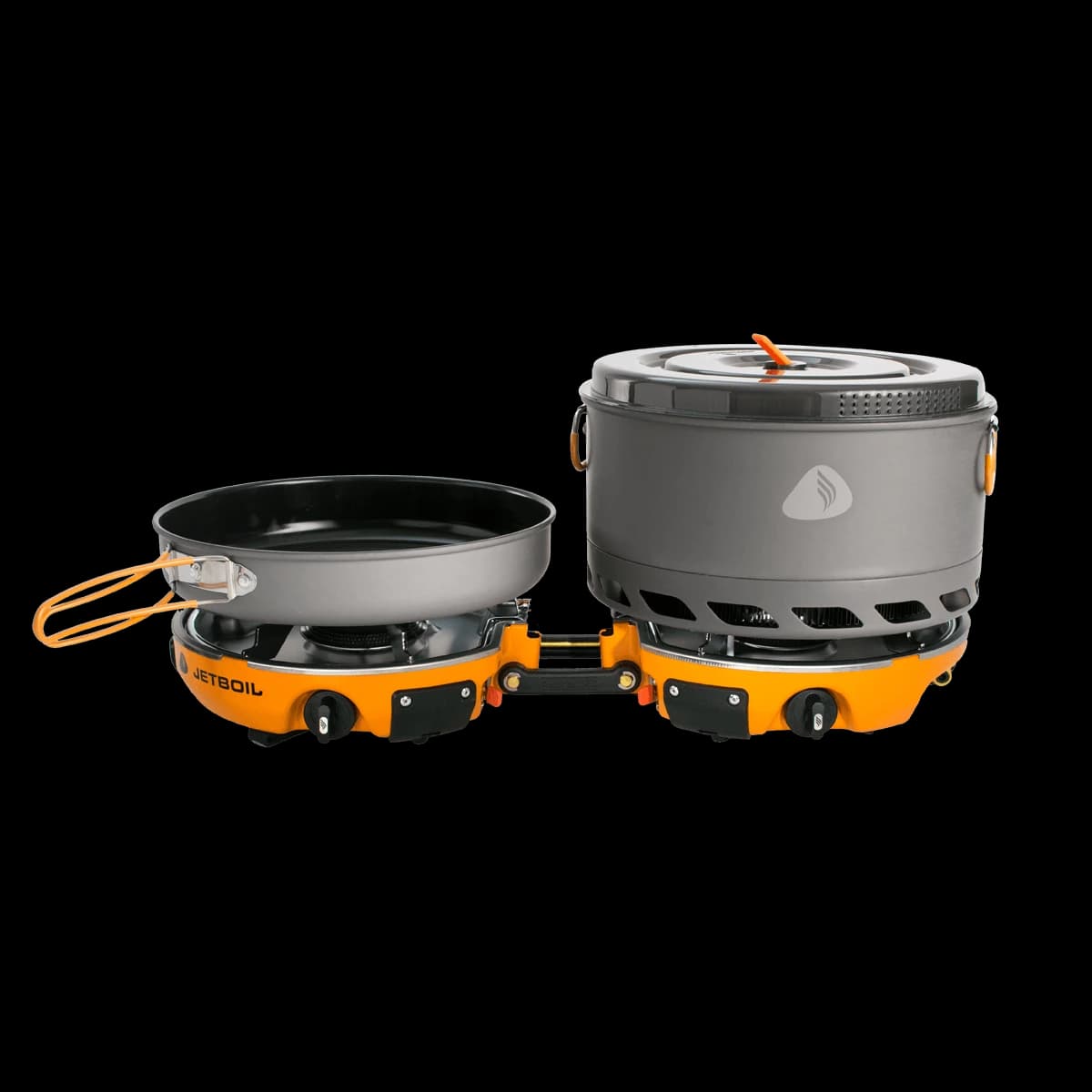
The most useful contrast on this same list is the Jetboil Genesis Basecamp System, Gavler's rank-1 pick, precisely because the two represent opposite philosophies. The Genesis runs on propane with a pressure regulator for real temperature control and a documented, fast boil — but you have to carry and eventually replace fuel canisters. The CampStove 2+ trades that speed and consistency for never needing to resupply fuel at all, at the cost of a slower, smokier, more hands-on cooking process. If you don't mind carrying fuel and want a faster, more predictable kitchen, the Genesis is the easier choice for most car-camping trips. If your priority is long stretches off-grid where hauling canisters isn't practical, the CampStove 2+'s twig-burning design solves a problem the Genesis can't.
The Gavler verdict
An 8.4 and a specialist's tool, not a general-purpose stove. The BioLite CampStove 2+ delivers on its one genuinely unique promise — cook and charge devices using nothing but scavenged wood — and reviewers who value that self-sufficiency, like Cool of the Wild, come away impressed. But the honest math on boil times (closer to 10 minutes than the claimed 4.5, confirmed independently by two different testing teams) and the near-universal complaint about simmer control mean this isn't a stove for campers who just want dinner fast. Buy it if long off-grid trips and freedom from fuel canisters are the whole point. Buy a canister stove instead if you just want to eat sooner.
Common Questions
Only if going fuel-free is genuinely the point. It ranks number 6 on Gavler's Best Camping Stoves list with an 8.4, and Gavler's Jake Morrison put it plainly: it's 'worth it only if going fuel-free is the whole point.' Better Trail's testers were harsher, concluding that for most campers 'the novelty won't outweigh the frustrations.' If self-sufficiency on long off-grid trips matters more to you than speed, it earns its keep; if you just want dinner fast, it won't.
Longer than advertised. BioLite claims about 4.5 minutes for a liter, but independent testers consistently land closer to 10 minutes. World Water Reserve clocked 10.5 minutes after the pot partly smothered the flame, and Better Trail's testers measured the same 10.5 minutes for the same reason — the pot sitting low over the fire chokes it, forcing you to stop and refeed mid-boil.
No — treat the 3W USB output as a trickle, not a fast charger. It only draws power while a fire is actively burning hot enough to spare energy beyond running the internal fan, so charging is tied directly to how diligently you're feeding twigs. It's useful for topping off a phone or headlamp over the course of a cooking session, not for a fast full charge.
Where to Buy.
Prices checked regularly
90-day price history
Price History
Tracked at $60.00 across 90 tracked days — currently $200 at the retailers above.
Tracked daily across retailers. Vote Want itabove and we’ll alert you the moment the price drops.
Some links are affiliate links — Gavler may earn a commission. This never affects rankings or scores. Learn more.
Precision Engineering
Twig-Fueled Combustion
A fan-fed firebox burns sticks and biomass instead of gas canisters, so you never carry or run out of fuel — the whole reason to own it.
3W USB Charging
The fire's heat feeds a 3,200 mAh internal battery and 3W USB port, enough to slowly top up a phone or headlamp — best treated as a supplement, not a power-bank replacement.
Fan-Assisted Clean Burn
An adjustable internal fan boosts combustion to cut smoke and speed the boil; dial it up to charge faster or down to conserve battery.
Technical Specifications
The Scoreboard
Reviewers split sharply on practicality: fans value the fuel-free self-sufficiency and built-in charging, while skeptics (Andrew Skurka) call it 'neat but mostly impractical' for typical trips. The community rating reflects that divide — it's a specialist tool, not an everyday stove.
Cast Your Vote
Do you think BioLite CampStove 2+ deserves the #6 spot in Best Camping Stoves?
Global Critique
“Neat but mostly impractical — for the vast majority of trips a canister stove is lighter, faster, and less fussy than feeding a fire.”
“The fan-fed burn stays impressively clean, and cooking and charging off nothing but scavenged twigs is genuinely liberating on long off-grid trips.”
“In our test the pot partly snuffed the flame and we had to add fuel mid-boil, so a liter took about 10.5 minutes versus the claimed 4.5.”
More from Best Camping Stoves.
See how other top picks compare in this category.
Pick a Camping Stove for the Way You Cook Outside
BTU hangtags are the wrong first question. Match canister backpacking, tabletop propane, or wood-burning to how you cook outside.
The Best Camping Stoves in 2026, Ranked by People Who Actually Cook Outdoors
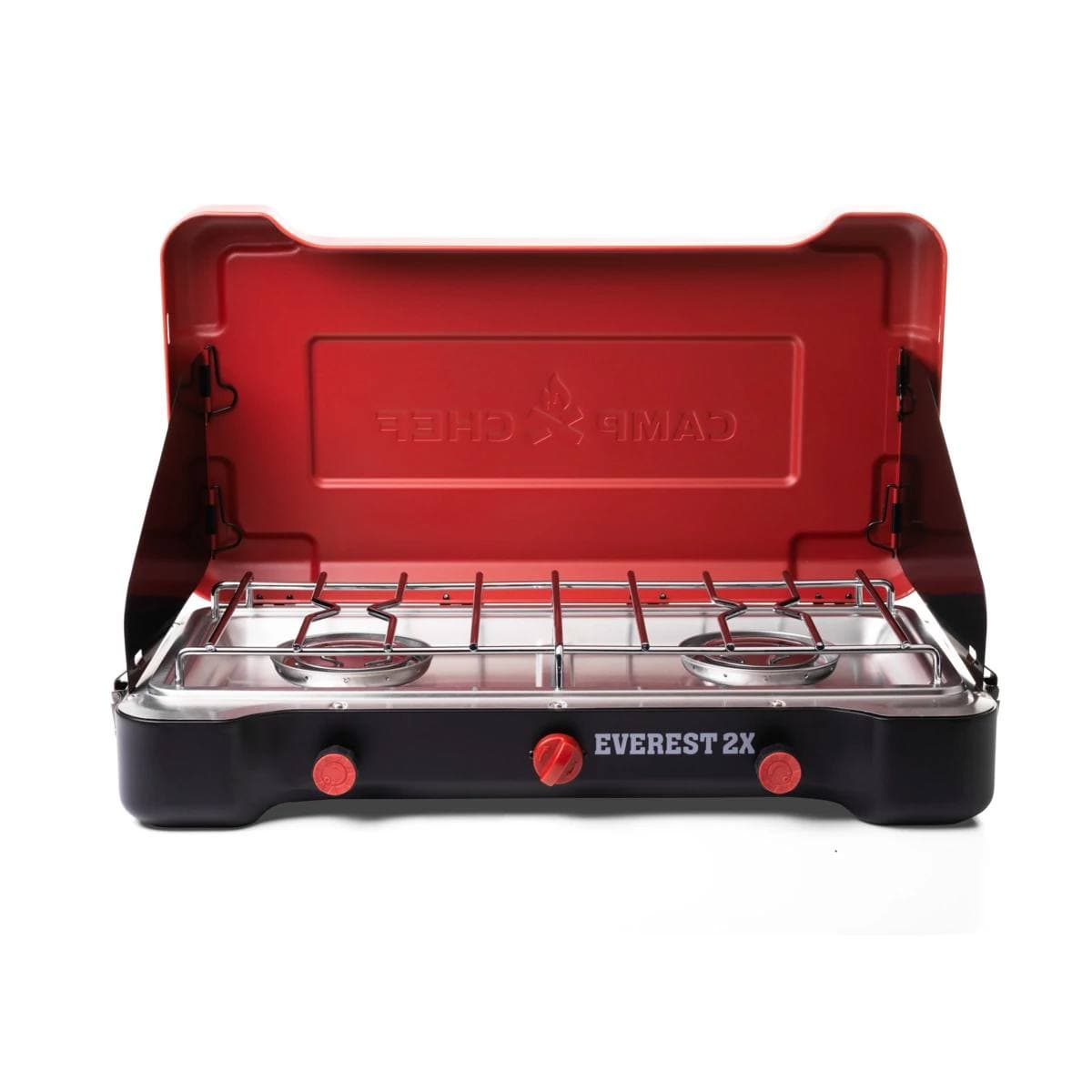
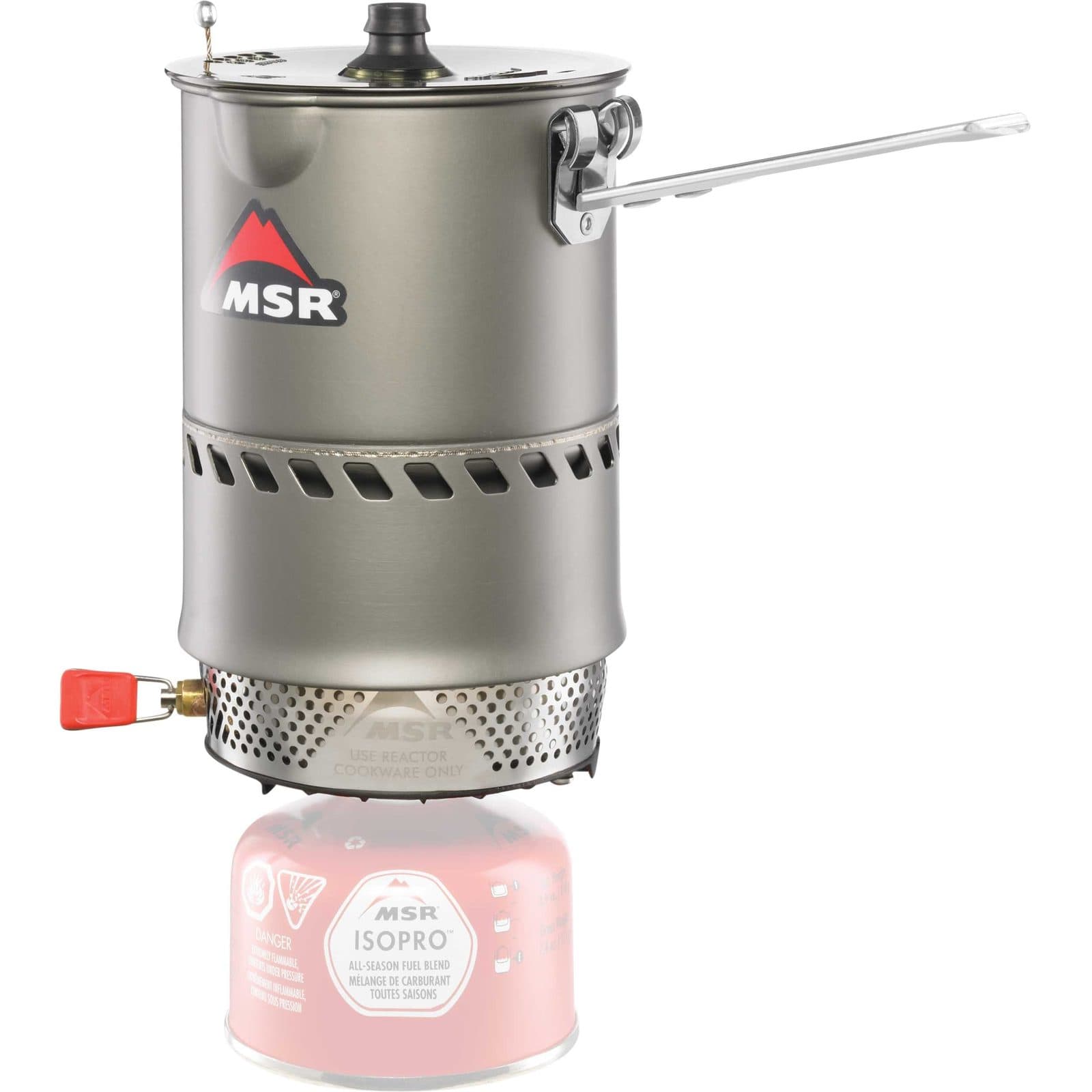
Jetboil, MSR, Camp Chef, Coleman. Gavler's campers rank the stoves worth carrying — for backpackers, basecamps, and car-camp kitchens.