Amazon Smart Thermostat.
$79 Alexa-native smart thermostat built on Honeywell's resi-HVAC platform. Pays for itself in one heating season.
The Verdict.
Gavler Meta-Score
“The default budget pick if you live in Alexa. $79 with utility rebates often bringing it under $50 net. The closest thing to a no-regrets thermostat purchase in any price tier — if and only if Alexa is your ecosystem.”
The Gavler Verdict
The Gavler Review.
Amazon Smart Thermostat Review: The Budget Pick With One Hard Condition
The Amazon Smart Thermostat ranks 8th on Gavler's Best Smart Thermostats list with a 7.6, and it's the rare product in this category with almost no reasonable objection on price. Wirecutter has flatly called it the "Best value smart thermostat we've ever tested," and Tom's Guide's review — headlined "the budget smart thermostat we've been waiting for" — put the number in context: "For just $59, it's the ultimate bargain." At Gavler's verified $79 price point, with typical utility rebates of $30 to $50 stacked on top, the real-world cost frequently lands under $50. The one condition that has to be true for any of this to matter: you live in Alexa. This thermostat has no Google Home support, no Apple HomeKit, and no Matter — buy it for the wrong ecosystem and the price advantage is irrelevant.
What it is
Amazon didn't build this thermostat from scratch — it partnered with Resideo (Honeywell Home) and licensed the same T-series HVAC platform that underpins Honeywell's own pro-channel thermostats, including the Honeywell Home T6 Pro further up Gavler's list. In practical terms, that means the HVAC brain, the Wi-Fi radio, and the underlying reliability engineering are proven, contractor-grade components wearing an Amazon shell and an Alexa-native app in place of Honeywell's own software.
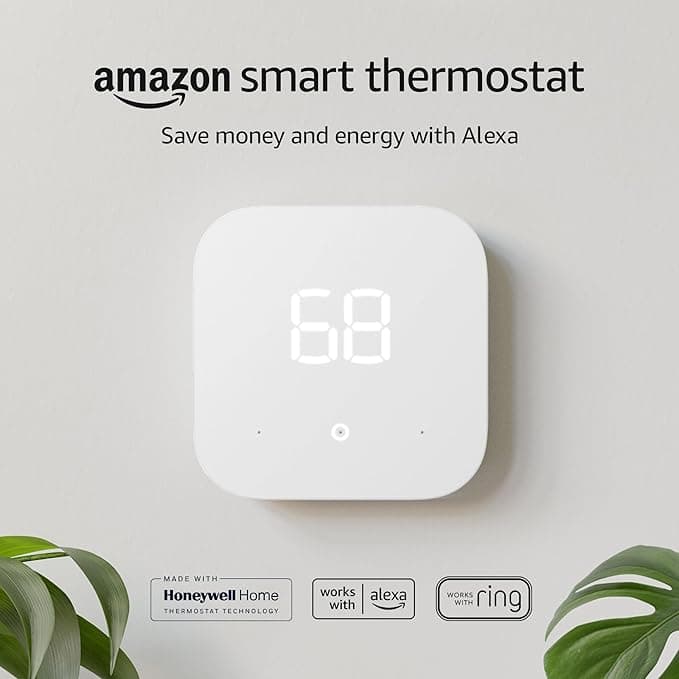
What Amazon stripped out to hit $79: a color touchscreen (this ships with a matte monochrome LCD), remote room sensors, and any smart-platform support beyond Alexa. A C-wire is required, with an adapter kit sold separately for homes that don't have one. Tom's Guide summarized the resulting look well: "it's a 3.5 x 3.5 rounded square, similar to the Ecobee SmartThermostat," with touch-only controls and an included faceplate to cover old thermostat marks — a detail Tom's Guide pointed out that Nest charges $15 for separately.
In use
The core mechanism isn't a learning algorithm the way Nest markets one — it's Alexa Hunches, which infers your routine from how you interact with other Alexa devices in the house and nudges the temperature accordingly. Tom's Guide ran this in a real household for an extended period and reported a mixed but generally positive result: "The Amazon Smart Thermostat changed when everyone in my house fell asleep, raising the temperature slightly to accommodate the overnight chill." Away-detection was less reliable: "I found hunches less successful in recognizing when we weren't home for a few hours, perhaps because of my dog." That's a useful, specific caveat — the automation works well for predictable routines like bedtime and poorly for irregular comings and goings, especially in households with pets that trigger motion or presence signals.
For buyers who want more granular control than Hunches provides, Tom's Guide's reviewer was candid about the limitation: "This automation is limiting for those who apparently glean joy from granular control over the thermostat. I'm talking to you, dad." There's no per-room sensor support and no way to set multiple thermostats to different zone schedules independently, even if you own more than one unit — an odd omission Tom's Guide called out directly.
On the value math, EnergySage's assessment lines up with Gavler's own community data: the thermostat "pays for itself in one heating season for most US homes," even before stacking a utility rebate on top. That's a real, calculable claim, not marketing language — basic schedule programming alone typically produces enough savings to clear the purchase price within a single season in most US climates.
Strengths
- The strongest ROI math in the smart thermostat category. At $79, with $30-50 in typical rebates layered on, this is close to a no-regrets purchase for the right buyer — Wirecutter's "best value" framing isn't hyperbole.
- Proven, licensed HVAC hardware, not an unproven startup platform. The Honeywell T-series lineage means the thermostat brain and Wi-Fi radio come from a company with decades of resi-HVAC reliability data behind it.
- Genuinely simple setup and daily use. No learning curve, no complicated scheduling interface — just touch controls, an app, and Alexa Hunches doing quiet background work.
- A faceplate included at no extra cost, a detail Tom's Guide specifically flagged as a contrast to Nest's $15 upcharge for the same accessory.
The trade-offs — who should skip it
- Anyone outside the Alexa ecosystem. This is the dominant, non-negotiable caveat. No Google Home, no HomeKit, no Matter. If your smart home runs on Google Assistant or Siri, this thermostat simply doesn't participate — Tom's Guide was direct about it: "you should be aware of the thermostat's exclusivity."
- Buyers who want remote room sensors. Unlike the Nest Learning Thermostat or Ecobee's higher-end models, there's no sensor accessory to correct for a home with uneven temperatures room to room.
- Households whose routines don't fit Hunches' pattern-matching. If your schedule is irregular, or pets in the house confuse presence detection, the automatic-actions feature will underperform — you'll likely end up managing temperature manually more often than the marketing implies.
How it compares
The Honeywell Home T6 Pro, ranked 7th at $129, is effectively this thermostat's more expensive parent — Honeywell's own pro-channel version of the same underlying platform, sold with a "set it and forget it for a decade" pitch through HVAC contractors rather than Amazon's storefront. It supports both Alexa and Google Home, which the Amazon Smart Thermostat does not, but it costs $50 more and drops the ROI advantage that makes the Amazon version the default budget pick.
At the other end, the Mysa V2, ranked 9th at $199, solves a completely different problem — 240V line-voltage compatibility for electric baseboard and in-floor radiant heat, which neither Amazon's nor Honeywell's thermostats can control at all. It's not really a competitor so much as a reminder that "smart thermostat" covers more HVAC types than the standard 24V forced-air systems this category mostly targets; if your home runs baseboards, the Amazon Smart Thermostat is irrelevant regardless of price.
The Gavler verdict
A 7.6 that reflects a thermostat winning almost entirely on value rather than features — community ratings skew notably higher than expert consensus here, because owners who bought it for the price keep confirming it delivers on that promise. Wirecutter's "best value" call and Tom's Guide's "ultimate bargain" framing both land on the same conclusion Gavler's data does: at $79 with rebates stacking the odds further in your favor, this is close to a no-regrets purchase, provided the one hard condition is met. If you're an Alexa household, buy this and stop shopping. If you're not, the ecosystem lock-in makes this a pass no matter how good the price looks.
Common Questions
Yes, but only if you live in Alexa. It ranks 8th on Gavler's Best Smart Thermostats list with a 7.6, and Wirecutter has called it 'Best value smart thermostat we've ever tested.' At $79, with typical utility rebates of $30-50, real-world cost often lands under $50 — Tom's Guide put it plainly: 'For just $59, it's the ultimate bargain.' The catch is total ecosystem lock-in: no Google Home, no HomeKit, no Matter.
No. It is Alexa-only — no Google Assistant, no Apple HomeKit, no Matter support. Tom's Guide flagged this directly: 'the Amazon Smart Thermostat only works with Alexa... If you're an Alexa household, this won't be a problem, but you should be aware of the thermostat's exclusivity.' For Google-first or Apple-first homes, this thermostat is not a fit regardless of price.
Instead of a learning algorithm or remote room sensors, it leans on Alexa Hunches — inferring when everyone's asleep or away based on how you use other Alexa devices, then nudging the temperature automatically. Tom's Guide's own long-term testing found the feature inconsistent: it reliably caught bedtime, but the reviewer noted 'I found hunches less successful in recognizing when we weren't home for a few hours, perhaps because of my dog.'
Where to Buy.
Prices checked regularly
90-day price history
Price History
Steady at $79.00 for the entire 90-day tracking window — no increases, no discounts, across 91 tracked days.
Tracked daily across retailers. Vote Want itabove and we’ll alert you the moment the price drops.
Some links are affiliate links — Gavler may earn a commission. This never affects rankings or scores. Learn more.
Precision Engineering
Alexa-Native (No Other Platforms)
First-class Alexa control; no Google Home, no HomeKit, no Matter support.
Honeywell HVAC Platform
Licensed Honeywell T-series hardware platform — same HVAC reliability the pro-channel T6 Pro is built on.
Best ROI in the Category
$79 list price plus typical $30-50 utility rebates means real-world cost under $50 in most US markets.
Technical Specifications
The Scoreboard
Community reviews skew strongly positive — value alone carries the score. Editorial coverage is more cautious because of the Alexa-only ecosystem lock-in.
Cast Your Vote
Do you think Amazon Smart Thermostat deserves the #8 spot in Best Smart Thermostats?
Global Critique
“Best value smart thermostat we've ever tested.”
“Pays for itself in one heating season for most US homes.”
More from Best Smart Thermostats.
See how other top picks compare in this category.
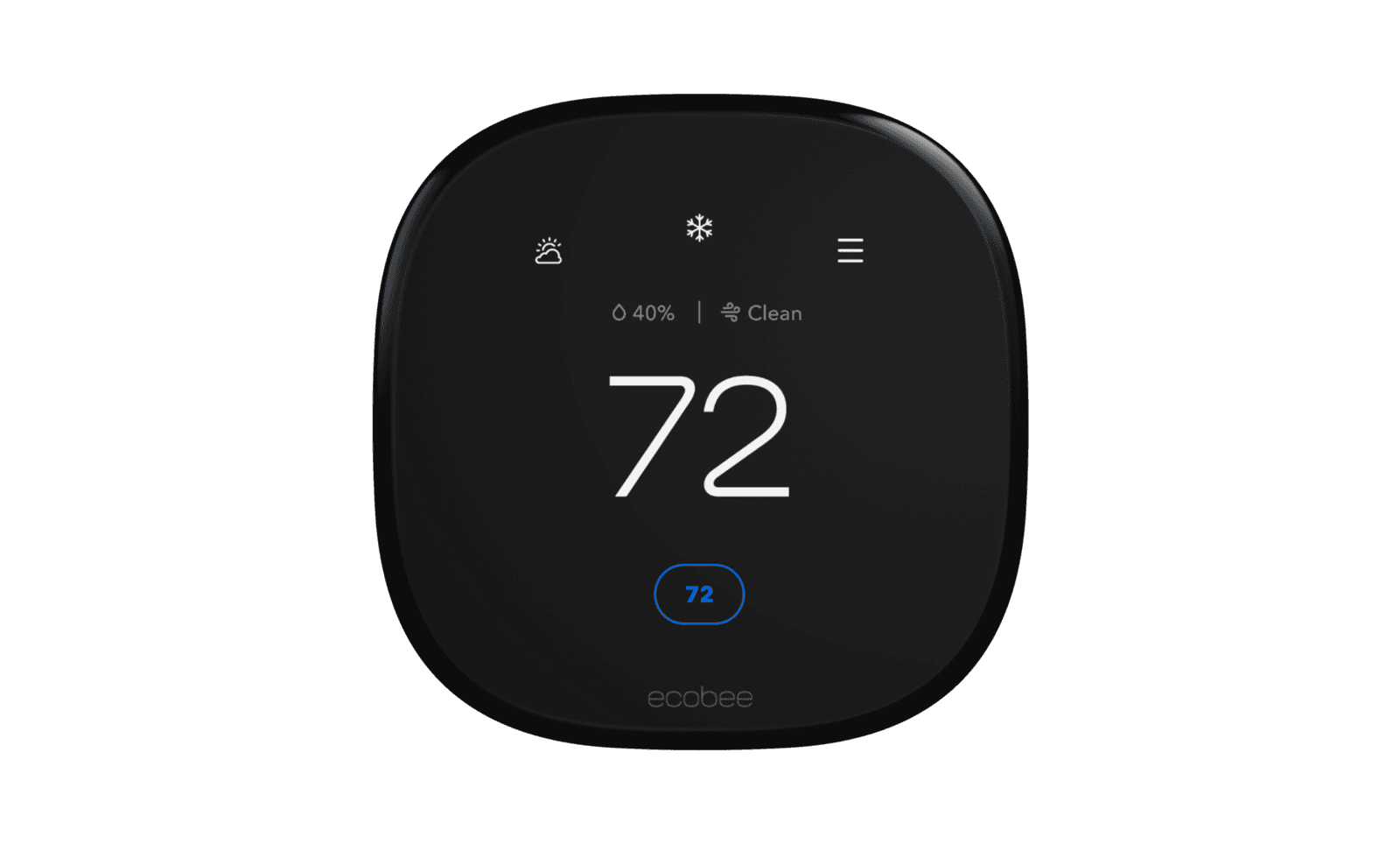
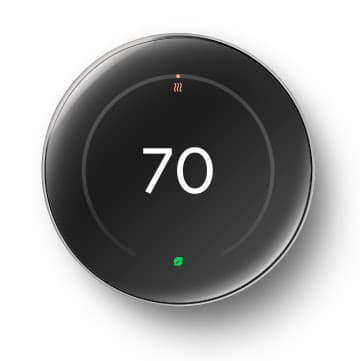
24V vs Line-Voltage: Check This Before a Smart Thermostat
Ecosystem hangtags are the wrong first question. 24V vs line-voltage is the wiring. Then pick the product in that lane.
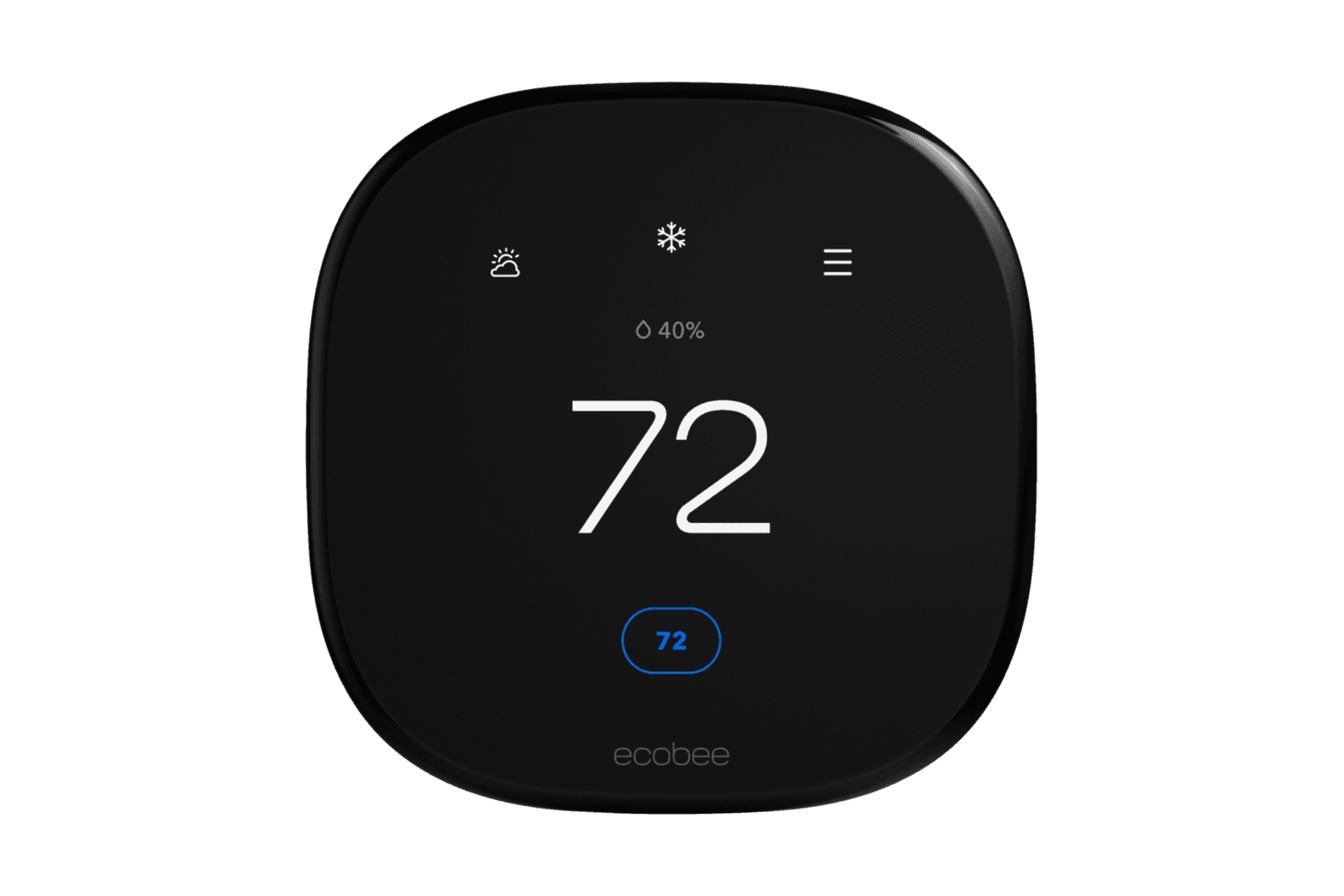
Ecobee Smart Thermostat Premium vs Nest Learning Thermostat (4th Gen): The Smart Thermostat Decision That Actually Matters in 2026
The two smart thermostats every homeowner cross-shops. Here's how the Ecobee Premium and Nest Learning 4th Gen compare in 2026.